You help make Hymnary.org possible. More than 10 million people from 200+ countries found hymns, liturgical resources and encouragement on Hymnary.org in 2025, including you. Every visit affirms the global impact of this ministry.

If Hymnary has been meaningful to you this year, would you take a moment today to help sustain it? A gift of any size—paired with a note of encouragement if you wish—directly supports the server costs, research work and curation that keep this resource freely available to the world.

Give securely online today, or mail a check to:
Hymnary.org
Calvin University
3201 Burton Street SE
Grand Rapids, MI 49546

Thank you for your partnership, and may the hope of Advent fill your heart.

Person Results

Topics:ordinary+time
In:people

Planning worship? Check out our sister site, ZeteoSearch.org, for 20+ additional resources related to your search.
Showing 11 - 20 of 956Results Per Page: 102050

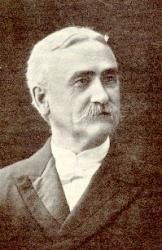
H. R. Palmer

1834 - 1907 Person Name: Horatio R. Palmer Topics: Ordinary Time Week 7 Composer of "PEACE, BE STILL" in Hymns and Devotions for Daily Worship Palmer, Horatio Richmond, MUS. DOC, was born April 26, 1834. He is the author of several works on the theory of music; and the editor of some musical editions of hymnbooks. To the latter he contributed numerous tunes, some of which have attained to great popularity, and 5 of which are in I. D. Sankey's Sacred Songs and Solos, London, 1881. His publications include Songs of Love for the Bible School; and Book of Anthems, the combined sale of which has exceeded one million copies. As a hymnwriter he is known by his "Yield not to temptation," which was written in 1868, and published in the National Sunday School Teachers' Magazine, from which it passed, with music by the author, into his Songs of Love, &c, 1874, and other collections. In America its use is extensive. Dr. Palmer's degree was conferred by the University of Chicago in 1880. -- John Julian, Dictionary of Hymnology (1907) =============== Palmer, H. R., p. 877, i. The hymn "Would you gain the best in life" (Steadfastness), in the Congregational Sunday School Supplement, 1891, the Council School Hymn Book, 1905, and others, is by this author. --John Julian, Dictionary of Hymnology, New Supplement (1907)

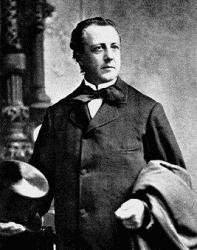
Charles C. Converse

1832 - 1918 Person Name: Charles Converse Topics: Ordinary Time Week 21 Composer of "CONVERSE" in Hymns and Devotions for Daily Worship Pseudonyms: Clare, Lester Vesé, Nevers, Karl Re­den, Revons ================================= Charles Crozat Converse LLD USA 1832-1918. Born in Warren, MA, he went to Leipzig, Germany to study law and philosophy, as well as music theory and composition under Moritz Hauptmann, Friedrich Richter, and Louis Plaidy at the Leipzig Conservatory. He also met Franz Liszt and Louis Spohr. He became an author, composer, arranger and editor. He returned to the states in 1859 and graduated from the Albany, NY, Law School two years later. He married Lida Lewis. From 1875 he practiced law in Erie, PA, and also was put in charge of the Burdetta Organ Company. He composed hymn tunes and other works. He was offered a DM degree for his Psalm 126 cantata, but he declined the offer. In 1895 Rutherford College honored him with a LLD degree. He spent his last years in Highwood, NJ, where he died. He published “New method for the guitar”, “Musical bouquet”, “The 126th Psalm”, “Sweet singer”, “Church singer”, “Sayings of Sages” between 1855 and 1863. he also wrote the “Turkish battle polka” and “Rock beside the sea” ballad, and “The anthem book of the Episcopal Methodist Church”. John Perry

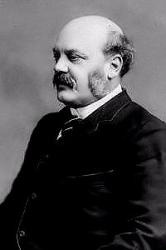
A. L. Peace

1844 - 1912 Person Name: Albert L. Peace Topics: Ordinary Time Week 11 Composer of "ST. MARGARET" in Hymns and Devotions for Daily Worship Albert Lister Peace DMus United Kingdom 1844-1912. Born at Huddersfield, Yorkshire, England, son of a warehouseman and woolstapler, he was extremely gifted as a musician, largely self-taught, playing the organ at Holmfirth Parish Church near Huddersfield at age nine. He married Margaret Martin Steel Gilchrist, and they had three children: Lister, Archibald, and Margaret. In 1865 he was appointed organist of Trinity Congregational Church in Glasgow, Scotland. He obtained his doctorate degree from the University of Oxford in 1875. He became organist at Glasgow Cathedral in 1879. In 1897 he succeeded William Best as organist at St George’s Hall, Liverpool. In later years he was in much demand to play the organ in recitals. He did so at Canterbury Cathedral (1886), Victoria Hall, Hanley, Stoke-on-Trent (1888), and Newcastle Cathedral (1891). He composed orchestrations, sonatas, cantatas, and concert and church service anthems. He was an arranger, author, and editor. He died at Blundelsands, Liverpool, England. John Perry

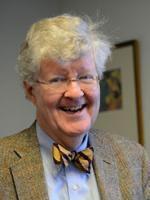
Thomas H. Troeger

1945 - 2022 Person Name: Thomas H. Troeger, b. 1945 Topics: Ordinary Time, Twenty-Second Sunday B Author of "As a Chalice Cast of Gold" in Worship (4th ed.) Thomas Troeger (1945-2022), professor of Christian communication at Yale Divinity school, was a well known preacher, poet, and musician. He was a fellow of Silliman College, held a B.A. from Yale University; B.D. Colgate Rochester Divinity School; S.T. D. Dickinson College, and was awarded an honorary D.D. from Virginia Theological Seminary. He was ordained in the Presbyterian Church in 1970 and the Episcopal Church in 1999, and remained dually aligned with both traditions. Troerger led conferences and lectures in worship and preaching throughout North America, as well as in Denmark, Holland, Australia, Japan, and Africa. He served as national chaplain to the American Guild of Organists, and for at least three years he hosted the Season of Worship broadcast for Cokesbury. He was president of the Academy of Homiletics as well as Societas Homiletica. He had, as of 2009, written 22 books in the areas of preaching, poetry, hymnody, and worship. Many of his hymn texts are found in New Hymns for the Lectionary (Oxford, 1992), and God, You Made All Things for Singing (Oxford, 2009). Laura de Jong

R. M. McIntosh

1836 - 1889 Person Name: Rigdon M. McIntosh Topics: Ordinary Time Week 26 Arranger of "PROMISED LAND" in Hymns and Devotions for Daily Worship Used Pseudonym: Robert M. McIntosh ========== Rigdon (Robert) McCoy McIntosh USA 1836-1899 Born at Maury County, TN, into a farming family, he attended Jackson College in Columbia, TN, graduating in 1854. He studied music under Asa Everett in Richmond, VA, and became a traveling singing school teacher. He also served briefly in the Civil War. He wrote several hymns during this period of his life. In 1860 he married Sarah McGlasson, and they had a daughter, Loulie Everett. In 1875 he was appointed head of the Vanderbilt University Music Department in Nashville, TN. In 1877 he joined the faculty of Emory College, Oxford, GA. In 1895 he left Emory College to devote his time to the R M McIntosh Publishing Company. He also served as music editor of the Methodist Episcopal Church South Publishing House for over 30 years. His song book publications include: “Good news” (1876), “Light & life” (1881), “Prayer & praise” (1883), “New life” (1879), “New life #2” (1886), and “Songs of service” (1896). He died in Atlanta, GA. John Perry

Thomas Olivers

1725 - 1799 Person Name: Thomas Olivers, 1725-1799 Topics: Ordinary Time 32, Year C Paraphraser of "The God of Abraham Praise" in Worship (3rd ed.) Thomas Olivers was born in Tregonan, Montgomeryshire, in 1725. His youth was one of profligacy, but under the ministry of Whitefield, he was led to a change of life. He was for a time apprenticed to a shoemaker, and followed his trade in several places. In 1763, John Wesley engaged him as an assistant; and for twenty-five years he performed the duties of an itinerant ministry. During the latter portion of his life he was dependent on a pension granted him by the Wesleyan Conference. He died in 1799. --Annotations of the Hymnal, Charles Hutchins, M.A., 1872. ================== Olivers, Thomas, was born at Tregynon, near Newtown, Montgomeryshire, in 1725. His father's death, when the son was only four years of age, followed by that of the mother shortly afterwards, caused him to be passed on to the care of one relative after another, by whom he was brought up in a somewhat careless manner, and with little education. He was apprenticed to a shoemaker. His youth was one of great ungodliness, through which at the age of 18 he was compelled to leave his native place. He journeyed to Shrewsbury, Wrexham, and Bristol, miserably poor and very wretched. At Bristol he heard G. Whitefield preach from the text "Is not this a brand plucked out of the fire?" That sermon turned the whole current of his life, and he became a decided Christian. His intention at the first was to join the followers of Whitefield, but being discouraged from doing so by one of Whitefield's preachers, he subsequently joined the Methodist Society at Bradford-on-Avon. At that town, where he purposed carrying on his business of shoemaking, he met John Wesley, who, recognising in him both ability and zeal, engaged him as one of his preachers. Olivers joined Wesley at once, and proceeded as an evangelist to Cornwall. This was on Oct. 1, 1753. He continued his work till his death, which took place suddenly in London, in March 1799. He was buried in Wesley's tomb in the City Road Chapel burying ground, London. Olivers was for some time co-editor with J. Wesley of the Arminian Magazine, but his lack of education unfitted him for the work. As the author of the tune Helmsley, and of the hymn “The God of Abraham praise," he is widely known. He also wrote “Come Immortal King of glory;" and "O Thou God of my salvation," whilst residing at Chester; and an Elegy on the death of John Wesley. His hymns and the Elegy were reprinted (with a Memoir by the Rev. J. Kirk) by D. Sedgwick, in 1868. --John Julian, Dictionary of Hymnology (1907)

Aurelius Clemens Prudentius

348 - 410 Topics: Doxologies Author of "Of the Father's Love Begotten" Marcus Aurelius Clemens Prudentius, "The Christian Pindar" was born in northern Spain, a magistrate whose religious convictions came late in life. His subsequent sacred poems were literary and personal, not, like those of St. Ambrose, designed for singing. Selections from them soon entered the Mozarabic rite, however, and have since remained exquisite treasures of the Western churches. His Cathemerinon liber, Peristephanon, and Psychomachia were among the most widely read books of the Middle Ages. A concordance to his works was published by the Medieval Academy of America in 1932. There is a considerable literature on his works. --The Hymnal 1940 Companion ============= Prudentius, Aurelius Clemens , with the occasional prefix of Marcus (cf. Migne, vol. lix. p. 593, and Dressel, p. ii. n), is the name of the most prominent and most prolific author of sacred Latin poetry in its earliest days. Of the writer himself we know nothing, or next to nothing, beyond what he has himself told us in a short introduction in verse to his works. From that source we learn that he was a Spaniard, of good family evidently, and that he was born A.D. 348 somewhere in the north of Spain, either at Saragossa, Tarragona, or Calahorra, but at which is left uncertain, by his applying the same expression to all, which if applied only to one would have fixed his place of birth. After receiving a good education befitting his social status he applied himself for some years to practising as a pleader in the local courts of law, until he received promotion to a judgeship in two cities successively:— "Bis legum moderanrine Frenos nobilium reximus urbium Jus civile bonis reddidimus, terruimus reos;" and afterwards to a post of still higher authority: "Tandem militiae gradu Evectum pietas principis extulit." Archbishop Trench considers this last to have been "a high military appointment at court," and such the poet's own words would seem to describe; but it may well be doubted whether a civilian and a lawyer would be eligible for such employment; in which case we may adopt the solution of the difficulty offered in the Prolegomena to our author's works (Migne, vol. lix. p. 601):— "Evectus indeest ad superiorem rnilitia? gradum, nimirum militia? civil is, palatinae, aut praesidialis, non bellicae, castrensis, aut cohortalis; nam ii qui officiis jure consultorum praesidum, rectorum et similium funguntur, vulgo in cod. Theod. militare et ad superiores militias ascendere dicuntur." It was after this lengthened experience at a comparatively early age of positions of trust and power that Prudentius, conscience-smitten on account of the follies and worldliness that had marked his youth and earlier manhood, determined to throw up all his secular employments, and devote the remainder of his life to advancing the interests of Christ's Church by the power of his pen rather than that of his purse and personal position. Accordingly we find that he retired in his 57th year into poverty and private life, and began that remarkable succession of sacred poems upon which his fame now entirely rests. We have no reason however to regard him as another St. Augustine, rescued from the "wretchedness of most unclean living" by this flight from the temptations and engrossing cares of official life into the calm seclusion of a wholly devotional leisure. He had probably rather learnt from sad experience the emptiness and vanity for an immortal soul of the surroundings of even the high places of this world. As he himself expresses it:— "Numquid talia proderunt Carnis post obitum vel bona, vel mala, Cum jam, quicquid id est, quod fueram, mors aboleverit?" and sought, at the cost of all that the world holds dear, those good things which God hath prepared for them that love Him. Beyond the fact of his retirement from the world in this way, and the fruits which it produced in the shape of his voluminous contributions to sacred poetry, we have no further information about our author. To judge from the amount he wrote, his life must have been extended many years after he began his new career, but how long his life was or where he died we are not told. Probably he died circa 413. His works are:— (1) Liber Cathemerinon. "Christian Day, as we may call it" W. S. Lilly, "Chapters in European History," vol. i. p. 208). (2) Liber Peristephanon. "Martyrs' Garlands" (id.). (3) Apotheosis. A work on the Divine Nature, or the Deification of Human Nature in Christ. (4) Hamartigenia. A treatise on the Origin of Sin, directed against the Marcionites. (5) Psychomachia or "The Spiritual Combat"-—an allegorical work. (6) Libri contra Symmachum. A controversial work against the restoration in the Senate House at Rome of the altar of Victory which Gratian had removed. Symmachus had petitioned Valentinian II. for its restoration in 384, but the influence of St. Ambrose had prevailed against him at that time. In 392 the altar was restored, but removed again by Theodosius in 394. After the death of the latter the attempt to restore it was renewed by Arcadius and Honorius, and it was at that time that Prudentius wrote his first book. The second (for there are two) was written in 405. Fague considers that the first may date in 395. (7) The Dittochseon = the double food or double Testament, is a wordy collection of 49 sets of four verses each, on Old and New Testament scenes. Of these different works the most important are the first two, and it is from them that the Liturgical hymns enumerated below have been chiefly compiled. The general character of Prudentius's writings it is not easy fairly to estimate, and to judge by the wholesale laudation he obtains from some of his critics, and the equally unsparing censure of others, his judges have so found it. In venturing upon any opinion upon such a subject, the reader must bear in mind the peculiar position in which the period at which he was writing found the poet. The poetry of classical Rome in all its exact beauty of form had long passed its meridian, and was being replaced by a style which was yet in its infancy, but which burst forth into new life and beauty in the hands of the Mediaeval hymnologists. Prudentius wrote before rhyming Latin verse was thought of, but after attention had ceased to be given to quantities. Under such circumstances it were vain to look for very finished work from him, and such certainly we do not find. But amidst a good deal of what one must confess is tasteless verbiage or clumsy rhetorical ornament-—however varied the metres he employs, numbering some 17—-there are also passages to be found, not unfrequently, of dramatic vigour and noble expression, which may well hold their own with the more musical utterances of a later date. He writes as a man intensely in earnest, and we may gather much from his writings concerning the points of conduct which were deemed the most important in Christian living at a time when a great portion of mankind were still the victims or slaves of a morality which, heathen at the best, was lowered and corrupted the more as the universality of its influence was more and more successfully challenged by the spread of the Gospel of Christ. If, there¬fore, we can scarcely go as far in our author's praise as Barth—-much given to lavish commendation—-who describes him as "Poeta eximius eruditissimus et sanctissimus scriptor; nemo divinius de rebus Christianis unquam scripsit"; or as Bentley—-not given to praise--who calls him the "Horace and Virgil of the Christians," we shall be as loath, considering under what circumstances he wrote, to carp at his style as not being formed on the best ancient models but as confessedly impure; feeling with Archbishop Trench that it is his merit that "whether consciously or unconsciously, he acted on the principle that the new life claimed new forms in which to manifest itself; that he did not shrink from helping forward that great transformation of the Latin language, which it needed to undergo, now that it should be the vehicle of truths which, were all together novel to it." (Sacred Latin Poetry, 1874, p. 121.) The reader will find so exhaustive an account of the various writings of Prudentius in the account given of him and them in Smith and Wace's Dictionary of Christian Biography, and Smith's Dictionary of Greek and Roman Biography, that it is only necessary in this work to refer very briefly to them as above. The poems have been constantly reprinted and re-edited, till the editor who produced the best edition we have of them, Albert Dressel (Leipsic, 1860), is able to say that his is the sixty-third. The use made of Prudentius's poems in the ancient Breviaries and Hymnaries was very extensive. In the form of centos stanzas and lines wore compiled and used as hymns; and it is mainly from these centos, and not from the original poems, that the translations into English were made. Daniel, i., Nos. 103-115, gives 13 genuine hymns as having been in use for "Morning," "Christmas," "Epiphany," "Lent," "Easter," "Transfiguration," "Burial," &c, in the older Breviaries. ….Many more which were used in like manner have been translated into English. When to these are added the hymns and those which have not been translated into English, we realise the position and power of Prudentius in the hymnody of the Church. [Rev. Digby S. Wrangham, M.A.] --John Julian, Dictionary of Hymnology (1907) ============== Prudentius, A. C, p. 915, ii. Two somewhat full versions of Prudentius are: (1) The Cathemerinon and other Poems of Aurelius Prudentius Clemens in English Verse, Lond., Rivington, 1845; and (2) Translations from Prudentius. By Francis St. John Thackeray, M.A.. F.S.A. Lond., Bell & Sons, 1890. --John Julian, Dictionary of Hymnology, Appendix, Part II (1907)

Richard Proulx

1937 - 2010 Person Name: Richard Proulx, b. 1937 Topics: Ordinary Time 12, Year B; Ordinary Time 19, Year A Harmonizer of "FOUNDATIN" in Worship (3rd ed.) Richard Proulx (b. St. Paul, MN, April 3, 1937; d. Chicago, IL, February 18, 2010). A composer, conductor, and teacher, Proulx was director of music at the Holy Name Cathedral in Chicago, Illinois (1980-1997); before that he was organist and choirmaster at St. Thomas' Episcopal Church in Seattle, Washington. He contributed his expertise to the Roman Catholic Worship III (1986), The Episcopal Hymnal 1982, The United Methodist Hymnal (1989), and the ecumenical A New Hymnal for Colleges and Schools (1992). He was educated at the University of Minnesota, MacPhail College of Music in Minneapolis, Minnesota, St. John's Abbey in Collegeville, Minnesota, and the Royal School of Church Music in England. He composed more than 250 works. Bert Polman

Frances Elizabeth Cox

1812 - 1897 Person Name: Frances E. Cox, 1812-1897 Topics: 29th Sunday in Ordinary Time Year A; 29th Sunday in Ordinary Time Year C Translator of "Sing Praise to God Who Reigns Above" in RitualSong Cox, Frances Elizabeth, daughter of Mr. George V. Cox, born at Oxford, is well known as a successful translator of hymns from the German. Her translations were published as Sacred Hymns from the German, London, Pickering. The 1st edition, pub. 1841, contained 49 translations printed with the original text, together with biographical notes on the German authors. In the 2nd edition, 1864, Hymns from the German, London, Rivingtons, the translations were increased to 56, those of 1841 being revised, and with additional notes. The 56 translations were composed of 27 from the 1st ed. (22 being omitted) and 29 which were new. The best known of her translations are "Jesus lives! no longer [thy terrors] now" ; and ”Who are these like stars appearing ?" A few other translations and original hymns have been contributed by Miss Cox to the magazines; but they have not been gathered together into a volume. -- John Julian, Dictionary of Hymnology (1907)

Synesius of Cyrene, Bishop of Ptolemais

370 - 430 Person Name: Synesius of Cyrene Topics: Ordinary Time Week 24 Author of "Lord Jesus, Think on Me" in Hymns and Devotions for Daily Worship Synesius, a native of Cyrene, born circa 375. His descent was illustrious. His pedigree extended through seventeen centuries, and in the words of Gibbon, "could not be equalled in the history of mankind." He became distinguished for his eloquence and philosophy, and as a statesman and patriot he took a noble stand. When the Goths were threatening his country he went to the court of Arcadius, and for three years tried to rouse it to the dangers that were coming on the empire. But Gibbon says, ”The court of Arcadius indulged the zeal, applauded the eloquence, and neglected the advice of Synesius." In 410 he was made Bishop of Ptolemaïs, but much against his will. He died in 430. Synesius's opinions have been variously estimated. That he was imbued with the Neo-Platonic philosophy there is no doubt but that he was a semi-Christian, as alleged by Mosheim or that he denied the doctrine of the Resurrection as stated directly by Gibbon [see Decline and Fall, vol. ii.]; and indirectly by Bingham [see Christian Antiq., Lond., 1843, i., pp. 464-5] is very doubtful. Mr. Chatfield, who has translated his Odes in his Songs and Hymns of the Greek Christian Poets, 1876, contends that his tenth Ode "Lord Jesus, think on me," proves that he was not a semi-Christian, and that he held the doctrine of the Resurrection. The first is clear: but the second is open to doubt. He certainly prays to the Redeemer: but there is nothing in the hymn to shew that he looked upon the Redeemer as being clothed in His risen body. This tenth ode is the only Ode of Synesius, which has come into common use. The original Odes are found in the Anth. Graeca Carm. Christ, 1871, p. 2 seq., and Mr. Chatfield's trs. in his Songs, &c, 1876. Synesius's Odes have also been translation by Alan Stevenson, and included in his The Ten Hymns of Synesius, Bishop of Tyreore, A.D. 410 in English Verse. And some Occasional Pieces by Alan Stevenson, LL.B. Printed for Private Circulation, 1865. -- Excerpts from John Julian, Dictionary of Hymnology (1907)

Pages


Export as CSV
It looks like you are using an ad-blocker. Ad revenue helps keep us running. Please consider white-listing Hymnary.org or getting Hymnary Pro to eliminate ads entirely and help support Hymnary.org.