You help make Hymnary.org possible. More than 10 million people from 200+ countries found hymns, liturgical resources and encouragement on Hymnary.org in 2025, including you. Every visit affirms the global impact of this ministry.

If Hymnary has been meaningful to you this year, would you take a moment today to help sustain it? A gift of any size—paired with a note of encouragement if you wish—directly supports the server costs, research work and curation that keep this resource freely available to the world.

Give securely online today, or mail a check to:
Hymnary.org
Calvin University
3201 Burton Street SE
Grand Rapids, MI 49546

Thank you for your partnership, and may the hope of Advent fill your heart.

Person Results

Topics:confession and absolution
In:people

Planning worship? Check out our sister site, ZeteoSearch.org, for 20+ additional resources related to your search.
Showing 11 - 20 of 74Results Per Page: 102050

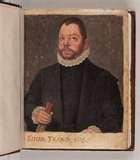
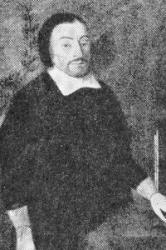
Johann Franck

1618 - 1677 Person Name: Johann Franck, 1618-77 Topics: Confession and Absolution; Confession and Absolution Author of "Lord, to You I Make Confession" in Christian Worship (1993) Johann Franck (b. Guben, Brandenburg, Germany, 1618; d. Guben, 1677) was a law student at the University of Köningsberg and practiced law during the Thirty Years' War. He held several positions in civil service, including councillor and mayor of Guben. A significant poet, second only to Paul Gerhardt in his day, Franck wrote some 110 hymns, many of which were published by his friend Johann Crüger in various editions of the Praxis Pietatis melica. All were included in the first part of Franck’s Teutsche Gedichte bestehend im geistliche Sion (1672). Bert Polman ============= Franck, Johann, son of Johann Franck, advocate and councillor at Guben, Brandenburg, was born at Guben, June 1, 1618. After his father's death, in 1620, his uncle by marriage, the Town Judge, Adam Tielckau, adopted him and sent him for his education to the schools at Guben, Cottbus, Stettin and Thorn. On June 28, 1638, he matriculated as a student of law at the University of Königsberg, the only German university left undisturbed by the Thirty Years' War. Here his religious spirit, his love of nature, and his friendship with such men as Simon Dach and Heinrich Held, preserved him from sharing in the excesses of his fellow students. He returned to Guben at Easter, 1640, at the urgent request of his mother, who wished to have him near her in those times of war during which Guben frequently suffered from the presence of both Swedish and Saxon troops. After his return from Prague, May, 1645, he commenced practice as a lawyer. In 1648 he became a burgess and councillor, in 1661 burgomaster, and in 1671 was appointed the deputy from Guben to the Landtag (Diet) of Lower Lusatia. He died at Guben, June 18, 1677; and on the bicentenary of his death, June 18, 1877, a monumental tablet to his memory was affixed to the outer wall of the Stadtkirche at Guben (Koch, iii. 378-385; Allgemeine Deutsche Biographie, vii. 211-212; the two works by Dr. Hugo Jentsch of Guben, Johann Franck, 1877, and Die Abfassungszeit der geistlichen Lieder Johann Franck's, 1876). Of Franck's secular poems those before 1649 are much the best; his later productions becoming more and more affected and artificial, long-winded and full of classical allusions, and much inferior to those of Dach or Opitz. As a hymn writer he holds a high rank and is distinguished for unfeigned and firm faith, deep earnestness, finished form, and noble, pithy, simplicity of expression. In his hymns we miss the objectivity and congregational character of the older German hymns, and notice a more personal, individual tone; especially the longing for the inward and mystical union of Christ with the soul as in his "Jesus, meine Freude." He stands in close relationship with Gerhardt, sometimes more soaring and occasionally more profound, but neither on the whole so natural nor so suited for popular comprehension or Church use. His hymns appeared mostly in the works of his friends Weichmann, Crüger and Peter. They were collected in his Geistliches Sion, Guben, 1674, to the number of 110; and of these the 57 hymns (the other 53 being psalm versions of no great merit) were reprinted with a biographical preface by Dr. J. L. Pasig as Johann Franck's Geistliche Lieder, Grimma, 1846. Two of those translated into English are from the Latin of J. Campanus (q. v.). Four other hymns are annotated under their own first lines:—"Brunquell aller Güter"; "Dreieinigkeit der Gottheit wahrer Spiegel"; "Jesu, meine Freude"; "Schmücke dich, o liebe Secle." The rest are:— i. Hymns in English common use: -- i. Erweitert eure Pforten . [Advent]. Founded on Psalm xxiv. 7-10. First published in C. Peter's Andachts-Zymbeln, Freiberg, 1655, p. 25, in 7 stanzas of 8 lines; repeated 1674, p. 3, and 1846, p. 3, as above. Included in the 1688 and later editions of Crüger's Praxis pietatis, in Bollhagen's Gesang-Buch, 1736, &c. The only translation in common use is:—- Unfold your gates and open, a translation of st. 1, 3, 6, by A. T. Russell, as No. 30 in his Hymns & Psalms, 1851; repeated altered as No. 30 in Kennedy, 1863, and thus as No. 102 in Holy Song, 1869. ii. Herr Gott dich loben wir, Regier. Thanksgiving for Peace. Evidently written as a thanksgiving for the conclusion of the Thirty Years' War, by the Peace of Westphalia, Oct. 24, 1648. First published in the Crüger-Runge Gesang-Buch, Berlin, 1653, No. 306, in 9 st. of 8 l., as the first of the "Hymns of Thanksgiving for Peace attained"; and repeated 1674, p. 182, and 1846, p. 77, as above. Included in Crüger's Praxis, 1653, and many later collections, and, as No. 591, in the Unverfälschter Liedersegen, 1851. The only translation in common use is:— Lord God, we worship Thee, a very good version of st. 2, 3, 6, 8, by Miss Winkworth in her Chorale Book for England, 1863, No. 183. Repeated in full in the Society for Promoting Christian Knowledge Church Hymns, 1871; the Hymnary, 1872; the Psalmist, 1878; and in America in the Pennsylvania Lutheran Church Book, 1868. In the American Protestant Episcopal Collection, 1871; the Hymns & Songs of Praise, N. Y. 1874; and the Ohio Lutheran Hymnal, 1880, the translation of stanza 8 is omitted. iii. Herr ich habe missgehandelt. Lent. Of this fine hymn of penitence stanza i. appeared as No. 19 in Cruger's Geistliche Kirchenmelodien , Leipzig, 1649. The full form in 8 stanzas of 6 lines is No. 41 in the Crüger-Runge Gesang-Buch, Berlin, 1653, entitled "For the forgiveness of sins," repeated 1674, p. 39, and 1846, p. 37, as above. Included in Crüger's Praxis, 1653, and others, and in the Unverfälschter Liedersegen, 1851. The only translation in common use is:— Lord, to Thee I make confession, a very good translation, omitting st. 4, 5, 6, by Miss Winkworth in her Chorale Book for England, 1863, No. 44, repeated in the Appendix to the Hymnal for St. John's, Aberdeen, 1865-1870; and in the Pennsylvania Lutheran Ch. Book, 1868; Evangelical Hymnal, N. Y., 1880; Ohio Lutheran Hymnal, 1880. Another translation is: "Lord, how oft I have offended," by N. L. Frothingham, 1870, p. 177. iv. Herr Jesu, Licht der Heiden. Presentation in the Temple. Founded on the account in St. Luke ii., and probably the finest hymn on the subject. Dr. Jentsch, 1876, p. 9, thinks it was written before Dec. 8, 1669, as C. Peter, who died then, left a melody for it. We have not found the full text earlier than 1674, as above, p. 10, in 6 stanzas of 8 lines, entitled "On the Festival of the Purification of Mary" (1846, p. 10). Included in the 1688 and later editions of Crüger's Praxis, and in the Unverfälschter Liedersegen, 1851, No. 197. The translations in common use are:— 1. Light of the Gentile world , a translation, omitting st. 6, by Miss Winkworth in the first service of her Lyra Germanica, 1855, p. 193 (ed. 1876, p. 195), and thence as No. 147 in the Pennsylvania Lutheran Hymn Book, 1865. This version is in S.M. Double. 2. Light of the Gentile Nations, a good translation, omitting st. 6, by Miss Winkworth in her Chorale Book for England, 1863, No. 80. Repeated in Dr. Thomas's Augustine Hymn Book, 1866, and in America in the Pennsylvania Lutheran Church Book, 1868, and the Ohio Lutheran Hymnal, 1880. ii. Hymns not in English common use: v. Du geballtes Weltgebäude. Christ above all earthly things. Stanza i. in Cruger's Kirchenmelodien, 1649, No. 116. The full text (beginning "Du o schönes) is No. 239 in the Crüger-Runge Gesang-Buch, 1653, in 8 stanzas, entitled "Longing after Eternal Life." Repeated, 1674, p. 194, and 1846, p. 60, as above. The translations are: (1) "Let who will in thee rejoice," by Miss Winkworth, 1855, p. 180 (1876, p. 182). (2) "O beautiful abode of earth," by Miss Warner, 1858 (1861, p. 233). (3) "Thou, O fair Creation-building," by N. L. Frothingham, 1870, p. 232. vi. Unsre müden Augenlieder. Evening. Probably written while a student at Königsberg. First published in J. Weichmann's Sorgen-lägerin, Königsberg, 1648, Pt. iii., No. 4, in 7 st.; repeated 1674, p. 213, and 1846, p. 91, as above. The only translation is by H. J. Buckoll, 1842, p. 79, beginning with st. vi., "Ever, Lord, on Thee relying." [Rev. James Mearns, M.A.] --John Julian, Dictionary of Hymnology (1907)

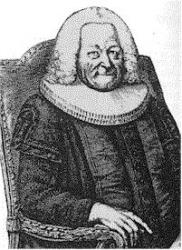
Erdmann Neumeister

1671 - 1756 Person Name: Erdmann Neumeister, 1671-1756 Topics: Confession and Absolution; Confession and Absolution Author of "Jesus Sinners Does Receive" in Christian Worship (1993) Neumeister, Erdmann, son of Johann Neumeister, schoolmaster, organist, &c, at Uechteritz, near Weissenfels, was born at Uechteritz, May 12, 1671. He entered the University of Leipzig in 1689, graduated M.A. in 1695, and was then for some time University lecturer. In June 1697 he was appointed assistant pastor at Bibra, and in 1698 pastor there, and assistant superintendent of the Eckartsberg district. He was then, in 1704, called by Duke Johann Georg, to Weissenfels as tutor to his only daughter, and assistant court preacher, and shortly afterwards court preacher. After the death of this princess, Neumeister was invited by the Duke's sister (she had married Count Erdmann II. von Promnitz) to Sorau, where on New Year's Day, 1706, he entered on the offices of senior court-preacher, consistorialrath, and superintendent. Finally, in 1715, he accepted the appointment of Pastor of St. James's Church at Hamburg, entering on his duties there Sept. 29, 1715. He died at Hamburg, Aug. 18 (not 28), 1756 (Bode, p. 120; Allgemeine Deutsche Biographie. xxiii. 543, &c). Neumeister was well known in his day as an earnest and eloquent preacher, as a vehement upholder of High Lutheranism, and as a keen controversialist against the Pietists and the Moravians by means of the pulpit as well as the press. His underlying motive was doubtless to preserve the simplicity of the faith from the subjective novelties of the period. He was the author of one of the earliest historico-critical works on German Poetry (1695"); and of many Cantatas for use in church, of which form of Fervice he may be regarded as the originator. He had begun to write hymns during his student days, and in later years their composition was a favourite Sunday employment. He takes high rank among the German hymn-writers of the 18th century, not only for the number of his productions (over 650), but also for their abiding value. A number are founded on well-known hymns of the 16th and 17th century; and many of his later productions are inferior. Of his earlier efforts many soon took and still hold their place as standard German hymns; and deservedly so, for their simple, musical style, scripturalness, poetic fervour, depth of faith and Christian experience, and for their clear-cut sayings which have almost passed into proverbial use. They appeared principally in the following works:— 1. DerZugang zum Gnadenstuhle Jesu Christo. This was a devotional manual of preparation for Holy Communion, with interspersed hymns. The first edition appeared at Weissenfels in 1705, the 2nd 1707, 3rd 1712, 4th 1715. The earliest edition of which precise details are available is the 5th edition 1717, from which Wetzel, ii. 231, quotes the first lines of all the 77 hymns (the page references to the earlier eds. given by Fischer appear to be conjectural); and the earliest ed. available for collation was the 7th edition, 1724 [Göttingen University Library]. In the later editions many hymns are repeated from his other works. 2. Fünffache Kirchen-Andachten, Leipzig 1716 [Wernigerode Library], a collected edition of his Cantatas (Wernigerode Library has the 1704 ed. of his Geistliche Cantaten), and similar productions. A second set (Fortgesetzte) appeared at Hamburg in 1726 [Hamburg Town Library]; and a third set (Dritter Theil) at Hamburg in 1752 [Hamburg Town Library]. 3. Evangelischer Nachklang, Hamburg, 1718 [Hamburg Town Library], with 86 hymns on the Gospels for Sundays and Festivals, originally written to form conclusions to his sermons. A second set of 86 appeared as the Anderer Theil at Hamburg, 1729 [Hamburg Town Library]. Those of Neumeister’s hymns which have passed into English are:— i. Gott verlasst die Seinen nioht, Ei so fahret hin ihr Sorgen. Cross and Consolation. In his Evangelical Nachklang, 1718, No. 71, p. 149, in 5 stanzas of 8 lines, appointed for the 25th Sunday after Trinity, in Burg's Gesang-Buch, Breslau, 1746, it appears in two forms. No. 127 is the original with alterations, and arranged in 11 stanzas of 4 lines, with the refrain "Gott verlässt die Seinen nicht." No. 128 is a form in 3 stanzas of 6 lines, rewritten to the melody, "Jesus meine Zuversicht", and beginning with stanza iii. line 5, of the original, viz. "Gott verlässt die Seinen nicht, Nach dem Seufzen, nach dem Weinen." ii. Jesu, grosser Wunderstern. Epiphany. In his Kirchen-Andachten, 1716, p. 646, in 4 st. of 6 1., with the motto, Auf ihr Christen insgemein! Stellt euch mit den Weisen ein. Jesus muss geschenket sein." It is a hymn on the Gifts of the Magi, and the spiritual sense in which we can offer the same—-the Gold of Faith, the Frankincense of Prayer, the Myrrh of Penitence. In the Berlin Geistliche Lieder, ed. 1863, No. 208. Translated as:— 1. Jesus! great and wondrous star. A good and full translation by E. Cronenwett, as No. 52 in the Ohio Lutheran Hymnal, 1880. iii. Jesus nimmt die Sünder an! Saget doch dies Trostwort Allen. Lent. The best hymn of its author. First published in his Evangelical Nachklang, 1718, No. 47, p. 96, in 8 stanzas of 6 lines, founded on the Gospel for the 3rd Sunday after Trinity (St. Luke xv. 1-7), and also suggested by St. Matt. xi. 28, and Isaiah i. 18. It has come into very extensive German use, especially at Mission services at home and abroad. In the Berlin Geistliche Lieder, ed. 1863, No. 110. The translations are:— 1. This man sinners doth receive. In full by Dr. H. Mills, in his Horae Germanicae, 1845 (1856, p. 73). His translations of stanzas i., ii., iv., v. are included in the American Lutheran General Synod's Collection, 1850-52, No. 844. 2. Jesus sinners doth receive! Spread the word of consolation. A good translation of stanzas i., iii.—v., by A. T. Russell, as No. 47 in the Dalston Hospital Hymn Book, 1848, repeated in his own Psalms & Hymns, 1851. 3. Jesus is the sinner's Friend. A good and full translation by Miss Dunn in her Hymns from the German, 1857, p. 82. Her translations of stanzas i., ii., iv. are No. 46 in Dr. Pagenstecher's Collection, 1864. 4. Sinners Jesus will receive. A full and good translation by Mrs. Bevan in her Songs of Eternal Life, 1858, p. 23. Repeated in full in L. Rehfuess's Church at Sea, 1868, p. 50, and, abridged, in the English Presbyterian Psalms & Hymns, 1867, and Flett's Collection, Paisley, 1871. In Dr. W. F. Stevenson's Hymns for Church & Home, 1873, stanzas i., v., vi., vii. are included, altered, and beginning "Jesus sinners will receive; Say this word of grace to all;" and this form is also in the Baptist Hymnal, 1879. Other translations are :— (l) "My Jesus the sinner receives." By Miss Warner, 1869, p. 51. (2) "Jesus sinners doth receive! Tell to all." By R. Massie in the Day of Rest, 1811. The hymn "Jesus sinners will receive, When they fall," by E. Cronenwett, in 5 stanzas, in the Ohio Lutheran Hymnal, 1880, is marked as a translation of Neumeister. It follows Neumeister in metre, but seems rather a paraphrase of the hymn "Jesus nimmt die Sünder an, Drum so will ich nicht verzagen." This hymn is by Ludwig Heinrich Schlosser [b. Sept. 1, 1663, at Darmstadt; d. Aug. 18,1723, as pastor at Frankfurt am Main], and appeared in the Appendix to the Frankfurt ed., 1693, of Crüger's Praxis, and in his own Stilles Lob Gottes in dern geistlichen Zion, Frankfurt a. M , 1724 (see Wetzel, iv. 433; Kambach's Anthologie, vi p. xi., &c). In Burg's Gesang-Buch, Breslau, 1746, the Neumeister hymn is given as No. 1593 and marked as by G. G. Hofmann, and the Schlosser hymn as No. 1592 and marked as by Neumeister. Hence perhaps the confusion. Hymns not in English common use:--. iv. Bleib, Jesu, bleib bei mir. For the Dying. In his Evangelical Nachklang, 171S, No. 31, p. 64, in 7 st., entitled "For the Second Day of Easter." In the Berlin Geistliche Lieder, ed. 1863, No. 1434. Translated as "Jesus, near me still abide." By Miss Dunn, 1857, p. 117. v, Herr Jesu Christ, mein höchstes Gut. Love to Christ. One of his best and most popular hymns, apparently written for use at the Sunday celebration of Holy Communion in the castle at Weissenfels. It seems to have appeared in his Zugang, 1705 (Wetzel, ii. 232, cites it as in the 5th edition 1717. In the 8th ed. 1724, p. 17, entitled “Hymn of Consolation from Ps. lxxiii. 23-28 ), and is included in the Halle Stadt Gesang-Buch,1711, No. 524 in 6 st. In Freylinghausen, 1714, it begins "Herr Jesu Christ, mein Fleisch und Blut." In Porst's Gesang-Buch,ed. 1855, No. 546. The translations are (1) "All my desires are fix'd on Thee" (st. iii.). By P. H. Molther as pt. ot No. 401 in the Moravian Hymn Book 1801 (1886, No. 448). (2) "Lord Jesus Christ, my spirit's health." By Dr. H. Mills, 1845 (1856, p. 115). vi. Herr Jesu, meines Lebens Heil. Evening. Apparently in his Zugang, 1705 (Wetzel, ii. 232, as in ed. 1717. In ed. 1724, p. 284 in 10 st), and included in the Halle Stadt Gesang-Buch, 1711, No. 426. In Burg's Gesang-Buch, Breslau, 1746, No. 1844. Translated as (1) "Now I'll lie down and sleep in Thee"(st. vi.), as pt. of No. 750 in the Moravian Hymn Book, 1789 (1849, No. 1137). (2) "Lord Jesu! Thou my life's true health." By H. J. Buckoll, 1842, p. 92. vii. Ich bin bei allem Kummer stille. Trust in God. Included in the 5th ed. 1717 of his Zugang (Wetzel, ii. 232), and in the ed. 1724, p. 594, in 6 stanzas, founded on Ps. lxxvii. 11. In the Berlin Geistliche Lieder, ed. 1863, No. 911. It has been translated into English through the recast by J. S. Diterich "Herr, mache meine Seele stille," which is No. 169, in 7 stanzas, in the Berlin Gesang-Buch,1765 (Berlin Gesang-Buch, 1829, No. 599). Translated as "Lord, make my spirit still." By Miss Warner, 1869, p. 26. viii. Ich weiss dass mein Erlöser lebet. For the Dying. In his Evangelical Nachklang, 1718, No. 32, in 5 st., entitled "On the Third Day of Easter." In Bunsen's Allgemeine Gesang-Buch, 1846, No. 437, in 4 stanzas. Translated as "I know that my Redeemer liveth, And as He lives." A good translation from Bunsen in Reid's Praise Book, 1872. ix. Ob Menschen klug und weise sein. Spiritual Wisdom. In his Evangelical Nachklang, 1718, No. 12, p. 24, in 6 stanzas, for the 1st Sunday after Epiphany. In the Berlin Geistliche Lieder, ed. 1863. Translated as “Here many wise and prudent grow." By Dr. H. Mills, 1845 (1856, p. 109). x. So ist die Woche nun geschlossen. Saturday Evening. Apparently in his Zugang, 1705 (Wetzel, ii. 233, cites it as in ed. 1717. In the ed. 1724, p. 552, in 9 st. entitled "Hymn for the close of the Week"). In the Berlin Geistliche Lieder, ed. 1863. Translated as “Thou, Lord, Thy love art still bestowing." By H. J. Buckoll, 1842. xi. Wie Gott will, also will ich sagen. Trust in God. Wetzel ii. 214, cites this as in his Zugang, 1717 (ed. 1724, p. 570, in 8 stanzas). In the Berlin Geistliche Lieder, ed. 1863, No. 919. Translated as “As Thou wilt, my God! I ever say” By Miss Borthwick, in Hymns from the Land of Luther, 1858, p. 44 (1884, p. 166), and thence in Bishop Ryle's Collection 1860, No. 163. [Rev. James Mearns, M.A.] --John Julian, Dictionary of Hymnology (1907)

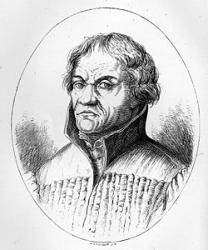
Angelus Silesius

1624 - 1677 Person Name: Johann Angelus Topics: Songs of Penance, Confession and Absolution Author (attributed to) of "Ich will von meiner Missethat" in Evangelisch-Lutherisches Gesang-Buch Pen name of Johann Scheffler ======================================= Angelus Silesius, born in Selisia, in 1624, was the son of a Polish nobleman, and his true name was John Scheffler; but he adopted the name Angelus from a Spanish mystic of the 16th century--John ab Angelis--and added the name Silesius, because of his own country. He studied medicine, and obtained his degree of M.D. at Padua. While physician to the Duke Sylvius Nimrod--from 1649 to 1652--he had contention with the Lutheran clergy, and in 1653 entered the Romish Church. Subsequently he was physician to the Emperor Ferdinand III., but at length entered the priesthood and retired to the Jesuit monastery of S. Matthias, in Breslau, where he died in 1677. His hymns were mostly written before he joined the Romish Church, and were intended for private devotion; some, however, have been very acceptable for public use. "Several of them are among the deepest and most tender in the German language, and breathe a glowing love to the Saviour." --Annotations of the Hymnal, Charles Hutchins, M.A. 1872. ================================================= Scheffler, Johann (Angelus Silesius), was born in 1624 at Breslau in Silesia. His father, Stanislaus Scheffler, was a member of the Polish nobility, but had been forced to leave his fatherland on account of his adherence to Lutheranism, and had then settled in Breslau. The son was thus educated as a strict Lutheran. After passing through the St. Elisabeth's Gymnasium at Breslau, he matriculated at the University of Strassburg, on May 4, 1643, as a student of medicine. In the next year he went to Leyden, and in 1647 to Padua, where he graduated PH. D. and M.D. on July 9, 1648. Thereafter he returned to Silesia, and, on Nov. 3, 1649, was appointed private physician, at Oels, to Duke Sylvius Nimrod of Württemberg-Oels. The Duke was a staunch Lutheran, and his court preacher, Christoph Freitag, administered the ecclesiastical affairs of the district according to the strictest Lutheran churchly orthodoxy. Scheffler, who in Hollaud had become acquainted with the writings of Jakob Böhme, and had become a personal friend of Abraham von Frankenberg, the editor of Böhme's works, soon found that the spiritual atmosphere of Oels did not suit him. His own leanings at this time were distinctly to Mysticism and Separatism. He was at no pains to conceal his sentiments, and withdrew himself from public worship, from confession, and from the Holy Communion. When he wished to publish his poems, and submitted them for this purpose to Freitag, he was refused permission to print them on the ground of their mystical tendencies. He resigned his post in the end of 1652, and went to Breslau. Here he became acquainted with the Jesuits, who in that place were earnest students of the mystical works of Tauler (q.v.), and through them was introduced to the study of the mediaeval mystics of the Roman Catholic Church. On June 12, 1653, he was formally received into the Roman Catholic communion, and at his confirmation on that day at St. Matthias's Church in Breslau, he took the name of Angelus, probably after a Spanish mystic of the 16th cent, named John ab Angelis.* On March 24, 1654, the Emperor Ferdinand III. conferred on him the title of Imperial Court Physician, but this title was purely honorary, and Scheffler remained still at Breslau. On Feb. 27,1661, he entered the order of St. Francis; on May 21, 1661, was ordained priest at Neisse in Silesia, and in 1664 was appointed Rath and Hofmarschall to his friend Sebastian von Rostock, the newly created Prince Bishop of Breslau. After the Bishop's death in 1671 Scheffler retired to the monastery of St. Matthias in Breslau, where he died July 9, 1677, from a wasting sickness, during which he used this characteristic prayer, "Jesus and Christ, God and Man, Bridegroom and Brother, Peace and Joy, Sweetness and Pleasure, Refuge and Redemption, Heaven and Earth, Eternity and Time, Love and All, receive my soul." Of Scheffler, as a Convert and as a Controversialist, not much need be said. He certainly became more Roman than the Romans; and in his more than 50 controversial tractates, shows little of the sweetness and repose for which some have thought that he left the Lutheran church. In his Ecclesiologia, published at Glatz in 1677 [British Museum has the 2nd edition, published at Oberammergau and Kempten in 1735], he collected 39 of these treatises, of which e.g. No. 34 is entitled, "The Lutheran and Calvinistic Idol of the Understanding exhibited, laid bare, as well as the Likeness of the True God. In which also, at the same time, the attacks aud objections of adversaries are repelled. 1 Cor. viii. 4, Idolum nihil est, an idol is nothing." At an early age Scheffler had begun to write poems, and some of these occasional pieces were printed in 1641 and 1642. His most famous non-hymnological work is his Geistreiche Sinn- und Schlussreime, &c, published at Vienna in 1657, but better known by the title prefixed in the 2nd edition published at Glatz in 1675, viz. the Cherubinischer Wandersmann, [Both eds. in the British Museum]…. Scheffler's latest poetical work was the Sinnliche Beschreibung der vier letzten Dinge, zu heilsamen Schröken und Auffmunterung aller Menschen inn Druck gegeben. Mit der himmlischen Procession vermehrt, &c. Schweidnitz, 1675. [British Museum]… Scheffler's most important hymnological work is his Heilige Seelenlust, oder geistliche Hirten-Lieder, der in ihren Jesum verliebten Psyche, gesungen von Johann Angelo Silesio, und von Herrn Georgio Josepho mit aussbündig schönen Melodeyen geziert, &c. Of this the first edition appeared at Breslau, apparently in 1657, in three books, with Hymns 1-123, and a fourth—-separately paged—-book, with 32 hymns, apparently also at Breslau, 1657. In the 2nd ed., pub. at Breslau in 1668, the paging and numbering are consecutive; and a fifth book is added, with Hymns 166-205. [Both eds. in Royal Library, Breslau; 2nd ed. in British Museum] The first three books form a cycle of hymns, principally on the person and work of Our Lord, arranged according to the Christian Year, from Advent to Whitsuntide, and seem mostly to have been written before Scheffler left the Lutheran church. Those of the fourth book were probably written 1653 to 1656, and those of the fifth book between 1656 and 1668. In the first three books he is most clearly under the influence of his predecessors. That is, so far as the style and form are concerned, he was greatly influenced by the Pastorals of the Nürnberg Pegnitz Shepherds, and of Friedrich von Spee (q.v.) ; and in the substance of his poems—their longings for mystical union with Christ, and their clinging love to the Saviour—he was influenced on the one side by Böhme, and on the other by the earnest inner religious life which he had found in Holland. In his later hymns the tone is more manly, and the defects and excesses of his earlier style have, in great measure, disappeared. Scheffler's hymns were gladly received by the Lutheran Church as a welcome addition to the store of "Jesus Hymns," but many long passed current as anonymous; the I. A., for Johann Angelus, being often interpreted as Incerti Autoris, and vice versa. Through the Nürnberg Gesang-Buch, 1676; Freylinghausen's Gesang-Buch 1704 and 1714; Porst's Gesang-Buch, 1713; and Burg's Gesang-Buch, Breslau, 1746, a large number came into use among the Lutherans, more indeed than among the Roman Catholics. They were great favourites among the Moravians, after Zinzendorf had included 79 of them in his Christ-Catholisches Singe-und Bet-Büchlen, 1727 ; and, unfortunately, preciscly the worst were selected for imitation, so that Scheffler has the doubtful honour of being the model of tli8 spiritual-fleshly productions which disfigured the Moravian hymn-books between 1740 and 1755. Judging Scheffler's hymns as a whole one must give them a very high place in German hymnody. Only a small proportion of the hymns bear a distinctively Roman Catholic character. Of the rest, after setting on one side those in which Christ is set forth as the Bridegroom of the soul, with an excessive use of the imagery of Canticles; and those disfigured by the mannerisms of the Pastoral School, there remain a large number which are hymns of the first rank. These finer hymns are the work of a true poet, almost perfect in style and in beauty of rhythm, concise and profound; the fruits indeed it may be said of Mysticism, but of Mysticism chastened and kept in bounds by deep reverence and by a true and fervent love to the Saviour. Scheffler holds a high place in the first rank of German sacred poets, and is much the finest of the Post-Reformation Roman Catholic hymn-writers. A number of Scheffler's hymns are translations from the Latin…which have passed into English, are as follows. i. Ach Gott, was hat vor Herrlichkeit. God's Majesty. First published as No. 110 in Bk. iii., 1657, of his Heilige Seelenlust , in 6 st. of 8 1., entitled, "She [the soul] rejoices herself on the glory of Jesus." In the Herrnhut Gesang-Buch, 1735, No. 67. The translation in common use is:— Thy Majesty, how vast it is. This is a free translation of st. i.-iv. as part of No. 189 in the Moravian Hymn Book, 1789 (1886, No. 225). Another tr. is: "My God! how vast a Glory has," as No. 310 in the Moravian Hymn Book, pt. ii., 1743. ii. Der edle Schäfer, Gottes Sohn. The Good Shepherd . Translated as:— The true good Shepherd, God's own Son. This is a translation of st. i., v., by P. H. Molther, as No. 18 in the Moravian Hymn Book, 1789. In the 1826 and later eds. (1886, No. 22) it begins, "Christ the good Shepherd.” iii. Grosser König, dem ich diene. Love to God. First published as No. 161 in Bk. v., 1668, of his Heilige Seelenlust in 10 stanzas of 8 lines, entitled, "She presents to her Beloved her heart in diverse fashion as a morning gift." The translation in common use is:— Make my heart a garden fair. This is a tr. of st. viii., as st. ii. of No. 439 in the Moravian Hymn Book, 1789. Other trs. are: (1) "Lord, I come, Thy grace adoring," by J. D. Burns, 1869, p. 227. (2) "Almighty King, Eternal Sire," by G. Moultrie, in his Espousals of S. Dorothea, 1870, p. 69. iv. Jesus ist der schönste Nam'. Love to Christ. First published as No. 35 in Bk. i., 1657, of his Heilige Seelenlust in 9 stanzas of 6 lines, entitled, "She praises the excellency of the Name of Jesus." Tr. as:— Jesus is the highest name. This is a good tr. of st. i., ii., viii., ix., by A. T. Russell, as No. 69 in his Psalms & Hymns, 185. Another tr. is: "Jesus is the sweetest Name, Unto mortals," by J. C. Earle, in O. Shipley's Annus Sanctus, 1884, pt. ii. p. 43. v. Keine Schönheit hat die Welt. Love to Christ. A beautiful hymn on Christ in Nature. First published as No. 109 in Bk. iii., 1657, of his Heilige Seelenlust, in 16 stanzas of 4 lines, entitled, "She ponders His charmingness to the creatures." The trs. in common use are :— 1. Earth has nothing sweet or fair. This is a very good translation, omitting st. vi.—viii., x., xi., by Miss Cox in her Sacred Hymns from the German, 1841, p. 165 2. Nothing fair on earth I see. This is a somewhat free tr. of st. i.-v., ix., xii.-xiv., xvi., by Miss Winkworth in her Lyra Germanica, 1st Ser., 1855, p. 48; repeated, abridged and altered, in her Chorale Book for England, 1863, No. 158. Other translations are : (l) All the beauty we can find," as No. 457, in pt. i. of the Moravian Hymn Book 1754. (2) "Would you view the glorious face," in J. A. Latrobe's Psalms & Hymns ., 1841, No. 437. (3) "Whate'er of beauty I behold," by Lady E. Fortescue, 1843, p. 35. (4) " Earth has nothing bright for me," by Miss Manington, 1863, p. 168. (5) "The world with broadcast beauties sown," by E. Massie, 1867, p. 14. vi. Morgenstern der finstern Nacht. Love to Christ. First published as No. 26 in Bk. i., 1657, of his Heilige Seelenlust, in 6 st. of 5 1., entitled, "She wishes to have the little Jesus as the true Morning Star in the heaven of her heart." Another tr. is: "Morning Star in darksome night”, by Miss Winkworth, 1869, p. 250. vii. Nun nimm mein Herz, und alles was ich bin. Self-surrender to Christ. First published as No. 102 in Bk. iii., 1657, of his Heilige Seelenlust, in 4 stanzas of 6 lines, entitled, "She gives herself to her Bridegroom." The translation in common use is:— O take my heart, and whatsoe'er is mine. This is a tr. of st. i., iv., by F. W. Foster, as No. 267 in the Moravian Hymn Book, 1789. Another tr. is: "Now take my heart and all that is in me," by Miss Winkworth, 1858, p. 98. viii. Wollt ihr den Herren finden. Seeking of Christ. First published in Bk. iv., 1657, of his Heilige Seelenlust, entitled, "She gives notice where Jesus is to be found.” Translated as:— If you would find the Saviour. This is a free version, condensing st. iii., iv., as st. iii. in the Moravian Hymn Book, 1754, pt. i., No. 657. Included, greatly altered, and beginning, "Would you find the Saviour?" in J. A. Latrobe's Psalms & Hymns, 1841 and 1852. ix. Wo willt du hin, weils Abend ist. Evening. A beautiful hymn founded on the Narrative of Christ at Emmaus. The translation in common use is:— Where wilt Thou go! since night draws near. By A. Crull, in full, as No. 93 in the Ohio Lutheran Hymnal 1880. Another translation is: "Where wilt Thou go? the eve draws nigh," by Miss Manington; 1863, p. 154. Other hymns by Scheffler which have been rendered into English are:— x. Ach, sagt mir nicht von Gold und Schätzen. Love to Christ. The translations are (1) "Tell me no more of golden treasures," in the Supplement to German Psalmody, ed. 1765, p. 53; and Select Hymns from German Psalmody , Tranquebar, 1754, p. 84. (2) "0 tell me not of glitt'ring treasure," by Dr. H. Mills, 1845, p. 75. (3) "0 tell me not of gold and treasure," by Miss Burlingham, in the British Herald, August, 1865, p. 121, repeated as "Ah, tell me not," &c, in Reid's Praise Book, 1872. xi. Ach, was steh'st du auf der Au. Love to Christ. This form is tr. as "Jesus, end of my desires." xii. ‘Auf, auf, 0 Seel', auf, auf, zum Streit. Christian Warfare. The translations are (1) "Up! Christian man, and join the fight," by Miss Manington, 1863, p. 44. (2) "Up, Christian! gird thee to the strife," by Miss Burlingham, in the British Herald, July, 1865, p. 106. xiii, Dein' eigne Liebe zwinget mich. Love to Christ. Tr. as, "Thine own love doth me constrain," by J. Kelly, in the Family Treasury, 1878, p. 716. xiv. Die Sonne kommt heran. Morning. Translated as "The sun will soon appear," by J. Kelly, in the Family Trea¬sury, 1878, p. 716. xv. Ihr Engel, die das höchste Gut. Love to Christ. This form is tr. as, "Ye Seraphim, who prostrate fall," as No. 649 in pt. i. of the Moravian Hymn Book, 1754. xvi. Jesu, ew'ge Sonne. Love to Christ. Translated as "Christ the spring of endless joys," by J. Kelly, in the Family Treasury, 1878, p. 716. xvii. Kommt, meine Freund, und höret an. Eternal Life. Tr. as: "Come hither, friends, and hear me say," by J. Kelly, in the Family Treasury , 1879, p. 271. xviii. Meine Seele willt du ruh'n. Love to God. This form is tr. as "O my soul, desir'st thou rest." In the Supplement to German Psalmody, ed. 1765, p. 56. xix. Mein Lieb ist mir und ich bin ihm. Love to Christ. This is tr. as, "My Friend's to me, and I'm to Him," as No; 467 in pt. i. of the Moravian Hymn Book, 1754. xx. 0 du allerliebster Gott. Christ in Gethsemane. This form is tr. as "Jesus, O my Lord and God," by J. C. Earle, in O. Shipley's Annus Sanctus, 1884, p. 73. xxi. Schau', Braut, wie hängt dein Bräutigam. Passiontide. Tr. as, "O Bride! behold thy Bridegroom hangs," as No. 460 in pt. i. of the Moravian Hymn Book, 1754. xxii. Tritt hin, o Seel', und dank' dem Herrn. Thanksgiving. Tr. as "Come, O my soul, with thankful voice," by Dr. G. Walker, 1860, p. 70. xxiii. Weil ich schon seh' die gold'nen Wangen. Morning. The trs. are (1) "Because I see red tints adorning," by Miss Manington, 1863, p. 119. (2) "I see the golden light of morn," in the Family Treasury, 1877, p. 603. xxiv. Wie lieblich sind die Wohnungen. Eternal Life. Translated as "How lovely are the mansions fair," by J. Kelly, in the Family Treasury, 1879, p. 270. xxv. Zeuch mich nach dir, so laufen wir. Love to Christ. Translated as "Draw us to Thee, then will we flee," as No. 137 in pt. i. of the Moravian Hymn Book, 1754. It may be added that in some English books Scheffler appears as a composer of hymn-tunes. This is however a mistake, for the melodies in the Heilige Seelenlust are, as the title distinctly says, by Georg Joseph, a musician living at that time in Breslau. [Rev. James Mearns, M.A.] * In his later writings he styled himself Johann Angelus Silesius, adding this designation—the Silesian—in order to distinguish himself from the Lutheran theologian, Johann Angelus, of Darmstadt. --Excerpts from John Julian, Dictionary of Hymnology (1907)

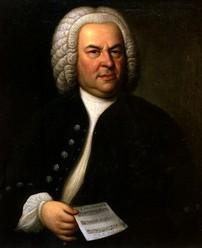
Johann Sebastian Bach

1685 - 1750 Person Name: Johann S. Bach, c. 1750 Topics: Confession and Absolution Harmonizer of "ALLEIN ZU DIR" in The Lutheran Hymnal Johann Sebastian Bach was born at Eisenach into a musical family and in a town steeped in Reformation history, he received early musical training from his father and older brother, and elementary education in the classical school Luther had earlier attended. Throughout his life he made extraordinary efforts to learn from other musicians. At 15 he walked to Lüneburg to work as a chorister and study at the convent school of St. Michael. From there he walked 30 miles to Hamburg to hear Johann Reinken, and 60 miles to Celle to become familiar with French composition and performance traditions. Once he obtained a month's leave from his job to hear Buxtehude, but stayed nearly four months. He arranged compositions from Vivaldi and other Italian masters. His own compositions spanned almost every musical form then known (Opera was the notable exception). In his own time, Bach was highly regarded as organist and teacher, his compositions being circulated as models of contrapuntal technique. Four of his children achieved careers as composers; Haydn, Mozart, Beethoven, Mendelssohn, Schumann, Brahms, and Chopin are only a few of the best known of the musicians that confessed a major debt to Bach's work in their own musical development. Mendelssohn began re-introducing Bach's music into the concert repertoire, where it has come to attract admiration and even veneration for its own sake. After 20 years of successful work in several posts, Bach became cantor of the Thomas-schule in Leipzig, and remained there for the remaining 27 years of his life, concentrating on church music for the Lutheran service: over 200 cantatas, four passion settings, a Mass, and hundreds of chorale settings, harmonizations, preludes, and arrangements. He edited the tunes for Schemelli's Musicalisches Gesangbuch, contributing 16 original tunes. His choral harmonizations remain a staple for studies of composition and harmony. Additional melodies from his works have been adapted as hymn tunes. --John Julian, Dictionary of Hymnology (1907)

Allen William Chatfield

1808 - 1896 Person Name: Allen W. Chatfield Topics: Confession and Absolution Translator of "Lord Jesus, Think on Me" in The Lutheran Hymnal Chatfield, Allen William, M.A., born at Chatteris, Oct. 2nd, 1808, and educated at Charterhouse School and Trinity College, Cambridge, where he was Bell's Univ. Scholar and Members' Prizeman. He graduated in 1831, taking a first class in classical honours. Taking Holy Orders in 1832, he was from 1833 to 1847 Vicar of Stotfold, Bedfordshire; and since 1847 Vicar of Much-Marcle, Herefordshire. Mr. Chatfield has published various Sermons from time to time. His Litany, &c. [Prayer Book] in Greek verse is admirable, and has been commended by many eminent scholars. His Songs and Hymns of Earliest Greek Christian Poets, Bishops, and others, translated into English Verse, 1876, has not received the attention of hymnal compilers which it merits. One hymn therefrom, "Lord Jesu, think on me," is a specimen of others of equal merit, which might be adopted with advantage. He died Jan. 10, 1896. -- John Julian, Dictionary of Hymnology (1907)

Melchior Vulpius

1570 - 1615 Person Name: Melchior Vulpius, c. 1570-1615 Topics: Confession and Absolution; Confession and Absolution Composer of "JESU KREUZ, LEIDEN UND PEIN" in Christian Worship (1993) Born into a poor family named Fuchs, Melchior Vulpius (b. Wasungen, Henneberg, Germany, c. 1570; d. Weimar, Germany, 1615) had only limited educational oppor­tunities and did not attend the university. He taught Latin in the school in Schleusingen, where he Latinized his surname, and from 1596 until his death served as a Lutheran cantor and teacher in Weimar. A distinguished composer, Vulpius wrote a St. Matthew Passion (1613), nearly two hundred motets in German and Latin, and over four hundred hymn tunes, many of which became popular in Lutheran churches, and some of which introduced the lively Italian balletto rhythms into the German hymn tunes. His music was published in Cantiones Sacrae (1602, 1604), Kirchengesangund Geistliche Lieder (1604, enlarged as Ein schon geistlich Gesanglmch, 1609), and posthumous­ly in Cantionale Sacrum (1646). Bert Polman

Samuel Howard

1710 - 1782 Topics: Confession and Absolution Composer of "ST. BRIDE" in The Lutheran Hymnal Samuel Howard, Mus. Doc.; b. in England, 1710,; d. 1782 Evangelical Lutheran Hymnal, 1908

Paul Eber

1511 - 1569 Person Name: Paul Eber, 1511-69 Topics: Confession and Absolution Author of "When in the Hour of Deepest Need" in Lutheran Service Book Eber, Paul, son of Johannes Eber, master tailor at Kitzingen, Bavaria, was born at Kitzingen, Nov. 8, 1511. He was sent in 1523 to the Gymnasium at Ansbach, but being forced by illness to return home, was on his way thrown from horseback and dragged more than a mile, remaining as a consequence deformed ever after. In 1525 he entered the St. Lorentz school at Nürnberg, under Joachim Camerarius, and in 1532 went to the University of Wittenberg, where he graduated 1536, and thereafter became tutor in the Philosophical Faculty. He was appointed Professor of Latin in 1544, then in 1557 Professor of Hebrew and Castle preacher, and in 1558 Town preacher and General Superintendent of the Electorate, receiving in 1559 the degree D.D. from the University. He died at Wittenberg, Dec. 10, 1569 (Koch, i. 271-278; Allgemeines Deutsche Biog., v. 529). At Wittenberg he was a close friend of Melanchthon, was privy to all his plans, and conducted the greater part of his correspondence. After Melanchthon's death in 1560, he became leader of his party, and had to engage in various controversies with the Crypto-Calvinists, &c.; the seeds of his fatal illness being sown on his return journey from the fruitless conference held at Altenburg with the theologians of Jena, which lasted from Oct. 20, 1568, to March 9, 1569. Eber was, next to Luther, the best poet of the Wittenberg school. His hymns, some of them written for his own children to sing to Luther's melodies, are distinguished for their child-like spirit and beautiful simplicity. Seventeen hymns have been attributed to him, four of which are certainly his, and probably two others. Of these six, five have been translated into English, one of which is noted under "Dicimus grates," and the others are:— i. Herr Jesu Christ, wahr Mensch und Gott. For the Dying. The first hymnbook in which this simple and beautiful hymn has been found is the Low German Enchiridion, published at Hamburg, 1565, where it is in 8 stanzas of 6 lines., entitled "A prayer to Christ for a happy departure from this troublous life," and marked as "D. Paulus Eberus Filiolis suis faciebat MDLVII. Wackernagel, iv. p. 4, gives this and a second form in High German from the Psalmen, Geystliche Lieder und Gesänge, Strassburg, 1569. In his Bibliographie, 1855, p. 233, Wackernagel describes an undated broadsheet, which he would date 1550, and at p. 279 says it forms the first of Neun Schöne Geistliche Lieder, Nürnberg N.D., c. 1556. G. Döring, in his Choralkunde, Danzig, 1865, p. 434, says it appeared as "Panie Jezu ty's czlowiek i Bog" in the Polish Cantional, edited by Pastor Seklucyan, and published at Königsberg, 1559. Lauxmann, in Koch, viii, 591-594, adds that it comforted Eber himself while he lay a-dying, Dec. 10, 1569; was repeated by Hugo Grotius a few minutes before his death, Aug. 28, 1645; and was a favourite hymn of Prince Wolfgang of Anhalt (d. 1566), Christian I., Elector of Saxony (d. 1591), of the Margrave Georg Friedrieh of Brandenburg-Kulmbach (d. 1603), &c. Included as No. 820 in the Unv. L. S., 1851. The translations in common use are:— 1. Lord Jesus Christ, true Man and God, Who borest. Good and full, by Miss Winkworth in the first Ser. of her Lyra Germanica, 1855, p. 239. Of this stanzas i.-iv. appear in the Psalms & Hymns., Bedford, 1859; i., ii., viii. in the Harrow School Hymn Book, 1866 ; and i.-iii., v., viii. in the Pennsylvania Lutheran Church Book,1868. A cento from stanza ii., line 3-6, iii., 11. 1-4, vii., 1line 3-6, beginning, "When from my sight all fades away," is No. 1181 in the American Sabbath Hymn Book, 1858. 2. Lord Jesus Christ, true Man and God, Thou Who. A translation by E. Cronenwett, in nine stanzas of L.M., based on stanzas i., ii., iv.-viii., as No. 434, in the Ohio Lutheran Hymnal 1880. Other translations are, (1) "0 God, support me, death is near," by Dr. G. Walker, 1860, p. 103. (2) "Lord Jesus Christ, true Man and God, who hast”, by E. Massie, 1867, p. 10. ii. Wenn wir in höchsten Nöthen sein. In Trouble. Founded on a hymn by Joachim Camerarius, his former master at Nürnberg [b. at Bamberg, April 12, 1500, d. as Professor of Greek and Latin at Leipzig, April 17, 1574], which in Wackernagel, i. p. 324, runs thus:— "In tenebris nostrae et densa caligine mentis, Cum nihil est toto pectore consilii, Turbati erigimus, Deus, ad Te lumina cordis Nostra, tuamque fides solius erat opem. Tu rege consiliis actus, Pater optime, nostros, Nostrum opus ut laudi serviat omne Tuae." These lines comforted Melanchthon in 1546; and Lauxmann, in Koch, viii. 161-165, thinks probably Eber also. He relates that on Ascension Day, 1547, after the battle of Mühlberg, the Wittenbergers having received a message from the captive Elector to deliver their city to the Emperor Charles V. assembled for prayer in church; and quotes a portion of the prayer by Bugenhagen which greatly resembles Eber's hymn. But that the hymn was written then we have no proof, and the earliest source quoted by Wackernagel, iv. p. 6, is the Naw Betbüchlein, Dresden 1566, in 7 stanza of 4 line., though in his Bibliographie, 1855, p. 312, he describes a broadsheet printed at Nürnberg, N.D., c. 1560. In M. Moller's Meditationes sanctorum Patrum, Görlitz, 1584, it is entitled "A beautiful prayer of the venerable Dr. Paul Eber, which he composed on the beautiful words of King Jehoshaphat, 2 Chron. xx. 12." Included as No. 583 in the Unv. L. S., 1851. A "Cry from the depths," though not in despair but in trustful confidence in God, it is one of the finest and most widely used hymns of the Reformation period. Lauxmann relates how the singing of this hymn and the prayers of Martin Rinkart (q.v.), Archidiaconus of Eulenburg near Leipzig, prevailed to move the heart of the Swedish Lieutenant-Colonel, who on Feb. 21, 1635, had demanded from the inhabitants a ransom of £4500, but eventually accepted 2000 florins; says that in commemoration of a similar deliverance from the Swedish army in 1642 the hymn was long sung at the end of the Sunday afternoon service at Pegau, near Leipzig, and adds other incidents regarding its use. The only translation in common use is :— When in the hour of utmost need. A full and very good translation by Miss Winkworth in the 2nd Ser. of her Lyra Germanica, 1858, p. 180, and thence as No. 141 in her Chorale Book for England, 1863. Included in full in the American Presbyterian Hymnal 1874, and the Ohio Lutheran Hymnal, 1880. In full, though slightly altered, as No. 233, in Hymns Ancient & Modern, 1861, but omitted in the revised edition, 1875. In the Hymnary, 1871, Psalmist, 1878, J. L. Porter's Collection, 1876, Thring's Collection, 1882, and the Evangelical Hymna, N. Y., 1880, st. v. is omitted. Other translations are, (1) "When we are under great distress," by J. C. Jacobi, 1720, p. 19 (1722, p. 119; 1732, p. 184, altered, and thence as No. 140 in p. i. of the Moravian Hymn Book, 1754). (2) "When neither help nor counsel's nigh," by Dr. G. Walker, 1860, p. 89. (3) "When all our way is hedged around," by N. L. Frothingham, 1870. His hymns not in English common use are:— iii. Helft mir Gottes Güte preisen. [New Year.] Written on the name Helena, borne both by his wife and his daughter, the initial letters of each stanza composing it. Wackernagel, iv. p. 6, quotes it from Eichorn's Geistliche Lieder, Frankfurt a. Oder, c. 1580, in 6 st. of 8 l., entitled, "A Thanksgiving and Prayer for the New Year, in remembrance of God's goodness, for the Children." Older but less correct forms are noted by Mützell, p. 486, as in the Copenhagen GesangBuch,1511, and the Stettin, 1576. Included as No. 68 in the Unv. L. S., 1851. It is translation as, "Ye Christians in this nation," by J. C. Jacobi, 1722, p. 11 (1732, p. 10, altered and beginning, "Come, let us all, with Fervour.") iv. In Christi Wunden schlaf ich ein. [For the Dying.] Appears in Jeremias Weber's Gesang-Buch, Leipzig, 1638, p. 797, marked as "Another" (the hymn immediately preceding is ascribed to Eber), in 3 st. of 4 1. In the Berlin Geistlicher Lieder Schatz, ed. 1863, No. 1468, the text is slightly varied, and arranged in 2 st. of 6 1. It was first ascribed to Eber in the Nürnberg Gesang-Buch, 1676. Lauxmann, in Koch, viii. 595-601, says of it, "That the hymn is much older than the date of its appearance [i.e. than 1638] seems obvious; that it breathes the childlike spirit of Eber is certain. More than this we cannot say." St. i., 11. 3-6, "Ja Christi Blut und Gerechtigkeit," has been adopted by many pious Germans, young and old, as a prayer in life and death, and Lauxmann relates many interesting incidents regarding its use by A. G. Spangenberg, by Wilhelm Hey, and others. These four lines were adopted by N. L. von Zinzendorf, as the first stanza of his well-known hymn, "Christi Blut und Gerechtigkeit" (q. v.). It is translation as, "I fall asleep in Jesus' arms," by Miss Winkworth, i860, p. 121. [Rev .James Mearns] -- John Julian, Dictionary of Hymnology (1907)

Stephen P. Starke

b. 1955 Person Name: Stephen P. Starke, b. 1955 Topics: Confession and Absolution Author of "As Rebels, Lord, Who Foolishly Have Wandered" in Lutheran Service Book Rev. Stephen P. Starke has always had a heart for hymns. At a young age, Starke played hymns out of The Lutheran Hymnal and read through the hymnal to pass the time before Sunday services. Pastor Starke graduated from Concordia University Chicago with a BA. While completing his MDiv from Concordia Theological Seminary, Fort Wayne, Indiana, he attempted his first hymn text and was encouraged to write more. Since that time, he has written more than 175 hymns inspired by music and the Scriptures. He has been commissioned to write hymns for special occasions, including the 125th anniversary of Concordia University Wisconsin, as well as his daughter’s wedding. Because of his extensive work as a hymnwriter, Pastor Starke received an honorary doctor of letters degree from Concordia University, Irvine, California, and an honorary doctor of divinity degree from Concordia University Wisconsin in Mequon. It is through the medium of hymns that Pastor Starke desires to preserve and pass on the truths of the Gospel for generations to come.

W. McComb

1793 - 1873 Person Name: William McComb, 1793-1873 Topics: Confession and Absolution Author of "Chief of Sinners Though I Be" in Lutheran Service Book McComb, William, author of "Chief of sinners though I be" (Christ All and All), was born in Coleraine, County Londonderry, Ireland, in 1793, and was for several years a bookseller in Belfast. He published The Dirge of O'Neill, 1816; The School of the Sabbath, 1822; and The Voice of a Year, 1848. These together with smaller pieces were collected and pub. as The Poetical Works of William M'Comb, 1864. --John Julian, Dictionary of Hymnology, Appendix, Part II (1907)

Pages


Export as CSV
It looks like you are using an ad-blocker. Ad revenue helps keep us running. Please consider white-listing Hymnary.org or getting Hymnary Pro to eliminate ads entirely and help support Hymnary.org.