You help make Hymnary.org possible. More than 10 million people from 200+ countries found hymns, liturgical resources and encouragement on Hymnary.org in 2025, including you. Every visit affirms the global impact of this ministry.

If Hymnary has been meaningful to you this year, would you take a moment today to help sustain it? A gift of any size—paired with a note of encouragement if you wish—directly supports the server costs, research work and curation that keep this resource freely available to the world.

Give securely online today, or mail a check to:
Hymnary.org
Calvin University
3201 Burton Street SE
Grand Rapids, MI 49546

Thank you for your partnership, and may the hope of Advent fill your heart.

Person Results

Tune Identifier:"^st_matthew_croft$"
In:person

Planning worship? Check out our sister site, ZeteoSearch.org, for 20+ additional resources related to your search.
Showing 11 - 20 of 49Results Per Page: 102050

Anonymous

Author of "The Earth Belongs unto the Lord" in The Cyber Hymnal In some hymnals, the editors noted that a hymn's author is unknown to them, and so this artificial "person" entry is used to reflect that fact. Obviously, the hymns attributed to "Author Unknown" "Unknown" or "Anonymous" could have been written by many people over a span of many centuries.

A. R. Cousin

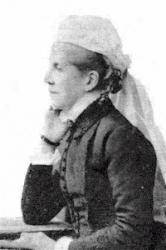
1824 - 1906 Person Name: Annie Ross Cousin Author of "To Thee and to Thy Christ, O God" in Christian Praise Cousin, Anne Ross, née Cundell, is the only daughter of David Ross Cundell, M.D., Leith, and is the widow of the Rev. William Cousin, late Minister of the Free Church of Melrose. She has contributed many poems to various periodicals; 7 hymns to The Service of Praise, 1865, edited by the Rev. J. H. Wilson, of Edinburgh; and 1 to the Psalms and Hymns for Divine Worship, 1866, the Hymnal of the English Presbyterian Church. Four of her hymns are included in the Scottish Presbyterian Hymnal, 1876. Her most popular hymn, "The sands of time are sinking," was first published in The Christian Treasury for 1857, and gives its title to the collected edition of her poems published in 1876, as Immanuel’s Land and other Pieces by A. R. C. This is a collection of 107 hymns and poems, many of which are very beautiful. In general they are, however, rather meditations than hymns suited for public worship. Of these the following, in addition to those annotated under their first lines, are in common use:— 1. King Eternal, King Immortal. Christmas. 2. O Christ, what burdens bowed Thy head. Good Friday. 3. To Thee, and to Thy Christ, O God. Praise. 4. To thy father and thy mother. Filial Duty. [Rev. J. Mearns, M.A.] --John Julian, Dictionary of Hymnology (1907) ===================== Cousin, Anne K., p. 264, ii. Other hymns are:— 1. None but Christ; His merit hides me. None but Christ. From her Immanuel's Land, &c, 1876, into Laudes Domini, 1884, &c. 2. O! Christ, He is the Fountain. This begins with stanza iii. of "The sands of time are sinking," p. 264, ii. 3. Saviour, shed Thy sweetest [richest] blessing. On behalf of Missioriaries. Published in Wilson's Service of Praise, 1865. 4. When we reach our peaceful dwelling. Heaven Anticipated. In her Immanuel's Land, &c. --John Julian, Dictionary of Hymnology, Appendix, Part II (1907) ================= Cousin, A. R., p. 264, ii, Other hymns that have passed into use are:— 1. In the songless night, the daylight dreary. Jesus near. 2. Lord, mine must be a spotless dress. Christ our Righteousness. 3. O now is the time. Seek the Lord. 4. O Thou that on the billow. Jesus near. Of these No. 4 appeared in J. H. Wilson's Songs of Zion, 1862; Nos. 1 and 3 in J. H. Wilson's Service of Praise, 1865 ; and No. 2 in her own Immanuel’s Land, 1876. Mrs. Cousin died at Edinburgh Dec. 6, 1906, in her 83rd year. [Rev. James Mearns, M.A.] --John Julian, Dictionary of Hymnology, New Supplement (1907)

Catherine Winkworth

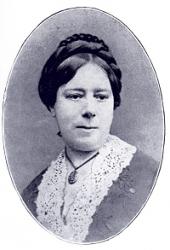
1827 - 1878 Person Name: Catherine Winkworth, 1829-78 Translator of "Thy word, O Lord, like gentle dews" in Service Book and Hymnal of the Lutheran Church in America Catherine Winkworth (b. Holborn, London, England, 1827; d. Monnetier, Savoy, France, 1878) is well known for her English translations of German hymns; her translations were polished and yet remained close to the original. Educated initially by her mother, she lived with relatives in Dresden, Germany, in 1845, where she acquired her knowledge of German and interest in German hymnody. After residing near Manchester until 1862, she moved to Clifton, near Bristol. A pioneer in promoting women's rights, Winkworth put much of her energy into the encouragement of higher education for women. She translated a large number of German hymn texts from hymnals owned by a friend, Baron Bunsen. Though often altered, these translations continue to be used in many modern hymnals. Her work was published in two series of Lyra Germanica (1855, 1858) and in The Chorale Book for England (1863), which included the appropriate German tune with each text as provided by Sterndale Bennett and Otto Goldschmidt. Winkworth also translated biographies of German Christians who promoted ministries to the poor and sick and compiled a handbook of biographies of German hymn authors, Christian Singers of Germany (1869). Bert Polman ======================== Winkworth, Catherine, daughter of Henry Winkworth, of Alderley Edge, Cheshire, was born in London, Sep. 13, 1829. Most of her early life was spent in the neighbourhood of Manchester. Subsequently she removed with the family to Clifton, near Bristol. She died suddenly of heart disease, at Monnetier, in Savoy, in July, 1878. Miss Winkworth published:— Translations from the German of the Life of Pastor Fliedner, the Founder of the Sisterhood of Protestant Deaconesses at Kaiserworth, 1861; and of the Life of Amelia Sieveking, 1863. Her sympathy with practical efforts for the benefit of women, and with a pure devotional life, as seen in these translations, received from her the most practical illustration possible in the deep and active interest which she took in educational work in connection with the Clifton Association for the Higher Education of Women, and kindred societies there and elsewhere. Our interest, however, is mainly centred in her hymnological work as embodied in her:— (1) Lyra Germanica, 1st Ser., 1855. (2) Lyra Germanica, 2nd Ser., 1858. (3) The Chorale Book for England (containing translations from the German, together with music), 1863; and (4) her charming biographical work, the Christian Singers of Germany, 1869. In a sympathetic article on Miss Winkworth in the Inquirer of July 20, 1878, Dr. Martineau says:— "The translations contained in these volumes are invariably faithful, and for the most part both terse and delicate; and an admirable art is applied to the management of complex and difficult versification. They have not quite the fire of John Wesley's versions of Moravian hymns, or the wonderful fusion and reproduction of thought which may be found in Coleridge. But if less flowing they are more conscientious than either, and attain a result as poetical as severe exactitude admits, being only a little short of ‘native music'" Dr. Percival, then Principal of Clifton College, also wrote concerning her (in the Bristol Times and Mirror), in July, 1878:— "She was a person of remarkable intellectual and social gifts, and very unusual attainments; but what specially distinguished her was her combination of rare ability and great knowledge with a certain tender and sympathetic refinement which constitutes the special charm of the true womanly character." Dr. Martineau (as above) says her religious life afforded "a happy example of the piety which the Church of England discipline may implant.....The fast hold she retained of her discipleship of Christ was no example of ‘feminine simplicity,' carrying on the childish mind into maturer years, but the clear allegiance of a firm mind, familiar with the pretensions of non-Christian schools, well able to test them, and undiverted by them from her first love." Miss Winkworth, although not the earliest of modern translators from the German into English, is certainly the foremost in rank and popularity. Her translations are the most widely used of any from that language, and have had more to do with the modern revival of the English use of German hymns than the versions of any other writer. -- John Julian, Dictionary of Hymnology (1907) ============================ See also in: Hymn Writers of the Church

John White Chadwick

1840 - 1904 Author of "It singeth low in ev'ry heart" in Hymns of the Spirit for Use in the Free Churches of America Chadwick, John White, was born at Marblehead, Mass., U.S., Oct. 19, 1840; graduated at the Cambridge Divinity School, July 19, 1864, and ordained minister of the Second Unitarian Church, Brooklyn, N.Y., Dec. 21, 1864. A frequent contributor to the Christian Examiner; The Radical; Old and New; Harper's Magazine; and has published many poems in American periodicals. His hymn on Unity, "Eternal Ruler of the ceaseless round," was written for the graduating class of the Divinity School, Cambridge, June 19, 1864. It is in Horder's Congregational Hymns, 1884. It is a hymn of superior merit. [Rev. W. Garrett Horder] --John Julian, Dictionary of Hymnology (1907) ======================== Chadwick, J. W, p. 216, i. Mr. Chadwick's important prose works were the Life of Theodore Parker, 1890, and that of William Ellery Channing, 1903; and his poetical productions A Book of Poems, 1876, and In Nazareth Town and other Poems, 1883. He received his M.A. from Harvard in 1888; and d. Dec. 11, 1901. In addition to "Eternal Ruler of the ceaseless round," already noted on p. 216, ii., Mr. Chadwick's widow has supplied us with the following data concerning his hymns:— 1. A gentle tumult in the earth. [Easter.] Dated 1876. 2. Another year of setting suns. [New Year.] Written as a New Year's Hymn for 1873, and originally began "That this shall be a better year." In The Pilgrim Hymnal, Boston, 1904. 3. Come, let us sing a tender song, [Communion of Saints.] Dated 1901, and included in The Pilgrim Hymnal, 1904. 4. Everlasting Holy One. [Invocation.] 1875. 5. It singeth low in every heart. [In Memoriam.] Written in 1876, for the 25th Anniversary of the Dedication of his Church at Brooklyn. It has passed into a great many collections in America, and a few in Great Britain, including Horder's Worship Song, 1905. 6. Now sing we a song for the harvest. [Harvest.] Written for a Harvest Thanksgiving Service in 1871. Given in The Pilgrim Hymnal, 1904, and others. 7. 0 God, we come not as of old. [Perfect Law of Liberty.] Written in 1874, and entitled "The Perfect Law." 8. 0 Love Divine of all that is. [Trust.] Written in 1865, and included in his Book of Poems, 1876, as "A Song of Trust." In several American collections. 9. 0 Thou, Whose perfect goodness crowns. [For an Anniversary.] "Written for the 23th Anniversary of his Installation, Dec. 21, 1889." In The Pilgrim Hymnal, and other collections. 10. Thou Whose Spirit dwells in all. [Easter.] Written in 1890. 11. What has drawn us thus apart? [For Unity.] Undated, in the Boston Unitarian Hymns for Church and Home, 1895. During the past ten years Mr. Chadwick's hymns have become very popular in America, and especially with the compilers of Congrega¬tional and Unitarian collections. --John Julian, Dictionary of Hymnology, New Supplement (1907)

John Greenleaf Whittier

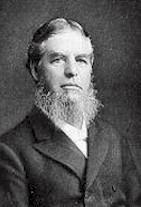
1807 - 1892 Author of "O Love! O Life! our faith and sight" in Hymns of the Church Whittier, John Greenleaf, the American Quaker poet, was born at Haverhill, Massachusetts, Dec. 17, 1807. He began life as a farm-boy and shoemaker, and subsequently became a successful journalist, editor and poet. In 1828 he became editor of the American Manufacturer (Boston), in 1830 of the New England Review, and an 1836 (on becoming Secretary to the American Anti-Slavery Society) of the Pennsylvania Freeman. He was also for some time, beginning with 1847, the corresponding editor of the National Era. In 1840 he removed to Amesbury, Massachusetts, where most of his later works have been written. At the present time [1890] he lives alternately at Amesbury and Boston. His first poetical piece was printed in the Newburyport Free Press in 1824. Since then his publications have been numerous, including:— Voices of Freedom, 1833; Songs of Labour, and other Poems, 1850; Ballads and other Poems, London, 1844; The Panorama, and other Poems, 1856; In War Time, 1863; Occasional Poems, 1865; Poetical Works, 1869; Complete Poetical Works, 1876; The Bay of the Seven Islands, and other Poems, 1883, &c. From his numerous poems the following hymns have been compiled, and have come into common use, more especially amongst the American Unitarians:— 1. All as God wills, Who wisely heeds. Trust. This begins with stanza xi. of Whittier's poem, "My Psalm." in his workThe Panorama, and other Poems, 1856 (Complete Poetical Works, Boston, 1876, p. 179), and is given in Lyra Sacra Americana , 1868; Border's Congregational Hymns, 1884, &c. 2. All things are Thine: no gift have we. Opening of a Place of Worship. Written for the Opening of Plymouth Church, Minnesota, 1872 ( Complete Poetical Works , p. 281). In Horder's Congregational Hymns, 1884. 3. Another hand is beckoning us. Bereavement. From his poem " Gone," written in 1845 (Complete Poetical Works, p. 106). In Horder's Congregational Hymns, 1884. 4. Dear Lord and Father of mankind. Calmness in God desired. From his poem “The Brewing of Soma," beginning with stanza xii. (Complete Poetical Works p. 266). In Horder's Congregational Hymns, 1884. 5. God giveth quietness at last. Death and Burial. This begins with stanza xvii. of his poem, “The Singer," written in 1871 (Author's MS.), and included in the Complete Poetical Works, 1876, p. 265. In Martineau's Hymns, 1875. 6. Hast thou, 'midst life's empty noises. The Purpose of Life. Written in 1842. It is in Longfellow and Johnson's Unitarian Book of Hymns, Boston, 1846, and several other later American collections. Also in Lyra Sacra Americana, 1864. 7. I ask not now for gold to gild. Resignation. From his poem "The Wish of To-Day." Written in 1848 (Author's MS.). In Hedge and Huntingdon's Unitarian Hymns for the Church of Christ, Boston, 1853; the Laudes Domini, 1884, and other collections. 8. Immortal love, for ever full. The Love of Jesus. This poem, entitled “Our Master," appeared in Whittier's work, The Panorama, and other Poems, 1856, in 35 stanzas of 4 lines; in Schaff’s Christ in Song, 1869-70, p. 117; and in the Complete Poetical Works, 1876, p. 231, and others. From this poem the following centos have come into common use:— (1) Immortal love for ever full. In the 1890 edition of the Hymnal Companion and others. (2) 0 Lord and Master of us all. Begins with stanza xvi. (3) 0 Love! O Life! our faith and sight. Begins with stanza xxiv. In several American hymnals, including the Unitarian Hymn [and Tune Book ], Boston, 1868, and others. (4) Our Friend, our Brother, and our Lord. Begins with stanza xxxiv. In Horder's Congregational Hymns, 1884, &c. (5) We faintly hear, we dimly see. Begins with stanza xxvi. In Barrett's Congregational Church Hymnal, 1887. (6) We may not climb the heavenly steeps. Begins with stanza v. In Laudes Domini, 1884; the Primitive Methodist Hymnal, 1887, &c. The use of these centos shows that the hymnic element in the original poem is of a high and enduring order. 9. It may not be our lot to wield. Duty and its Reward. This begins with stanza iv. of his poem "Seedtime and Harvest." Written circa 1850 (Author's MS.). Given in his Complete Poetical Works, p. 114. The hymn is in Laudes Domini, 1884, and other American collections. 10. May freedom speed onward, wherever the blood. Freedom. In the 1848 Supplement to the Boston Book of Hymns, Boston, No. 582, Hymns of the Spirit, 1864, and other collections. In Whittier's Poetical Works, Boston, 1869, p. 68, it is given as, “Right onward, O speed it! Wherever the blood”. 11. Now is the seed-time; God alone. Self-Sacrifice. In the Boston Hymns of the Spirit, 1864, No. 683. 12. 0 backward-looking son of time. New and Old. This begins with stanza xix. of his poem "The Reformer," and is given in this form in the Boston Hymns for the Church of Christ, Boston, 1853, No. 835, and again in later collections. In full in the Complete Poetical Works, p. 78. 13. 0 beauty, old yet ever new. The Law of Love. This in the Boston Hymns of the Spirit, 1864, begins with stanza xxi. of his poem on “The Shadow and the Light,” given in full in the Complete Poetical Works , p. 173. 14. 0 fairest-born of love and light. American National Hymn. This is from his poem "Democracy," which is dated "Election Day, 1843," and is in his Ballads and other Poems, London, 1844, p. 214, and his Complete Poetical Works, p. 82. 15. 0, he whom Jesus loves has truly spoken. True Worship. This in the 1848 Supplement to the Boston Book of Hymns, 1848, No. 578, begins with stanza xi. of his poem on “Worship," given in full in his Complete Poetical Works, p. 96. The poem is dated by the Author, 1848 (Author's MS.). 16. 0 holy Father, just and true. Freedom. "Lines written for the Celebration of the third Anniversary of British Emancipation at the Broadway Tabernacle, N. Y., First of August, 1837." (Complete Poetical Works, p. 47.) It was included in the Unitarian Christian Hymns, Boston, 1844, and has been repeated in later collections. 17. 0 Maker of the Fruits and Flowers. Flower Services. This begins with stanza iv. of his "Lines for the Agricultural and Horticultural Exhibition at Amesbury and Salisbury, Sep. 28, 1858," as given in his Complete Poetical Works , p. 183. It is in the Boston Hymns of the Spirit, 1864, and as "O Painter of the fruits and flowers," in Horder's Congregational Hymns, 1884. 18. O not alone with outward sign. Divine Invitation. This begins with stanza ii. of his poem, "The Call of the Christian," given in his Ballads and other Poems, London, 1844, p. 185, and his Complete Poetical Works, p. 73. The hymn appeared in the Boston Book of Hymns, 1846, and again in later collections. 19. O pure Reformers, not in vain. Freedom. This begins with stanza xii. of his poem "To the Reformers of England," as given in his Complete Poetical Works, p. 77. The hymn was included in the Boston Book of Hymns, 1846, and has been repeated in later collections. 20. O sometimes gleams upon our sight. Old and New. This is taken from his poem "The Chapel of the Hermits," 1852 (in 94 stanzas of 4 lines), and begins with stanza xi. (Comp. Poetical Works, p. 115.) The cento was given in the Boston Hymns of the Spirit, 1864, and repeated in later collections. 21. O Thou, at Whose rebuke the grave. Mercy. This was given in the Boston Book of Hymns, 1848, No. 44l. 22. O [God] Thou, Whose presence went before. National Hymn. This hymn is dated by the author 1834 (Author's MS.), and was written for the Anti-slavery Meeting at Chatham Street Chapel, New York, "on the 4th of the 7th month, 1831." It is No. 750 in the Unitarian Christian Hymns, 1844. It is sometimes given as “0 God, whose presence went before." 23. 0, what though our feet may not tread where Christ trod. Presence of Christ's Spirit. The author dates this 1837 (Author's MS.). It is No. 150 in the Boston Book of Hymns, 1846. In their Hymns of the Spirit, 1864, No. 652, it begins: "0, wherefore the dream of the earthly abode." Both centos are from his poem “Poledom." 24. Shall we grow weary in our watch? Patience, or Resignation. This begins with stanza x. of his poem "The Cypress-Tree of Ceylon." (Complete Poetical Works, p. 84.) This form of the text was given in the Boston Book of Hymns, 1846, No. 278, in 7 stanzas of 4 lines, and again in Horder's Congregational Hymns, 1884, in 3 stanzas. 25. Sport of the changeful multitude. Persecution. This begins with line 6 of stanza x. of his poem "Ezekiel," and was given in the Boston Hymns of the Spirit, 1864, No. 65lines In full in Complete Poetical Works, p. 67. 26. The green earth sends its incense up. Worship of Nature. The author dates this 1845 (Author's MS.). It is from his poem “The Worship of Nature," and was given in this form in the Boston Hymns for the Church of Christ, 1853, No. 193. The cento "The harp at Nature's advent strung," in the Unitarian Hymn [and Tune] Book, Boston, 1868, No. 195, is from the same poem. The cento No. 321 in the Boston Hymns of the Spirit, 1864, is also (altered) from this poem. 27. The path of life we walk today. The Shadowing Rock. This in the Boston Hys. of the Spirit, 1864, begins with stanza i. of his poem on "The Rock in El Gh'or," which the author dates 1859 (Author's MS.). In full in Complete Poetical Works, p. 180. 28. Thine are all the gifts, 0 God. Children's Missions, or Ragged Schools. Written for the Anniversary of the Children's Mission, Boston, 1878. It is given in Horder's Congregational Hymns, 1884. 29. Thou hast fallen in thine armour. Death. From his poem "To the memory of Charles B. Storrs, late President of Western Reserve College," published in his Ballads and other Poems, London, 1844, p. 84. Dated by the author 1835 (Author's MS.). Abridged form in the Hymns of the Spirit, 1864. 30. To-day, beneath Thy chastening eye. Seeking Rest. This begins with stanza iv. of his poem, "The Wish of To-Day," dated by the author 1847 (Author's MS.), and given in full in his Complete Poetical Works, p. 114. The cento is in Martineau's Hymns, 1873, and others. 31. We see not, know not; all our way. Resignation. "Written at the opening of the Civil War, 1861" (Author's MS.), and included in his In War Time, 1863, and his Complete Poetical Works, p. 190. In full in the Prim. Methodist Hymnal, 1887. 32. When on my day of life the night is falling. Old Age. Written in 1882 (Author's MS.), and included in his work The Bay of the Seven Islands, and other Poems, 1883. In Horder's Congregational Hymns, 1884. 33. With silence only as their benediction. Death. 1845. "Written on the death of Sophia Sturge, sister of Joseph Sturge, of Birmingham, England" (Author's MS.). It is in several collections, including Martineau's Hymns, &c, 1873; Horder's Congregational Hymns, 1884, and others. Notwithstanding this extensive use of portions of Mr. Whittier's poems as hymns for congregational use, he modestly says concerning himself: "I am really not a hymn-writer, for the good reason that I know nothing of music. Only a very few of my pieces were written for singing. A good hymn is the best use to which poetry can be devoted, but I do not claim that I have succeeded in composing one." (Author's MS.) We must add, however, that these pieces are characterized by rich poetic beauty, sweet tenderness, and deep sympathy with human kind. -- John Julian, Dictionary of Hymnology (1907) ======================== Whittier, J. G, p. 1277, i. In addition to the large number of this author's hymns already annotated from his own manuscript, the following have also come into use, mainly in the form of centos from his poems, during the past ten years:— i. From Poems, 1850:— 1. O brother man! Fold to thy heart thy brother. [Brotherly Love.] From his poem, “Worship." Written in 1848, and published in Poems, 1850. ii. From Songs of Labour, and Other Poems, 1850;— 2. Bowed down in lowliness of min. [Resignation.] From the poem “The Wish of To-day." iii. From The Chapel of the Hermits, and Other Poems, 1853:— 3. O, sometimes glimpses on our sight. [Light in Darkness.] First published in The National Era, 1851, and again as above, 1853. In The Pilgrim Hymnal, N.Y. 1904, it begins " 0 sometimes gleams upon our sight," and in Hymns of the Ages, 1904, "Yet sometimes glimpses on my sight"; see p. 1277, ii. 20. iv. From The Panorama, and Other Poems, 1856:— 4. Thou, 0 most compassionate. [Divine Compassion.] This cento is from the poem "My Dream," and is dated 1855. v. From Home Ballads and Poems, 1860:— 5. I mourn no more my vanished years. [Life's Review.] A cento from "My Psalm," dated 1859, opening with st. i. 6. No longer forward nor behind. This begins with st. iii. of "My Psalm." 7. O hearts of love, O souls that turn. [Life from, Christ.] A cento from the poem, "The Overheart." 8. O Love Divine, Whose constant beam. [Divine Love Universal.] From the poem, "The Shadow and the Light." The form in which it is given in The Pilgrim Hymnal, 1904, first appeared in The Independent, Nov. 1860. 9. Once more the liberal year laughs out. [Autumn.] From his "For an Autumn Festival," 1859. vi. From In War Time, and Other Poems, 1864:— 10. I can only urge the plea. [Cry for Mercy.] A cento from “Andrew Rykman’s Prayer,” dated 1863. 11. What Thou wilt, O Father, give. Also from “Andrew Kykman's Prayer." vii. From The Tent on the Beach, and Other Poems, 1867:— 12. I bow my forehead to [in] the dust. St. ix., &c. 13. I know not what the future hath. St. xvi., &c. 14. I long for household voices gone. St. xv., &c. 15. I see the wrong that round me lies. St. x., &c. 16. Who fathoms the Eternal Thought. St. iv., &c. 17. Yet, in the maddening maze of things. St. xi., &c. These centos are taken from the poem, "The Eternal Goodness," which is dated 1865. viii. From Among the Hills, and Other Poems, 1869:— 18. For ever round the mercy-seat. [God's Love and Man's Unfaithfulness.] From the poem, “The Answer." ix. From The Pennsylvania Pilgrim, and Other Poems, 1873:— 19. Best for the weary hands is good. [Daily Renewal.] This is from "My Birthday," which appeared in the Atlantic Monthly, 1871, and again as above, 1873. x. From Hazel Blossoms, 1875:— 20. All things [gifts] are Thine, p. 1277, i. 2. The church for which this was written, in 1873, was Plymouth Church, St. Paul, Minn. The hymn was included in Hazel Blossoms, 1875. 21. We need love's tender lessons taught. [Love.] From Child-Songs," in Hazel Blossoms, opening with st. ix. xi. From The Bay of the Seven Islands, 1883:— 22. As from the lighted hearths behind me. [Anticipation of the Future.] This begins with st. iii. of the poem, "What the Traveller said at Sunset." xii. Additional Notes:— 23. Lord, for the things we see. [Public Gatherings.] This hymn is from "Poledom," 1837. 24. Not always as the whirlwind's rush. [Call to the Ministry.] Published in The Poetical Writings, 1857, Vol. i., p. 254, and again in the Oxford edition of his Poetical Works, 1904, p. 455. It is dated 1833. 25. Sound over all waters, [The Coming Kingdom.) This, in Horder's Worship Song, 1905, is from Whittier's Complete Poetical Works, Boston, 1876, p. 280, where it is dated 1873. 26. Take courage, Temperance workers. [Temperance.] Mr. Pickard, Whittier's literary executor, cannot trace this hymn in any of the author's writings, and we also are at fault. 27. The harp at Nature's advent strung. [Nature's acknowledgement of God.] Dr. Charles L. Noyes, one of the editors of The Pilgrim Hymnal, 1904, writes us concerning this hymn: "It was first published in its present form [as in the American hymn-books] in 1867 in The Tent on the Beach." But a hymn almost identical was written when Whittier was in his teens, and published in the Haverhill Gazette, October 5, 1827. The same poem appeared in The Palladium, 1829. It was revised for The Tent on the Beach, 1867 (p. 1278, i. 26). 28. We see not, know not; all our way, p. 1278, i. 31. This hymn, written in 1861, first appeared in the Atlantic Monthly, 1862, vol. 10, p. 235. 29. Wherever through the ages rise. [Love is universal.] Opens with line 1 of a section in the poem "Miriam," in Miriam, and Other Poems, 1871, p. 13. 30. Who calls Thy glorious service hard? [Duty.] This begins with st. iii. of his poem "Seedtime and Harvest," noted on p. 1277, ii. 9. 31. O Lord and Father of mankind. This is a slightly altered form of "Dear Lord and Father of mankind." p. 1277, i. 4. The poem, “Our Master," stated on p. 1277, i., No. 8, as having appeared in The Panorama, 1856, in error, was given in The Tent on the Beach, and Other Poems, Boston, 1867, pp. 143-152. In compiling the foregoing, we have been materially assisted by Mr. Pickard, the poet's literary executor, and the Rev. Dr. Charles L. Noyes, of Somerville, Mass. Whittier died at Hampton Falls, New Hampshire, Sep. 7, 1892. --John Julian, Dictionary of Hymnology, New Supplement (1907) ======================= See also in: Hymn Writers of the Church

John Morison

1750 - 1798 Person Name: John Morrison Author of "The race that long in darkness pined" in Hymns of the Church Morison, John, D.D., was born in Aberdeenshire in 1749. He studied at the University of Aberdeen (King's College), where he graduated M.A. in 1771. In 1780 he became parish minister of Canisbay, Caithness. He received the degree of D.D. from the University of Edinburgh in 1792. He died at Canisbay, June 12, 1798. He was one of the members added on May 26, 1781, to the Committee appointed by the General Assembly of 1775 to revise the Translations and Paraphrases of 1745. To him are ascribed Nos. 19, 21, 29, 30 and 35, in the 1781 collection, and he is said to have been joint author with John Logan of Nos. 27 and 28. [Rev. James Mearns, M.A.] --John Julian, Dictionary of Hymnology (1907)

Adelaide Anne Procter

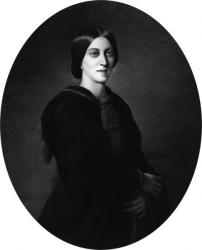
1825 - 1864 Person Name: Adelaide Anne Procter, 1825-1864 Author of "The shadows of the evening hours" in Hymns and Chorales Not to be confused with Adelaide A. Pollard. Adelaide Anne Proctor was born in London, in 1825. Her father, Brian W. Proctor, is well known by his literary nom de guerre of Barry Cornwall. In 1853, Miss Proctor became a contributor to Dickens' "Household Words." Her reputation as a poet was secured by the publication of her first volume of "Legends and Lyrics," in 1858. A second volume was added in 1860. She also published other compositions in poetry and prose. She died in 1864. She was a member of the Roman Catholic Church. --Annotations of the Hymnal, Charles Hutchins, M.A. 1872. =============== Procter, Adelaide Anne, daughter of Bryan Waller Procter (Barry Cornwall), was born in Bedford Square, London, Oct. 30, 1825. In 1851 she entered the Roman communion, and died in London, Feb. 2, 1864. Miss Procter displayed more than usual intellectual powers at an early age. In later years she was skilled in music and languages. Her poetical gifts have been widely appreciated. Her Legends and Lyrics, A Book of Verse, was published in 1858. Of this an enlarged edition was published in 1862. Her hymns in common use from these two editions are:— 1. I do not ask, 0 Lord, that life may be. Resignation. In her Legends, &c., 1862. It is one of the most widely used of Miss Procter's hymns. 2. I thank Thee, 0 my God, Who made. Thankfulness. In her Legends, &c., 1858, p. 207, in 6 stanzas of 6 lines. In several collections, including the Hymnal Companion, it begins in an altered form, "My God, I thank Thee, Who hast made;" and in others, "Our God, we thank Thee, Who hast made." Bishop Bickersteth in his note on this hymn in the Hymnal Companion, 1816, says, "This most beautiful hymn by A. A. Procter (1858), touches the chord of thankfulness in trial, as perhaps no other hymn does, and is thus most useful for the visitation of the sick." 3. One by one the sands are going [flowing]. The links of Life. In her Legends, &c., 1858, p. 20, in 8 stanzas of 4 lines. 4. Rise, for the day is passing. Redeem the Time. In her Legends, &c., 1858. Sometimes given as "Arise, for the day is passing," as in Holy Song, 1869. 5. Strive; yet I do not promise. Strive, Wait, Pray. In her Legends, &c., 1858, p. 103, in 3 stanzas of 8 lines. 6. The way is long and dreary. Life a Pilgrimage. In her Legends, &c., 1858, p. 136, in 3 stanzas of 8 lines and a refrain. 7. The shadows of the evening hours. Evening. In her Legends, &c., 1862. 8. We ask for peace, 0 Lord. Peace with God. In her Legends, &c., 1858, p. 214, in 4 stanzas of 9 lines. --John Julian, Dictionary of Hymnology (1907)

Harriet Auber

1773 - 1862 Person Name: Harriet Auber, 1773-1862 Author of "O praise our great and glorious Lord" in The New English Hymnal Auber, Harriet, daughter of Mr. James Auber, b. in London, Oct. 4, 1773. During the greater part of her quiet and secluded life she resided at Broxbourne and Hoddesdon, Herts, and died at the latter place on the 20th Jan., 1862. Miss Auber wrote devotional and other poetry, but only a portion of the former was published in her Spirit of the Psalms, in 1829. This collection is mainly her work, and from it some useful versions of the Psalms have been taken and included in modern hymn-books, about 20 appearing in Spurgeon's Our Own Hymn Book, 1866. Miss Auber's name is widely known, but it is principally through her exquisite lyric, "Our blest Redeemer, ere He breathed," and the Epiphany hymn, "Bright was the guiding star that led." (For criticism of her work, see English Psalters, §. 17.) In addition to these and other hymns by Miss Auber, which are annotated under their respective first lines, the following are also in C. V., but principally in America:— 1.  Arise, ye people, and adore.   Easter. 2.  As Thy chosen people, Lord.   Ps. lxciii. 3.  Can guilty man indeed believe?   Ps. xciv. 4.  Delightful is the task to sing.   Ps. cxlvii. 5.  Father of Spirits, Nature's God.   Ps. cxxxi. 6.  Hail, gracious Source of every good.   Ps. Ixv. 7.  Hasten, Lord, the glorious time.   Ps. lxxii. 8.  Jehovah reigns, O earth, rejoice.   Ps. xccii. 9.  Join, all ye servants of the Lord.   H. Scriptures. 10.  Jesus, Lord, to Thee we sing.   Ps. cx. 11.  O all ye lands, rejoice in God.   Ps. lxvi. 12.  O God our Strength, to Thee the song.   Ps. lIxxxi. 13.  O praise our great and gracious Lord.   Ps. lxxviii. 14.  On thy church, O power divine.   Ps. lxvii. 15.  Sweet is the work, O Lord.   Sunday. 16.  That Thou, O Lord, art ever nigh.   Ps. lxxv. 17.  The Lord, Who hath redeemed our souls.   Ps. xxxi. 18.  When all bespeaks a Father's love.   Ps. set. 19.  When dangers press and fears invade.   Ps. lxii. 20.  Who, O Lord, when life is o'er.   Ps. xv. 21.  Whom have we   Lord,  in  heaven, but Thee.   Ps. lxxiii. 22.  Wide, ye heavenly gates, unfold.   Ascension. 23.  With hearts in love abounding.   Ps. xlv. 24.  With joy we hail the sacred day.   Sunday. 25.  Vainly through the night the ranger.   Ps. cxvii. All these psalm-versions and hymns are from her Spirit of the Psalms,   London, 1829. - John Julian, Dictionary of Hymnology (1907) ========================= Auber, Harriet, p. 90, ii. The following versions of psalms from her Spirit of the Psalms, 1829, are also in common use:- 1. Great God, wert Thou extreme to mark. Ps. cxxx. "Thy servants in the temple watched," begins with stanza ii. of this. 2. How blest are they who daily prove. Ps. xli. 3. How blest the children of the Lord. Altered from Ps. cxii. 4. Jehovah, great and awful name. Part of Ps. Ixxviii. 5. 0 Thou Whom heaven's bright host revere. Ps. Ixxxiv. 6. Praise the Lord, our mighty King. Ps. cxxxv. 7. Spirit of peace, Who as a [celestial] Dove. Ps. cxxxiii. 8. Thou by Whose strength the mountains stand. Ps. Ixv. 9. To heaven our longing eyes we raise. Ps. cxxi. 10. Vainly through night's weary hours. Ps. cxxvii. Sometimes "Vainly through the night the ranger." 11. While all the golden harps above. Easter. --John Julian, Dictionary of Hymnology, Appendix, Part II (1907) See also in:Hymn Writers of the Church

Edmund H. Sears

1810 - 1876 Person Name: E. H. Sears Author of "It came upon the midnight clear" in Hymns of the Faith Edmund Hamilton Sears was born in Berkshire [County], Massachusetts, in 1810; graduated at Union College, Schenectady, in 1834, and at the Theological School of Harvard University, in 1837. He became pastor of the Unitarian Society in Wayland, Mass., in 1838; removed to Lancaster in 1840; but on account of ill health was obliged to retire from the active duties of the ministry in 1847; since then, residing in Wayland, he devoted himself to literature. He has published several works. --Annotations of the Hymnal, Charles Hutchins, M.A., 1872 ======================= Sears, Edmund Hamilton, D.D., son of Joseph Sears, was born at Sandisfield, Berkshire County, Massachusetts, April 6, 1810, and educated at Union College, Schenectady, N.Y., where he graduated in 1834; and at the Theological School at Cambridge. In 1838 he became pastor of the First Church (Unitarian) at Wayland, Massachusetts; then at Lancaster in the same State, in 1840; again at Wayland, in 1847; and finally at Weston, Massachusetts, in 1865. He died at Weston, Jan. 14, 1876. He published:— (1) Regeneration, 1854; (2) Pictures of the Olden Time, 1857; (3) Athanasia, or Foregleams of Immortality, 1858, enlarged ed., 1872; (4) The Fourth Gospel the Heart of Christ; (5) Sermons and Songs of the Christian Life, 1875, in which his hymns are collected. Also co-editor of the Monthly Religious Magazine. Of his hymns the following are in common use:— 1. Calm on the listening ear of night. Christmas. This hymn was first published in its original form, in the Boston Observer, 1834; afterwards, in the Christian Register, in 1835; subsequently it was emended by the author, and, as thus emended, was reprinted entire in the Monthly Magazine, vol. xxxv. Its use is extensive. 2. It came upon the midnight clear. Christmas. "Rev. Dr. Morison writes to us, Sears's second Christmas hymn was sent to me as editor of the Christian Register, I think, in December, 1849. I was very much delighted with it, and before it came out in the Register, read it at a Christmas celebration of Dr. Lunt's Sunday School in Quincy. I always feel that, however poor my Christmas sermon may be, the reading and singing of this hymn are enough to make up for all deficiences.'" 3. Ho, ye that rest beneath the rock. Charitable Meetings on behalf of Children. Appeared in Longfellow and Johnson's Hymns of the Spirit, Boston, 1864, in 2 stanzas of 8 lines. Dr. Sears's two Christmas hymns rank with the best on that holy season in the English language. Although a member of the Unitarian body, his views were rather Swedenborgian than Unitarian. He held always to the absolute Divinity of Christ. [Rev. F. M. Bird, M.A.] --Excerpts from John Julian, Dictionary of Hymnology (1907)

George Rawson

1807 - 1889 Author of "We Limit Not The Truth Of God" in Favourite Hymns of the Church Born: June 5, 1807, Leeds, England. Died: March 25, 1889, Clifton, England. Buried: Arno’s Vale Cemetery, Bristol, England. Pseudonym: A Leeds Layman. Rawson, George, was born June 5, 1807, at Leeds, in which town he practised for many years as a solicitor. In 1853 he assisted the Congregational ministers of Leeds in the compilation of Psalms, Hymns, and Passages of Scripture for Christian Worship, a volume commonly known as the Leeds Hymn-book. Mr. Rawson was a member of the Congregational body. In 1858 he also assisted Rev. Dr. Green and other Baptist ministers in the preparation of Psalms and Hymns for the use of the Baptist Denomination. A number of Mr. Rawson's own compositions first appeared in this and in the Leeds Hymn-book In 1876 he published his Hymns, Verses and Chants (Hodder and Stoughton, London), including his previously published hymns, and containing (exclusive of chants) 80 original pieces. In 1885 most of these, with several additional hymns, were published by the R. T. S. under the title Songs of Spiritual Thought. Mr. Rawson died March 25, 1889. His hymns are distinguished by refinement of thought, and delicacy and propriety of language; and if they do not attain the first rank among the songs of the Christian Church, many are of great excellence. The most widely known are, "By Christ redeemed, in Christ restored;" "Come to our poor nature's night;" "Father in high heaven dwelling;" "In the dark and cloudy day;" and "Reaper, behold the fields are white." In the Leeds Hymn-book, 1853, and the Baptist Psalms & Hymns, 1858, there are also several recasts of and additions to the hymns of other writers. In addition to Mr. Rawson's hymns which are annotated under their respective first lines, the following are also in common use:- i. From the Leeds Hymn-book, 1853. 1. Captain and Saviour of the host. Burial. 2. Give dust to dust: and here we leave. Burial. 3. God the Lord is King-—before him. Ps. xcix. 4. In the dark and cloudy day. Consolation. 5. Soul, thy week of toil is ended. Saturday Evening. 6. Though the night be very long. Resignation. ii. From the Baptist Psalms & Hymns, 1858. 7. Beautiful, desired, and dear. Public Worship. 8. Blessed are they who have not seen. Faith. 9. Blessed is the faithful heart. Faithfulness. 10. Christ to heaven is gone before. Ascension. 11. God the Father, be Thou near. Evening. 12. He fell asleep in Christ the Lord. Burial. 13. Immersed beneath the closing wave. Holy Baptism. 14. Lord, we bless Thee, Who hast given. Holy Communion. 15. My Father God, with filial awe. Abiding in God. 16. Our eyes we lift up to the hills. The Lord the Pastor's Keeper. 17. Reaper, behold the fields are ripe [white] . Missions. 18. Rise, heart, thy Lord arose. Sunday. 19. Upon the holy mountains high. Security of the Church. iii. From the Leeds Sunday School Hymn Book, 1858. 20. And will [How shall] the mighty God. The Holy Ghost. 21. Jesus, the Lord, our Righteousness. Jesus, the children's Friend. 22. O Thou Good Shepherd. The Good Shepherd. iv. From Dr. Allon's Supplemental Hymns, 1868. 23. My Father, it is good for me. Trust. 24. Thou Who hast known the careworn breast. Evening. 25. Walking with Thee, my God. Walking with God. v. From Mr. Rawson's Hymns, Verses, &c. 1876. 26. God is our Refuge; God our Strength. Ps. xlvi. 27. Lo, a voice from heaven hath said. Burial. 28. Lord, let me pray. I know not how. The Holy Spirit desired. 29. O pallid, gentle, grief-worn face. Easter Eve. 30. Out of the depths, the gulfs, the night. Ps. cxxx. 31. This, the old world's day of rest. Saturday Evening. [1854-7.] 32. Thou who Thyself didst sanctify. Ordination. [1854-7.] 33. Voices of the deep blue night. The Heavenly Call. 34. With gladness we worship. Public Worship. Mr. Rawson is represented by about 50 hymns in the collections of the present day. It must be noted that in the Hymns, &c, 1876, and in the Songs, &c, 1885, the texts of the hymns have been revised, and in several instances been weakened thereby. [Rev.W. R. Stevenson, M.A.] --John Julian, Dictionary of Hymnology (1907) ================ Rawson, George, p. 952, i. Additional hymns by this author in common use include:— 1. Come, Spirit of the Lord. From his “How shall the mighty God," in his Hymns, Verses, &c, 1876, No. 43. 2. Each trial hath a gentle voice. Patience and Hope. In the 1880 Supplement to the Baptist Psalms and Hymns. This is dated 1857. It is not in the author's Hymns, 1876. 3. Stand up before your God. All Saints. In the 1880 Baptist Psalms and Hymns this is dated 1865. It is not in Rawson's Hymns, 1876. --John Julian, Dictionary of Hymnology, Appendix, Part II (1907)

Pages


Export as CSV
It looks like you are using an ad-blocker. Ad revenue helps keep us running. Please consider white-listing Hymnary.org or getting Hymnary Pro to eliminate ads entirely and help support Hymnary.org.