You help make Hymnary.org possible. More than 10 million people from 200+ countries found hymns, liturgical resources and encouragement on Hymnary.org in 2025, including you. Every visit affirms the global impact of this ministry.

If Hymnary has been meaningful to you this year, would you take a moment today to help sustain it? A gift of any size—paired with a note of encouragement if you wish—directly supports the server costs, research work and curation that keep this resource freely available to the world.

Give securely online today, or mail a check to:
Hymnary.org
Calvin University
3201 Burton Street SE
Grand Rapids, MI 49546

Thank you for your partnership, and may the hope of Advent fill your heart.

Person Results

Topics:discipleship and service
In:people

Planning worship? Check out our sister site, ZeteoSearch.org, for 20+ additional resources related to your search.
Showing 21 - 30 of 607Results Per Page: 102050

Betty Pulkingham

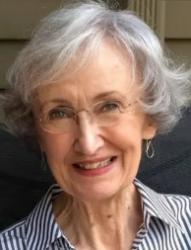
1928 - 2019 Topics: Discipleship and Service Arranger of "CHANNEL OF PEACE" in Voices United Betty Carr Pulkingham was born in 1928 in Burlington, North Carolina. She received a B.S. in Music in 1949 from the University of North Carolina, Greensboro and she did graduate studies at the Eastman School of Music. She was Instructor of Music Theory at the University of Texas. In 1951, she married a seminarian Graham Pulkingham. They ministered together in various places in the U.S., England and Scotland; they were founding members of the Community of Celebration, an Anglican religious order. She travelled widely with "The Fisherfolk," an outreach music ministry connected with the Community of Celebration. Betty Pulkingham was a well known composer and arranger. She co-edited and published a number of songbooks and books on worship; and served on the Episcopal Church's Standing Commission on Church Music from 1988-1994. She and her husband returned to Burlington and then she later moved to Austin, Texas to live with family. She died in Austin, May 9, 2019 at the age of 90. Dianne Shapiro, from Obituary (https://www.richandthompson.com/tributes/Betty-Pulkingham) (accessed 6-21-2019)

Will L. Thompson

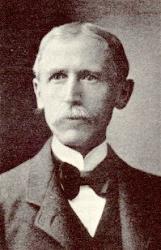
1847 - 1909 Topics: Discipleship and Service Author of "예 수 가 우 리 를 부 르 는 소 리 (Softly and Tenderly Jesus Is Calling)" in 찬송과 예배 = Chansong gwa yebae = Come, Let Us Worship Will Lamartine Thompson (1847-1909) Born: November 7, 1847, East Li­ver­pool, Ohio. Died: Sep­tem­ber 20, 1909, New York, New York. Buried: Ri­ver­view Cem­e­te­ry, East Li­ver­pool, Ohio. Rebuffed in an ear­ly at­tempt to sell his songs to a com­mer­cial pub­lish­er, Thomp­son start­ed his own pub­lish­ing com­pa­ny. He lat­er ex­pand­ed, open­ing a store to sell pi­an­os, or­gans and sheet mu­sic. Both a lyr­i­cist and com­pos­er, he en­sured he would al­ways re­mem­ber words or mel­o­dies that came to him at odd times: "No mat­ter where I am, at home or ho­tel, at the store or tra­vel­ing, if an idea or theme comes to me that I deem wor­thy of a song, I jot it down in verse. In this way I ne­ver lose it." Thompson took ill dur­ing a tour of Eur­ope, and his fam­i­ly cut short their tra­vels to re­turn home. He died a few weeks lat­er. Music-- 1.Jesus Is All the World to Me 2.Lead Me Gently Home, Father 3.Softly and Tenderly Jesus Is Calling 4.There’s a Great Day Coming --hymntime.com/tch ================================== Various biographical sketches and newspaper articles about Thompson are available in the DNAH Archives.

Mary E. Byrne

1880 - 1931 Person Name: Maire ni Bhroin (Mary Byrne) Topics: Discipleship and Service Translator of "Be thou my vision" in A New Hymnal for Colleges and Schools Mary Elizabeth Byrne, M.A. (July 2, 1880 – January 19, 1931) was born in Ireland. She translated the Old Irish Hymn, "Bí Thusa 'mo Shúile," into English as "Be Thou My Vision" in Ériu (the journal of the School of Irish Learning), in 1905. See also in: Wikipedia

Washington Gladden

1836 - 1918 Person Name: Rev. Washington Gladden Topics: The Kingdom of God on Earth Discipleship and Service; Discipleship and Service Author of "O Master, let me walk with Thee" in The Hymnal Washington Gladden (1836-1918) was called to the First Congregational Church in Columbus, OH in 1882 and remained there for 32 years. In 1883-84 he was known for his success in fighting the corrupt Tweed Ring, for arbitrating the Telegraphers' Strike and the Hocking Valley Coal Strike. He attacked John D. Rockefeller, Sr. for giving $100,000 of "tainted money" to the Congregational Church's Foreign Missions program. Throughout his ministry he emphasized applying the gospel to life in America. He wrote "O Master, let me walk with thee" in 1879. Mary Louise VanDyke =================== Gladden, Washington, was born at Pottsgrove, Pennsylvania, Feb. 11, 1836; was educated at Williams College: and entered the Congregational Ministry. He was for some time editor of the New York Independent, and of the Sunday Afternoon. In the Sunday Afternoon, his hymn, "O Master, let me walk with Thee" (Walking with God), appeared in 3 stanzas of 8 lines, in March 1879. Of these stanzas i. and iii. are in Laudes Domini, 1884, and others. --John Julian, Dictionary of Hymnology, Appendix, Part II (1907) ================== Gladden, W., p. 1565, ii. Dr. Gladden has been Pastor of the First Congregational Church, Columbus, Ohio, since 1882. His hymn-writing has not been extensive. The most popular of his hymns is "0 Master, let me walk with Thee," noted on p. 1565, ii. It has come into somewhat extensive use during the last ten years. Additional hymns in common use include:— 1. Behold a Sower from afar. [The Kingdom of God.] In the Boston Pilgrim Hymnal, 1904, this is dated 1897. 2. Forgive, 0 Lord, the doubts that break Thy promises to me. [Doubting repented of.] Dated 1879, in The Pilgrim Hymnal, 1904. --John Julian, Dictionary of Hymnology, New Supplement (1907)

Melchior Vulpius

1570 - 1615 Person Name: Melchior Vulpius, c. 1560-1616 Topics: Saints and Angels; Christ the King; Christ the King; Christian Life; Church; Commissioning; Discipleship; Faith; Going Forth; Light; Praise; Saints; Service; Song; Unity Composer of "GELOBT SEI GOTT" in Worship (3rd ed.) Born into a poor family named Fuchs, Melchior Vulpius (b. Wasungen, Henneberg, Germany, c. 1570; d. Weimar, Germany, 1615) had only limited educational oppor­tunities and did not attend the university. He taught Latin in the school in Schleusingen, where he Latinized his surname, and from 1596 until his death served as a Lutheran cantor and teacher in Weimar. A distinguished composer, Vulpius wrote a St. Matthew Passion (1613), nearly two hundred motets in German and Latin, and over four hundred hymn tunes, many of which became popular in Lutheran churches, and some of which introduced the lively Italian balletto rhythms into the German hymn tunes. His music was published in Cantiones Sacrae (1602, 1604), Kirchengesangund Geistliche Lieder (1604, enlarged as Ein schon geistlich Gesanglmch, 1609), and posthumous­ly in Cantionale Sacrum (1646). Bert Polman

Carol Ann Doran

1936 - 2023 Person Name: Carol Doran Topics: Discipleship and Service Composer of "STORM-SWEPT WAY" in A New Hymnal for Colleges and Schools Carol Doran was a musician, author, scholar, loving wife, mother, and grandmother. She was also a woman of unwavering faith, integrity, kindness, curiosity, beauty, good humor, and fearlessness who inspired those she loved and who loved her so much in return. Carol’s early exposure to the study of music became a lifelong passion and professional dedication as she went on to earn a Doctor of Music Arts degree in Church Music and Organ at The Eastman School of Music in Rochester, NY. Dr. Doran taught and was a professor of Music and Liturgy at Colgate Rochester Divinity School/Bexley Hall in Rochester, New York; Virginia Theological Seminary in Alexandria, Virginia; the School of Theology at Boston University; Episcopal Divinity School in Cambridge, MA, and many others. Additionally, she served with distinction on the boards of many professional organizations of musicians and liturgists. Carol published numerous articles on church music and worship and collaborated with the Rev. Dr. Thomas H. Troeger in the publication of four books, including two hymnals published by Oxford University Press. Carol and Michael Doran were married for more than 59 years, the majority of which were spent in Rochester, NY where they raised their four children: Charles, Julia, Ellen, and Elizabeth. Carol cared deeply about her family, and she extended that joyful compassion to friends, associates, and every person that she encountered in her life. Carol celebrated the lives that her children and their families were living and showed her love in a million different ways throughout her life. When she saw you, whether to say hello or goodbye, she proclaimed her love with a warm, lingering handshake or hug; her loving kindness in her eyes and in the smile you could trust and take as the gift she gave you. Above all, she was devoted to her husband, Michael, and he to her. Carol is survived by her loving husband, Michael of North Andover, MA; sister Ellen Buerklin of Chester, PA; brother Norman (& Patty) Maynard, MA; son Charles (& Cara) Ipswich, MA.; daughters Julia Chambers (& Eddy) Escondido, CA; Ellen Bzomowski (& Steve) Plainfield, MA; Elizabeth Evenson (& Paul) Arlington, MA; and nine grandchildren: Zoe, Lucas, Alexander, Ava, Kyle, Theo, Valerie, Kira, and Elias. We love you and we will miss you always. Funeral service will be offered on Thursday November 9,2023 at 11:00 a.m. in The Parish of Christ Church, 35 Central Street, Andover, MA. A reception will follow at the church. Obituary

Nicolaus Selneccer

1530 - 1592 Person Name: Rev. Nicolaus Selnecker (1532-1592) Topics: Discipleship and Service Author of "Lord Jesus Christ, with us abide" in The Hymnal Selnecker, Nicolaus, D.D., son of Georg Selnecker (Selneccer, Schellenecker, who was protonotarius to the Nürnberg magistracy, but lived at Hersbruck near Nürnberg) was born at Hersbruck Dec. 5, 1532. In 1536 he was removed to Nürnberg, and became during his school time, when only twelve years old, organist at the chapel in the Kaiserburg there. He went to the university of Wittenberg in 1550 (where he became a favourite pupil of Melanchthon), graduated M.A. on July 31, 1554, and subsequently lectured as a privat-docent, sometimes to 200 students. In the end of 1557 he was appointed second court preacher at Dresden, and tutor to the heir apparent Prince Alexander, having also to supervise the education of the choirboys of the royal chapel. He was ordained at Wittenberg Jan. 6, 1558. The principal theologians at the Saxon court at that time were inclined to follow Melanchthon's lead and to approximate to Calvin's teachings regarding Consubstantiation. When therefore Selnecker thought it his duty openly to declare his adhesion to strict Lutheranism, he found his position almost untenable. When Martin Hoffmann of the Neustadt church in Dresden preached against the Elector August's passion for game preserving, Selnecker took Hoffmann's part. His enemies took advantage of this, and managed so that after Hoffmann had been expelled from Dresden, in August, 1564, Selnecker was requested to seek work elsewhere. He preached his farewell sermon at Dresden on March 15, 1565, and on the 26th he entered on his new office of Professor of Theology at Jena. After the siege of Gotha, Duke Johann Wilhelm of Saxony recalled Wigand and other professors of Theology who had been expelled from Jena, in 1561, as adherents of Flaeius; and Selnecker, not being so extreme a Lutheran as they, had to leave Jena. Thereupon the Elector August again received him into favour, appointed him professor of Theology at Leipzig, and also pastor of St. Thomas's church and Superintendent of Leipzig. He entered on his duties at Leipzig in August 1568, and for some time worked quietly and successfully. In July 1570 the Elector acceded to the request of Duke Julius of Brunswick for Selnecker's services, and gave Selnecker leave of absence to go to Wolfenbüttel as court preacher and general superintendent. Here he succeeded in inducing the clergy to receive the so-called Saxon Confession, and persevered in zealous visitations of churches, schools, &c. After 1572 he resided at Gandersheim, took an interest in the Gymnasium there, &c. In 1573 he also visited, and drew up a book of Church Order and Discipline for the district of Oldenburg-Jever. But in Brunswick, what with Martin Chemnitz the Superintendent of Brunswick, who was a High Lutheran, the Duke who wished for peace, and the other General Superintendent at Wolfenbüttel, Selnecker found it a difficult matter to work comfortably, and was himself accused of Crypto-Calvinism. He therefore gladly accepted the Elector August's recall to Leipzig, and began to lecture there again in Feb. 1574. In 1576 he was once more appointed pastor of St. Thomas's Church, and Superintendent. At Leipzig the sacramental controversy broke out afresh, and Selnecker became deeply involved therein, lie was then engaged in drawing up the Formula of Concord (meant to unite the Lutherans, but to exclude the Romanists on one hand, and the Calvinists on the other), which was finally revised on May 29, and published on July 22, 1577. The Formula of Concord was so far a success that it was very largely subscribed, but at the same time its authors, and specially Selnecker, were subjected to the most violent abuse both from the High Lutherans and from the Galvinists, so much so that he called 1579 his "year of patience and silence." For a few years immediately thereafter his life was a more peaceful one, and he found time to devote to poetry and music. At this time he assisted greatly in the building up of the famous Motett Choir of St. Thomas's Church, which J. S. Bach afterwards conducted. But on the death of the Elector August in 1586 the real direction of affairs passed into the hands of Dr. Nicolaus Crell, Chancellor to the Elector Christian I., and under his rule the Lutheran clergy were gradually displaced by Melanchthonians and Crypto-Calvinists. When the new court preacher Salmuth began to issue a German Bible with notes in which he clearly taught Calvinism and impugned the Formula of Concord, Selnecker published a pamphlet in opposition, and was in consequence deprived of his offices on May 17, 1589. For a time he stayed on in his own house in Leipzig, and used his pen in controversy. But after haying received, on Oct. 22, notice to cease writing, he thought it prudent to leave Leipzig, He found many sympathisers, and after a short time spent in Halle and then in Magdeburg, he accepted the appointment of Superintendent at Hildesheim. Here he had many anxious and weighty matters to settle, and was finally called on, in 1591, to arbitrate in matters of dispute at Augsburg. Returning from Augsburg in stormy December weather, and being worn out and seriously ill, he reached Hildesheim half dead, and was confined to his room till April. Meantime the Elector Christian I. had suddenly died, and his widow, after deposing the Chancellor Crell, proceeded to recall those whom Crell had banished. Selnecker, spite of his weakness, welcomed the idea of returning to Leipzig, left Hildesheim on May 9, and reached Leipzig on May 19; but only to die. He died at Leipzig, May 24, 1592. Seluecker, as we have seen, was a prominent figure in the ecclesiastical history of Germany in the latter half of the sixteenth century, and a good illustration of the extremes to which theological controversies were then carried. He was the author of some 175 theological and controversial works, in German and Latin, perhaps the most important being his Institutio Religionis Christianae, Frankfurt, 1572-73. He also ranks, with Helmbold and Ringwaldt, among the most important hymnwriters of the period. Amid the manifold changes and chances of his life he found inspiration and consolation in the study of and recourse to the Psalter, and in his love of music. In Latin verse he published a Scriptural play on the Fall of our First Parents, entitled Theophiania, &c, Wittenberg, 1560 [Brit. Mus.], and a version of the Psalms as Paraphrasis Psalterii, Heinrichstadt, 1573…His German hymns partake for the most part of the objective churchly character of the hymns of the Reformation period, and indeed contain many reminiscences of them. Of the rest, many only too faithfully mirror the misfortunes and changes and conflicts of his life, and are full of personal matter and careless in style. Still there remain not a few worthy of note, in which a genuine piety, a deep and fervent love to the Saviour, and a zeal for the best interests of His Church on earth, are expressed in clear, flowing and musical style. The hymns by Selnecker which have passed into English are:— i. Ach bleib bei uns, Herr Jesu Christ. Peace and Orthodoxy. It has sometimes been said of this hymn that st. i., ii. are by Selnecker, and that the rest are a later addition. The opposite however is the case. The full form appeared in theGeistliche Psalmen, &c, Nürnberg, 1611, p. 597, in 9 stanzas, viz.:— 1. Ach bleib bey uns, Herr Jesu Christ. 2. In diser schweren betrübten Zeit. 3. Herr Jesu, hilff, dein Kirch erhalt. 4. Erhalt unns nun bey deinem Wort. 5. Ach Gott es geht gar libel zu. 6. Den stoltzen Geistern wehre doch. 7. Die Sach und Ehr, Herr Jesu Christ. 8. Dein Wort ist unsers Hertzens Trutz. 9. Gib dass wir leben in deim Wort. The text of 1611 is in H. Thiele's ed. of Selnecker's Geistliche Lieder, 1855, p. 31, and in the Berlin Geistliche Lieder, ed. 1863, No. 408. The translations in common use from this text:— 1. Lord Jesus with Thy children stay. This is a tr. of st. 1, 2, 8, 6, 9, 3 by J. Swertner in the Moravian Hymn Book 1789, No. 6 (1886, No. 6). 2. Ah Jesu Christ, with us abide. This is a good tr. of st. 1-5, 9, by Dr. Kennedy as No. 41 in his Hymnologia Christiana 1863, repeated in Holy Song, 1869. 3. Lord Jesu Christ, with us abide, For round us fall, &c. By Miss Winkworth, of st. 1, 2, in her Chorale Book for England. 4. Forsake us not, 0 Lord be near. Other trs. are-—(1) Abide with us, O Jesu dear," as No. 336, in pt. i. of the Moravian Hymn Book, 1754. (2) "Lord Jesu Christ, with us abide, 'Tis now." By H. J. Buckoll, 1842, p. 69. (3) "With us, Lord Jesus Christ, abide." By Dr. G. Walker, 1860, p. 61. ii. Christus der wahre Gottes Sohn. Holy Baptism. Translated as:— Now Christ, the very Son of God. iii. Hilf, Herr, mein Gott, in dieser Noth. Cross and Consolatio. In hisChristliche Psalmen, 1587, in 15 lines entitled "Anno 1565. God knows why." It was probably written during his last months at Dresden. It has indeed been said to have been written to comfort Martin Hoffmann, diaconus of the Holy Cross Church at Dresden, on his expulsion after preaching about the Elector August's passion for hunting and game preserving; but the hymn is dated 1565, and Hoffmann left Dresden in August, 1564. The form translated into English is:— Hilf, Helffer, hilf in Angst und Noth. The translations are:— 1. My Helper, aid: Thy mercy show. By A. T. Russell, in full, as No. 223 in his Psalms and Hymns. 1851. 2. Help, Saviour! help, in fear and need By E. Cronenwett, in full, as No. 410 in the OhioLutheran Hymnal 1880. 3. Help, Jesus, help! in woe, in need. By Miss Manington in her Footprints of the Holy Dead, &c, 1863, p. 8. iv. Lass mich dein sein und bleiben. Close of Service. This is a beautiful stanza of 8 lines which is very frequently used in Germany at the close of Divine service. It was written as his daily prayer . The translations are:— 1. Let me be Thine for ever, My gracious. This is a tr. of st. i.-iii. by Dr. M. Loy as No. 230 in the Ohio Lutheran Hymnal, 1880. 2. Make me Thine own and keep me Thine. By Miss Winkworth in her Christian Singers of Germany, 1869, p. 152. v. 0 Herre Gott, in meiner Noth. For the Dying. Founded on Ps. cxvi. 9. Translated as:—- 0 Lord my God, I cry to Thee. This is a good and full tr. by Miss Winkworth in her Lyra Germanica 2nd Ser. 1858, p. 212, and her Chorale Book for England, 1863, No. 192. vi. Wir danken dir, Herr Jesu Christ, Dass du gen Himmel gefahren bist. Ascension. The translation in common use is:— We thank Thee, Jesus! dearest Friend, that Thou didst. Other trs. are—- (1) “Lord Jesus Christ! we thank Thee now." This is No. 334, in pt. i., of the Moravian Hymn Book, 1754. (2) "To Thee, our Lord, all praise be given." vii. Wir danken dir, o treuer Gott. Absolution. Translated as:— O Faithful God, thanks be to Thee. By C. H. L. Schnette, in full, as No. 246 in the Ohio Lutheran Hymnal 1880. [Rev. James Mearns, M.A.] --Excerpts from John Julian, Dictionary of Hymnology (1907)

Orlando Gibbons

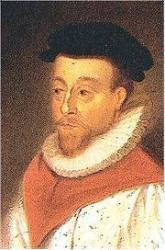
1583 - 1625 Topics: Discipleship and Service Composer (melody and bass) of "SONG 1" in A New Hymnal for Colleges and Schools Orlando Gibbons (baptised 25 December 1583 – 5 June 1625) was an English composer, virginalist and organist of the late Tudor and early Jacobean periods. He was a leading composer in the England of his day. Gibbons was born in Cambridge and christened at Oxford the same year – thus appearing in Oxford church records. Between 1596 and 1598 he sang in the Choir of King's College, Cambridge, where his brother Edward Gibbons (1568–1650), eldest of the four sons of William Gibbons, was master of the choristers. The second brother Ellis Gibbons (1573–1603) was also a promising composer, but died young. Orlando entered the university in 1598 and achieved the degree of Bachelor of Music in 1606. James I appointed him a Gentleman of the Chapel Royal, where he served as an organist from at least 1615 until his death. In 1623 he became senior organist at the Chapel Royal, with Thomas Tomkins as junior organist. He also held positions as keyboard player in the privy chamber of the court of Prince Charles (later King Charles I), and organist at Westminster Abbey. He died at age 41 in Canterbury of apoplexy, and a monument to him was built in Canterbury Cathedral. A suspicion immediately arose that Gibbons had died of the plague, which was rife in England that year. Two physicians who had been present at his death were ordered to make a report, and performed an autopsy, the account of which survives in The National Archives: We whose names are here underwritten: having been called to give our counsels to Mr. Orlando Gibbons; in the time of his late and sudden sickness, which we found in the beginning lethargical, or a profound sleep; out of which, we could never recover him, neither by inward nor outward medicines, & then instantly he fell in most strong, & sharp convulsions; which did wring his mouth up to his ears, & his eyes were distorted, as though they would have been thrust out of his head & then suddenly he lost both speech, sight and hearing, & so grew apoplectical & lost the whole motion of every part of his body, & so died. Then here upon (his death being so sudden) rumours were cast out that he did die of the plague, whereupon we . . . caused his body to be searched by certain women that were sworn to deliver the truth, who did affirm that they never saw a fairer corpse. Yet notwithstanding we to give full satisfaction to all did cause the skull to be opened in our presence & we carefully viewed the body, which we found also to be very clean without any show or spot of any contagious matter. In the brain we found the whole & sole cause of his sickness namely a great admirable blackness & syderation in the outside of the brain. Within the brain (being opened) there did issue out abundance of water intermixed with blood & this we affirm to be the only cause of his sudden death. His death was a shock to peers and the suddenness of his passing drew comment more for the haste of his burial – and of its location at Canterbury rather than the body being returned to London. His wife, Elizabeth, died a little over a year later, aged in her mid-30s, leaving Orlando's eldest brother, Edward, to care for the children left orphans by this event. Of these children only the eldest son, Christopher Gibbons, went on to become a musician. One of the most versatile English composers of his time, Gibbons wrote a quantity of keyboard works, around thirty fantasias for viols, a number of madrigals (the best-known being "The Silver Swan"), and many popular verse anthems. His choral music is distinguished by his complete mastery of counterpoint, combined with his wonderful gift for melody. Perhaps his most well known verse anthem is This is the record of John, which sets an Advent text for solo countertenor or tenor, alternating with full chorus. The soloist is required to demonstrate considerable technical facility at points, and the work at once expresses the rhetorical force of the text, whilst never being demonstrative or bombastic. He also produced two major settings of Evensong, the Short Service and the Second Service. The former includes a beautifully expressive Nunc dimittis, while the latter is an extended composition, combining verse and full sections. Gibbons's full anthems include the expressive O Lord, in thy wrath, and the Ascension Day anthem O clap your hands together for eight voices. He contributed six pieces to the first printed collection of keyboard music in England, Parthenia (to which he was by far the youngest of the three contributors), published in about 1611. Gibbons's surviving keyboard output comprises some 45 pieces. The polyphonic fantasia and dance forms are the best represented genres. Gibbons's writing exhibits full mastery of three- and four-part counterpoint. Most of the fantasias are complex, multisectional pieces, treating multiple subjects imitatively. Gibbons's approach to melody in both fantasias and dances features a capability for almost limitless development of simple musical ideas, on display in works such as Pavane in D minor and Lord Salisbury's Pavan and Galliard. In the 20th century, the Canadian pianist Glenn Gould championed Gibbons's music, and named him as his favorite composer. Gould wrote of Gibbons's hymns and anthems: "ever since my teen-age years this music ... has moved me more deeply than any other sound experience I can think of." In one interview, Gould compared Gibbons to Beethoven and Webern: ...despite the requisite quota of scales and shakes in such half-hearted virtuoso vehicles as the Salisbury Galliard, one is never quite able to counter the impression of music of supreme beauty that lacks its ideal means of reproduction. Like Beethoven in his last quartets, or Webern at almost any time, Gibbons is an artist of such intractable commitment that, in the keyboard field, at least, his works work better in one's memory, or on paper, than they ever can through the intercession of a sounding-board. To this day, Gibbons's obit service is commemorated every year in King's College Chapel, Cambridge. --wikipedia.org

Isao Koizumi

1907 - 1992 Topics: Discipleship and Service Composer of "TOKYO" in A New Hymnal for Colleges and Schools Isao Koizumi (b. 1907; d. 1992) graduated from the Osaka University of Commerce in 1932. For the next ten years he taught at that school, was an organist in Tokyo, and then went on to work in the import-export business. He has served as the conductor of the Tokyo Choral Society and edited various hymnals, including The Hymnal 1954 for the United Church of Christ in Japan, The Sunday School Hymnal (1954), and Hymns of Praise (1967 edition). A writer and translator of books and articles on church music, Koizumi has also composed and arranged hymn tunes. He is considered a leading figure in modern Japanese hymnody. Bert Polman

John Goss

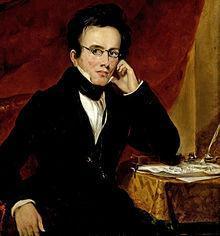
1800 - 1880 Person Name: John Goss, 1800-1880 Topics: The Church of God The Sacraments - Baptism; The Church of God The Sacraments - The Lord's Supper; The Life in Christ Consecration and Discipleship; The Life in Christ Fellowship and Service; The Gospel Call Adapter of "ARMAGEDDON" in The Hymnary of the United Church of Canada John Goss (b. Fareham, Hampshire, England, 1800; d. London, England, 1880). As a boy Goss was a chorister at the Chapel Royal and later sang in the opera chorus of the Covent Garden Theater. He was a professor of music at the Royal Academy of Music (1827-1874) and organist of St. Paul Cathedral, London (1838-1872); in both positions he exerted significant influence on the reform of British cathedral music. Goss published Parochial Psalmody (1826) and Chants, Ancient and Modern (1841); he edited William Mercer's Church Psalter and Hymn Book (1854). With James Turle he published a two-volume collection of anthems and Anglican service music (1854). Bert Polman

Pages


Export as CSV
It looks like you are using an ad-blocker. Ad revenue helps keep us running. Please consider white-listing Hymnary.org or getting Hymnary Pro to eliminate ads entirely and help support Hymnary.org.