You help make Hymnary.org possible. More than 10 million people from 200+ countries found hymns, liturgical resources and encouragement on Hymnary.org in 2025, including you. Every visit affirms the global impact of this ministry.

If Hymnary has been meaningful to you this year, would you take a moment today to help sustain it? A gift of any size—paired with a note of encouragement if you wish—directly supports the server costs, research work and curation that keep this resource freely available to the world.

Give securely online today, or mail a check to:
Hymnary.org
Calvin University
3201 Burton Street SE
Grand Rapids, MI 49546

Thank you for your partnership, and may the hope of Advent fill your heart.

Person Results

Topics:advent ii
In:person

Planning worship? Check out our sister site, ZeteoSearch.org, for 20+ additional resources related to your search.
Showing 21 - 30 of 75Results Per Page: 102050

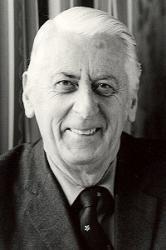
Fred Pratt Green

1903 - 2000 Person Name: F. Pratt Green, 1903-2000 Topics: Advent II Year A; Advent II Year B Author of "When Jesus came to Jordan" in Common Praise The name of the Rev. F. Pratt Green is one of the best-known of the contemporary school of hymnwriters in the British Isles. His name and writings appear in practically every new hymnal and "hymn supplement" wherever English is spoken and sung. And now they are appearing in American hymnals, poetry magazines, and anthologies. Mr. Green was born in Liverpool, England, in 1903. Ordained in the British Methodist ministry, he has been pastor and district superintendent in Brighton and York, and now served in Norwich. There he continued to write new hymns "that fill the gap between the hymns of the first part of this century and the 'far-out' compositions that have crowded into some churches in the last decade or more." --Seven New Hymns of Hope , 1971. Used by permission.

Philip Doddridge

1702 - 1751 Person Name: Philip Doddridge, 1702-1751 Topics: Advent II Year A Author of "Hark the glad sound! the Saviour comes" in Common Praise Philip Doddridge (b. London, England, 1702; d. Lisbon, Portugal, 1751) belonged to the Non-conformist Church (not associated with the Church of England). Its members were frequently the focus of discrimination. Offered an education by a rich patron to prepare him for ordination in the Church of England, Doddridge chose instead to remain in the Non-conformist Church. For twenty years he pastored a poor parish in Northampton, where he opened an academy for training Non-conformist ministers and taught most of the subjects himself. Doddridge suffered from tuberculosis, and when Lady Huntington, one of his patrons, offered to finance a trip to Lisbon for his health, he is reputed to have said, "I can as well go to heaven from Lisbon as from Northampton." He died in Lisbon soon after his arrival. Doddridge wrote some four hundred hymn texts, generally to accompany his sermons. These hymns were published posthumously in Hymns, Founded on Various Texts in the Holy Scriptures (1755); relatively few are still sung today. Bert Polman ======================== Doddridge, Philip, D.D., was born in London, June 26, 1702. His grandfather was one of the ministers under the Commonwealth, who were ejected in 1662. His father was a London oilman. He was offered by the Duchess of Bedford an University training for ordination in the Church of England, but declined it. He entered Mr. Jennings's non-conformist seminary at Kibworth instead; preached his first sermon at Hinckley, to which Mr. Jennings had removed his academy. In 1723 he was chosen pastor at Kibworth. In 1725 he changed his residence to Market Harborough, still ministering at Kibworth. The settled work of his life as a preceptor and divine began in 1729, with his appointment to the Castle Hill Meeting at Northampton, and continued till in the last stage of consumption. He sailed to Lisbon, in 1751, where he died October 26, the same year. Two hundred pupils in all, gathered from England, Scotland and Holland, were prepared in his seminary, chiefly for the dissenting ministry, but partly for professions. The wide range of subjects, including daily readings in Hebrew and Greek, Algebra, Trigonometry, Watts' Logic, outline of Philosophy, and copious Divinity, is itself a proof of Doddridge's learning. He was presented with his D.D. degree by the University of Aberdeen. His fame as a divine, combined with his wide sympathies and gentle, unaffected goodness, won for him the friendship of Watts, Col. Gardiner and Hervey, and the esteem of Seeker and Warburton. He welcomed the work of Wesley and Whitefield, and entertained the latter on his visit to Northampton. His Rise and Progress of Religion in the Soul and The Family Expositor both did good work in their day. For criticism of his hymns see English Hymnody, Early, § XIV. [Rev. H. Leigh Bennett, M.A.] After Dr. Doddridge's death his hymns were published by his friend Job Orton, in 1755, as:— "Hymns founded on Various Texts in the Holy Scriptures. By the late Reverend Philip Doddridge, D.D. Published from the Author's Manuscript by Job Orton . . . Salop. Printed by J. Eddowes and J. Cotton, &c. MDCCLV." Concerning the text of the hymns, Orton says in his Preface:— "There may perhaps be some improprieties, owing to my not being able to read the author's manuscript in particular places, and being obliged, without a poetical genius, to supply those deficiencies, whereby the beauty of the stanza may be greatly defaced, though the sense is preserved." The 1st edition contained 370 hymns; the 2nd, 1759, 374; and the 3rd, 1766, and later editions, 375. In 1839 Doddridge's great-grandson re-edited the hymns from the original manuscript and published the same as:— Scriptural Hymns by the Rev. Philip Doddridge, D.D. New and corrected edition containing many hymns never before printed. Edited from the Original Documents by the Author's great-grandson, John Doddridge Humphreys, Esq. Lond. Darton & Clark, 1839. This work contains 22 additional hymns. The text differs in many instances from Orton's, but these changes have not come into common use. In addition to the manuscript used by Orton and J. D. Humphreys, another containing 100 hymns (five of which are not in any edition of the Hymns), all in the author's handwriting, and most of them dated, is referred to in this Dictionary as the "D. Manuscripts." It is the property of Mr. W. S. Booker and family. A manuscript, not in Doddridge's handwriting, of 77 "Hymns by P. Doddridge, Mar. 16, 1739/1740," is in the possession of Mr. W. T. Brooke. The existence of these manuscripts is accounted for from the fact that Doddridge's hymns were freely circulated in manuscript during his lifetime. It is from his correspondence with R. Blair (q.v.) that the few compositions traceable to him in the Scottish Trans. & Paraphrases were derived. The hymns by Doddridge which have attained to the greatest popularity are:— “Awake, my soul, stretch every nerve"; " Do not I love Thee, O my Lord? " "Grace 'tis a charming sound”; " Hark, the glad sound, the Saviour comes"; "My God, and is Thy table spread?" "O happy day, that fixed my choice"; "O God of Jacob [Bethel], by Whose hand”; " See Israel's gentle Shepherd stand"; "Ye servants of the Lord." These hymns, with many besides, are annotated under their respective first lines. Of the rest, taken from the Hymns, &c, 1755, the following are also in common use:— 1. Behold the gloomy vale. Death anticipated. 2. Behold the Great Physician stands. Christ the Physician. 3. Captives of Israel, hear. Spiritual Deliverance. 4. Eternal God, our wondering souls. Enoch's Piety and Translation. 5. Eternal Source of life and thought. Subjection to the Father. G. Exalted Prince of Life, we own. Christ the Prince and Saviour. 7. Father Divine, the Saviour cried. Christ's Submission to the Father. 8. Father Divine, Thy piercing eye. Secret Prayer. 9. Father of mercies, send Thy grace. Sympathy. The Good Samaritan. 10. Go, saith the Lord, proclaim my grace. Forgiveness. 11. God of Eternity, from Thee. Redeeming the Time. 12. God of my life, through all its [my] days. Praising God continually. 13. God. of salvation, we adore. Praise to God for Redemption. 14. Great Father of mankind. Gentiles brought into the Church. 15. Great God, we sing that mighty hand. The New Tear. 16. Great Leader of Thine Israel's host. During Persecution. 17. Great Lord of angels, we adore. Ordination. 18. Great Spirit of immortal love. Purity of Heart desired. 19. Great Teacher of Thy Church, we own. The Divine Precepts. 20. Hail, everlasting Prince of Peace. Sympathy. 21. Hail to the Prince of life and peace. Praise to Christ. 22. Hear, gracious [Saviour] Sovereign, from Thy throne. The Blessings of the Holy Spirit desired. 23. How gentle God's commands. God's Care of His Own. 24. How rich Thy favours, God of grace. God and His Living Temple. 25. How swift the torrent flows [rolls]. Our Fathers, where are they? 26. Jesus the Lord, our souls adore. Christ the Forerunner. 27. Jesus, we own Thy Sovereign hand. Christ to be fully known hereafter. 28. Loud let the tuneful trumpet sound. Gospel Jubilee. 29. My gracious Lord, I own Thy right. Life in Jesus. 30. My [Dear] Saviour, I am [we are] Thine. Joined to Christ through the Spirit. 31. My soul, with all thy waking powers. The Choice of Moses. 32. Now let our voices join. Singing in the ways of God. 33. 0 injured Majesty of heaven. Lent. 34. 0 Zion, tune thy voice. Glory of the Church of Christ. 35. Peace, 'tis the Lord Jehovah's hand. Resignation. 36. Praise the Lord of boundless might. The Father of Lights. 37. Praise to Thy Name, Eternal God. Growth in Grace desired. 38. Remark, my soul, the narrow bounds. The New Year. 39. Repent, the Voice celestial cries. Lent. 40. Return, my roving heart, return. Heart communing. 41. Salvation, O melodious sound. God our Salvation. 42. Saviour of men, and Lord of love. Ministry and Death of Christ. 43. Searcher of hearts, before Thy face. Peter to Simon Magus. 44. Shepherd of Israel, Thou dost keep. Induction or Settlement of a Minister. 45. Shine forth, eternal Source of light. Knowledge of God desired. 46. Shine on our souls, eternal God. Sunday. 47. Sing, ye redeemed of the Lord. Joy on the Homeward Way. 48. Sovereign of life, before Thine eye. Life and Death in God's hands. 49. The darkened sky, how thick it lours. Sorrow followed by Joy. 50. The day approacheth, O my soul. Judgment anticipated. 51. The King of heaven His table spreads. The Gospel Feast. 52. The promises I sing. The unchanging promises of God. 53. The swift-declining day. Walk in the Light. 54. These mortal joys, how soon they fade. Treasures, Perishable and Eternal. 55. Thy judgments cry aloud. Retributive Providence. 56. Thy presence, Everlasting God. Omnipresence of the Father. 57. 'Tis mine, the covenant of His grace. Death anticipated. 58. To Thee, my God; my days are known. Life under the eye of God. 59. Tomorrow, Lord, is Thine. Uncertainty of Life. 60. Triumphant Lord, Thy goodness reigns. The Divine Goodness. 61. Triumphant Zion, lift thy head. The Church Purified and Guarded. 62. Unite my roving thoughts, unite. Peace. 63. What mysteries, Lord, in Thee combine. Christ, the First and Last. 64. While on the verge of life I stand. Death anticipated with Joy. 65. With ecstacy of Joy. Christ the Living Stone. 66. Ye golden lamps of heaven, farewell. Heaven opening. 67. Ye hearts with youthful vigour warm. The Young encouraged. 68. Ye humble souls, that seek the Lord. Easter. 69. Ye sons of men, with joy record. Praise of the Works of God. 70. Yes, the Redeemer rose. Easter In Dr. Hatfield's Church HymnBook, N. Y., 1872, Nos. 9, 12, 14, 15, 21, 23, 25, 29, 30, 32, 34, 35, 39, 40, 44, 47, 51, 61, 64, 65, 67, 69, 70, as above, are dated 1740. What authority there may be for this date we cannot say, these hymns not being in any “D. MSS." with which we are acquainted, and no dates are given in the Hymns, &c, 1755. Some later American editors have copied this date from Dr. Hatfield. Doddridge's hymns are largely used by Unitarians both in Great Britain and America. As might be expected, the Congregationalists also draw freely from his stores. The Baptists come next. In the hymnals of the Church of England the choicest, only are in use. Taken together, over one-third of his hymns are in common usage at the present time. -- John Julian, Dictionary of Hymnology (1907) ================ Doddridge, Philip, D.D. At p. 305 an account is given of a manuscript volume of Doddridge's Hymns, which is the property of the Rooker family. Since that article was written another manuscript vol. has been found. It was the property of Lady Frances Gardiner, née Erskine, an intimate friend of Doddridge, and wife of Col. Gardiner. It is a copy of the Rooker manuscipt, with the revised text, as in the margin of that ms., and is in Doddridge's hand¬writing. It was from this manuscript that the Doddridge hymns were taken for the Scottish Translationsand Paraphrases, 1745. Additional hymns by Dr. Doddridge still in common use include:— 1. My God, how cheerful is the sound. All in Christ. 2. My Saviour, let me hear Thy voice. Pardon desired. 3. My soul, triumphant in the Lord. Divine Guidance assured. 4. No «iore, ye wise, your wisdom boast. Glorying in God alone. From Hymns, No. 128. 5. Now be that Sacrifice survey'd. Christ our Sacrifice. 6. 0 Israel, blest beyond compare. Happiness of God's Israel. 7. Our fathers, where are they? Considering the Past. From Hymns, No. 164. 8. Praise to the Lord on high. Missions. 9. Praise to the radiant Source of bliss. Praise for Divine Guidance. 10. Return, my soul, and seek thy rest. Rest in Jesus. 11. Salvation doth to God belong. National Thanksgiving. 12. Sovereign of Life, I own Thy hand. On Recovery from Sickness. 13. The sepulchres, how thick they stand. Burial. 14. There is a Shepherd kind and strong. The Good Shepherd. From Hymns, No. 216. 15. Wait on the Lord, ye heirs of hope. Waiting on God. 16. We bless the eternal Source of light. Christ's care of the Church. 17. With transport, Lord, our souls proclaim. Immutability of Christ. 18. Ye mourning saints, whose streaming tears. Death and Burial. These all appeared in Dr. Doddridge's Hymns, 1755. --John Julian, Dictionary of Hymnology, Appendix, Part II (1907)

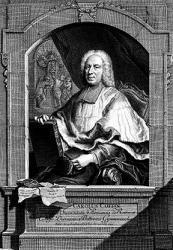
Charles Coffin

1676 - 1749 Person Name: Charles Coffin, 1676-1749 Topics: Advent II Year A; Advent II Year B; Advent II Year C Author of "On Jordan's bank the Baptist's cry" in Common Praise Coffin, Charles, born at Buzaney (Ardennes) in 1676, died 1749, was principal of the college at Beauvais, 1712 (succeeding the historian Rollin), and rector of the University of Paris, 1718. He published in 1727 some, of his Latin poems, for which he was already noted, and in 1736 the bulk of his hymns appeared in the Paris Breviary of that year. In the same year he published them as Hymni Sacri Auctore Carolo Coffin, and in 1755 a complete ed. of his Works was issued in 2 vols. To his Hymni Sacri is prefixed an interesting preface. The whole plan of his hymns, and of the Paris Breviary which he so largely influenced, comes out in his words. "In his porro scribendis Hymnis non tam poetico indulgendunv spiritui, quam nitoro et pietate consulendum esse existimavi. Pleraque igitur, argumentis convenientia e purissiinis Scripturae Sacrae fontibus deprompsi quac idoneis Ecclesiae cantui numeris alligarem." His hymns are described by a French critic as having less brilliancy than those of Santüil (q.v.), but more simplicity and unction. They number 100 in the edition of 1736. Translated into English by J. Chandler, I. Williams and others, are noted under their respective Latin first lines. [William T. Brooke] -- John Julian, Dictionary of Hymnology (1907)

Winfred Douglas

1867 - 1944 Topics: Advent; Evangelists; Missions; Holy Scriptures; Lent II The Holy Communion General; St. Andrew's Day The Communion Closing; St. Peter Morning Prayer Closing; Trinity VII The Holy Communion Opening Translator of "Spread, O spread, thou mighty word" in The Hymnal of the Protestant Episcopal Church in the United States of America 1940 Charles Winfred Douglas (b. Oswego, NY, 1867; d. Santa Rosa, CA, 1944), an influential leader in Episcopalian liturgical and musical life. Educated at Syracuse University and St. Andrews Divinity School, Syracuse, New York, he moved to Colorado for his health. There he studied at St. Matthew's Hall, Denver, and founded the Mission of the Transfiguration in Evergreen (1897). Ordained a priest in the Episcopal Church in 1899, he also studied in France, Germany and England, where he spent time with the Benedictines of Solesmes on the Island of Wight from 1903 to 1906. For much of his life, Douglas served as director of music at the Community of St. Mary in Peekskill, New York, and had associations with cathedrals in Denver, Colorado, and Fond du Lac, Wisconsin. He promoted chanting and plainsong in the Episcopal Church through workshops and publications such as The American Psalter (1929), the Plainsong Psalter (1932), and the Monastic Diurnal (1932). His writings include program notes for the Denver Symphony Orchestra, various hymn preludes; organ, as well as the book, Church Music in History and Practice (1937). He was editor of both the Hymnal 1916 and its significant successor, Hymnal 1940, of the Episcopal Church. Douglas's other achievements include a thorough knowledge of the life and culture of Hopi and Navajo natives, among whom he lived for a number of years. Bert Polman

Christian Fürchtegott Gellert

1715 - 1769 Person Name: C. F. Gellert, 1715-1769 Topics: Easter; Easter Day Year B; Easter II Year C; Easter IV Year A; Proper 20 Year A; Second Sunday Before Advent Year A Author of "Jesus lives! thy terrors now" in Common Praise Gellert, Christian Fürchtegott, son of Christian Gellert, pastor at Hainichen in the Saxon Harz, near Freiberg, was born at Hainichen, July 4, 1715. In 1734 he entered the University of Leipzig as a student of theology, and after completing his course acted for some time as assistant to his father. But then, as now, sermons preached from manuscript were not tolerated in the Lutheran Church, and as his memory was treacherous, he found himself compelled to try some other profession. In 1739 he became domestic tutor to the sons of Herr von Lüttichau, near Dresden, and in 1741 returned to Leipzig to superintend the studies of a nephew at the University. He also resumed his own studies. He graduated M.A. 1744; became in 1745 private tutor or lecturer in the philosophical faculty; and was in 1751 appointed extraordinary professor of philosophy, lecturing on poetry and rhetoric, and then on moral philosophy. An ordinary professorship offered to him in 1761 he refused, as he did not feel strong enough to fulfil its duties, having been delicate from a child, and after 1752 suffering very greatly from hypochondria. He died at Leipzig, Dec. 13, 1769 (Koch, vi. 263-277; Allgemeine Deutsche Biographie, viii. 544-549, &c). As a professor, Gellert was most popular, numbering Goethe and Lessing among his pupils, and won from his students extraordinary reverence and affection, due partly to the warm interest he took in their personal conduct and welfare. In his early life he was one of the contributors to the Bremer Beiträge; and was one of the leaders in the revolt against the domination of Gottsched and the writers of the French school. His Fables (1st Ser. 1746; 2nd 1748), by their charm of style, spirit, humour and point, may justly be characterised as epoch-making, won for him universal esteem and influence among his contemporaries of all classes, and still rank among the classics of German literature. As a hymnwriter he also marks an epoch; and while in the revival of churchly feeling the hymns of the Rationalistic period of 1760 to 1820 have been ignored by many recent compilers, yet the greatest admirers of the old standard hymns have been fain to stretch their area of selection from Luther to Gellert. He prepared himself by prayer for their composition, and selected the moments when his mental horizon was most unclouded. He was distinguished by deep and sincere piety, blameless life, and regularity in attendance on the services of the Church. His hymns are the utterances of a sincere Christian morality, not very elevated or enthusiastic, but genuine expressions of his own feelings and experiences; and what in them he preached he also put in practice in his daily life. Many are too didactic in tone, reading like versifications of portions of his lectures on morals, and are only suited for private use. But in regard to his best hymns, it may safely be said that their rational piety and good taste, combined with a certain earnestness and pathos, entitle them to a place among the classics of German hymnody. They exactly met the requirements of the time, won universal admiration, and speedily passed into the hymnbooks in use over all Germany, Roman Catholic as well as Lutheran. Two of Gellert's hymns are noted under their own first lines, viz., "Jesus lebt, mit ihm auch ich," and "Wie gross ist des All-mächtgen Güte." The following have also passed into English, almost all being taken from his Geistliche Oden und Lieder, a collection of 54 hymns first published at Leipzig, 1757, and which has passed through very numerous editions:— I. Hymns in English common use: i. An dir allein, an dir hab ich gesündigt. Lent. 1757, p. 102, in 6 stanzas of 4 lines, entitled "Hymn of Penitence." In Zollikofer's Gesange-Buch, 1766, and the Berlin Geistliche Lieder S., ed. 1863, No. 499. Translated as:— Against Thee only have I sinn'd, I own it. A good and full version, by Miss Wink worth, as No. 42 in her Chorale Book for England, 1863. Another translation is:— "Against Thee, Lord, Thee only my transgression," by N. L. Frothingham, 1870, p. 241. ii. Dies ist der Tag, den Gott gemacht. Christmas. One of his best and most popular hymns. 1757, p. 72, in 11 stanzas of 4 lines, repeated in the Berlin Gesang-Buch, 1765, No. 55, and the Berlin Geistliche Lieder S. ed. 1863, No. 154. Translated as:— This is the day the Lord hath made, O'er all the earth. A translation of stanzas i.-iii., x., by Miss Borthwick, as No. 22 in Dr. Pagenstecher's Collection, 1864, and included in Hymns from the Land of Luther, 1884, p. 256. Other trs. are:—(1) "This is the day which God ordains," by Dr. G. Walker, 1860, p. 27. (2) "This day shall yet by God's command," in the Family Treasury, 1811, p. 278. iii. Für alle Güte sei gepreist. Evening. 1757, p. 85, in 4 stanzas of 6 lines, included in Zollikofer's Gesang-Buch 1766, No. 78, and the Berlin Geistliche Lieder S., ed. 1863, No. 1160. Translated as:— To Father, Son, and Spirit praise. A good and full translation by A. T. Russell, as No. 7 in his Psalms & Hymns, 1851. Another translation is: — "For all Thy kindness laud I Thee," by H. J. Buckoll, 1842, p. 96. iv. Gott ist mein Lied. Praise. On God's Might and Providence. 1757, p. 78, in 15 st. of 5 1. In the Berlin Geistliche Lieder S.., ed. 1863, No. 24. Translated as:— God is my song, His praises I'll repeat, A free translation of stanzas i.-v., as No. 94 in Sir John Bowring's Hymns, 1825. Repeated, omitting stanza ii., as No. 114 in Dale's English Hymn Book, 1875. Other translations are:— (1) “Of God I sing," by Dr. H. Mills, 1856, p. 11. (2) "God is my song, With sovereign," by N. L. Frothingham, 1870, p. 243. v. Wenn ich, o Schöpfer, deine Macht. Praise. This fine hymn of Praise for Creation and Providence was first published 1757, p. 62, in 6 stanzas of 7 lines. In the Berlin Gesang-Buch, 1765, No. 25, and Berlin Geistliche Lieder S.ed. 1863, No. 72. Translated as:—- Thou Great First Cause! when of Thy skill. In full in Dr. H. Mills's Horae Germanicae, 1845 (1856, p. 5). Stanzas ii., iii., v., vi., altered and beginning, "The earth, where'er I turn mine eye," are in the American Lutheran General Synod's Collection, 1852. Other trs. are:— (1) "When, O my dearest Lord, I prove," by Miss Dunn, 1857, p. 80. (2) "Creator! when I see Thy might," in Madame de Pontes's Poets and Poetry of Germany, 1858, v. i. p. 472. (3) "When I, Creator, view Thy might," by Miss Manington, 1863. vi. Wer Gottes Wort nicht halt, und spricht. Faith in Works. This didactic hymn on Faith proved by Works, was first published 1757, p. 49, in 5 stanzas of 6 lines. In Zollikofer's Gesang-Buch, 1766, and the Berlin Geistliche Lieder S. ed. 1863, No. 72. Translated as:— Who keepeth not God's Word, yet saith. A good and full translation by Miss Winkworth, in her Lyra Germanica, 2nd Ser., 1858, p. 161. A greatly altered version of stanzas ii.—v., beginning, "True faith in holy life will shine," was included as No. 418 in Kennedy, 1863, and repeated in the Ibrox Hymnal 1871, J. L. Porter's Collection 1876, and others. II. Hymns not in English common use: vii. Auf Gott, und nicht auf meinen Rath. Trust in God's Providence. 1757, p. 134, in 6 stanzas. Translated as: (1) "Rule Thou my portion, Lord, my skill," by Dr. H. Mills, 1845 (1856, p. 164). (2) "On God and on no earthly trust," by J. D. Burns, in his Remains, 1869. viii. Auf, schicke dich. Christmas. 1757, p. 109, in 1 stanza. Translated as, "Come, tune your heart," by Miss Cox, 1841, p. 17 (1864, p. 39). ix. Dein Heil, o Christ! nicht zu verscherzen. Prayer. 1757, p. 6, in 14 stanzas of 8 lines. In J. A. Schlegel's Geistliche Gesänge, 3rd Ser., 1772, p. 193, recast as "Zu deinem Gotte beten," in 5 stanzas of 12 lines; and this in the Kaiserwerth Lieder-Buch für Kleinkinderschulen, 1842, No. 208, appears "Zu Gott im Himmel beten," in 8 stanzas of 4 lines. The 1842 was translated as, "O how sweet it is to pray," by Mrs. Bevan, 1859, p. 148. x. Der Tag ist wieder hin, und diesen Theil des Lebens. Evening. 1757, p. 13, in 10 stanzas, as "Self-Examination at Eventide." Translated as,"Another day is ended," by Miss Warner, 1869 (1871, p. 9). xi. Du klagst, und fühlest die Beschwerden. Contentment. 1757, p. 91, in 8 stanzas. Translated as "Thy wounded spirit feels its pain," by Dr. B. Maguire, 1883, p. 153. xii. Erinnre dich, mein Geist, erfreut. Easter. 1757, p. 27, in 13 stanzas. Translated as, "Awake, my soul, and hail the day," in Dr. J. D. Lang's Aurora Australis, Sydney, 1826, p. 43. xiii. Er ruft der Sonn, und schafft den Mond. New Year. 1757, p. 154, in 6 stanzas. In the Berlin Gesang-Buch, 1765, No. 233, as "Gott ruft." Translated as, “Lord, Thou that ever wast and art," in the British Magazine, Jan., 1838, p. 36. xiv. Gott, deine Güte reicht so weit. Supplication. 1757, p. 1, in 4 stanzas, founded on 1 Kings iii. 5-14. The translations are: (1) "O God, Thy goodness doth extend, Far as," by Dr. J. D. Lang, 1826, p. 10. (2) "Behold! Thy goodness, oh my God," by Miss Fry, 1845, p. 78. xv. Gott ist mein Hort. Holy Scripture. 1757, p. 70, in 8 stanzas. Translated as, "I trust the Lord, Upon His word," by Dr. H. Mills, 1845 (1856, p. 23). xvi. Herr, der du mir das Leben. Evening. 1757, p. 121, in 5 stanzas. Translated as, "By Thee, Thou Lord of Heaven," by H. J. Buckoll, 1842, p. 97. xvii. Herr, starke mich, dein Leiden su bedenken. Passiontide. 1757, p. 123, in 22 stanzas. Translated as, "Clothe me, oh Lord, with strength! that I may dwell” by Miss Fry, 1859, p. 153. xviii. Ich hab in guten Stunden. For the Sick. 1757, p. 128, in 6 stanzas. [See the Story of a Hymn, in the Sunday at Home for Sept., 1865.] Translated as: (1) “I have had my days of blessing," by Mrs. Findlater, in Hymns from the Land of Luther, 1855, p. 60. (2) "Once, happy hours with blessings crowned," by A. B. H., in the Day of Rest, 1877, p. 405. xix. Ich komme, Herr, und suche dich. Holy Communion. 1757, p. 89, in 5 stanzas. The translations are: (1) "I come, 0 Lord, and seek for Thee," by Miss Manington, 1863, p. 14. (2) “Weary and laden with my load, I come," by Dr. B. Maguire, 1872, p. 178. xx. Ich komme vor dein Angesicht. Supplication. 1757, p. 140. in 13 stanzas. The translations are: (1) "Great God, I bow before Thy face," by Dr. J. D. Lang, 1826, p. 23. (2) “Now in Thy presence I appear," by Dr. H. Mills, 1845 (1856, p. 137). xxi. Mein erst Gefühl sei Preis und Dank. Morning. 1757, p. 55, in 12 stanzas. Translated as, "I bless Thee, Lord, Thou God of might," beginning with st. vi., by H. J. Buckoll, 1842, p. 56. xxii. Nach einer Prüfung kurzer Tage. Eternal Life. 1757, p. 158, in 12 stanzas, as "The Consolation of Eternal Life." Though hardly a hymn for congregational use and too individualised, it has been a very great favourite in Germany. In the Berlin Gesang-Buch, 1765, 132, and the Berlin Geistliche Liedersegen, ed. 1863, No. 1483. The translations are: (1) "A few short days of trial past," in Miss Knight's Prayers and Hymns from the German, 1812 (1832, p. 107). (2) "A few short hours of transient joy," by Dr. J. D. Lang, 1826, p. 123. (3) “When these brief trial-days are past," by J. Sheppard, 1857, p. 98. (4) “A few short days of trial here,” by Miss Burlingham, in the British Herald, July 1865, p. 98. (5) "Our few short years of trial o'er," by Dr. J. Guthrie, 1869, d. 124. (6) “When these brief trial-days are spent," by Miss Winkworth, 1869, p. 318. (7) "A few more days, a few more years," by Dr. R. Maguire, 1883, p. 165. xxiii 0 Herr, mein Gott! durch den ich bin und lebe. Resignation to the will of God. 1757, p. 152. in 7 st. Translated as, "In Thee, my God, I live and move," by Dr. R. Maguire, 1883, p. 113. xxiv. So hoff’ ich denn mit festem Muth . Assurance of the Grace of God. 1757, p. 115, in 4 stanzas. The translations are: (1) "Firm is my hope of future good," by Dr. H. Mills, 1845 (1856, p. 188). (2) “In Thee, O Lord, my hope hath stood," by Dr. R. Maguire, 1872. zzv. Was ists dast ich mich quäle. Patience. 1757, p. 17, in 7 stanzas. The translations are: (1) "O foolish heart, be still," by Miss Warner, 1858 (1861, p. 452), repeated in Bishop Ryle's Collection, 1860, No. 181 (2) “What billows these that o'er thee roll," by Dr. R. Maguire, 1872. xxvi. Wie sicher lebt der Mensch, der Staub. For the Dying. 1757, p. 149, in 14 stanzas. Translated as, "How heedless, how secure is man!" by Dr. H. Mills, 1845 (1856, p. 238). One or two recasts from Gellert's Lehrgedichte und Erzählungen, Leipzig, 1754, came into German common use, and one has passed into English, viz.:— xxvii. Mensch, der du Christus schmähst, was ist in ihrer Lehre. Love to Mankind. 1754, pp. 27-56, being a poem entitled “The Christian." A recast from portions of this made by J. S. Diterich, beginning "Gieb mir, O Gott, ein Herz," in 9 stanzas, appears as No. 219 in the Berlin Gesang-Buch, 1765; and has been translated as "Grant me, O God! a tender heart," by Miss Knight, 1812 (1832, p. 97). [Rev. James Mearns, M.A.] -- John Julian, Dictionary of Hymnology (1907)

James G. Walton

1821 - 1905 Topics: National Days; Missions; Conversion St. Paul Morning Prayer General; Epiphany II Evening Prayer Opening; Heritage; Loyalty; Sunday next before Advent Evening Prayer General; The Church as God's gift; Trinity VIII Evening Prayer Closing; Trinity XIV Evening Prayer General Composer of "ST. CATHERINE" in The Hymnal of the Protestant Episcopal Church in the United States of America 1940 Born: Feb­ru­a­ry 19, 1821, Clith­er­oe, Lan­ca­shire, Eng­land. Died: Sep­tem­ber 1, 1905, Brad­ford, New York. Little is known of Wal­ton’s life. His works in­clude: Plain Song Mu­sic for the Ho­ly Com­mun­ion Of­fice, 1874 (ed­it­or) Music: ST. CATHERINE --www.hymntime.com/tch

Mary Louise Bringle

b. 1953 Person Name: Mary Louise Bringle, b. 1953 Topics: Advent II C Author of "A Morning Star Draws Near" in Worship (4th ed.)

John L. Bell

b. 1949 Person Name: John L. Bell, b. 1949 Topics: Advent II B Adapter of "Goodness Is Stronger than Evil" in Worship (4th ed.) John Bell (b. 1949) was born in the Scottish town of Kilmarnock in Ayrshire, intending to be a music teacher when he felt the call to the ministry. But in frustration with his classes, he did volunteer work in a deprived neighborhood in London for a time and also served for two years as an associate pastor at the English Reformed Church in Amsterdam. After graduating he worked for five years as a youth pastor for the Church of Scotland, serving a large region that included about 500 churches. He then took a similar position with the Iona Community, and with his colleague Graham Maule, began to broaden the youth ministry to focus on renewal of the church’s worship. His approach soon turned to composing songs within the identifiable traditions of hymnody that began to address concerns missing from the current Scottish hymnal: "I discovered that seldom did our hymns represent the plight of poor people to God. There was nothing that dealt with unemployment, nothing that dealt with living in a multicultural society and feeling disenfranchised. There was nothing about child abuse…,that reflected concern for the developing world, nothing that helped see ourselves as brothers and sisters to those who are suffering from poverty or persecution." [from an interview in Reformed Worship (March 1993)] That concern not only led to writing many songs, but increasingly to introducing them internationally in many conferences, while also gathering songs from around the world. He was convener for the fourth edition of the Church of Scotland’s Church Hymnary (2005), a very different collection from the previous 1973 edition. His books, The Singing Thing and The Singing Thing Too, as well as the many collections of songs and worship resources produced by John Bell—some together with other members of the Iona Community’s “Wild Goose Resource Group,” —are available in North America from GIA Publications. Emily Brink

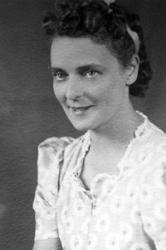
Jan Struther

1901 - 1953 Topics: Advent II The Holy Communion General Author of "High o'er the lonely hills" in The Hymnal of the Protestant Episcopal Church in the United States of America 1940 Jan Struther, given name: Joyce Torrens-Graham [sic Joyce Anstruther] (b. Westminster, London, England, 1901; d. New York, NY, 1953) wrote many poems and essays under the pen name of Jan Struther (derived from her mother's maiden name, Eva Anstruther). In addition to her pen name, Struther also had the married names of Mrs. Anthony Maxtone Graham and, from a second marriage, Mrs. Adolf Kurt Placzek. During World War II she moved with her children to New York City and remained there until her death. In England she is best known for her novel Mrs. Miniver (1940), which consists of sketches of British family life before World War II. Immensely popular, the book was later made into a movie. Struther also wrote comic and serious poetry, essays, and short stories, published in Betsinda Dances and Other Poems (1931), Try Anything Twice (1938), The Glass Blower (1941), and, posthumously, The Children's Bells (1957). Songs of Praise (1931) included twelve of her hymn texts. Bert Polman

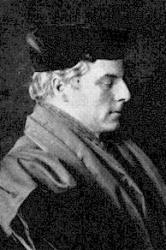
Percy Dearmer

1867 - 1936 Topics: Advent II The Holy Communion Sequence Author of "Book of books, our people's strength" in The Hymnal of the Protestant Episcopal Church in the United States of America 1940 Dearmer, Percy, M.A., son of Thomas Dearmer, was born in London, Feb. 27, 1867, and educated at Westminster School and at Christ Church, Oxford (B.A. 1890, M.A. 1896). He was ordained D. 1891, P. 1892, and has been since 1901 Vicar of S. Mary the Virgin, Primrose Hill, London. He has been Secretary of the London Branch of the Christian Social Union since 1891, and is the author of The Parson's Handbook, 1st edition, 1899, and other works. He was one of the compilers of the English Hymnal, 1906, acting as Secretary and Editor, and contributed to it ten translations (38, 95, 150, 160, 165, 180, 215, 237, 352, 628) and portions of two others (242, 329), with the following originals:— 1. A brighter dawn is breaking. Easter. Suggested by the Aurora lucis, p. 95, but practically original. 2. Father, Who on man dost shower. Temperance. 3. God, we thank Thee, not in vain. Burial. 4. Holy God, we offer here. Holy Communion. 5. Jesu, good above all other. For Children. 6. Lord, the wind and sea obey Thee. For those at Sea. 7. The winter's sleep was long and deep. St. Philip and St. James. [Rev. James Mearns, M.A.] --John Julian, Dictionary of Hymnology, New Supplement (1907)

Pages


Export as CSV
It looks like you are using an ad-blocker. Ad revenue helps keep us running. Please consider white-listing Hymnary.org or getting Hymnary Pro to eliminate ads entirely and help support Hymnary.org.