You help make Hymnary.org possible. More than 10 million people from 200+ countries found hymns, liturgical resources and encouragement on Hymnary.org in 2025, including you. Every visit affirms the global impact of this ministry.

If Hymnary has been meaningful to you this year, would you take a moment today to help sustain it? A gift of any size—paired with a note of encouragement if you wish—directly supports the server costs, research work and curation that keep this resource freely available to the world.

Give securely online today, or mail a check to:
Hymnary.org
Calvin University
3201 Burton Street SE
Grand Rapids, MI 49546

Thank you for your partnership, and may the hope of Advent fill your heart.

Person Results

Text Identifier:"^o_word_of_god_incarnate$"
In:people

Planning worship? Check out our sister site, ZeteoSearch.org, for 20+ additional resources related to your search.
Showing 31 - 40 of 45Results Per Page: 102050

Johannes Herman

1548 - 1563 Person Name: Johann Herman Composer of "MUNICH" in College Hymnal

Robert Prescott Stewart

1825 - 1894 Person Name: R. Stewart Composer of "[O Word of God Incarnate]" in Songs of Worship

B. C. Unseld

1843 - 1923 Person Name: Benjamin Carl Unseld Composer of "[O Word of God incarnate]" in The Endeavor Hymnal Benjamin Carl Unseld, 1843-1923 Born: Oc­to­ber 18, 1843, Shep­herd­stown, West Vir­gin­ia. Died: No­vem­ber 19, 1923. Buried: Elm­wood Ceme­te­ry, Shep­herd­stown, West Vir­gin­ia. After leav­ing school at age 14, Un­seld worked as a clerk in a coun­try store. He re­ceived his first mu­sic­al in­struct­ion around age 15, from a com­pan­ion who had at­tend­ed a sing­ing school. He was shown the rep­re­sen­ta­tion of the scale in the old Car­mi­na Sac­ra, and had it sung for him. At the friend’s sug­gest­ion, he got per­mis­sion from his pas­tor to prac­tice on the church or­gan. Since both boys worked, their on­ly chance to prac­tice was af­ter the store closed at 9:00 p.m., and oc­casion­al­ly at noon­time. They went to the church to­ge­ther and took turns, one at the key­board and the other at the bel­lows. Shortly af­ter the Bat­tle of An­tie­tam in Sep­tem­ber 1862, some of which Un­seld wit­nessed, he left home and be­came a book­keep­er in the gen­er­al of­fic­es of a rail­road in Co­lum­bia, Penn­syl­van­ia. He sang in a choir, and gained fur­ther prac­tice read­ing mu­sic. He rent­ed a mel­o­de­on and spent much time in his room im­pro­vis­ing on it. He bought a co­py of Wood­bur­y’s Har­mo­ny and Mu­sic­al Com­po­si­tion, and stu­died it as well as he could with­out a teach­er. He ac­cept­ed an in­vi­ta­tion to play the or­gan in the lo­cal Meth­od­ist church, on the con­di­tion that he re­ceived the tunes ear­ly in the week so he could learn them. This was his first po­si­tion as an or­ga­nist. In the spring of 1866, he en­tered the Mu­sic­al In­sti­tute in Pro­vi­dence, Rhode Is­land, con­duct­ed by Eben Tour­jée (found­er of the New Eng­land Con­serv­a­to­ry in Bos­ton, Mass­a­chu­setts, and fa­ther of Liz­zie Tour­jée). There he stu­died voice, pi­a­no, or­gan, and har­mo­ny. Af­ter learn­ing of Un­seld’s bus­i­ness ex­per­i­ence, Dr. Tour­jée made him sec­re­ta­ry of the school; in 1867, Un­seld be­came the first sec­re­ta­ry of the New Eng­land Con­ser­va­to­ry. Starting in 1870, Un­seld at­tend­ed schools led by The­o­dore F. Sew­ard. There he met George Webb, Low­ell Mason, James Mc­Gran­a­han, Charles Case, and other not­a­bles in the mu­sic com­mun­i­ty. In 1874, Uns­eld taught at Fisk Un­i­ver­si­ty in Nash­ville, Ten­nes­see, and helped train Fisk’s Ju­bi­lee Sing­ers for their Eur­o­pe­an trip. In 1877 and 1878, he was or­gan­ist and choir mas­ter at St. James’ Epis­co­pal Church, Lan­cas­ter, Penn­syl­van­ia. In 1879, Un­seld moved to New York Ci­ty, and for 15 years taught, led choirs, com­posed and pub­lished. In New York, his mu­sic­al head­quar­ters was the pub­lish­ing house of Big­low & Main Com­pa­ny, where he was in al­most dai­ly con­tact with the pop­u­lar com­pos­ers and teach­ers of the day: Ira San­key, Ho­ra­tio Palm­er, Hu­bert Main, Ro­bert Low­ry, et al. In 1894, Un­seld moved to Cin­cin­na­ti, Ohio, and worked as an ed­it­or for the Fill­more Mu­sic House. In 1898, he moved to Day­ton, Ohio, and worked in a sim­i­lar ca­pa­ci­ty for the Lo­renz Pub­lishing Com­pa­ny. He moved back to New York Ci­ty in 1901, then to Ha­gers­town, Ma­ry­land in 1905. He and his wife Sal­lie were ap­par­ent­ly liv­ing in Ten­nes­see as of 1920. Un­seld’s works in­clude: The Chor­al Stan­dard (New York: Fill­more Bro­thers, 1895) Progress in Song, with E. T. Hil­de­brand (Cin­cin­na­ti, Ohio: The Fill­more Bro­thers Com­pa­ny) Unseld was in­duct­ed in­to the South­ern Gos­pel Mu­sic As­so­ci­a­tion Hall of Fame in 2004. Sources-- Hall, pp. 239-44 Music-- Ancyra Euphemia He Is Ris­en Hordville Make Haste! Meschach Twilight Is Fall­ing Unseld Wonderful Mess­age --www.hymntime.com/tch

Frederick Iliffe

1847 - 1928 Person Name: Dr. Frederick Iliffe Composer of "AUTUMN" in The Song Companion to the Scriptures Born: February 21, 1847, Smeeton-Westerby, Leicestershire, England. Died: February 2, 1928, Warnborough Road, Oxford, England. Iliffe was educated at Oxford University (BMus 1873, DMus 1879). He served as organist at St. Wilfred’s, Kibworth; St. Barnabas’, Oxford (1879-83); organist and choirmaster at St. John’s College, Oxford (1883); St. Mary-the-Virgin, 1900; conductor of Queen’s College Musical Society (1904); and examiner for the Musical Degrees (1908). --www.hymntime.com/tch/

Charles H. Richards

1839 - 1925 Composer of "MACDONALD" in The Wesleyan Methodist Hymnal

J. Remington Fairlamb

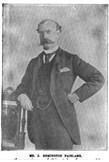
1838 - 1908 Person Name: James R. Fairlamb Composer of "CELESTE" in Luther League Hymnal Mr. J. Remington Fairlamb received his first musical instruction at the hands of his mother. Although he was exceedingly fond of his music, while very young he was more fond of “dreaming” than of “practicing” at the piano. But at the age of twelve the boy came across a copy of Spohr’s oratorio ”The Last Judgment,” which seems to have satisfied his craving and shaped his career. When fourteen years of age he obtained a position as organist of the Western Methodist church, the first of its denomination in Philadelphia to obtain an organ. He afterwards filled the same position in the Tabernacle Baptist Church and succeeded one of the best church musicians of that city as organist and choir master of the Clinton Street Presbyterian church. During his twentieth year Mr. Fairlamb went to Europe and studied first in Paris, the piano under Marmoutel, voice under Masset, and harmony under Danhauser; subsequently he continued his studies under Mabellin in Florence Italy. Returning to America about the outbreak of the Civil War, and being incapacitated for military service by defective eyesight, Mr. Fairlamb accepted the position of Musical Director of the Church of the Epiphany in Washington, D.C. Here he enjoyed the acquaintance of many notable people, including President and Mrs. Lincoln. Being appointed United States consul at Zurich in Switzerland by Mr. Lincoln, he returned to Europe and remained there four years. His compositions number about two hundred in all. His music is distinguishable by dramatic intensity and orchestral ideas. He has published a part of a romantic opera, “Valeri,” and a quartet opera, “Love’s Stratagem.” His songs published in “St. Nicholas Songs” and “Harper’s Young People,” are so simple, quaint and delicate that, says a prominent New York contralto, he would live had he composed nothing else, forever in these.” His “Cradle Song” is a worthy specimen of this style of composition. Mr. Fairlamb has charge of societies in Newburgh, Hudson and Catskill. from The World's Best Music: Famous Songs and Those who Made Them Famous, Volume 1 By Frederic Dean, Reginald De Koven, Gerrit Smith

H. A. Prothero

Person Name: H. A. Prothero (1871- ) Composer of "ALBION" in The Pilgrim Hymnal

J. Hallett Sheppard

1835 - 1879 Person Name: J. Hallet Shepherd Composer of "[O Word of God incarnate]" in The Calvary Hymnal

William A. Hawley

1870 - 1929 Person Name: W. A. Hawley Composer of "HARRIS" in The Church Hymnal Born: Circa 1870, Campbellford (or Belleville), Ontario, Canada. Died: August 29, 1929, Calgary, Alberta, Canada. By age 11, Hawley was the organist at his local Methodist church in Campbellford, and was leading the choir by age 16. He studied medicine briefly in Toronto, then went to the Conservatory of Music in Boston, Massachusetts. He evidently injured his hand, cutting short a promising musical career, and he worked as a piano tuner instead. However, for several years he served as organist at the First Baptist Church in Charlottetown, Prince Edward Island. It was there he joined the Salvation Army (SA); he later worked with the SA in Winnipeg and Calgary, and wrote a number of SA songs. --www.hymntime.com/tch

John Downing Farrer

1829 - 1919 Person Name: J. Downing Farrer Composer of "KISULUTINI" in The Church Missionary Hymn Book Born: Circa February 1829, Lowestoft, Suffolk, England. Died: Circa February 1919, Christchurch District, Hampshire, England. Farrer and his wife were living in Lowestoft as of 1881, and Farrer was in Bournemouth in 1901. --www.hymntime.com/tch/

Pages


Export as CSV
It looks like you are using an ad-blocker. Ad revenue helps keep us running. Please consider white-listing Hymnary.org or getting Hymnary Pro to eliminate ads entirely and help support Hymnary.org.