

 My Starred Hymns
 My FlexScores
 My Hymnals
 My Purchased Files
Planning worship?
Check out our sister site, ZeteoSearch.org,
for 20+ additional resources related to your search.
- |
User Links
Person Results
Fulbert of Chartres
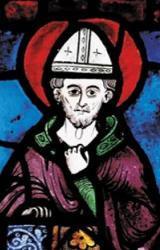
960 - 1028 Person Name: Fulbert of Chartres, ca. 975-1028 Meter: 8.6.8.6 with repeat Author of "Sing, Choirs of New Jerusalem" in Trinity Hymnal (Rev. ed.) Fulbert of Chartres, Saint and Bishop (St. Fulbertus Carnotensis), flourished in the 11th century, having been consecrated Bishop of Chartres (probably) in 1007, and dying on April 10th, 1028. His collected works were published at Paris in 1608, but with the exception of one hymn, "Chorus novae Hierusalem" (q.v.), are very little known. That hymn in its original Latin form was included in the Sarum Breviary, and, in one English form or another, finds a place in most of our English Hymnals as "Ye choirs of New Jerusalem." [Rev. Digby S. Wrangham, M.A.]
--John Julian, Dictionary of Hymnology
Fulbert of Chartres
Austin C. Lovelace

1919 - 2010 Meter: 8.6.8.6 with repeat Arranger of "DOVE OF PEACE" in Trinity Hymnal (Rev. ed.) LOVELACE, AUSTIN C., AAGO: (1919-2010) D.S.M., Union Theological Seminary, New York. Recitals, workshops, festivals, lectures in 17 different denominations in 45 states as well as in Finland, Scotland, Canada, and New Zealand. Past President, Fellow, and Life member, HSUSC. 50 year member, Hymn Society of Great Britain and Ireland. Author of five books; co-editor and consultant of denominational and other hymnals. Longtime member, ASCAP. Composer of over 800 compositions published by 20 publishers. Organist for the 2nd Assembly of the World Council of Churches, 1954. Dean of the first North Carolina Chapter, AGO. Chairman of the 1968 National Convention, AGO, in Denver. Two terms on the National Council, AGO. Co-founder, with Tom Matthews, of the North Shore Chapter, AGO. Minister of Music Emeritus. Denver Chapter, AGO.
Austin C. Lovelace (from In Melody and Song, Darcey Press, 2014)
Austin C. Lovelace
Henry Lahee
1826 - 1912 Person Name: Henry Lahee, 1826-1912 Meter: 8.6.8.6 with repeat Composer of "NATIVITY" in The Hymnary Born: April 11, 1826, Chelsea, London, England.
Died: April 29, 1912, London, England.
Lahee studied under John Goss and William Sterndale Bennett. He played the organ at several churches, including Holy Trinity Church, Brompton (1847-74). He won prizes for his compositions in Bristol, Manchester, Glasgow, and London, and set to music poems by Edgar Allen Poe ("The Bells"), Henry Wadsworth Longfellow ("Building of the Ship") and Alfred Tennyson ("Sleeping Beauty"). His works include:
Metrical Psalter, with William Irons, 1855
Famous Singers of Today and Yesterday, 1898
One Hundred Hymn Tunes
Sources:
Frost, p. 680
CS Concordance, pp. 246-47
Nutter, p. 460
--www.hymntime.com/tch
Henry Lahee
Lowell Mason
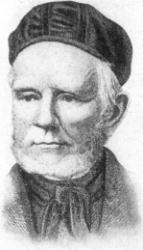
1792 - 1872 Meter: 8.6.8.6 with repeat Arranger of "ANTIOCH" in Trinity Hymnal (Rev. ed.) Dr. Lowell Mason (the degree was conferred by the University of New York) is justly called the father of American church music; and by his labors were founded the germinating principles of national musical intelligence and knowledge, which afforded a soil upon which all higher musical culture has been founded. To him we owe some of our best ideas in religious church music, elementary musical education, music in the schools, the popularization of classical chorus singing, and the art of teaching music upon the Inductive or Pestalozzian plan. More than that, we owe him no small share of the respect which the profession of music enjoys at the present time as contrasted with the contempt in which it was held a century or more ago. In fact, the entire art of music, as now understood and practiced in America, has derived advantage from the work of this great man.
Lowell Mason was born in Medfield, Mass., January 8, 1792. From childhood he had manifested an intense love for music, and had devoted all his spare time and effort to improving himself according to such opportunities as were available to him. At the age of twenty he found himself filling a clerkship in a banking house in Savannah, Ga. Here he lost no opportunity of gratifying his passion for musical advancement, and was fortunate to meet for the first time a thoroughly qualified instructor, in the person of F. L. Abel. Applying his spare hours assiduously to the cultivation of the pursuit to which his passion inclined him, he soon acquired a proficiency that enabled him to enter the field of original composition, and his first work of this kind was embodied in the compilation of a collection of church music, which contained many of his own compositions. The manuscript was offered unavailingly to publishers in Philadelphia and in Boston. Fortunately for our musical advancement it finally secured the attention of the Boston Handel and Haydn Society, and by its committee was submitted to Dr. G. K. Jackson, the severest critic in Boston. Dr. Jackson approved most heartily of the work, and added a few of his own compositions to it. Thus enlarged, it was finally published in 1822 as The Handel and Haydn Society Collection of Church Music. Mason's name was omitted from the publication at his own request, which he thus explains, "I was then a bank officer in Savannah, and did not wish to be known as a musical man, as I had not the least thought of ever making music a profession." President Winchester, of the Handel and Haydn Society, sold the copyright for the young man. Mr. Mason went back to Savannah with probably $500 in his pocket as the preliminary result of his Boston visit.
The book soon sprang into universal popularity, being at once adopted by the singing schools of New England, and through this means entering into the church choirs, to whom it opened up a higher field of harmonic beauty. Its career of success ran through some seventeen editions. On realizing this success, Mason determined to accept an invitation to come to Boston and enter upon a musical career. This was in 1826. He was made an honorary member of the Handel and Haydn Society, but declined to accept this, and entered the ranks as an active member. He had been invited to come to Boston by President Winchester and other musical friends and was guaranteed an income of $2,000 a year. He was also appointed, by the influence of these friends, director of music at the Hanover, Green, and Park Street churches, to alternate six months with each congregation. Finally he made a permanent arrangement with the Bowdoin Street Church, and gave up the guarantee, but again friendly influence stepped in and procured for him the position of teller at the American Bank.
In 1827 Lowell Mason became president and conductor of the Handel and Haydn Society. It was the beginning of a career that was to win for him as has been already stated the title of "The Father of American Church Music." Although this may seem rather a bold claim it is not too much under the circumstances. Mr. Mason might have been in the average ranks of musicianship had he lived in Europe; in America he was well in advance of his surroundings. It was not too high praise (in spite of Mason's very simple style) when Dr. Jackson wrote of his song collection: "It is much the best book I have seen published in this country, and I do not hesitate to give it my most decided approbation," or that the great contrapuntist, Hauptmann, should say the harmonies of the tunes were dignified and churchlike and that the counterpoint was good, plain, singable and melodious.
Charles C. Perkins gives a few of the reasons why Lowell Mason was the very man to lead American music as it then existed. He says, "First and foremost, he was not so very much superior to the members as to be unreasonably impatient at their shortcomings. Second, he was a born teacher, who, by hard work, had fitted himself to give instruction in singing. Third, he was one of themselves, a plain, self-made man, who could understand them and be understood of them."
The personality of Dr. Mason was of great use to the art and appreciation of music in this country. He was of strong mind, dignified manners, sensitive, yet sweet and engaging.
Prof. Horace Mann, one of the great educators of that day, said he would walk fifty miles to see and hear Mr. Mason teach if he could not otherwise have that advantage.
Dr. Mason visited a number of the music schools in Europe, studied their methods, and incorporated the best things in his own work. He founded the Boston Academy of Music. The aim of this institution was to reach the masses and introduce music into the public schools. Dr. Mason resided in Boston from 1826 to 1851, when he removed to New York. Not only Boston benefited directly by this enthusiastic teacher's instruction, but he was constantly traveling to other societies in distant cities and helping their work. He had a notable class at North Reading, Mass., and he went in his later years as far as Rochester, where he trained a chorus of five hundred voices, many of them teachers, and some of them coming long distances to study under him. Before 1810 he had developed his idea of "Teachers' Conventions," and, as in these he had representatives from different states, he made musical missionaries for almost the entire country. He left behind him no less than fifty volumes of musical collections, instruction books, and manuals.
As a composer of solid, enduring church music. Dr. Mason was one of the most successful this country has introduced. He was a deeply pious man, and was a communicant of the Presbyterian Church. Dr. Mason in 1817 married Miss Abigail Gregory, of Leesborough, Mass. The family consisted of four sons, Daniel Gregory, Lowell, William and Henry. The two former founded the publishing house of Mason Bros., dissolved by the death of the former in 1869. Lowell and Henry were the founders of the great organ manufacturer of Mason & Hamlin. Dr. William Mason was one of the most eminent musicians that America has yet produced.
Dr. Lowell Mason died at "Silverspring," a beautiful residence on the side of Orange Mountain, New Jersey, August 11, 1872, bequeathing his great musical library, much of which had been collected abroad, to Yale College.
--Hall, J. H. (c1914). Biography of Gospel Song and Hymn Writers. New York: Fleming H. Revell Company.
Lowell Mason
Nahum Tate
1652 - 1715 Meter: 8.6.8.6 with repeat Author of "While Shepherds Watched Their Flocks" in Trinity Hymnal (Rev. ed.) Nahum Tate was born in Dublin and graduated from Trinity College, Dublin, B.A. 1672. He lacked great talent but wrote much for the stage, adapting other men's work, really successful only in a version of King Lear. Although he collaborated with Dryden on several occasions, he was never fully in step with the intellectual life of his times, and spent most of his life in a futile pursuit of popular favor. Nonetheless, he was appointed poet laureate in 1692 and royal historiographer in 1702. He is now known only for the New Version of the Psalms of David, 1696, which he produced in collaboration with Nicholas Brady. Poverty stricken throughout much of his life, he died in the Mint at Southwark, where he had taken refuge from his creditors, on August 12, 1715.
--The Hymnal 1940 Companion
See also in:
Hymn Writers of the Church
Nahum Tate
Monastery of Our Lady of the Rosary (Summit, N.J.)
Person Name: DNS Meter: 8.6.8.6 with repeat Harmonizer of "FAIRFIELD" in The Summit Choirbook The Monastery of Our Lady of the Rosary is a Dominican convent in Summit, New Jersey. It was founded in 1919.
Monastery of Our Lady of the Rosary (Summit, N.J.)
James Leith Macbeth Bain
1840 - 1925 Person Name: James Leith MacBeth Bain, 1840-1924 Meter: 8.6.8.6 with repeat Composer of "BROTHER JAMES; AIR" in CPWI Hymnal James Leith Macbeth Bain (b. Scotland, c. 1840; d. Liverpool, England, 1925), was a healer, mystic, and poet known simply as Brother James. The tune BROTHER JAMES AIR was first published in his volume The great peace: being a New Year's greeting ... (1915). Born in a devout Christian home, Bain came to doubt the faith but later regained a mystical belief with the aid of the Christo Theosophic Society. He founded the Brotherhood of Healers, and he and his fellow healers often sang to their patients during healing sessions. In the latter years of his life he worked among the poor in the slums of Liverpool. He published a book on healing entitled The Brotherhood of Healers ... (1906).
Psalter Hymnal Handbook, 1988
James Leith Macbeth Bain
William Cowper
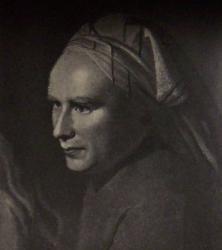
1731 - 1800 Meter: 8.6.8.6 with repeat Author of "The Spirit Breathes upon the Word" in Trinity Hymnal (Rev. ed.) William Cowper (pronounced "Cooper"; b. Berkampstead, Hertfordshire, England, 1731; d. East Dereham, Norfolk, England, 1800) is regarded as one of the best early Romantic poets. To biographers he is also known as "mad Cowper." His literary talents produced some of the finest English hymn texts, but his chronic depression accounts for the somber tone of many of those texts. Educated to become an attorney, Cowper was called to the bar in 1754 but never practiced law. In 1763 he had the opportunity to become a clerk for the House of Lords, but the dread of the required public examination triggered his tendency to depression, and he attempted suicide. His subsequent hospitalization and friendship with Morley and Mary Unwin provided emotional stability, but the periods of severe depression returned. His depression was deepened by a religious bent, which often stressed the wrath of God, and at times Cowper felt that God had predestined him to damnation.
For the last two decades of his life Cowper lived in Olney, where John Newton became his pastor. There he assisted Newton in his pastoral duties, and the two collaborated on the important hymn collection Olney Hymns (1779), to which Cowper contributed sixty-eight hymn texts.
Bert Polman
============
Cowper, William, the poet. The leading events in the life of Cowper are: born in his father's rectory, Berkhampstead, Nov. 26, 1731; educated at Westminster; called to the Bar, 1754; madness, 1763; residence at Huntingdon, 1765; removal to Olney, 1768; to Weston, 1786; to East Dereham, 1795; death there, April 25, 1800.
The simple life of Cowper, marked chiefly by its innocent recreations and tender friendships, was in reality a tragedy. His mother, whom he commemorated in the exquisite "Lines on her picture," a vivid delineation of his childhood, written in his 60th year, died when he was six years old. At his first school he was profoundly wretched, but happier at Westminster; excelling at cricket and football, and numbering Warren Hastings, Colman, and the future model of his versification. Churchill, among his contemporaries or friends. Destined for the Bar, he was articled to a solicitor, along with Thurlow. During this period he fell in love with his cousin, Theodora Cowper, sister to Lady Hesketh, and wrote love poems to her. The marriage was forbidden by her father, but she never forgot him, and in after years secretly aided his necessities. Fits of melancholy, from which he had suffered in school days, began to increase, as he entered on life, much straitened in means after his father's death. But on the whole, it is the playful, humorous side of him that is most prominent in the nine years after his call to the Bar; spent in the society of Colman, Bonnell Thornton, and Lloyd, and in writing satires for The Connoisseur and St. James's Chronicle and halfpenny ballads. Then came the awful calamity, which destroyed all hopes of distinction, and made him a sedentary invalid, dependent on his friends. He had been nominated to the Clerkship of the Journals of the House of Lords, but the dread of appearing before them to show his fitness for the appointment overthrew his reason. He attempted his life with "laudanum, knife and cord,"—-in the third attempt nearly succeeding. The dark delusion of his life now first showed itself—a belief in his reprobation by God. But for the present, under the wise and Christian treatment of Dr. Cotton (q. v.) at St. Albans, it passed away; and the eight years that followed, of which the two first were spent at Huntingdon (where he formed his lifelong friendship with Mrs. Unwin), and the remainder at Olney in active piety among the poor, and enthusiastic devotions under the guidance of John Newton (q. v.), were full of the realisation of God's favour, and the happiest, most lucid period of his life. But the tension of long religious exercises, the nervous excitement of leading at prayer meetings, and the extreme despondence (far more than the Calvinism) of Newton, could scarcely have been a healthy atmosphere for a shy, sensitive spirit, that needed most of all the joyous sunlight of Christianity. A year after his brother's death, madness returned. Under the conviction that it was the command of God, he attempted suicide; and he then settled down into a belief in stark contradiction to his Calvinistic creed, "that the Lord, after having renewed him in holiness, had doomed him to everlasting perdition" (Southey). In its darkest form his affliction lasted sixteen months, during which he chiefly resided in J. Newton's house, patiently tended by him and by his devoted nurse, Mrs. Unwin. Gradually he became interested in carpentering, gardening, glazing, and the tendance of some tame hares and other playmates. At the close of 1780, Mrs. Unwin suggested to him some serious poetical work; and the occupation proved so congenial, that his first volume was published in 1782. To a gay episode in 1783 (his fascination by the wit of Lady Austen) his greatest poem, The Task, and also John Gilpin were owing. His other principal work was his Homer, published in 1791. The dark cloud had greatly lifted from his life when Lady Hesketh's care accomplished his removal to Weston (1786): but the loss of his dear friend William Unwin lowered it again for some months. The five years' illness of Mrs. Unwin, during which his nurse of old became his tenderly-watched patient, deepened the darkness more and more. And her death (1796) brought “fixed despair," of which his last poem, The Castaway, is the terrible memorial. Perhaps no more beautiful sentence has been written of him, than the testimony of one, who saw him after death, that with the "composure and calmness" of the face there “mingled, as it were, a holy surprise."
Cowper's poetry marks the dawn of the return from the conventionality of Pope to natural expression, and the study of quiet nature. His ambition was higher than this, to be the Bard of Christianity. His great poems show no trace of his monomania, and are full of healthy piety. His fame as a poet is less than as a letter-writer: the charm of his letters is unsurpassed. Though the most considerable poet, who has written hymns, he has contributed little to the development of their structure, adopting the traditional modes of his time and Newton's severe canons. The spiritual ideas of the hymns are identical with Newton's: their highest note is peace and thankful contemplation, rather than joy: more than half of them are full of trustful or reassuring faith: ten of them are either submissive (44), self-reproachful (17, 42, 43), full of sad yearning (1, 34), questioning (9), or dark spiritual conflict (38-40). The specialty of Cowper's handling is a greater plaintiveness, tenderness, and refinement. A study of these hymns as they stood originally under the classified heads of the Olney Hymns, 1779, which in some cases probably indicate the aim of Cowper as well as the ultimate arrangement of the book by Newton, shows that one or two hymns were more the history of his conversion, than transcripts of present feelings; and the study of Newton's hymns in the same volume, full of heavy indictment against the sins of his own regenerate life, brings out the peculiar danger of his friendship to the poet: it tends also to modify considerably the conclusions of Southey as to the signs of incipient madness in Cowper's maddest hymns. Cowper's best hymns are given in The Book of Praise by Lord Selborne. Two may be selected from them; the exquisitely tender "Hark! my soul, it is the Lord" (q. v.), and "Oh, for a closer walk with God" (q. v.). Anyone who knows Mrs. Browning's noble lines on Cowper's grave will find even a deeper beauty in the latter, which is a purely English hymn of perfect structure and streamlike cadence, by connecting its sadness and its aspiration not only with the “discord on the music" and the "darkness on the glory," but the rapture of his heavenly waking beneath the "pathetic eyes” of Christ.
Authorities. Lives, by Hayley; Grimshaw; Southey; Professor Goldwin Smith; Mr. Benham (attached to Globe Edition); Life of Newton, by Rev. Josiah Bull; and the Olney Hymns. The numbers of the hymns quoted refer to the Olney Hymns. [Rev. H. Leigh Bennett, M.A.]
--John Julian, Dictionary of Hymnology (1907)
================
Cowper, W. , p. 265, i. Other hymns are:—
1. Holy Lord God, I love Thy truth. Hatred of Sin.
2. I was a grovelling creature once. Hope and Confidence.
3. No strength of nature can suffice. Obedience through love.
4. The Lord receives His highest praise. Faith.
5. The saints should never be dismayed. Providence. All these hymns appeared in the Olney Hymns, 1779.
--John Julian, Dictionary of Hymnology, Appendix, Part II (1907)
=====================
Cowper, W., p. 265, i. Prof. John E. B. Mayor, of Cambridge, contributed some letters by Cowper, hitherto unpublished, together with notes thereon, to Notes and Queries, July 2 to Sept. 24, 1904. These letters are dated from Huntingdon, where he spent two years after leaving St. Alban's (see p. 265, i.), and Olney. The first is dated "Huntingdon, June 24, 1765," and the last "From Olney, July 14, 1772." They together with extracts from other letters by J. Newton (dated respectively Aug. 8, 1772, Nov. 4, 1772), two quotations without date, followed by the last in the N. & Q. series, Aug. 1773, are of intense interest to all students of Cowper, and especially to those who have given attention to the religious side of the poet's life, with its faint lights and deep and awful shadows. From the hymnological standpoint the additional information which we gather is not important, except concerning the hymns "0 for a closer walk with God," "God moves in a mysterious way," "Tis my happiness below," and "Hear what God, the Lord, hath spoken." Concerning the last three, their position in the manuscripts, and the date of the last from J. Newton in the above order, "Aug. 1773," is conclusive proof against the common belief that "God moves in a mysterious way" was written as the outpouring of Cowper's soul in gratitude for the frustration of his attempted suicide in October 1773.
--John Julian, Dictionary of Hymnology, New Supplement (1907)
William Cowper
Richard D. Torrans
Person Name: Richard Torrans Meter: 8.6.8.6 with repeat Composer of "HAIL HOLY" in Our Great Redeemer's Praise
Richard D. Torrans
John Hampden Gurney
1802 - 1862 Person Name: John Hampden Gurney, 1802-1862 Meter: 8.6.8.6 with repeat Author of "Lord, as to Thy dear Cross we flee" in The Hymnary of the United Church of Canada Gurney, John Hampden, M.A., eldest son of Sir John Gurney, a Baron of the Exchequer, was born in Serjeants’ Inn, London, Aug. 15, 1802, and educated at Trinity College, Cambridge, where he graduated in 1824. On taking Holy Orders he became Curate of Lutterworth (1827-1844), and subsequently Rector of St. Mary's, Marylebone, and Prebendary of St. Paul's Cathedral. He died in London, March 8, 1862. The Society for Promoting Christian Knowledge and other religious societies had his cordial sympathy, and received his active support. His publications include several small volumes in prose, and the following:—
(1) Church Psalmody; Hints for the improvement of a Collection of Hymns published by the Society for Promoting Christian Knowledge, 1853; (2) A Collection of Hymns for Public Worship. Lutterworth, 1838. This contains 300 hymns, and is known as his Lutterworth Collection; (3) Psalms and Hymns for Public Worship, selected for some of the Churches of Marylebone. London, 1851. This collection of 300 hymns and psalm versions is known as his Marylebone Collection. The Preface is signed by "Charles Baring," "Thomas Garnier," and "John Hampden Gurney," but the work was practically done by Gurney.
To the Lutterworth Collection 1838, he contributed :—
1. Earth to earth, and dust to dust. Burial.
2. Great King of nations, hear our prayer. Fast Day.
3. Lord, as to Thy dear Cross we flee. Lent.
4. Lord, at Thy word the constant sun. Harvest.
5. Saviour, what wealth was Thine. Passiontide.
6. Soon to the dust we speed. Heaven anticipated.
7. Thou God of mercy and of might. Good Friday.
8. Thou plenteous source of light and love. Advent.
9. Thou Who of old didst raise. Ascension.
10. Through centuries of sin and woe. For Peace.
11. We praise Thee, everlasting God. Te Deum.
These hymns were all signed "J. H. G.," and Nos. 1, 2, 3, 7, 8, 9 and 11, were repeated in the Marylebone Collection, 1851; and to these were added:—
12. Fair waved the golden corn. Child's Hymn.
13. How vast the debt we owe. Offertory.
14. Lord of the Harvest, Thee we hail. Harvest. This is No. 4 above rewritten.
15. Lord, we lift our eyes above. Love of Christ.
In addition to these we are specially indebted to Gurney for, "We saw Thee not when Thou didst come" (q.v.), and "Yes, God is good," &c. (q.v.). Several of the above-named hymns are in extensive use in Great Britain and America. The most popular are annotated under their respective first lines.
-- John Julian, Dictionary of Hymnology (1907)
John Hampden Gurney
Pages