You help make Hymnary.org possible. More than 10 million people from 200+ countries found hymns, liturgical resources and encouragement on Hymnary.org in 2025, including you. Every visit affirms the global impact of this ministry.

If Hymnary has been meaningful to you this year, would you take a moment today to help sustain it? A gift of any size—paired with a note of encouragement if you wish—directly supports the server costs, research work and curation that keep this resource freely available to the world.

Give securely online today, or mail a check to:
Hymnary.org
Calvin University
3201 Burton Street SE
Grand Rapids, MI 49546

Thank you for your partnership, and may the hope of Advent fill your heart.

Person Results

Text Identifier:"^take_my_life_and_let_it_be$"
In:people

Planning worship? Check out our sister site, ZeteoSearch.org, for 20+ additional resources related to your search.
Showing 41 - 50 of 103Results Per Page: 102050

Louis M. Gottschalk

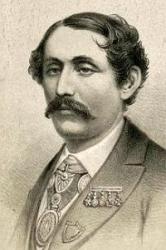
1829 - 1869 Person Name: Louis Moreau Gottschalk Composer of "MERCY" in The Hymnal and Order of Service Louis Moreau Gottschalk USA 1829-1869. Born in New Orleans, LA, to a Jewish father and Creole mother, he had six siblings and half-siblings. They lived in a small cottage in New Orleans. He later moved in with relatives (his grandmother and a nurse). He played the piano from an early age and was soon recognized as a prodigy by new Orleans bourgeois establishments. He made a performance debut at the new St. Charles Hotel in 1840. At 13 he left the U.S. And went to Europe with his father, as they realized he needed classical training to fulfill his musical ambitions. The Paris Conservatory rejected him without hearing him play on the grounds of his nationality. Chopin heard him play a concert there and remarked, “Give me your hand, my child, I predict that you will become the king of pianists. Franz Liszt and Charles Valentin Alkan also recognized his extreme talent. He became a composer and piano virtuoso, traveling far and wide performing, first back to the U.S., then Cuba, Puerto Rico, Central and South America. He was taken with music he heard in those places and composed his own. He returned to the States, resting in NJ, then went to New York City. There he mentored a young Venezuelan student, Carreno, and became concerned that she succeed. He was only able to give her a few lessons, yet she would remember him fondly and play his music the rest of her days. A year after meeting Gottschalk, she performed for President Lincoln and went on to become a renowned concern pianist, earning the nickname “Valkyrie of the Piano”. Gottschalk was also interested in art and made connections with notable figures of the New York art world. He traded one of his compositions to his art friend, Frederic Church, for one of Church's landscape paintings. By 1860 Gootschalk had established himself as the best known pianist in the New World. He supported the Union cause during the Civil War and returned to New Orleans only occasionally for concerts. He traveled some 95,000 miles and gave 1000 concerts by 1865. He was forced to leave the U.S. later that year as a result of a scandelous affair with a student at Oakland Female Seminary in Oakland, CA. He never came back to the U.S. He went to South America giving frequent concerts. At one, in Rio de Janeiro, Brazil, he collapsed from yellow fever as he played a concert. He died three weeks later, never recovering from the collapse, possibly from an overdose of quinine or an abdominal infection. He was buried in Brooklyn, NY. Though some of his works were destroyed or disappeared after his death, a number of them remain and have been recorded by various artists. John Perry

Horatius Bonar

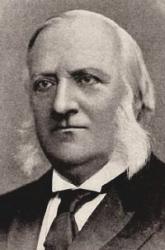
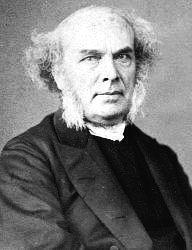
1808 - 1889 Author of "Consecration Hymn" in The Olive Leaf Horatius Bonar was born at Edinburgh, in 1808. His education was obtained at the High School, and the University of his native city. He was ordained to the ministry, in 1837, and since then has been pastor at Kelso. In 1843, he joined the Free Church of Scotland. His reputation as a religious writer was first gained on the publication of the "Kelso Tracts," of which he was the author. He has also written many other prose works, some of which have had a very large circulation. Nor is he less favorably known as a religious poet and hymn-writer. The three series of "Hymns of Faith and Hope," have passed through several editions. --Annotations of the Hymnal, Charles Hutchins, M.A. 1872 ================================ Bonar, Horatius, D.D. Dr. Bonar's family has had representatives among the clergy of the Church of Scotland during two centuries and more. His father, James Bonar, second Solicitor of Excise in Edinburgh, was a man of intellectual power, varied learning, and deop piety. Horatius Bonar was born in Edinburgh, Dec. 19th, 1808; and educated at the High School and the University of Edinburgh. After completing his studies, he was "licensed" to preach, and became assistant to the Rev. John Lewis, minister of St. James's, Leith. He was ordained minister of the North Parish, Kelso, on the 30th November, 1837, but left the Established Church at the "Disruption," in May, 1848, remaining in Kelso as a minister of the Free Church of Scotland. The University of Aberdeen conferred on him the doctorate of divinity in 1853. In 1866 he was translated to the Chalmers Memorial Church, the Grange, Edinburgh; and in 1883 he was chosen Moderator of the General Assembly of of the Free Church of Scotland. Dr. Bonar's hymns and poems were, he tells us, composed amid a great variety of circumstances; in many cases he cannot himself recall these circumstances; they also appeared in several publications, but nearly all have boen published or republished in the following:— (i) Songs for the Wilderness, 1843-4. (2) The Bible Hymn Book, 1845. (3) Hymns, Original and Selected, 1846. (4) Hymns of Faith and Hope, First Series, 1857; Second Series, 1861; Third Series, 1866. (5) The Song of the New Creation, 1872. (6) My Old Letters, a long poem, 1877. (7) Hymns of the Nativity, 1879. (8) Communion Hymns, 1881. In addition to numerous prose works, he has also edited The New Jerusalem; a Hymn of the Olden Time, 1852, &c. Dr. Bonar's poems—-including many beautiful lyrics, several psalm versions, and translations from the Greek and Latin, a large number of hymns, and a long meditative poem—-are very numerous, too numerous, perhaps, for their permanent fame as a whole. Dr. Bonar's scholarship is thorough and extensive; and his poems display the grace of style and wealth of allusion which are the fruit of ripe culture. Affected very slightly by current literary moods, still less by the influence of other religious poetry, they reveal extreme susceptibility to the emotional power which the phases of natural and of spiritual life exercise; the phases of natural life being recognised chiefly as conveying and fashioning spiritual life, used chiefly for depicting spiritual life, and handled for this purpose with greater delicacy of touch than in the Olney Hymns, and with less conscious purpose than in the Christian Year. As a result of this susceptibility, and from habitual contemplation of the Second Advent as the era of this world's true bliss, his hymns and poems are distinguished by a tone of pensive reflection, which some might call pessimism. But they are more than the record of emotion; another element is supplied by his intellectual and personal grasp of Divine truth, these truths particularly:—The gift of a Substitute, our Blessed Saviour; Divine grace, righteous, yet free and universal in offer; the duty of immediate reliance upon the privilege of immediate assurance through that grace; communion with God, especially in the Lord's Supper, respecting which he insists on the privilege of cherishing the highest conceptions which Scripture warrants; and finally, the Second Advent of our Lord: by his vigorous celebration of these and other truths as the source and strength of spiritual life, his hymns are protected from the blight of unhealthy, sentimental introspection. To sum up: Dr. Bonar's hymns satisfy the fastidious by their instinctive good taste; they mirror the life of Christ in the soul, partially, perhaps, but with vivid accuracy; they win the heart by their tone of tender sympathy; they sing the truth of God in ringing notes; and although, when taken as a whole, they are not perfect ; although, in reading them, we meet with feeble stanzas, halting rhythm, defective rhyme, meaningless Iteration; yet a singularly large number have been stamped with approval, both in literary circles and by the Church. In Great Britain and America nearly 100 of Dr. Bonar's hymns are in common use. They are found in almost all modern hymnals from four in Hymns Ancient & Modern to more than twenty in the American Songs for the Sanctuary, N. Y., 1865-72. The most widely known are, "A few more years shall roll;" "Come, Lord, and tarry not;" "Here, O my Lord, I see Thee face to face;" "I heard the Voice of Jesus say;" "The Church has waited long;" and "Thy way, not mine, O Lord." In addition to these and others which are annotated under their respective first lines, the following are also in common use:— From Songs for the Wilderness, No. 1, 1843. 1. For Thee we long and pray. Sunday Morning. 2. Holy Father, hear my cry. A Child's Prayer. 3. I thought upon my sins and I was sad. Christ our Peace. 4. Peace to the world, our Lord is come. A Millennial Song. 5. Spirit of everlasting grace. The Vision of Dry Bones. ii. From Songs for the Wilderness, No. 2,1844. 6. Ho, ye thirsty, parched and fainting. Invitation. 7. 0 'tis not what we fancied it. The world renounced. 8. Sing them, my children, sing them still. Children exhorted to Praise. 9. Time's sun is fast setting. Advent. 10. Weep, pilgrim, weep, yet 'tis not for the sorrow. Faith. 11. Yes, for me, for me He careth. Christ the Elder Brother . iii. From The Bible Hymn Book, 1845. 12. Jesus, my sorrow lies too deep. Jesus, the Great High Priest. 13. There is a Morning Star, my soul. The Morning Star. 14. This is not my place of resting. Pressing towards heaven. iv. From Hymns, Original and Selected, 1845. 15. Let there be light, Jehovah said. Creation. v. From Hymns of Faith and Hope, 1st series, 1857. 16. Be brave, my brother. The Fight of Faith. 17. Blessed be God, our God. Good Friday. 18. Everlasting praises. Doxology. 19. Go up, go up, my heart. Heavenly aspirations desired. 20. I close my heavy eye. Evening. Sometimes given as "We close our heavy eyes." 21. I see the crowd in Pilate's hall. Good Friday. 22. Jesus, while this rongh desert soil. Strength by the Way. 23. Jesus, Whom angel-hosts adore. The Word made Flesh. From "The Son of God, in mighty love." 24. Make haste, 0 man, to live. Exhortation to lay hold of Life. 25. No seas again shall sever. Heaven. 26. Oppressed with noonday's scorching heat. Shadow of the Cross. 27. Rest for the toiling hand. Burial. From "Lie down, frail body, here." 28. Shall this life of mine be wasted? Exhortation to Duty. 29. These are the crowns that we shall wear. Heaven. 30. Thy works, not mine, O Christ [Lord]. The Sin-bearer. 31. Where the faded flower shall freshen. Heaven. vi. From Hymns of Faith and Hope. 2nd series, 1861. 32. Be still, my soul, Jehovah loveth Thee. Rest in the Love of God. 33. Christ has done the mighty work. Good Friday. 34. Come, mighty Spirit, penetrate. Whitsuntide. 35. Deep down beneath the unresting surge. Burial at Sea. 36. Fear not the foe, thou flock of God [thou little flock]. Battle-Song of the Church. 37. For lack of love I languish. Lent. 38. From this bleak hill of storms. Eternal Rest desired. 39. He liveth long who liveth well. The True Life. 40. Here shall death's triumph end: the rock-barred door. Easter. From "The tomb is empty: wouldst thou have it full." 41. Jesus, Sun and Shield art Thou. Jesus the First and Last. 42. Jesus, the Christ of God. Praise to Christ. 43. Light of the world, for ever, ever shining. Christ the Light of the World. From "Why walk in darkness? Has the dear light vanished?" 44. Make use of me, my God. Duty desired. 45. Not what I am, 0 Lord, but what Thou art. The Love of God. 46. 0 Light of Light, shine in. Cry of the Weary. 47. 0 love of God, how strong and true. Love of God. 48. 0 love that casts out fear. Love of God. 49. 0 strong to save and bless. Lent. 50. 0 this soul, how dark and blind. Lent. 51. Safe across the waters. Thanksgiving at end of a journey. 52. Silent, like men in solemn haste. Pressing onwards. 53. Speak, lips of mine. Exhortation to Praise. 54. The Bridegroom comes. Advent. vii. From Hymns of Faith and Hope. 3rd series, 1866. 55. Bear Thou my burden, Thou Who bar'st my sin. Lent or Passiontide. 56. Done is the work that saves. Easter. 57. Father, our children keep. Prayer on behalf of Children. 58. Fill Thou my life, 0 Lord my God. Life's Praise. 59. Finish Thy work, the time is short. Earnest labour to the end. 60. From the Cross the blood is falling. Good Friday. 61. He called them, and they left. Obedience. 62. Help me, my [0] God to speak. Truth desired. 63. Holy Father, Mighty God. Holy Trinity. 64. How are my troubles multiplied. Ps. iii. 65. How sweetly doth He show His face Flower Service. 66. Light hath arisen, we walk in its brightness. Sustaining power of Faith. 67. Lo, God, our God has come. Christmas. 68. Lord, give me light to do Thy work. Divine guidance desired. 69. No, not despairingly. Lent. 70. Not to ourselves again. Life in Christ, or, Living unto God. 71. Now in parting, Father, bless us. Post Communion. 72. Sounds the trumpet from afar. Battle-Song of the Church. 73. Thee in the loving bloom of morn. God in all. 74. Through good report and evil, Lord. Faithfulness. 75. To Jehovah, God of might. Praise to the Father. 76. To the name of God on high. Doxology. 77. Upward, where the stars are burning. Heavenward Aspirations. 78. We take the peace which He hath won. The Gift of Peace. 79. When the weary, seeking rest. Intercession for all Conditions of Men. viii. From The Song of the New Creation,1872. 80. For the Bread and for the Wine. Holy Communion. 81. Light of life so softly shining. Light of Life. 82. Yet there is room. The Lamb's bright hall of song. Home Missions. ix. From Hymns of the Nativity, 1879. 83. Great Ruler of the land and sea. Sailors' Liturgy. From Communion Hymns, 1881. 84. Beloved, let us love. Brotherly Love. In several instances these hymns are given in an abbreviated form, and sometimes alterations are also introduced. In this latter respect however Dr. Bonar has suffered less than most modern hymn-writers. [Rev. James Mearns, M.A.] -- John Julian, Dictionary of Hymnology (1907) ==================== Bonar, Horatius, p. 161, i. He died at Edinburgh, July 31, 1889. In 1890 his son published a posthumous volume of his poetical pieces as Until the Day Break and other Hymns and Poems left behind. The following additional hymns are in common use:— 1. Almighty Comforter and Friend. (1866.) Whitsuntide. 2. Father, make use of me. An altered form of No. 44, p. 162, ii. 3. I ask a perfect creed. (1861.) Creed not Opinions. From this is also taken "O True One, give me truth." 4. Long, long deferred, now come at last. Marriage of the Lamb. Part of "Ascend, Beloved, to the joy." (1861.) 5. Nay 'tis not what we fancied it. (1857.) Vanity of the World. 6. No blood, no altar now. (1861.) The Finished Sacrifice. 7. No shadows yonder. (1857.) Heaven Anticipated. 8. Not with the light and vain. (1857.) Godly Companionship. 9. O Love invisible, yet infinite. (1866.) Divine Love. 10. On the great love of God I lean. (1866.) Love of God our Resting-place. 11. On Thee, O Jesus, strongly leaning. (1866.) Fellowship with Christ. 12. Peace upon peace, like wave on wave. (1866.) Divine Peace. 13. Sower divine, sow the good seed in me. (1857.) Heavenly Sowing. 14. Speaketh the sinner's sin within my heart. (1866.) Ps. xxxvi. 15. Still one in life and one in death. (1857.) Communion of Saints. Part of "'Tis thus they press the hand and part." 16. Surely, yon heaven, where angels see God's face. (1857.) Heaven Anticipated. 17. That city with the jewelled crest. (1857.) Heaven. Part of "These are the crowns that we shall wear." Another cento from the same is "Yon city, with the jewelled crest." 18. That clime is not like this dull clime of ours. (1843.) Heaven. 19. The Free One makes you free: He breaks the rod. (1857.) Freedom in Christ. From "Of old they sang the song of liberty." 20. There is a Morning-star, my soul. (1357.) Christ the Morning Star. 21. This is the day of toil. (1866.) Pressing Onwards. 22. Thy thoughts are here, my God. (1866.) Holy Scripture. 23. Till the day dawn. (1857.) Life's Journey. 24. To Him Who spread the skies. (1866.) Creation's Song. 25. Trustingly, trustingly. (1866.) Trust. 26. Unto th' eternal hills. (1866.) Ps. cxxi. The above dates are: 1843, Songs in the Wilderness; 1857, Hymns of Faith and Hope, 1st Series; 1861, same, 2nd Ser. (not 1864); 1866, same, 3rd Ser. (not 1867), The dates 1857, 1864,1867, were given by Dr. Bonar, but the British Museum copies are 1857, 1861, 1866 respectively. --John Julian, Dictionary of Hymnology, Appendix, Part II (1907) ============== Bonar, H., pp. 161, i.; 1554, i. The Rev. H. N. Bonar, Dr. Bonar's son, published in 1904, Hymns by Horatius Bonar, Selected and Arranged by his Son H. N. Bonar, With a brief History of some of the Hymns, &c. (London: H. Frowde). From this work we must correct the date of his Song of the New Creation to 1872. We have also enriched our pages by additional and expanded notes on several of Dr. Bonar's most widely used hymns. In his biographical notes, Mr. Bonar refers to Dr. Bonar's work as editor of the Quarterly Journal of Prophecy, begun in 1848, to which he contributed a hymn for each number. We find that the number of hymns contributed thereto is 101. With Dr. Bonar's poetical productions great difficulty has been encountered by the historian and annotator because of his absolute indifference to dates and details. It was enough for him that he had written, and that the Church of Christ approved and gladly used what, out of the fulness of his heart, he had given her. --Excerpt from John Julian, Dictionary of Hymnology, New Supplement (1907)

L. L. Pickett

1859 - 1928 Person Name: Rev. L. L. Pickett Composer of "[Take my life, and let it be]" in Tears and Triumphs Rv Leander Lycurgus Pickett USA 1859-1928. Born at Burnsville, MS, he became a Methodist evangelist. He held meetings in several states and at Holiness campgrounds. After marrying Ludie, they served pastorates in northeast TX, and Columbia, SC, before moving to Wilmore, KY. Pickett married Pruvy Melviney Dorough in 1878, and they had a son, James, in 1880. After her death in 1887, he married Ludie in 1888. He was a renowned speaker, leader, minister, author, hymnwriter, and patriot, prominent in the Holiness Movement, and helped found Asbury College (now University), at Wilmore, KY, where he also served as the financial agent of the board of trustees for many years. The Picketts boarded m,inistry students attending Asbury, among whom was missionary E Stanley Jones. In 1905 a student prayer meeting at the Pickett home spilled out to the Asbury campus in a revival that spread around the town of Wilmore. Between 1891 and 1926 Pickett published 11 song books, some with others, including John Sweney, William J Kirkpatrick, John Bryant, Martin Knapp, Elisha A Hoffman, Burke Culpepper, William Marks, Benjamin Butts, and Robert McNeill. He died at Middlesboro, KY. John Perry

M. L. McPhail

Person Name: M. Lindsay Composer of "CONSECRATION" in The Standard Church Hymnal

Walter Bond Gilbert

1829 - 1910 Person Name: Gilbert Composer of "MAIDSTONE" in An Evening Service Book Walter Bond Gilbert DMus United Kingdom 1829-1910. Born at Exeter, Devon, England, he studied music under Alfred Angel, Samuel Wesley and Henry Bishop. He attended New College, Oxford and the University of Toronto, Canada. He was organist in Devon at Topsham in 1847, Bideford in 1849, Kent at Tonbridge in 1854, Old Colliegiate Church, Maidstone in 1859, Lee in 1866, Boston, Lincolnshirein 1868, and Trinity Chapel in New York City in 1869-1897. He taught music at Tonbridge School, helped found the College of Organists, edited the America Episcopal Hymnal, and wrote a number of monographs, including “Antiquities of Maidstone”. He continued to write church music, producing services, oratorios (including “The Restoration of Israel and St. John, 1857), organ works, and anthems. He died at Headington, Oxford, England. John Perry

W. S. Weeden

1847 - 1908 Composer of "[Take my life, and let it be]" in Gospel Songs of Grace and Glory Winfield S. Weeden was born in 1847 in Middleport, OH. In his early life he was active in teaching singing schools throughout that area in Ohio. As singer and associate to Judson VandeVenter in his evangelistic campaigns, Weeden assisted in meetings at East Palestine and Sebring. He compiled several collections of hymns among them The Peacemaker, Songs of the Peacemaker, and Songs of Sovereign Grace. Weeden died in 1908. (see 101 More Hymn Stories, Osbeck, Grand Rapids, MI: Kregel, 1985) Mary Louise VanDyke

Franz Schubert

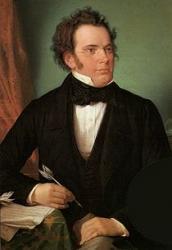
1797 - 1828 Person Name: Schubert Composer of "[Take my life, and let it be]" in Sacred Songs for Little Singers Franz Peter Schubert, 31 January 1797 – 19 November 1828) was an Austrian composer. In a short lifespan of just 31 years, Schubert was a prolific composer, writing some 600 Lieder, nine symphonies (including the famous "Unfinished Symphony"), liturgical music, operas, some incidental music, and a large body of chamber and solo piano music. Appreciation of Schubert's music during his lifetime was limited, but interest in his work increased significantly in the decades following his death. Franz Liszt, Robert Schumann, Johannes Brahms and Felix Mendelssohn, among others, discovered and championed his works in the 19th century. Today, Schubert is seen as one of the leading exponents of the early Romantic era in music and he remains one of the most frequently performed composers. Early life and education Schubert was born in Himmelpfortgrund (now a part of Alsergrund), Vienna, on 31 January 1797. His father, Franz Theodor Schubert, the son of a Moravian peasant, was a parish schoolmaster; his mother, Elisabeth Vietz, was the daughter of a Silesian master locksmith, and had also been a housemaid for a Viennese family prior to her marriage. Of Franz Theodor's fourteen children (one illegitimate child was born in 1783), nine died in infancy; five survived. Their father was a well-known teacher, and his school in Lichtental, a part of Vienna's 9th district, was well attended. He was not a musician of fame or with formal training, but he taught his son some elements of music. At the age of five, Schubert began receiving regular instruction from his father and a year later was enrolled at his father's school. His formal musical education also started around the same time. His father continued to teach him the basics of the violin, and his brother Ignaz gave him piano lessons. At the age of seven, Schubert began receiving lessons from Michael Holzer, the local church organist and choirmaster. Holzer's lessons seem to have mainly consisted of conversations and expressions of admiration and the boy gained more from his acquaintance with a friendly joiner's apprentice who used to take him to a neighboring pianoforte warehouse where he had the opportunity to practice on better instruments. He also played the viola in the family string quartet, with brothers Ferdinand and Ignaz on violin and his father on the cello. Schubert wrote many of his early string quartets for this ensemble. Schubert first came to the attention of Antonio Salieri, then Vienna's leading musical authority, in 1804, when his vocal talent was recognized. In October 1808, he became a pupil at the Stadtkonvikt (Imperial seminary) through a choir scholarship. At the Stadtkonvikt, Schubert was introduced to the overtures and symphonies of Mozart. His exposure to these pieces and various lighter compositions, combined with his occasional visits to the opera set the foundation for his greater musical knowledge. One important musical influence came from the songs of Johann Rudolf Zumsteeg, who was an important Lied composer of the time, which, his friend Joseph von Spaun reported, he "wanted to modernize". Schubert's friendship with Spaun began at the Stadtkonvikt and endured through his lifetime. In those early days, the more well-to-do Spaun furnished the impoverished Schubert with manuscript paper. Meanwhile, his genius began to show in his compositions. Schubert was occasionally permitted to lead the Stadtkonvikt's orchestra, and Salieri decided to begin training him privately in musical composition and theory in these years. It was the first germ of that amateur orchestra for which, in later years, many of his compositions were written. During the remainder of his stay at the Stadtkonvikt he wrote a good deal of chamber music, several songs, some miscellaneous pieces for the pianoforte and, among his more ambitious efforts, a Kyrie (D. 31) and Salve Regina (D. 27), an octet for wind instruments (D. 72/72a, said to commemorate the 1812 death of his mother), a cantata for guitar and male voices (D. 110, in honor of his father's birthday in 1813), and his first symphony (D. 82). At the end of 1813, he left the Stadtkonvikt, and returned home for studies at the Normalhauptschule to train as a teacher. In 1814, he entered his father's school as teacher of the youngest students. For over two years, the young man endured the drudgery of the work, which he performed with very indifferent success. There were, however, other interests to compensate. He continued to receive private lessons in composition from Salieri, who did more for Schubert’s musical training than any of his other teachers. Salieri and Schubert would part ways in 1817. In 1814, Schubert met a young soprano named Therese Grob, the daughter of a local silk manufacturer. Several of his songs (Salve Regina and Tantum Ergo) were composed for her voice, and she also performed in the premiere of his first Mass (D. 105) in September 1814. Schubert intended to marry Grob, but was hindered by the harsh marriage consent law of 1815, which required the ability to show the means to support a family. In November 1816, after failing to gain a position at Laibach, Schubert sent Grob's brother Heinrich a collection of songs, which were retained by her family into the 20th century. One of Schubert's most prolific years was 1815. He composed over 20,000 bars of music, more than half of which was for orchestra, including nine church works, a symphony, and about 140 Lieder. In that year, he was also introduced to Anselm Hüttenbrenner and Franz von Schober, who would become his lifelong friends. Another friend, Johann Mayrhofer, was introduced to him by Spaun in 1814. Maynard Solomon suggested that Schubert was erotically attracted to men, a thesis that has, at times, been heatedly debated. Musicologist and Schubert expert Rita Steblin claimed that he was "chasing women". Supported by friends Significant changes happened in 1816. Schober, a student of good family and some means, invited Schubert to room with him at his mother's house. The proposal was particularly opportune, for Schubert had just made the unsuccessful application for the post of Kapellmeister at Laibach, and he had also decided not to resume teaching duties at his father's school. By the end of the year, he became a guest in Schober's lodgings. For a time, he attempted to increase the household resources by giving music lessons, but they were soon abandoned, and he devoted himself to composition. "I compose every morning, and when one piece is done, I begin another." During this year, he focused on orchestral and choral works, although he also continued to write Lieder. Much of this work was unpublished, but manuscripts and copies circulated among friends and admirers. In early 1817, Schober introduced Schubert to Johann Michael Vogl, a prominent baritone twenty years Schubert's senior. Vogl, for whom Schubert went on to write a great many songs, became one of Schubert's main proponents in Viennese musical circles. He also met Joseph Hüttenbrenner (brother to Anselm), who also played a role in promoting Schubert's music. These, and an increasing circle of friends and musicians, became responsible for promoting, collecting, and, after his death, preserving his work. In late 1817, Schubert's father gained a new position at a school in Rossau (not far from Lichtental). Schubert rejoined his father and reluctantly took up teaching duties there. In early 1818, he was rejected for membership in the prestigious Gesellschaft der Musikfreunde, something that might have furthered his musical career. However, he began to gain more notice in the press, and the first public performance of a secular work, an overture performed in February 1818, received praise from the press in Vienna and abroad. Schubert spent the summer of 1818 as music teacher to the family of Count Johann Karl Esterházy at their château in Zseliz (then in Hungary, now in Slovakia). His duties were relatively light (teaching piano and singing to the two daughters, Marie and Karoline), and the pay was relatively good. As a result, he happily continued to compose during this time. It may have been at this time that he wrote one of his now world-famous compositions, the Marche militaire No. 1 in D major. Marie and Karoline both being his piano students, and the original score of "Marche Militaire" being a piano duet, lend credence to this view. On his return from Zseliz, he took up residence with his friend Mayrhofer. The respite at Zseliz led to a succession of compositions for piano duet. During the early 1820s, Schubert was part of a close-knit circle of artists and students who had social gatherings together that became known as "Schubertiaden". The tight circle of friends with which Schubert surrounded himself was dealt a blow in early 1820. Schubert and four of his friends were arrested by the Austrian police, who (in the aftermath of the French Revolution and Napoleonic Wars) were on their guard against revolutionary activities and suspicious of any gathering of youth or students. One of Schubert's friends, Johann Senn, was put on trial, imprisoned for over a year, and then permanently forbidden to enter Vienna. The other four, including Schubert, were "severely reprimanded", in part for "inveighing against [officials] with insulting and opprobrious language". While Schubert never saw Senn again, he did set some of his poems, "Selige Welt" and "Schwanengesang", to music. The incident may have played a role in a falling-out with Mayrhofer, with whom he was living at the time. He was nicknamed "Schwämmerl" by his friends, which Gibbs describes as translating to "Tubby" or "Little Mushroom". "Schwammerl" is Austrian (and other) dialect for mushroom; the umlaut makes it a diminutive. Musical maturity The compositions of 1819 and 1820 show a marked advance in development and maturity of style. The unfinished oratorio "Lazarus" (D. 689) was begun in February; later followed, amid a number of smaller works, by the 23rd Psalm (D. 706), the Gesang der Geister (D. 705/714), the Quartettsatz in C minor (D. 703), and the "Wanderer Fantasy" for piano (D. 760). Of most notable interest is the staging in 1820 of two of Schubert's operas: Die Zwillingsbrüder (D. 647) appeared at the Theater am Kärntnertor on 14 June, and Die Zauberharfe (D. 644) appeared at the Theater an der Wien on 21 August. Hitherto, his larger compositions (apart from his masses) had been restricted to the amateur orchestra at the Gundelhof, a society which grew out of the quartet-parties at his home. Now he began to assume a more prominent position, addressing a wider public. Publishers, however, remained distant, with Anton Diabelli hesitantly agreeing to print some of his works on commission. The first seven opus numbers (all songs) appeared on these terms; then the commission ceased, and he began to receive the meager pittances which were all that the great publishing houses ever paid him. The situation improved somewhat in March 1821 when Vogl sang "Der Erlkönig" at a concert that was extremely well received. That month, Schubert composed a variation on a waltz by Anton Diabelli (D. 718), being one of the fifty composers who contributed to Vaterländischer Künstlerverein. The production of the two operas turned Schubert's attention more firmly than ever in the direction of the stage, where, for a variety of reasons, he was almost completely unsuccessful. All in all, he produced seventeen stage works, each of them failures which were quickly forgotten. In 1822, Alfonso und Estrella was refused, partly owing to its libretto. Fierrabras (D. 796) was rejected in the fall of 1823, but this was largely due to the popularity of Rossini and the Italian operatic style, and the failure of Carl Maria von Weber's Euryanthe. Die Verschworenen (The Conspirators, D. 787) was prohibited by the censor (apparently on the grounds of its title), and Rosamunde (D. 797) was withdrawn after two nights, owing to the poor quality of the play for which Schubert had written incidental music. Of these works, the two former are written on a scale which would make their performances exceedingly difficult (Fierrabras, for instance, contains over 1,000 pages of manuscript score), but Die Verschworenen is a bright attractive comedy, and Rosamunde contains some of the most charming music that Schubert ever composed. In 1822, he made the acquaintance of both Weber and Beethoven, but little came of it in either case. Beethoven is said to have acknowledged the younger man's gifts on a few occasions, but some of this is likely legend and in any case he could not have known the real scope of Schubert's music – especially not the instrumental works – as so little of it was printed or performed in the composer's lifetime. On his deathbed, Beethoven is said to have looked into some of the younger man's works and exclaimed, "Truly, the spark of divine genius resides in this Schubert!" but what would have come of it if he had recovered we can never know. Last years and masterworks Despite his preoccupation with the stage, and later with his official duties, Schubert found time during these years for a significant amount of composition. He completed the Mass in A flat (fr) (D. 678) and, in 1822, embarked suddenly on a work which more decisively than almost any other in those years showed his maturing personal vision, the "Unfinished Symphony" in B minor. The reason he left it unfinished after two movements and sketches some way into a third remains an enigma, and it is also remarkable that he did not mention it to any of his friends even though, as Brian Newbould notes, he must have felt thrilled by what he was achieving. The event has been debated endlessly without resolution. In 1823 Schubert, in addition to Fierrabras, also wrote his first song cycle, Die schöne Müllerin (D. 795), setting poems by Wilhelm Müller. This series, together with the later cycle "Winterreise" (D. 911, also setting texts of Müller in 1827) is widely considered one of the pinnacles of Lieder. He also composed the song Du bist die Ruh ("You are stillness/peace") D. 776 during this year. Also in that year, symptoms of syphilis first appeared. In 1824, he wrote the variations for flute and piano on "Trockne Blumen", from the cycle Die schöne Müllerin, and several string quartets. He also wrote the Arpeggione Sonata (D. 821), at a time when there was a minor craze over that instrument. In the spring of that year he wrote the Octet in F (D. 803), "A Sketch for a Grand Symphony"; and in the summer went back to Zseliz. There he became attracted to Hungarian musical idiom, and wrote the Divertissement à la hongroise (D. 818) for piano duet and the String Quartet in A minor (D. 804). It has been said that he held a hopeless passion for his pupil, the Countess Karoline Eszterházy, but the only work he dedicated to her was his Fantasie in F minor (D. 940) for piano duet. The setbacks of previous years were compensated for by the prosperity and happiness of 1825. Publication had been moving more rapidly; the stress of poverty was for a time lightened; and in the summer he had a pleasant holiday in Upper Austria, where he was welcomed with enthusiasm. It was during this tour that he produced his "Songs from Sir Walter Scott". This cycle contains Ellens dritter Gesang (D. 839), a setting of Adam Storck's German translation of Scott's hymn from The Lady of the Lake, which is widely, though mistakenly, referred to as "Schubert's Ave Maria". It opens with the greeting Ave Maria, which recurs in the refrain; the entire Scott/Storck text in Schubert's song is frequently substituted with the complete Latin text of the traditional Ave Maria prayer. In 1825, Schubert also wrote the Piano Sonata in A minor (Op. 42, D. 845), and began the "Great" C major

Theodore E. Perkins

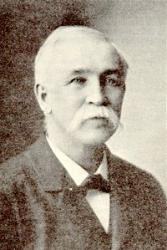
1831 - 1912 Person Name: Theo. E. Perkins Composer of "[Take my life, and let it be]" in Songs Tried and Proved Theodore E. Perkins was born at Poughkeepsie, on the Hudson, N.Y., July 21, 1831. His father was a Baptist clergyman. The family of ten brothers and sisters sang and played various instruments, forming among themselves both choir and orchestra. His musical education began at the early age of three years. During his father's pastorate at Hamilton, N. Y., the choir rehearsals were often held at the parsonage, and the leader used to place the three-year-old on a small stool, on the table around which the choir was assembled, giving him a chance to both see and hear. Later on he played the violincello in church, standing on a stool in order to finger the instrument. The home gatherings — especially on Thanksgiving Day, are the recollections among the happiest of his childhood. His father became pastor of the Berean Baptist Church in New York City, in 1839, giving him the opportunity of studying the pianoforte, of which he became a proficient player. His fine alto voice soon gave him notoriety. At the age of nineteen while filling a position as clerk in New York, all his spare time was given to the study of voice and piano. In 1851 he went to Hamilton, N. Y., taught music in Madison University (now Colgate), and in the Female Seminary. In 1854 he went to Port Jervis, N. Y., where he taught singing school, and April 30, 1855, married Mary Frances Caskey, who was for years his soprano soloist in many musical Festivals and Conventions. Soon after marriage he removed to Salem, N. J., where his lifework as singing school teacher really began, including Bridgeton and prominent towns in southern New Jersey. During the summer of 1856 he and his wife were pupils of the Normal Academy of Music at North Reading, Mass., conducted by Drs. Lowell Mason and Geo. F. Root. During 1856-1858 he was given the position of assistant teacher and manager. His association with these two great men gave an inspiration to all his future work. In 1859 he was co-principal with Wm. B. Bradbury at the Normal Academy of Music, Geneseo, N. Y. He remained at Geneseo until 1863. Professor Perkins also held very successful schools in North Pelham Province of Ontario, Canada, and in 1864-1868 was principal in schools at Tunkhannock and Meadville, Pa. In 1860, The Olive Branch, his first book of church music, was published by F. J. Huntington, New York City, the sales reaching 100,000. Next was Oriental, which sold over 30,000. The Union, Glees and Anthems, and Sabbath Anthems followed ; then The Sacred Lute, which sold over 300,000. His Sunday-school books commenced with The Evergreen, followed by the Shining Star and New Shining Star. Then came Psalm King, which was the last of the books published by Mr. Huntington. Hallowed Songs was published by Philip Phillips; The Sunday School Banner was published by Wm. B. Bradbury. The Royal Standard was published in Toronto, Canada. The Golden Promise, Sabbath Carols, The Mount Zion Collection were published under his own supervision. His Free Sunday School Songs several times numbered over 500,000 a month. Coronation Songs with Rev. Dr. Deems as hymn editor was published by A. S. Barnes Co., who also published Psalms and Hymns and Spiritual Songs, in which Dr. C. S. Robinson was hymn editor, who with Professor Perkins edited Calvary Songs, published by the American S. S. Union. Gospel Tent Songs was evangelical. The Safe-Guard Singer was his temperance book. Mr. Perkins was musical director in the following churches in Brooklyn: The Lafayette Avenue Presbyterian Church, Rev. Dr. Cuyler; Strong Place Baptist Church, Rev. E. E. L. Taylor, D. D.; Madison Avenue Baptist Church, Rev. H. G. Weston, D. D., L. L. D.; Fifth Avenue Presbyterian Church, Rev. Dr. Rice, followed by Dr. John Hall; The Memorial Presbyterian Church, Rev. Dr. C. S. Robinson, who was his close friend; The Church of the Holy Trinity, Rev. Dr. Tyng, Jr. ; Trinity Baptist Church, Rev. Dr. J. B. Simmons, and Washington Square M. E. Church. In Philadelphia: The Fifth Baptist Church, Rev. Dr. Chase; The Eleventh Baptist Church, Rev. Dr. Colman; The Tabernacle M. E. Church, Rev. George Gaul, D. D. He was leader and singer in Evangelistic Services, at the Rink, The Old Madison Square Garden and Cooper Union, all of New York City. The music of the first great meeting of the world's Evangelical Alliance, held for ten days in New York City, was under his direction, as was the first National Sunday School convention, held in Newark, N. J. He was also conductor at the Golden Anniversary of the Female Guardian Society, leading a chorus of forty-two hundred children. In the opening chorus, Great is the Lord, by Dr. Calcott, the word "Great" was given with so much decision and power that the clergymen on the platform sprang to their feet and remained standing until the chorus was finished. He taught voice culture in Princeton and Lafayette Universities, The Union Theological Seminary, New York City; Crozer Seminary, Chester, Pa., and organized the music department of Temple University, Philadelphia, continuing in charge four years. He had charge of the children's choir of Howard Mission, New York City, for twenty-five years, and thinks that some of the happiest and most restful of the working hours were spent in teaching the poor children of the fourth and sixth wards to sing the Gospel. Mr. Sankey said to Mr. Perkins that " Jesus of Nazareth was my banner song for eight years." Jesus is Mine has been sung at the Christian's death-bed, the grave, and once as the convict was going to the scaffold. His Christmas Carol Sweetly Carol had a very large sale in this country, and was republished in England, France, Italy, and Germany. For a period of forty years he has made the study of the voice special work. The most thorough investigations of the voice and its possibilities were made with the assistance of the late John Howard, extending over a period of twenty-five years, during which he has had the care of over two thousand voices. He published a work entitled, Physiological Yoice Culture, edited by his son, the late T. Edward Perkins, M. D., physician and throat specialist of Philadelphia. Mr. Perkins also completed a method of voice culture based on the principles of John Howard's Physiology of Artistic Singing." During these years of work he has found time to edit thirty-four books of church, Sunday-school, day-school, and glee music, the larger portion having been previously mentioned. Also songs and ballads in sheet form, and a cantata entitled, The Excursion, libretto by Fanny Crosby, with whom there has existed an unbroken friendship for over forty years. -Biography of Gospel Song and hymn Writers

William F. Sherwin

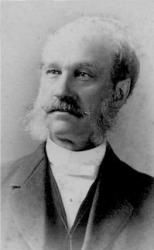
1826 - 1888 Person Name: W. F. S. Composer of "[Take my life, and let it be]" in Pure Delight Sherwin, William Fisk, an American Baptist, was born at Buckland, Massachusetts, March 14,1826. His educational opportunities, so far as schools were concerned, were few, but he made excellent use of his time and surroundings. At fifteen he went to Boston and studied music under Dr. Mason: In due course he became a teacher of vocal music, and held several important appointments in Massachusetts; in Hudson and Albany, New York County, and then in New York City. Taking special interest in Sunday Schools, he composed carols and hymn-tunes largely for their use, and was associated with the Rev. R. Lowry and others in preparing Bright Jewels, and other popular Sunday School hymn and tune books. A few of his melodies are known in Great Britain through I. D. Sankey's Sacred Songs and Solos, where they are given with his signature. His hymnwriting was limited. The following pieces are in common use:— 1. Grander than ocean's story (1871). The Love of God. 2. Hark, bark, the merry Christmas bells. Christmas Carol. 3. Lo, the day of God is breaking. The Spiritual Warfare. 4. Wake the song of joy and gladness. Sunday School or Temperance Anniversary. 5. Why is thy faith, 0 Child of God, so small. Safety in Jesus. Mr. Sherwin died at Boston, Massachusetts, April 14, 1888. -- John Julian, Dictionary of Hymnology (1907) ================== Sherwin, W. F., p. 1055, i. Another hymn from his Bright Jewels, 1869, p. 68, is "Sound the battle cry" (Christian Courage), in the Sunday School Hymnary, 1905, and several other collections. --John Julian, Dictionary of Hymnology, New Supplement (1907)

George M. Garrett

1834 - 1897 Person Name: G. M. Garrett Composer of "CONSECRATION" in The Church Hymnary Born: June 8, 1834, Winchester, Hampshire, England. Died: April 9, 1897, Cambridge, England. Buried: Cambridge Mill Road Cemetery, Cambridge, England

Pages


Export as CSV
It looks like you are using an ad-blocker. Ad revenue helps keep us running. Please consider white-listing Hymnary.org or getting Hymnary Pro to eliminate ads entirely and help support Hymnary.org.