You help make Hymnary.org possible. More than 10 million people from 200+ countries found hymns, liturgical resources and encouragement on Hymnary.org in 2025, including you. Every visit affirms the global impact of this ministry.

If Hymnary has been meaningful to you this year, would you take a moment today to help sustain it? A gift of any size—paired with a note of encouragement if you wish—directly supports the server costs, research work and curation that keep this resource freely available to the world.

Give securely online today, or mail a check to:
Hymnary.org
Calvin University
3201 Burton Street SE
Grand Rapids, MI 49546

Thank you for your partnership, and may the hope of Advent fill your heart.

Person Results

Tune Identifier:"^brown_bradbury$"
In:people

Planning worship? Check out our sister site, ZeteoSearch.org, for 20+ additional resources related to your search.
Showing 51 - 59 of 59Results Per Page: 102050

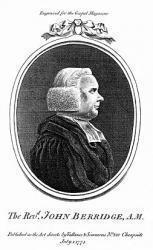
John Berridge

1716 - 1793 Author of "I Ask My Dying Savior Dear" in The Cyber Hymnal Berridge, John, born at Kingston, Notis, March 1, 1716, and educated at Clare Hall, Cambridge. In 1749 he was ordained as curate to the parish of Stapleford, near Cambridge, and in 1755 he was preferred to the Vicarage of Everton, where he died Jan. 22, 1793. His epitaph, written by himself for his own tombstone (with date of death filled in), is an epitome of his life. It reads:— " Here lies the remains of John Berridge, late Vicar of Everton, and an itinerate servant of Jesus Christ, who loved his Master and His work; and after running on His errands for many years, was caught up to wait on Him above. Reader! art thou born again? (No salvation without a new birth.) I was born in sin, February, 1716; remained ignorant of my fallen state till 1730; lived proudly on faith and works for salvation till 1754; was admitted to Everton Vicarage, 1755; fled to Jesus for refuge, 1755; fell asleep in Jesus, January 22,1793." The first collection of Berridge's hymns was published as A Collection of Divine Songs, 1760. This was subsequently suppressed. In 1785 his Sion's Songs; or, Hymns composed for the use of them that love and follow the Lord Jesus Christ in Sincerity were published. The work contains 342 hymns, some of which had previously appeared in the Gospel Magazine (from 1775 to 1777, 20 in all), under the signature of "Old Everton" and others were adapted from C. Wesley. The most popular of these in modern collections are, "Jesus, cast a look on me;" "O happy saints who dwell in light;” and "Since Jesus freely did appear." Concerning his hymns published in 1785, he says in his Preface:— “Twelve years ago these hymns were composed in a six months' illness, and have since laid neglected by me, often threatened with the fire, but have escaped that martyrdom." -- John Julian, Dictionary of Hymnology (1907) ================== Berridge, John, p. 138, i. The 1842 edition of his Sion's Songs has an elaborate preface by J. C. Philpot, the editor. From this collection the following additional hymns are in common use:— 1. I ask my dying Saviour dear. Sealed by Christ. 2. Lord Jesus, Who didst once appear. Holy Matrimony. An altered form of "Since Jesus freely did appear," p. 1059, i. 3. Soon as faith the Lord can see. None but Jesus. --John Julian, Dictionary of Hymnology, Appendix, Part II (1907)

Thomas Sternhold

1449 - 1549 Author of "Attend, My People, To My Law" in The Cyber Hymnal Thomas Sternhold was Groom of the Robes to Henry VIII and Edward VI. With Hopkins, he produced the first English version of the Psalms before alluded to. He completed fifty-one; Hopkins and others composed the remainder. He died in 1549. Thirty-seven of his psalms were edited and published after his death, by his friend Hopkins. The work is entitled "All such Psalms of David as Thomas Sternhold, late Groome of the King's Majestye's Robes, did in his Lyfetime drawe into Englyshe Metre." Of the version annexed to the Prayer Book, Montgomery says: "The merit of faithful adherence to the original has been claimed for this version, and need not to be denied, but it is the resemblance which the dead bear to the living." Wood, in his "Athenae Oxonlenses" (1691, vol. I, p. 62), has the following account of the origin of Sternhold's psalms: "Being a most zealous reformer, and a very strict liver, he became so scandalized at the amorous and obscene songs used in the Court, that he, forsooth, turned into English metre fifty-one of David's psalms, and caused musical notes to be set to them, thinking thereby that the courtiers would sing them instead of their sonnets; but they did not, some few excepted. However, the poetry and music being admirable, and the best that was made and composed in these times, they were thought fit to be sung in all parochial churches." Of Sternhold and Hopkins, old Fuller says: "They were men whose piety was better than their poetry, and they had drunk more of Jordan than of Helicon." Sternhold and Hopkins may be taken as the representatives of the strong tendency to versify Scripture that came with the Reformation into England--a work men eagerly entered on without the talent requisite for its successful accomplishment. The tendency went so far, that even the "Acts of the Apostles" was put into rhyme, and set to music by Dr. Christopher Tye. --Annotations of the Hymnal, Charles Hutchins, M.A. 1872.

Frances Annette (Coan) Percy

1843 - 1918 Person Name: Frances Annette Percy Author of "O Father, Hear My Morning Prayer" in Sunday School Hymnal

Ilyas Saleh

1839 - 1885 Person Name: الياس بن موسى بن سمعان صالح Author of "نحمدك اللهم واسمك العلي قريب" in بهجة الضمير في نظم المزامير (Psalter) إلياس بن موسى بن سمعان صالح المعروف بإلياس صالح اللاذقي Syrian poet, writer, and historian.

Heinrich Cornelius Hecker

1699 - 1743 Person Name: Heinr. Corn. Hecker Author of "Immanuel! der Herr ist hier" in Kleiner Liederschatz

Joseph Tritton

1819 - 1887 Author of "Behold He Comes!" in The Cyber Hymnal Tritten, Joseph, ws born at Battersea, Surrey, Sept. 21, 1819, educated at Charterhouse and other schools, and was for upwards of 40 years a partner in the banking-house of Barclay, Bevan, Tritton & Co., Lombard Street. He was a member of the Baptist Denomination, and for many years Treasurer of the Baptist Foreign Missionary Society, and of a number of other important philanthropic and religious institutions. During the latter part of life his residence was Bloomfield, Norwood. He died May 1, 1887. Mr. Tritton was for many years an occasional writer of hymns and poems. Two of the hymns sung at the opening of the Metropolitan Tabernacle, in 1861, were composed by him for that occasion, and afterwards incorporated by Mr. Spurgeon in Our Own Hymn Book, 1866. These are:— 1. Sing to the Lord with heart and voice. Opening of a Place of Worship. 2. Spirit of glory and of grace. Opening of a Place of Worship. A third hymn in the same book, 3. Behold He comes! the glorious King (Second Advent), was composed in 1856. In the 1880 Supplement to the Baptist Psalms & Hymns are two hymns prepared for use at meetings of the Baptist Missionary Society in 1880. These are:— 4. Head of the Church and Lord of all. Missions. 5. Lord God of our salvation. Missions. Other hymns of merit by Mr. Tritton have appeared from time to time in The Missionary Herald. [Rev. W. R. Stevenson, M.A.] -- John Julian, Dictionary of Hymnology (1907)

Ella M. Robinson

Author of "Saudando o Sábado" in Louvores ao Rei

R. Chester Barger

1902 - 1994 Person Name: R. C. Barger Arranger of "[Com que prazer, aguardo eu o dia do Senhor]" in Louvores ao Rei

Adele M. Harper

Author of "I Am The Life" in The Cyber Hymnal

Pages


Export as CSV
It looks like you are using an ad-blocker. Ad revenue helps keep us running. Please consider white-listing Hymnary.org or getting Hymnary Pro to eliminate ads entirely and help support Hymnary.org.