

 My Starred Hymns
 My FlexScores
 My Hymnals
 My Purchased Files
Planning worship?
Check out our sister site, ZeteoSearch.org,
for 20+ additional resources related to your search.
- |
User Links
Person Results
St. Bernard of Clairvaux
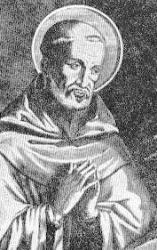
1090 - 1153 Person Name: Bernard of Clairvaux, 1091-1153 Author of "O Jesus, King most wonderful" in The Riverdale Hymn Book Bernard of Clairvaux, saint, abbot, and doctor, fills one of the most conspicuous positions in the history of the middle ages. His father, Tecelin, or Tesselin, a knight of great bravery, was the friend and vassal of the Duke of Burgundy. Bernard was born at his father's castle on the eminence of Les Fontaines, near Dijon, in Burgundy, in 1091. He was educated at Chatillon, where he was distinguished for his studious and meditative habits. The world, it would be thought, would have had overpowering attractions for a youth who, like Bernard, had all the advantages that high birth, great personal beauty, graceful manners, and irresistible influence could give, but, strengthened in the resolve by night visions of his mother (who had died in 1105), he chose a life of asceticism, and became a monk. In company with an uncle and two of his brothers, who had been won over by his entreaties, he entered the monastery of Citeaux, the first Cistercian foundation, in 1113. Two years later he was sent forth, at the head of twelve monks, from the rapidly increasing and overcrowded abbey, to found a daughter institution, which in spite of difficulties and privations which would have daunted less determined men, they succeeded in doing, in the Valley of Wormwood, about four miles from the Abbey of La Ferté—itself an earlier swarm from the same parent hive—on the Aube. On the death of Pope Honorius II., in 1130, the Sacred College was rent by factions, one of which elected Gregory of St. Angelo, who took the title of Innocent II., while another elected Peter Leonis, under that of Anacletua II. Innocent fled to France, and the question as to whom the allegiance of the King, Louie VI., and the French bishops was due was left by them for Bernard to decide. At a council held at Etampes, Bernard gave judgment in favour of Innocent. Throwing himself into the question with all the ardour of a vehement partisan, he won over both Henry I., the English king, and Lothair, the German emperor, to support the same cause, and then, in 1133, accompanied Innocent II., who was supported by Lothair and his army, to Italy and to Rome. When Lothair withdrew, Innocent retired to Pisa, and Bernard for awhile to his abbey of Clairvaux. It was not until after the death of Anacletus, the antipope, in January, 1138, and the resignation of his successor, the cardinal-priest Gregory, Victor II., that Innocent II., who had returned to Rome with Bernard, was universally acknowledged Pope, a result to which no one had so greatly contributed as the Abbot of Clairvaux. The influence of the latter now became paramount in the Church, as was proved at the Lateran Council of 1139, the largest council ever collected together, where the decrees in every line displayed the work of his master-hand. After having devoted four years to the service of the Pope, Bernard, early in 1135, returned to Clairvaux. In 1137 he was again at Rome, impetuous and determined as ever, denouncing the election of a Cluniac instead of a Clairvaux monk to the see of Langres in France, and in high controversy in consequence with Peter, the gentle Abbot of Cluny, and the Archbishop of Lyons. The question was settled by the deposition by the Pope of the Cluniac and the elevation of a Clairvaux monk (Godfrey, a kinsman of St. Bernard) into his place. In 1143, Bernard raised an almost similar question as to the election of St. William to the see of York, which was settled much after the same fashion, the deposition, after a time, if only for a time, of William, and the intrusion of another Clairvaux monk, Henry Murdac, or Murduch, into the archiepiccopal see. Meantime between these two dates—in 1140—the condemnation of Peter Abilaid and his tenets, in which matter Bernard appeared personally as prosecutor, took place at a council held at Sens. Abelard, condemned at Sens, appealed to Rome, and, resting awhile on his way thither, at Cluny, where Peter still presided as Abbot, died there in 1142. St. Bernard was next called upon to exercise his unrivalled powers of persuasion in a very different cause. Controversy over, he preached a crusade. The summer of 1146 was spent by him in traversing France to rouse the people to engage in the second crusade; the autumn with a like object in Germany. In both countries the effect of his appearance and eloquence was marvellous, almost miraculous. The population seemed to rise en masse, and take up the cross. In 1147 the expedition started, a vast horde, of which probably not a tenth ever reached Palestine. It proved a complete failure, and a miserable remnant shared the flight of their leaders, the Emperor Conrad, and Louis, King of France, and returned home, defeated and disgraced. The blame was thrown upon Bernard, and his apology for his part in the matter is extant. He was not, however, for long to bear up against reproach; he died in the 63rd year of his age, in 1153, weary of the world and glad to be at rest.
With the works of St. Bernard, the best ed. of which was pub. by Mabillon at Paris in the early part of the 18th cent. (1719), we are not concerned here, except as regards his contributions, few and far between as they are, to the stores of Latin hymnology. There has been so much doubt thrown upon the authorship of the hymns which usually go by his name,—notably by his editor, Mabillon himself,—that it is impossible to claim any of them as having been certainly written by him; but Archbishop Trench, than whom we have no greater modern authority on such a point, is satisfied that the attribution of them all, except the "Cur mundus militat," to St. Bernard is correct. "If he did not write," the Archbishop says, "it is not easy to guess who could have written them; and indeed they bear profoundly the stamp of his mind, being only inferior in beauty to his prose."
The hymns by which St. Bernard is best known as a writer of sacred poetry are: (1.) "Jesu duicis memoria," a long poem on the " Name of Jesus"—known as the "Jubilus of St. Bernard," and among mediaeval writers as the " Rosy Hymn." It is, perhaps, the best specimen of what Neale describes as the "subjective loveliness " of its author's compositions. (2.) "Salve mundi Salutore," an address to the various limbs of Christ on the cross. It consists of 350 lines, 50 lines being addressed to each. (3.) "Laetabundus, exultet fidelis chorus: Alleluia." This sequence was in use all over Europe. (4.) "Cum sit omnis homo foenum." (5.) " Ut jucundas cervus undas." A poem of 68 lines, and well known, is claimed for St. Bernard by Hommey in his Supplementum Patrum, Paris, 1686, p. 165, but on what Archbishop Trench, who quotes it at length, (Sac. Lat. Poetry, p. 242,) deems " grounds entirely insufficient." (6.) " Eheu, Eheu, mundi vita," or " Heu, Heu, mala mundi vita." A poem of nearly 400 lines, is sometimes claimed for St. Bernard, but according to Trench, “on no authority whatever." (7.) “O miranda vanitas." This is included in Mabillon's ed. of St. Bernard's Works. It is also attributed to him by Rambach, vol. i. p. 279. Many other hymns and sequences are attributed to St. Bernard. Trench speaks of a " general ascription to him of any poems of merit belonging to that period whereof the authorship was uncertain." Hymns, translated from, or founded on, St. Bernard's, will be found in almost every hymnal of the day, details of which, together with many others not in common use, will be found under the foregoing Latin first lines.
-John Julian, Dictionary of Hymnology (1907)
See also in:
Hymn Writers of the Church
St. Bernard of Clairvaux
John Greenleaf Whittier
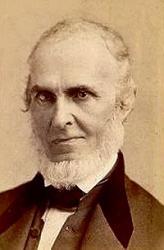
1807 - 1892 Person Name: John G. Whittier Author of "The Fatherhood of God Revealed" in The Pilgrim Hymnal Whittier, John Greenleaf, the American Quaker poet, was born at Haverhill, Massachusetts, Dec. 17, 1807. He began life as a farm-boy and shoemaker, and subsequently became a successful journalist, editor and poet. In 1828 he became editor of the American Manufacturer (Boston), in 1830 of the New England Review, and an 1836 (on becoming Secretary to the American Anti-Slavery Society) of the Pennsylvania Freeman. He was also for some time, beginning with 1847, the corresponding editor of the National Era. In 1840 he removed to Amesbury, Massachusetts, where most of his later works have been written. At the present time [1890] he lives alternately at Amesbury and Boston. His first poetical piece was printed in the Newburyport Free Press in 1824. Since then his publications have been numerous, including:—
Voices of Freedom, 1833; Songs of Labour, and other Poems, 1850; Ballads and other Poems, London, 1844; The Panorama, and other Poems, 1856; In War Time, 1863; Occasional Poems, 1865; Poetical Works, 1869; Complete Poetical Works, 1876; The Bay of the Seven Islands, and other Poems, 1883, &c.
From his numerous poems the following hymns have been compiled, and have come into common use, more especially amongst the American Unitarians:—
1. All as God wills, Who wisely heeds. Trust. This begins with stanza xi. of Whittier's poem, "My Psalm." in his workThe Panorama, and other Poems, 1856 (Complete Poetical Works, Boston, 1876, p. 179), and is given in Lyra Sacra Americana , 1868; Border's Congregational Hymns, 1884, &c.
2. All things are Thine: no gift have we. Opening of a Place of Worship. Written for the Opening of Plymouth Church, Minnesota, 1872 ( Complete Poetical Works , p. 281). In Horder's Congregational Hymns, 1884.
3. Another hand is beckoning us. Bereavement. From his poem " Gone," written in 1845 (Complete Poetical Works, p. 106). In Horder's Congregational Hymns, 1884.
4. Dear Lord and Father of mankind. Calmness in God desired. From his poem “The Brewing of Soma," beginning with stanza xii. (Complete Poetical Works p. 266). In Horder's Congregational Hymns, 1884.
5. God giveth quietness at last. Death and Burial. This begins with stanza xvii. of his poem, “The Singer," written in 1871 (Author's MS.), and included in the Complete Poetical Works, 1876, p. 265. In Martineau's Hymns, 1875.
6. Hast thou, 'midst life's empty noises. The Purpose of Life. Written in 1842. It is in Longfellow and Johnson's Unitarian Book of Hymns, Boston, 1846, and several other later American collections. Also in Lyra Sacra Americana, 1864.
7. I ask not now for gold to gild. Resignation. From his poem "The Wish of To-Day." Written in 1848 (Author's MS.). In Hedge and Huntingdon's Unitarian Hymns for the Church of Christ, Boston, 1853; the Laudes Domini, 1884, and other collections.
8. Immortal love, for ever full. The Love of Jesus. This poem, entitled “Our Master," appeared in Whittier's work, The Panorama, and other Poems, 1856, in 35 stanzas of 4 lines; in Schaff’s Christ in Song, 1869-70, p. 117; and in the Complete Poetical Works, 1876, p. 231, and others. From this poem the following centos have come into common use:—
(1) Immortal love for ever full. In the 1890 edition of the Hymnal Companion and others.
(2) 0 Lord and Master of us all. Begins with stanza xvi.
(3) 0 Love! O Life! our faith and sight. Begins with stanza xxiv. In several American hymnals, including the Unitarian Hymn [and Tune Book ], Boston, 1868, and others.
(4) Our Friend, our Brother, and our Lord. Begins with stanza xxxiv. In Horder's Congregational Hymns, 1884, &c.
(5) We faintly hear, we dimly see. Begins with stanza xxvi. In Barrett's Congregational Church Hymnal, 1887.
(6) We may not climb the heavenly steeps. Begins with stanza v. In Laudes Domini, 1884; the Primitive Methodist Hymnal, 1887, &c.
The use of these centos shows that the hymnic element in the original poem is of a high and enduring order.
9. It may not be our lot to wield. Duty and its Reward. This begins with stanza iv. of his poem "Seedtime and Harvest." Written circa 1850 (Author's MS.). Given in his Complete Poetical Works, p. 114. The hymn is in Laudes Domini, 1884, and other American collections.
10. May freedom speed onward, wherever the blood. Freedom. In the 1848 Supplement to the Boston Book of Hymns, Boston, No. 582, Hymns of the Spirit, 1864, and other collections. In Whittier's Poetical Works, Boston, 1869, p. 68, it is given as, “Right onward, O speed it! Wherever the blood”.
11. Now is the seed-time; God alone. Self-Sacrifice. In the Boston Hymns of the Spirit, 1864, No. 683.
12. 0 backward-looking son of time. New and Old. This begins with stanza xix. of his poem "The Reformer," and is given in this form in the Boston Hymns for the Church of Christ, Boston, 1853, No. 835, and again in later collections. In full in the Complete Poetical Works, p. 78.
13. 0 beauty, old yet ever new. The Law of Love. This in the Boston Hymns of the Spirit, 1864, begins with stanza xxi. of his poem on “The Shadow and the Light,” given in full in the Complete Poetical Works , p. 173.
14. 0 fairest-born of love and light. American National Hymn. This is from his poem "Democracy," which is dated "Election Day, 1843," and is in his Ballads and other Poems, London, 1844, p. 214, and his Complete Poetical Works, p. 82.
15. 0, he whom Jesus loves has truly spoken. True Worship. This in the 1848 Supplement to the Boston Book of Hymns, 1848, No. 578, begins with stanza xi. of his poem on “Worship," given in full in his Complete Poetical Works, p. 96. The poem is dated by the Author, 1848 (Author's MS.).
16. 0 holy Father, just and true. Freedom. "Lines written for the Celebration of the third Anniversary of British Emancipation at the Broadway Tabernacle, N. Y., First of August, 1837." (Complete Poetical Works, p. 47.) It was included in the Unitarian Christian Hymns, Boston, 1844, and has been repeated in later collections.
17. 0 Maker of the Fruits and Flowers. Flower Services. This begins with stanza iv. of his "Lines for the Agricultural and Horticultural Exhibition at Amesbury and Salisbury, Sep. 28, 1858," as given in his Complete Poetical Works , p. 183. It is in the Boston Hymns of the Spirit, 1864, and as "O Painter of the fruits and flowers," in Horder's Congregational Hymns, 1884.
18. O not alone with outward sign. Divine Invitation. This begins with stanza ii. of his poem, "The Call of the Christian," given in his Ballads and other Poems, London, 1844, p. 185, and his Complete Poetical Works, p. 73. The hymn appeared in the Boston Book of Hymns, 1846, and again in later collections.
19. O pure Reformers, not in vain. Freedom. This begins with stanza xii. of his poem "To the Reformers of England," as given in his Complete Poetical Works, p. 77. The hymn was included in the Boston Book of Hymns, 1846, and has been repeated in later collections.
20. O sometimes gleams upon our sight. Old and New. This is taken from his poem "The Chapel of the Hermits," 1852 (in 94 stanzas of 4 lines), and begins with stanza xi. (Comp. Poetical Works, p. 115.) The cento was given in the Boston Hymns of the Spirit, 1864, and repeated in later collections.
21. O Thou, at Whose rebuke the grave. Mercy. This was given in the Boston Book of Hymns, 1848, No. 44l.
22. O [God] Thou, Whose presence went before. National Hymn. This hymn is dated by the author 1834 (Author's MS.), and was written for the Anti-slavery Meeting at Chatham Street Chapel, New York, "on the 4th of the 7th month, 1831." It is No. 750 in the Unitarian Christian Hymns, 1844. It is sometimes given as “0 God, whose presence went before."
23. 0, what though our feet may not tread where Christ trod. Presence of Christ's Spirit. The author dates this 1837 (Author's MS.). It is No. 150 in the Boston Book of Hymns, 1846. In their Hymns of the Spirit, 1864, No. 652, it begins: "0, wherefore the dream of the earthly abode." Both centos are from his poem “Poledom."
24. Shall we grow weary in our watch? Patience, or Resignation. This begins with stanza x. of his poem "The Cypress-Tree of Ceylon." (Complete Poetical Works, p. 84.) This form of the text was given in the Boston Book of Hymns, 1846, No. 278, in 7 stanzas of 4 lines, and again in Horder's Congregational Hymns, 1884, in 3 stanzas.
25. Sport of the changeful multitude. Persecution. This begins with line 6 of stanza x. of his poem "Ezekiel," and was given in the Boston Hymns of the Spirit, 1864, No. 65lines In full in Complete Poetical Works, p. 67.
26. The green earth sends its incense up. Worship of Nature. The author dates this 1845 (Author's MS.). It is from his poem “The Worship of Nature," and was given in this form in the Boston Hymns for the Church of Christ, 1853, No. 193. The cento "The harp at Nature's advent strung," in the Unitarian Hymn [and Tune] Book, Boston, 1868, No. 195, is from the same poem. The cento No. 321 in the Boston Hymns of the Spirit, 1864, is also (altered) from this poem.
27. The path of life we walk today. The Shadowing Rock. This in the Boston Hys. of the Spirit, 1864, begins with stanza i. of his poem on "The Rock in El Gh'or," which the author dates 1859 (Author's MS.). In full in Complete Poetical Works, p. 180.
28. Thine are all the gifts, 0 God. Children's Missions, or Ragged Schools. Written for the Anniversary of the Children's Mission, Boston, 1878. It is given in Horder's Congregational Hymns, 1884.
29. Thou hast fallen in thine armour. Death. From his poem "To the memory of Charles B. Storrs, late President of Western Reserve College," published in his Ballads and other Poems, London, 1844, p. 84. Dated by the author 1835 (Author's MS.). Abridged form in the Hymns of the Spirit, 1864.
30. To-day, beneath Thy chastening eye. Seeking Rest. This begins with stanza iv. of his poem, "The Wish of To-Day," dated by the author 1847 (Author's MS.), and given in full in his Complete Poetical Works, p. 114. The cento is in Martineau's Hymns, 1873, and others.
31. We see not, know not; all our way. Resignation. "Written at the opening of the Civil War, 1861" (Author's MS.), and included in his In War Time, 1863, and his Complete Poetical Works, p. 190. In full in the Prim. Methodist Hymnal, 1887.
32. When on my day of life the night is falling. Old Age. Written in 1882 (Author's MS.), and included in his work The Bay of the Seven Islands, and other Poems, 1883. In Horder's Congregational Hymns, 1884.
33. With silence only as their benediction. Death. 1845. "Written on the death of Sophia Sturge, sister of Joseph Sturge, of Birmingham, England" (Author's MS.). It is in several collections, including Martineau's Hymns, &c, 1873; Horder's Congregational Hymns, 1884, and others.
Notwithstanding this extensive use of portions of Mr. Whittier's poems as hymns for congregational use, he modestly says concerning himself: "I am really not a hymn-writer, for the good reason that I know nothing of music. Only a very few of my pieces were written for singing. A good hymn is the best use to which poetry can be devoted, but I do not claim that I have succeeded in composing one." (Author's MS.) We must add, however, that these pieces are characterized by rich poetic beauty, sweet tenderness, and deep sympathy with human kind.
-- John Julian, Dictionary of Hymnology (1907)
========================
Whittier, J. G, p. 1277, i. In addition to the large number of this author's hymns already annotated from his own manuscript, the following have also come into use, mainly in the form of centos from his poems, during the past ten years:—
i. From Poems, 1850:—
1. O brother man! Fold to thy heart thy brother. [Brotherly Love.] From his poem, “Worship." Written in 1848, and published in Poems, 1850.
ii. From Songs of Labour, and Other Poems, 1850;—
2. Bowed down in lowliness of min. [Resignation.] From the poem “The Wish of To-day."
iii. From The Chapel of the Hermits, and Other Poems, 1853:—
3. O, sometimes glimpses on our sight. [Light in Darkness.] First published in The National Era, 1851, and again as above, 1853. In The Pilgrim Hymnal, N.Y. 1904, it begins " 0 sometimes gleams upon our sight," and in Hymns of the Ages, 1904, "Yet sometimes glimpses on my sight"; see p. 1277, ii. 20.
iv. From The Panorama, and Other Poems, 1856:—
4. Thou, 0 most compassionate. [Divine Compassion.] This cento is from the poem "My Dream," and is dated 1855.
v. From Home Ballads and Poems, 1860:—
5. I mourn no more my vanished years. [Life's Review.] A cento from "My Psalm," dated 1859, opening with st. i.
6. No longer forward nor behind. This begins with st. iii. of "My Psalm."
7. O hearts of love, O souls that turn. [Life from, Christ.] A cento from the poem, "The Overheart."
8. O Love Divine, Whose constant beam. [Divine Love Universal.] From the poem, "The Shadow and the Light." The form in which it is given in The Pilgrim Hymnal, 1904, first appeared in The Independent, Nov. 1860.
9. Once more the liberal year laughs out. [Autumn.] From his "For an Autumn Festival," 1859.
vi. From In War Time, and Other Poems, 1864:—
10. I can only urge the plea. [Cry for Mercy.] A cento from “Andrew Rykman’s Prayer,” dated 1863.
11. What Thou wilt, O Father, give. Also from “Andrew Kykman's Prayer."
vii. From The Tent on the Beach, and Other Poems, 1867:—
12. I bow my forehead to [in] the dust. St. ix., &c.
13. I know not what the future hath. St. xvi., &c.
14. I long for household voices gone. St. xv., &c.
15. I see the wrong that round me lies. St. x., &c.
16. Who fathoms the Eternal Thought. St. iv., &c.
17. Yet, in the maddening maze of things. St. xi., &c.
These centos are taken from the poem, "The Eternal Goodness," which is dated 1865.
viii. From Among the Hills, and Other Poems, 1869:—
18. For ever round the mercy-seat. [God's Love and Man's Unfaithfulness.] From the poem, “The Answer."
ix. From The Pennsylvania Pilgrim, and Other Poems, 1873:—
19. Best for the weary hands is good. [Daily Renewal.] This is from "My Birthday," which appeared in the Atlantic Monthly, 1871, and again as above, 1873.
x. From Hazel Blossoms, 1875:—
20. All things [gifts] are Thine, p. 1277, i. 2. The church for which this was written, in 1873, was Plymouth Church, St. Paul, Minn. The hymn was included in Hazel Blossoms, 1875.
21. We need love's tender lessons taught. [Love.] From Child-Songs," in Hazel Blossoms, opening with st. ix.
xi. From The Bay of the Seven Islands, 1883:—
22. As from the lighted hearths behind me. [Anticipation of the Future.] This begins with st. iii. of the poem, "What the Traveller said at Sunset."
xii. Additional Notes:—
23. Lord, for the things we see. [Public Gatherings.] This hymn is from "Poledom," 1837.
24. Not always as the whirlwind's rush. [Call to the Ministry.] Published in The Poetical Writings, 1857, Vol. i., p. 254, and again in the Oxford edition of his Poetical Works, 1904, p. 455. It is dated 1833.
25. Sound over all waters, [The Coming Kingdom.)
This, in Horder's Worship Song, 1905, is from Whittier's Complete Poetical Works, Boston, 1876, p. 280, where it is dated 1873.
26. Take courage, Temperance workers. [Temperance.] Mr. Pickard, Whittier's literary executor, cannot trace this hymn in any of the author's writings, and we also are at fault.
27. The harp at Nature's advent strung. [Nature's acknowledgement of God.] Dr. Charles L. Noyes, one of the editors of The Pilgrim Hymnal, 1904, writes us concerning this hymn: "It was first published in its present form [as in the American hymn-books] in 1867 in The Tent on the Beach." But a hymn almost identical was written when Whittier was in his teens, and published in the Haverhill Gazette, October 5, 1827. The same poem appeared in The Palladium, 1829. It was revised for The Tent on the Beach, 1867 (p. 1278, i. 26).
28. We see not, know not; all our way, p. 1278, i. 31. This hymn, written in 1861, first appeared in the Atlantic Monthly, 1862, vol. 10, p. 235.
29. Wherever through the ages rise. [Love is universal.] Opens with line 1 of a section in the poem "Miriam," in Miriam, and Other Poems, 1871, p. 13.
30. Who calls Thy glorious service hard? [Duty.] This begins with st. iii. of his poem "Seedtime and Harvest," noted on p. 1277, ii. 9.
31. O Lord and Father of mankind. This is a slightly altered form of "Dear Lord and Father of mankind." p. 1277, i. 4.
The poem, “Our Master," stated on p. 1277, i., No. 8, as having appeared in The Panorama, 1856, in error, was given in The Tent on the Beach, and Other Poems, Boston, 1867, pp. 143-152.
In compiling the foregoing, we have been materially assisted by Mr. Pickard, the poet's literary executor, and the Rev. Dr. Charles L. Noyes, of Somerville, Mass. Whittier died at Hampton Falls, New Hampshire, Sep. 7, 1892.
--John Julian, Dictionary of Hymnology, New Supplement (1907)
=======================
See also in:
Hymn Writers of the Church
John Greenleaf Whittier
Wilbur E. Brumbaugh
Person Name: Wilber E. Brumbaugh Author of "Come, People, Celebrate and Sing" in The Brethren Songbook
Wilbur E. Brumbaugh
W. L. Jenkins
Author of "The Bible tells of God's great plan" in The Irish Presbyterian Hymnbook
W. L. Jenkins
Hugh Stowell
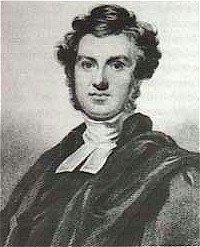
1799 - 1865 Author of "Jesus, our Savior and our Lord" in Hymns of Worship and Remembrance Stowell, Hugh, an able and popular minister of the Church of England, was born at Douglas, Isle of Man, December 3, 1799. He graduated at Oxford in 1822, and took holy orders the following year. He held various offices in his Church; became rector at Salford in 1831; was appointed honorary Canon of Chester Cathedral in 1845, and later Rural Dean of Eccles. He published several volumes. He also edited a book of hymns: A Selection of Psalms and Hymns Suited to the Services of the Church of England, 1831. To the several editions of this book most of his hymns were contributed. He died at Safford October 8, 1865.
From every stormy wind that blows 495
Lord of all power and might 206
Hymn Writers of the Church, 1915 by Charles Nutter
==================================
Stowell, Hugh, M.A., son of Hugh Stowell, Rector of Ballaugh, near Ramsey, was born at Douglas, Isle of Man, Dec. 3, 1799, and educated at St. Edmund Hull, Oxford, B.A. 1822; M.A. 1826. He was ordained in 1823, and held the curacy of Shepscombe, Gloucestershire; and then that of Holy Trinity, Huddersfield. Subsequently he was Curate in charge of St. Stephen's, Salford, and became rector of Christ Church, Salford, in 1831. In 1845 he was appointed Hon. Canon in Chester Cathedral; in 1851 Chaplain to the Bishop of Manchester; and Rural Dean of Eccles. He died at Salford, Oct. 8, 1865. His Memoir, by the Rev. J. B. Marsden, was published in 1868. Canon Stoweli was a popular and effective preacher. His publications included Tractarianism Tested, 1845; A Model for Men of Business, 1854 ; Pleasures of Religion and Other Poems, 1832; The Peaceful Valley, 1826 ; and a large number of single sermons, pamphlets, &c. His Selection of Psalms & Hymns was published as:—
A Selection of Psalms & Hymns Suited to the Services of the Church of England. By the Rev. H. Stowell, M.A., Manchester. Printed by Henry Smith, St. Ann's Square, 1831.
This Selection contained 233 hymns, in addition to versions of the Psalms. Of the hymns the following were by the compiler:—
1. Almighty Shepherd, Who didst give. (1828.) The Good Shepherd.
2. From every stormy wind that blows.
3. Gracious God, look down in kindness. Sunday School Anniversary.
4. Great God, we dare not bow the knee. Holy Communion.
5. Meek Lamb of God, on Thee. Lent.
6. To Thee, 0 God, we raise. Sunday School Anniversary.
7. Tune every heart, wake every tongue. Sunday School Anniversary.
8. When Jesus left the glorious sky. For an Infants’ School.
9. Yes, in the morning of our years. Sunday School Anniversary.
The 12th edition of this Selection published by Canon Stowell in 1864, was increased to 273 hymns, the additional hymns being in nearly every instance his own compositions. In addition to those already given we have:—
10. Again our yearly strain we raise. 1864.
11. Another year has glided past. (Before 1846.)
12. Another year with mercies strown. (Before 1846.)
13. Before Thy throne, 0 Lord, we bend. (Before 1846.)
14. By pressing dangers compassed round. 1843 (?).
15. Come, raise we all the blessed strain. 1862.
16. Hail, hallowed day of heavenly rest. 1844 (?).
17. Hark, how sweet those infant voices. 1841 (?).
18. How fruitless is the ploughman's toil. 1854.
19. How gently in night's silent hours. 1850.
20. Jesus is our Shepherd, Wiping, &c. 1849.
21. Jesus, Lord, Who hast ascended. 1853.
22. Jesus, Lord, we wait on Thee. 1863.
23. Jesus, our Saviour and our Lord. (Before 1846.)
24. Jesus, Prophet of Thy Church. 1861.
25. Lord, if our land be great and free. 1851.
26. Lord, in this dark and stormy day. 1848.
27. Lord, in Thy mercy hear our cry. 1855.
28. Meek Lamb of God, Who dost impart. 1859.
29. 0 God, the liquid sign of grace. 1856.
30. Sailing o'er life's changeful ocean. (Before 1846.)
31. Saviour, guide this little band. (Before 1846.)
32. The day of rest is passed away. (Before 1846.)
33. The morn of our lifetime is fast gliding by. (Before 1846.)
34. Though our lot be poor and lowly. 1847.
35. Thy cross, 0 Lord, the holy sign. 1840.
36. Wake, wake our yearly strain anew. 1852.
37. Wake, wake the joyful song. 1844.
38. We, a little simple throng. (Before 1846.)
39. We, little pilgrims of a day. 1845.
40. We love the holy house of prayer. 1857.
41. We will not weep as others do. 1842.
42. What is your life? It glances by. 1860.
43. What though our earthly lot be low. 1858.
These hymns were all written for the Anniversary Services of Christ Church Sunday Schools, Salford, and are included with others in a special Appendix in the 1877 ed. of the Selection as above.
Other hymns by Canon Stowell are:—
44. Children of old, Hosannah sang. Sunday Schools. 1830.
45. Lord of all power and might, Father of love, &c. Missions. Written for the Jubilee of the B. & F. Bible Society, March 7, 1853.
46. Shepherd of the ransomed sheep. The Good Shepherd.
47. Pilgrims in the narrow way. Sunday School Anniversary. This was his last hymn, and was written for the Christ Church Sunday School Anniversary, 1865.
Of Canon Stowell's hymns the most popular are Nos. 2, 3, 20 and 44. As a writer for children he was very successful. All the foregoing hymns are in the 15th ed. of his Selection edited by his son, Manchester, 1877; and in Hymns. By the late Rev. Canon Stowell, M.A. Manchester, 1868.
-- John Julian, Dictionary of Hymnology (1907)
Hugh Stowell
Henry Vaughan
1621 - 1695 Author of "Up to those bright and gladsome hills" in The Harvard University Hymn Book Vaughan, Henry, M.D., commonly called "The Silurist," was one of twin brothers born of a titled family at Newton, Llansaintffiad, in 1621. After studying under the Rev. Matthew Herbert, Rector of Llangattock, he proceeded to Jesus College, Oxford, in 1638; but through the national troubles of those days, his studies, in common with those of his brother, were interrupted, and they had to leave the University. Subsequently he entered the medical profession, and practised at Brecon and at Newton. He died April 23, 1695. His published works include, Poems with the Tenth Satire of Juvenal Englished, 1646; Olor Iscanus, 1651; The Mount of Olives, 1652, &c. As a religious poet he followed very closely the peculiarities of George Herbert, of whose writings he was a great admirer. His best and most devotional poems were written during a severe affliction, and were published in his Silex Scintillans. After being almost forgotten for more than 200 years, his quaint, thoughtful, devotional, and, in many instances, beautiful poems, are receiving attention at the hands of hymnal compilers and others.
From the Silex Scintillans several pieces have been taken as hymns for public worship. The following, all from the first edition of 1650, are in common use:—
1. As travellers when the twilight's come. Life a Pilgrimage.
2. Bright shadows of true rest! some shoots of bliss. Sundays. Sometimes as "Types of eternal rest, fair buds of bliss."
3. Joy of my life, while left me here. Guiding Stars.
4. King of mercy, King of love. God our King.
5. Lord, with what courage and delight. Cheerfulness.
6. My. God and King, to Thee I bow my knee. Lent.
7. Since in a land not barren still. Love and Discipline.
8. Up to those bright and gladsome hills. Ps. cxxi.
9. What needs a conscience, clear and bright? Conscience.
10. When one loud blast shall rend the deep. Advent. Judgment.
11. Zion's true glorious God! on Thee. Praise.
Of Vaughan's hymns the most widely used are:— "Bright Queen of heaven," "My soul, there is a countrie," and "Up to these bright and gladsome hills."
--Excerpts from John Julian, Dictionary of Hymnology (1907)
=====================
Vaughan, H., p. 1206, i. Nos. 6, 9, 11, are from the 2nd ed., 1655 of his Silex Scintillans, pt. ii., pp. 60, 40, 68. No. 10 is from "When through the North," &c, in the 1st ed. 1650, p. 13.
--John Julian, Dictionary of Hymnology, New Supplement (1907)
Henry Vaughan
John Chandler
1806 - 1876 Person Name: Rev. John Chandler Translator of "As now the sun's declining rays" in The Book of Common Praise John Chandler, one of the most successful translators of hymns, was born at Witley in Surrey, June 16, 1806. He was educated at Corpus Christi College, Oxford, B.A. 1827, M.A. 1830. Ordained deacon in 1831 and priest in 1832, he succeeded his father as the patron and vicar of Whitley, in 1837. His first volume, entitled The Hymns of the Primitive Church, now first Collected, Translated and Arranged, 1837, contained 100 hymns, for the most part ancient, with a few additions from the Paris Breviary of 1736. Four years later, he republished this volume under the title of hymns of the Church, mostly primitive, collected, translated and arranged for public use, 1841. Other publications include a Life of William of Wykeham, 1842, and Horae sacrae: prayers and meditations from the writings of the divines of the Anglican Church, 1854, as well as numerous sermons and tracts. Chandler died at Putney on July 1, 1876.
--The Hymnal 1940 Companion
===============
Chandler, John, M.A.,one of the earliest and most successful of modern translators of Latin hymns, son of the Rev. John F. Chandler, was born at Witley, Godalming, Surrey, June 16, 1806, and educated at Corpus Christi College, Oxford, where he graduated in 1827. He took Holy Orders in 1831, and became Vicar of Witley in 1837. He died at Putney, July 1, 1876. Besides numerous Sermons and Tracts, his prose works include Life of William of Wykeham, 1842; and Horae Sacrae; Prayers and Meditations from the writings of the Divines of the Anglican Church, with an Introduction, 1844. His translations, he says, arose out of his desire to see the ancient prayers of the Anglican Liturgy accompanied by hymns of a corresponding date of composition, and his inability to find these hymns until he says,
"My attention was a short time ago directed to some translations [by Isaac Williams] which appeared from time to time in the British Magazine, very beautifully executed, of some hymns extracted from the Parisian Breviary,with originals annexed. Some, indeed, of the Sapphic and Alcaic and other Horatian metres, seem to be of little value; but the rest, of the peculiar hymn-metre, Dimeter Iambics, appear ancient, simple, striking, and devotional—in a word in every way likely to answer our purpose. So I got a copy of the Parisian Breviary [1736], and one or two other old books of Latin Hymns, especially one compiled by Georgius Cassander, printed at Cologne, in the year 1556, and regularly applied myself to the work of selection and translation. The result is the collection I now lay before the public." Preface, Hymns of the Primitive Church, viii., ix.
This collection is:—
(1) The Hymns of the Primitive Church, now first Collected, Translated, and Arranged, by the Rev. J. Chandler. London, John W. Parker, 1837. These translations were accompanied by the Latin texts. The trsanslations rearranged, with additional translations, original hymns by Chandler and a few taken from other sources, were republished as (2) The Hymns of the Church, mostly Primitive, Collected, Translated, and Arranged/or Public Use, by the Rev. J. Chandler, M.A. London, John W. Parker, 1841.
From these works from 30 to 40 translations have come gradually into common use, some of which hold a foremost place in modern hymnals, "Alleluia, best and sweetest;" "Christ is our Corner Stone;" "On Jordan's bank the Baptist's cry;" "Jesus, our Hope, our hearts' Desire;" "Now, my soul, thy voice upraising;" "Once more the solemn season calls;" and, "O Jesu, Lord of heavenly grace;" being those which are most widely used. Although Chandler's translations are somewhat free, and, in a few instances, doctrinal difficulties are either evaded or softened down, yet their popularity is unquestionably greater than the translations of several others whose renderings are more massive in style and more literal in execution.
--John Julian, Dictionary of Hymnology (1907)
John Chandler
Joel Barlow
1754 - 1812 Person Name: Joel Barlow, 1755-1812 Author of "Awake, My Soul! To Sound His Praise" in The Cyber Hymnal Barlow, Joel, born at Reading, Connecticut, 1755 [sic], graduated at Yale 1778, and died near Cracow, Poland, 1812, He was well known as an author and politician during and after the American Revolution. His publications include Hasty Pudding; Columbia, &c. In 1785, at the request of the (Congregational) General Association of Connecticut, he corrected and enlarged Dr. Watts's Psalms, supplying those omitted by Watts, and adapting the whole to American thought and circumstances. This work, published in 1786, went through various editions, and, although officially superseded by Dwight in 1800, it continued to be issued for many years after. Its title is somewhat curious as setting forth its design. It reads:— Psalms carefully suited to the Christian Worship in the United States of America, being Dr. Watts’ Imitation of the Psalms of David, as improved by Mr. Barlow. Of his renderings of the Psalms, there are still in common use:—
1. Awake, my soul, to sound His praise. Ps. cviii. This is No. 233 in Hatfield's Church Hymn Book, 1872, and other collections.
2. Lord,Thou hast scourged our guilty land. Ps. lx. Altered from Watts. Also in Hatfield's Church Hymn Book, No. 1312.
3. Our land, O Lord, with songs of praise. Ps. xxxi . In the Philadelphia Presbyterian Hymnal, 1874.
4. In Thee, great God, with songs of praise. National Hymn. This is No. 3 in a slightly different form. It is No. 962 in N. Adams's Church Pastorals, Boston, 1804. [Rev. F. M. Bird, M.A.]
-- John Julian, Dictionary of Hymnology (1907)
Joel Barlow
Pages




