You help make Hymnary.org possible. More than 10 million people from 200+ countries found hymns, liturgical resources and encouragement on Hymnary.org in 2025, including you. Every visit affirms the global impact of this ministry.

If Hymnary has been meaningful to you this year, would you take a moment today to help sustain it? A gift of any size—paired with a note of encouragement if you wish—directly supports the server costs, research work and curation that keep this resource freely available to the world.

Give securely online today, or mail a check to:
Hymnary.org
Calvin University
3201 Burton Street SE
Grand Rapids, MI 49546

Thank you for your partnership, and may the hope of Advent fill your heart.

Person Results

Text Identifier:"^o_thou_whose_bounty_fills_my_cup$"
In:people

Planning worship? Check out our sister site, ZeteoSearch.org, for 20+ additional resources related to your search.
Showing 1 - 10 of 15Results Per Page: 102050

William Gardiner

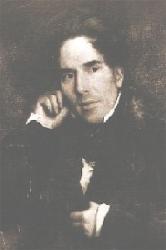
1770 - 1853 Person Name: W. Gardiner Composer of "[O Thou, whose bounty fills my cup]" in The Cokesbury Hymnal William Gardiner (b. Leicester, England, 1770; d. Leicester, 1853) The son of an English hosiery manufacturer, Gardiner took up his father's trade in addition to writing about music, composing, and editing. Having met Joseph Haydn and Ludwig van Beethoven on his business travels, Gardiner then proceeded to help popularize their compositions, especially Beethoven's, in England. He recorded his memories of various musicians in Music and Friends (3 volumes, 1838-1853). In the first two volumes of Sacred Melodies (1812, 1815), Gardiner turned melodies from composers such as Haydn, Mozart, and Beethoven into hymn tunes in an attempt to rejuvenate the singing of psalms. His work became an important model for American editors like Lowell Mason (see Mason's Boston Handel and Haydn Collection, 1822), and later hymnbook editors often turned to Gardiner as a source of tunes derived from classical music. Bert Polman

Samuel Webbe

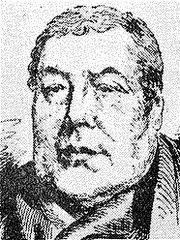
1740 - 1816 Composer of "BELMONT" in Hymn and Tune Book of the Methodist Episcopal Church, South (Round Note Ed.) Samuel Webbe (the elder; b. London, England, 1740; d. London, 1816) Webbe's father died soon after Samuel was born without providing financial security for the family. Thus Webbe received little education and was apprenticed to a cabinet­maker at the age of eleven. However, he was determined to study and taught himself Latin, Greek, Hebrew, French, German, and Italian while working on his apprentice­ship. He also worked as a music copyist and received musical training from Carl Barbant, organist at the Bavarian Embassy. Restricted at this time in England, Roman Catholic worship was freely permitted in the foreign embassies. Because Webbe was Roman Catholic, he became organist at the Portuguese Chapel and later at the Sardinian and Spanish chapels in their respective embassies. He wrote much music for Roman Catholic services and composed hymn tunes, motets, and madrigals. Webbe is considered an outstanding composer of glees and catches, as is evident in his nine published collections of these smaller choral works. He also published A Collection of Sacred Music (c. 1790), A Collection of Masses for Small Choirs (1792), and, with his son Samuel (the younger), Antiphons in Six Books of Anthems (1818). Bert Polman

Thomas Tallis

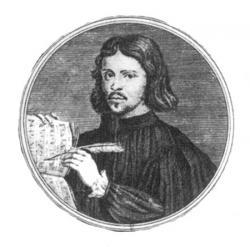
1505 - 1585 Person Name: Tallis Composer of "ST. GREGORIUS" in Hymns of Grace and Truth Thomas Tallis (b. Leicestershire [?], England, c. 1505; d. Greenwich, Kent, England 1585) was one of the few Tudor musicians who served during the reigns of Henry VIII: Edward VI, Mary, and Elizabeth I and managed to remain in the good favor of both Catholic and Protestant monarchs. He was court organist and composer from 1543 until his death, composing music for Roman Catholic masses and Anglican liturgies (depending on the monarch). With William Byrd, Tallis also enjoyed a long-term monopoly on music printing. Prior to his court connections Tallis had served at Waltham Abbey and Canterbury Cathedral. He composed mostly church music, including Latin motets, English anthems, settings of the liturgy, magnificats, and two sets of lamentations. His most extensive contrapuntal work was the choral composition, "Spem in alium," a work in forty parts for eight five-voice choirs. He also provided nine modal psalm tunes for Matthew Parker's Psalter (c. 1561). Bert Polman

Thomas Augustine Arne

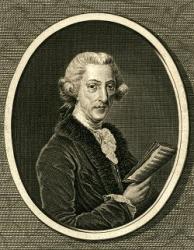
1710 - 1778 Person Name: Thomas A. Arne Composer of "ARLINGTON" in Hymns of Worship and Remembrance Dr. Thomas Augustine Arne was born March 12, 1710, in London; became early celebrated as a composer, and established his reputation by settling Milton's "Comus" to music - light, airy, and original; he composed many songs, and nearly all his attempts were successful; died March 5, 1778, aged 68. A Dictionary of Musical Information by John W. Moore, Boston: Oliver, Ditson & Company, 1876

Louis Spohr

1784 - 1859 Person Name: Ludwig Spohr Composer of "CALVARY" in Songs of Work and Worship Also: Spohr, Ludwig, 1784-1859 Shpor, Lui, 1784-1859 Spohr, L. (Louis), 1784-1859 Shpor, Ludvig, 1784-1859 Spohr, Ludewig, 1784-1859

H. W. Greatorex

1813 - 1858 Person Name: Henry W. Greatorex Composer of "GEER" in The Service Hymnal Henry Wellington Greatorex United Kingdom 1813-1858. Born at Burton upon Trent, England, he received a thorough musical education from his father, Thomas Greatorex, who was for many years organist of Westminster Abbey, and conductor of the London concerts of ancient music. Henry became a composer, author, compiler, editor, and arranger of music. He emigrated to the U.S. In 1839. In 1849 he married artist Eliza Pratt, and they had four children: Elizabeth, Kathleen, Thomas, and Francis Henry. Prior to settling in New York City as a music teacher and organist at Calvary Church, he played at churches in Hartford, CT, including Center Church and St Johns Episcopal Church in West Hartford, CT. He frequently sang in oratorios and concerts. For some years he was also organist and conductor of the choir at St. Paul's Chapel. In 1853 he was an organist at St. Philip's Episcopal Church in Charleston, SC. He did much to advance the standard of sacred music in the U.S. In days when country singing school teachers imposed more rudimentary melodies on hymn books. He published a collection of “Psalm & hymn tunes, chants, anthems & sentences” (Boston 1851). He died of yellow fever in Charleston, SC. John Perry

D. B. Towner

1850 - 1919 Composer of "[O Thou, whose bounty fills my cup]" in Revival Hymns Used pseudonyms Robert Beverly, T. R. Bowden ============================== Towner, Daniel B. (Rome, Pennsylvania, 1850--1919). Attended grade school in Rome, Penn. when P.P. Bliss was teacher. Later majored in music, joined D.L. Moody, and in 1893 became head of the music department at Moody Bible Institute. Author of more than 2,000 songs. --Paul Milburn, DNAH Archives

George Kingsley

1811 - 1884 Composer of "LUCIUS" in College Hymnal Born: July 7, 1811, Northampton, Massachusetts. Died: March 14, 1884, Northampton, Massachusetts. Kingsley played the organ at the Old South Church and Hollis Street Church in Boston, Massachusetts. He also taught music at Girard College in Philadelphia, Pennsylvania, served as music supervisor for public schools in Philadelphia, and compiled a number of music books, including: Sunday School Singing Book, 1832 The Harmonist, 1833 The Social Choir, 1836 The Sacred Choir, 1838 The Harp of David, 1844 The Young Ladies’ Harp, 1847 Templi Carmina (Northampton, Massachusetts: 1853) The Juvenile Choir, 1865 --www.hymntime.com/tch

William Tans'ur

1699 - 1783 Person Name: Wm. Tansur Composer of "BARBY" in Songs for the Service of Prayer William Tansur, b. about 1700, Dunchurch of Barnes; d. 1783, St. Neots Evangelical Lutheran Hymnal, 1908 Also known as Tansur; Tanzer; le Tansur

Mrs. T. D. Crewdson

1808 - 1863 Person Name: Jane Crewdson Author of "O Thou, Whose Bounty Fills My Cup" in The Cokesbury Hymnal Crewdson, Jane, née Fox, daughter of George Fox, of Perraw, Cornwall, was born at Perraw, October, 1809; married to Thomas Crewdson, of Manchester, 1836; and died at Summerlands, near Manchester, Sept. 14, 1863. During a long illness Mrs. Crewdson composed her works published as:— (1) Lays of the Reformation, 1860. (2) A Little While, and Other Poems (posthumous), 1864. (3) The Singer of Eisenach, n.d.; and (4) Aunt Jane's Verses for Children, 1851. 2nd ed. 1855, 3rd 1871. From these works nearly a dozen of her hymns have come into common use. The best known are, "O for the peace which floweth as a river," and "There is no sorrow, Lord, too light." In addition to these and others which are annotated under their respective first lines, there are the following in various collections: 1. Give to the Lord thy heart. 1864. Offertory. 2. How tenderly Thy hand is laid . 1864. Resignation. 3. Looking unto Jesus. 1864. Jesus All in All. 4. Lord, we know that Thou art near us. 1864. Resignation. 5. 0 Saviour, I have naught to plead. 1864. During Sickness. These plaintive lines were written a short time before her death. 6. 0 Thou whose bounty fills my cup. 1860. Peace. 7. The followers of the Son of God. 1864. The Daily Cross. 8. Though gloom may veil our troubled skies. 1864. Resignation. --John Julian, Dictionary of Hymnology (1907) ====================== Crewdson, Jane, p. 268, ii. The following additional hymns by Mrs. Crewdson have recently come into common use through The Baptist Church Hymnal, 1900:— 1. For the sunshine and the rain. Harvest. 2. O Fount of grace that runneth o'er. Public Worship. 3. There is an unsearchable joy. Joy in God. 4. When I come with troubled heart. Prayer. These hymns are all from her A Little While, and Other Poems, 1864. --John Julian, Dictionary of Hymnology, New Supplement (1907) =================== Crewdson, Jane, née Fox, p. 269, i. From her A Little While, and Other Poems, 1864, are:— 1. I've found a joy in sorrow. Power of Faith. 2. One touch from Thee, the Healer of diseases. Christ the Healer. 3. Tis not the Cross I have to bear. Faith desired . --John Julian, Dictionary of Hymnology, Appendix, Part II (1907)

Pages


Export as CSV
It looks like you are using an ad-blocker. Ad revenue helps keep us running. Please consider white-listing Hymnary.org or getting Hymnary Pro to eliminate ads entirely and help support Hymnary.org.