You help make Hymnary.org possible. More than 10 million people from 200+ countries found hymns, liturgical resources and encouragement on Hymnary.org in 2025, including you. Every visit affirms the global impact of this ministry.

If Hymnary has been meaningful to you this year, would you take a moment today to help sustain it? A gift of any size—paired with a note of encouragement if you wish—directly supports the server costs, research work and curation that keep this resource freely available to the world.

Give securely online today, or mail a check to:
Hymnary.org
Calvin University
3201 Burton Street SE
Grand Rapids, MI 49546

Thank you for your partnership, and may the hope of Advent fill your heart.

Search Results

Text Identifier:"^christ_is_our_cornerstone$"

Planning worship? Check out our sister site, ZeteoSearch.org, for 20+ additional resources related to your search.

Texts

text icon
Text authorities

Christ is our corner-stone

Author: John Chandler Meter: 6.6.6.6.8.8 Appears in 191 hymnals Text Sources: Latin, 7th cent.

Tunes

tune icon
Tune authorities
Audio

DARWALL'S 148TH

Meter: 6.6.6.6.8.8 Appears in 539 hymnals Composer and/or Arranger: John Darwall, 1731-89 Tune Sources: The Lutheran Hymnal, 1941 (Setting) Tune Key: C Major Incipit: 13153 17654 32231 Used With Text: Christ Is Our Cornerstone
Audio

HAREWOOD

Meter: 6.6.6.6.8.8 Appears in 57 hymnals Composer and/or Arranger: Samuel Sebastian Wesley, 1810-76 Tune Key: G Major Incipit: 56712 17543 21321 Used With Text: Christ is our cornerstone
Audio

ST. JOHN (Parish)

Meter: 6.6.6.6.8.8 Appears in 106 hymnals Composer and/or Arranger: William H. Havergal Tune Sources: Parish Choir, 1851 Tune Key: D Major Incipit: 13355 11765 45567 Used With Text: Christ Is Our Cornerstone

Instances

instance icon
Published text-tune combinations (hymns) from specific hymnals
TextPage scan

Christ Is Our Cornerstone

Author: John Chandler Hymnal: Voices Together #4 (2020) Meter: 6.6.6.6.8.8 Lyrics: 1 Christ is our cornerstone, on him alone we build. With his true saints alone the courts of heav’n are filled. On his great love our hopes we place of present grace and joys above. 2 Oh, then with hymns of praise these hallow’d courts shall ring. Our voices we will raise, the Three-in-One to sing, and thus proclaim in joyful song both loud and long that glorious name. 3 Here may we gain from heav’n the grace which we implore, and may that grace, once giv’n, be with us evermore, until that day when all the bless’d to endless rest are called away! 4 Praise to the God of heav’n; sing praise to Christ the Son; the Spirit, praise be giv’n, who joins them both as one: the holy Dove, who gives us grace to find our place in God’s great love! Topics: Confessing Faith; Death and Eternal Life; Heaven; Heritage Before 1500; Jesus Christ Images and Names of; Praise; Worship Scripture: Psalm 118:19-29 Tune Title: DARWALL’S 148th
Text

Christ Is Our Cornerstone

Author: John Chandler Hymnal: Hymns and Devotions for Daily Worship #157 (2024) Meter: 6.6.6.6.4.4.4.4 Lyrics: 1. Christ is our cornerstone; On him alone we build; With his true saints above The courts of Heav'n are filled: On His great love Our hopes we place Of present grace And joys above. 2. Oh, then, with hymns of praise These hallowed courts shall ring! Our voices we will raise, The Three in One to sing; And thus proclaim In joyful song, Both loud and long, That glorious name. 3. Here, gracious God, we pray, Forevermore draw nigh; Accept each faithful pray'r, And mark each humble sigh: In copious stores, On all who pray, Each holy day, Your blessings pour. 4. Here may we gain from Heav’n The grace we now implore, And may that grace, once giv’n, Be with us evermore. Until that day When all the blest In endless rest Are called away. 5. Praise to the God of Heav’n, Praise to his holy Son, And praise to him be giv’n Who joins them both in One: The Holy Dove, Who gives us grace To find our place With God above. Topics: Resurrection Scripture: 1 Peter 2:4-5 Languages: English Tune Title: DARWALL
TextPage scan

Christ Is Our Cornerstone

Author: John Chandler Hymnal: Moravian Book of Worship #517 (1995) Meter: 6.6.6.6.8.8 Lyrics: 1 Christ is our cornerstone, on him alone we build; with his true saints alone the courts of heav'n are filled; on his great love our hopes we place, of present grace and joys above. 2 O then with hymns of praise these hallowed courts shall ring: our voices we will raise the Three in One to sing, and thus proclaim in joyful song, both loud and long that glorious name. 3 Here, gracious God, do now for evermore draw near, accept each faithful vow, and ev'ry suppliant hear. In copious show'r on all who pray each holy day your blessings pour! 4 Here may we gain from heav'n the grace which we implore; and may that grace, once giv'n, be with us evermore, until that day when all the blessed to endless rest are called away! Topics: Nature of the Church; Christ--Cornerstone, our; Church--Dedication of a building; Church--Foundation and nature; God--Grace and mercy of; Lovefeast Scripture: Psalm 118:22-24 Languages: English Tune Title: DARWALL

People

person icon
Authors, composers, editors, etc.

John Chandler

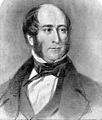
1806 - 1876 Translator of "Christ Is Our Cornerstone" in Moravian Book of Worship John Chandler, one of the most successful translators of hymns, was born at Witley in Surrey, June 16, 1806. He was educated at Corpus Christi College, Oxford, B.A. 1827, M.A. 1830. Ordained deacon in 1831 and priest in 1832, he succeeded his father as the patron and vicar of Whitley, in 1837. His first volume, entitled The Hymns of the Primitive Church, now first Collected, Translated and Arranged, 1837, contained 100 hymns, for the most part ancient, with a few additions from the Paris Breviary of 1736. Four years later, he republished this volume under the title of hymns of the Church, mostly primitive, collected, translated and arranged for public use, 1841. Other publications include a Life of William of Wykeham, 1842, and Horae sacrae: prayers and meditations from the writings of the divines of the Anglican Church, 1854, as well as numerous sermons and tracts. Chandler died at Putney on July 1, 1876. --The Hymnal 1940 Companion =============== Chandler, John, M.A.,one of the earliest and most successful of modern translators of Latin hymns, son of the Rev. John F. Chandler, was born at Witley, Godalming, Surrey, June 16, 1806, and educated at Corpus Christi College, Oxford, where he graduated in 1827. He took Holy Orders in 1831, and became Vicar of Witley in 1837. He died at Putney, July 1, 1876. Besides numerous Sermons and Tracts, his prose works include Life of William of Wykeham, 1842; and Horae Sacrae; Prayers and Meditations from the writings of the Divines of the Anglican Church, with an Introduction, 1844. His translations, he says, arose out of his desire to see the ancient prayers of the Anglican Liturgy accompanied by hymns of a corresponding date of composition, and his inability to find these hymns until he says, "My attention was a short time ago directed to some translations [by Isaac Williams] which appeared from time to time in the British Magazine, very beautifully executed, of some hymns extracted from the Parisian Breviary,with originals annexed. Some, indeed, of the Sapphic and Alcaic and other Horatian metres, seem to be of little value; but the rest, of the peculiar hymn-metre, Dimeter Iambics, appear ancient, simple, striking, and devotional—in a word in every way likely to answer our purpose. So I got a copy of the Parisian Breviary [1736], and one or two other old books of Latin Hymns, especially one compiled by Georgius Cassander, printed at Cologne, in the year 1556, and regularly applied myself to the work of selection and translation. The result is the collection I now lay before the public." Preface, Hymns of the Primitive Church, viii., ix. This collection is:— (1) The Hymns of the Primitive Church, now first Collected, Translated, and Arranged, by the Rev. J. Chandler. London, John W. Parker, 1837. These translations were accompanied by the Latin texts. The trsanslations rearranged, with additional translations, original hymns by Chandler and a few taken from other sources, were republished as (2) The Hymns of the Church, mostly Primitive, Collected, Translated, and Arranged/or Public Use, by the Rev. J. Chandler, M.A. London, John W. Parker, 1841. From these works from 30 to 40 translations have come gradually into common use, some of which hold a foremost place in modern hymnals, "Alleluia, best and sweetest;" "Christ is our Corner Stone;" "On Jordan's bank the Baptist's cry;" "Jesus, our Hope, our hearts' Desire;" "Now, my soul, thy voice upraising;" "Once more the solemn season calls;" and, "O Jesu, Lord of heavenly grace;" being those which are most widely used. Although Chandler's translations are somewhat free, and, in a few instances, doctrinal difficulties are either evaded or softened down, yet their popularity is unquestionably greater than the translations of several others whose renderings are more massive in style and more literal in execution. --John Julian, Dictionary of Hymnology (1907)

Anonymous

Author of "Christ Is Our Cornerstone" in The Cyber Hymnal In some hymnals, the editors noted that a hymn's author is unknown to them, and so this artificial "person" entry is used to reflect that fact. Obviously, the hymns attributed to "Author Unknown" "Unknown" or "Anonymous" could have been written by many people over a span of many centuries.

Samuel Sebastian Wesley

1810 - 1876 Person Name: Samuel Sebastian Wesley (1810-1876) Composer of "HAREWOOD" in Common Praise (1998) Samuel Sebastian Wesley (b. London, England, 1810; d. Gloucester, England, 1876) was an English organist and composer. The grandson of Charles Wesley, he was born in London, and sang in the choir of the Chapel Royal as a boy. He learned composition and organ from his father, Samuel, completed a doctorate in music at Oxford, and composed for piano, organ, and choir. He was organist at Hereford Cathedral (1832-1835), Exeter Cathedral (1835-1842), Leeds Parish Church (1842­-1849), Winchester Cathedral (1849-1865), and Gloucester Cathedral (1865-1876). Wesley strove to improve the standards of church music and the status of church musicians; his observations and plans for reform were published as A Few Words on Cathedral Music and the Music System of the Church (1849). He was the musical editor of Charles Kemble's A Selection of Psalms and Hymns (1864) and of the Wellburn Appendix of Original Hymns and Tunes (1875) but is best known as the compiler of The European Psalmist (1872), in which some 130 of the 733 hymn tunes were written by him. Bert Polman
It looks like you are using an ad-blocker. Ad revenue helps keep us running. Please consider white-listing Hymnary.org or getting Hymnary Pro to eliminate ads entirely and help support Hymnary.org.