You help make Hymnary.org possible. More than 10 million people from 200+ countries found hymns, liturgical resources and encouragement on Hymnary.org in 2025, including you. Every visit affirms the global impact of this ministry.

If Hymnary has been meaningful to you this year, would you take a moment today to help sustain it? A gift of any size—paired with a note of encouragement if you wish—directly supports the server costs, research work and curation that keep this resource freely available to the world.

Give securely online today, or mail a check to:
Hymnary.org
Calvin University
3201 Burton Street SE
Grand Rapids, MI 49546

Thank you for your partnership, and may the hope of Advent fill your heart.

Search Results

Text Identifier:"^he_laid_his_rocks_in_courses$"

Planning worship? Check out our sister site, ZeteoSearch.org, for 20+ additional resources related to your search.

Texts

text icon
Text authorities
Page scans

The Building of the Temple

Author: W. C. Gannett Appears in 4 hymnals First Line: He laid his rocks in courses Used With Tune: WEBB

Tunes

tune icon
Tune authorities
Page scansAudio

WEBB

Appears in 1,769 hymnals Composer and/or Arranger: G. J. Webb Incipit: 51131 16151 2325 Used With Text: The Building of the Temple
Page scansAudio

EWING

Appears in 596 hymnals Composer and/or Arranger: Alexander Ewing Incipit: 12143 21351 75665 Used With Text: God laid his rocks in courses
Page scansAudio

MEIRIONYDD

Appears in 134 hymnals Composer and/or Arranger: William Lloyd Incipit: 54332 12335 43432 Used With Text: God laid his rocks in courses

Instances

instance icon
Published text-tune combinations (hymns) from specific hymnals

He laid his rocks in courses

Author: William Channing Gannett Hymnal: Unity Hymns and Chorals. Rev and enl. with Service Elements #d88 (1913)
Page scan

God laid his rocks in courses

Author: William Channing Gannett Hymnal: Hymns of the Spirit for Use in the Free Churches of America #458 (1937) Languages: English Tune Title: MEIRIONYDD
Page scan

God laid his rocks in courses

Author: William Channing Gannett Hymnal: Services for Congregational Worship. The New Hymn and Tune Book #491 (1914) Languages: English Tune Title: EWING

People

person icon
Authors, composers, editors, etc.

George James Webb

1803 - 1887 Person Name: G. J. Webb Composer of "WEBB" in Song-Hymnal of Praise and Joy George James Webb, b. 1803,England; d. 1887, Orange, N. J. Evangelical Lutheran Hymnal, 1908

William Channing Gannett

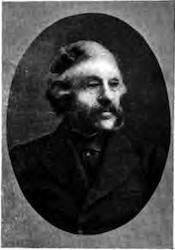
1840 - 1923 Person Name: W. C. Gannett Author of "The Building of the Temple" in Song-Hymnal of Praise and Joy Gannett, William Channing, M.A., s. of Dr. Ezra Stiles Gannett, was b. at Boston, March 13, 1840, and educated at Harvard College, 1860, and the Divinity School, Cambridge. Entered the Unitarian Ministry in 1868, and after filling several pastorates he became Pastor of the Unitarian Church at Rochester, N.Y., 1889. Mr. Gannett's hymns, mainly written for special occasions, were included in great part in The Thought of God in Hymns and Poems, Boston, 1st Series 1885,2nd Series 1894, the combined production of F. L. Hosmer (q.v.) and himself. Of Mr. Gannett's hymns the following are in common use:— 1. Bring, 0 morn, thy music [God Everlasting.] Written in 1893, and printed in A Chorus of Faith, being an account and resume of the Parliament of Religions, held in Chicago, 1893. Included in The Thought of God, 2nd Series, 1894, and again in several hymnals. 2. Clear in memory's silent reaches. [Memory.] Written in 1877 for a Free Religious Assoc. Festival, and published in The Thought of God, 1st Series, 1885. 3. Prom heart to heart, from creed to creed. [Faith.] Written in 1875 for the 150th anniversary of the First Religious Society in Newburyport, and given in The Thought of God, 1ist Series, 1885. Usually st. ii. is omitted. 4. He hides within the lily. [Divine Providence.] "Consider the lilies, how they grow." Written in 1873, and printed for use at the Free Religious Assoc. Festival, May 30th, 1873. Published in The Thought of God, &c, 1st Series, 1885, in 4 stanzas of 8 lines. The most widely used of the author's hymns. 5. I hear it often in the dark. [The Voice of God.] Written at Milwaukee, in 1870, and published in The Thought of God, &c, 1st Series, 1885. Sometimes it begins with st. iii., "0 God within, so close to me," as in Hymns for Church and Home, Boston, 1895. 6. Praise to God and thanksgiving. [ Harvest.] Written in 1872 for a Harvest Festival at St. Paul's, Minn., of which he was then Pastor, and included in The Thought of God &c, 1st Series, 1885. in the Boston Pilgrim Hymnal, 1904, it begins "Praise to God, and thanks we bring." 7. Sleep, my little Jesus. [ Christmas Carol.] Written for the Sunday School, St. Paul's, Minn., in 1882, and given in The Thought of God, 2nd Series, 1894, as "Mary's Manger Song." 8. The Lord is in His holy place. [Dedication of a Place of Worship.] Written for the Dedication of the Rev. C. W. Wendte's Church, Chicago, April 24, 1873, and pub. in The Thought of God, &c, 1st Series, 1885. It is one of the most popular and widely used of the author's hymns. 9. The morning hangs its signal. [Morning.] This is dated by the author "Chicago, July 30, 1886," and printed in Love to God and Love to Man, being No. 28 ot the Chicago "Unity Mission" series of hymns (N.D.). Also included in The Thought of God, &c, 2nd Series, 1894. Although in some sense a Morning hymn, it is adapted for use in Advent. It is usually known as “The Crowning Day." 10. The Truth is the Voice of God. In the "Unity Mission" Series, No. 28 (see above), this is given as No. 33, with the title "Truth and Righteousness and Love," in 4 stanzas of 4 lines and a refrain of 4 lines. These annotations are based upon manuscript notes kindly supplied by the author. The use made of Mr. Gannett's hymns shows that their poetic beauty and loving sympathy with all things beautiful and pure, are widely appreciated in America and to a limited extent in Great Britain also. --John Julian, Dictionary of Hymnology, New Supplement (1907)

A. Ewing

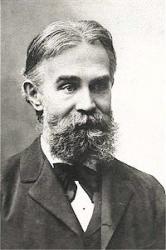
1830 - 1895 Person Name: Alexander Ewing Composer of "EWING" in Services for Congregational Worship. The New Hymn and Tune Book Alexander C (Rex) Ewing United Kingdom 1830-1895. Born at Aberdeen,Scotland, he studied music and German at Heidelberg University and law in Aberdeen. However, he did not qualify as a lawyer. A member of the Aberdeen Harmonic Choir and the Hadyn Society of Aberdeen, he was regarded as the most talented young musician in the city. He became an author, musician, editor, composer, and translator. He married Juliana Horatia Gatty in 1867. She died in 1885, and he remarried Elizabeth Margaret Cumby in 1886. He was a career officer in the British Army's Commissariat Department and subsequently the Army Pay Corps. He served at Constantinople during the Crimean War, thereafter in China for six years, then in Ireland during the Fenian Uprising. He was then in New Brunswick just after England created the British North American Act, creating the Dominion of Canada. He then went to Fredericton, where he played the organ and sang at Christ Church Cathedral. He was transferred to Aldershot. In 1879 he went to Malta, then served in Ceylon before returning to England. He reached the rank of Lt. Col. He translated several works by other authors. He retired and spent the last six years of his life in Taunton, England, where he died. John Perry
It looks like you are using an ad-blocker. Ad revenue helps keep us running. Please consider white-listing Hymnary.org or getting Hymnary Pro to eliminate ads entirely and help support Hymnary.org.