

 My Starred Hymns
 My FlexScores
 My Hymnals
 My Purchased Files
Planning worship?
Check out our sister site, ZeteoSearch.org,
for 20+ additional resources related to your search.
- |
User Links
Person Results
Charles C. Converse
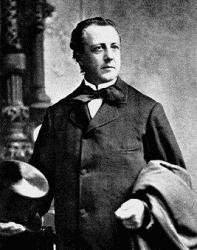
1832 - 1918 Person Name: Charles Crozat Converse Composer of "[I’m kneeling at the threshold, so weary, faint, and sore]" in The Cyber Hymnal Pseudonyms: Clare, Lester Vesé, Nevers, Karl Reden, Revons
=================================
Charles Crozat Converse LLD USA 1832-1918. Born in Warren, MA, he went to Leipzig, Germany to study law and philosophy, as well as music theory and composition under Moritz Hauptmann, Friedrich Richter, and Louis Plaidy at the Leipzig Conservatory. He also met Franz Liszt and Louis Spohr. He became an author, composer, arranger and editor. He returned to the states in 1859 and graduated from the Albany, NY, Law School two years later. He married Lida Lewis. From 1875 he practiced law in Erie, PA, and also was put in charge of the Burdetta Organ Company. He composed hymn tunes and other works. He was offered a DM degree for his Psalm 126 cantata, but he declined the offer. In 1895 Rutherford College honored him with a LLD degree. He spent his last years in Highwood, NJ, where he died. He published “New method for the guitar”, “Musical bouquet”, “The 126th Psalm”, “Sweet singer”, “Church singer”, “Sayings of Sages” between 1855 and 1863. he also wrote the “Turkish battle polka” and “Rock beside the sea” ballad, and “The anthem book of the Episcopal Methodist Church”.
John Perry
Charles C. Converse
W. A. Ogden
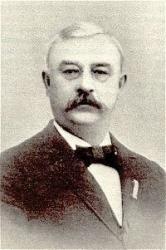
1841 - 1897 Composer of "[I am kneeling at the threshold, so weary, faint and sore]" in Loving Voices William Augustine Ogden USA 1841-1897. Born at Franklin County, OH, his family moved to IN when he was age six. He studied music in local singing schools at age 8, and by age 10 could read church music fairly well. Later, he could write out a melody by hearing it sung or played. He enlisted in the American Civil War in the 30th IN Volunteer Infantry. During the war he organized a male choir which became well known throughout the Army of the Cumberland. After the war, he returned home, resumed music study, and taught school. He married Jennie V Headington, and they had two children: Lowell and Marian. He worked for the Iowa Normal School, Toledo Public School System. Among his teachers: Lowell Mason, Thomas Hastings, E E Baily and B F Baker, president of the Boston Music School. He wrote many hymns, both lyrics and/or music. He later issued his first song book, “The silver song” (1870). It became quite popular, selling 500,000 copies. He went on to publish other song books. Ogden also taught music at many schools in the U S and Canada. In 1887 he became superintendent of music in the public schools of Toledo, OH. His works include: “New silver songs for Sunday school” (1872), “Crown of life” (1875), “Notes of victory” (1885), “The way of life” (1886), “Gathering jewels” (1886). He was known as a very enthusiastic person in his work and a very congenial one as well. He died at Toledo, OH.
John Perry
W. A. Ogden
Robert Lowry
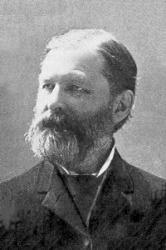
1826 - 1899 Person Name: Rev. R. Lowry Composer of "[I am kneeling at the threshold]" in Chapel Melodies Robert Lowry was born in Philadelphia, March 12, 1826. His fondness for music was exhibited in his earliest years. As a child he amused himself with the various musical instruments that came into his hands. At the age of seventeen he joined the First Baptist Church of Philadelphia, and soon became an active worker in the Sunday-school as teacher and chorister.
At the age of twenty-two he gave himself to the work of the ministry, and entered upon a course of study at the University of Lewisburg, Pa. At the age of twenty-eight he was graduated with the highest honors of his class. In the same year of his graduation, he entered upon the work of the ministry. He served as pastor at West Chester, Pa., 1851-1858; in New York City, 1859-1861; in Brooklyn, 1861-1869; in Lewisburg, Pa., 1869-1875. While pastor at Lewisburg, he was also professor of belles lettres in the University, and received the honorary degree of D. D. in 1875.
He then went to Plainfield, N. J., where he became pastor of Park Avenue Church. In each of these fields his work was crowned with marked success.
Dr. Lowry was a man of rare administrative ability, a most excellent preacher, a thorough Bible student, and whether in the pulpit or upon the platform, always a brilliant and interesting speaker. He was of a genial and pleasing disposition, and a high sense of humor was one of his most striking characteristics. Very few men had greater ability in painting pictures from the imagination. He could thrill an audience with his vivid descriptions, inspiring others with the same thoughts that inspired him.
His melodies are sung in every civilized land, and many of his hymns have been translated into foreign tongues. While preaching the Gospel, in which he found great joy, was his life-work, music and hymnology were favorite studies, but were always a side issue, a recreation.
In the year 1880, he took a rest of four years, visiting Europe. In 1885 he felt that he needed more rest, and resigned his pastorate at Plainfield, and visited in the South and West, also spending some time in Mexico. He returned, much improved in health, and again took up his work in Plainfield.
On the death of Wm. B. Bradbury, Messrs. Biglow & Main, successors to Mr. Bradbury in the publishing business, selected Dr. Lowry for editor of their Sunday-school book, Bright Jewels, which was a great success. Subsequently Dr. W. Doane was associated with him in the issue of the Sunday-school song book, Pure Gold, the sales of which exceeded a million copies. Then came Royal Diadem, Welcome Tidings, Brightest and Best, Glad Refrain, Good as Gold, Joyful Lays, Fountain of Song, Bright Array, Temple Anthems, and numerous other volumes. The good quality of their books did much to stimulate the cause of sacred song in this country.
When he saw that the obligations of musical editorship were laid upon him, he began the study of music in earnest, and sought the best musical text-books and works on the highest forms of musical composition. He possessed one of the finest musical libraries in the country. It abounded in works on the philosophy and science of musical sounds. He also had some musical works in his possession that were over one hundred and fifty years old.
One of his labors of love some years ago was an attempt to reduce music to a mathematical basis. On the established fact that Middle C has two hundred and fifty-six vibrations per second, he prepared a scale and went to work on the rule of three. After infinite calculation and repeated experiments, he carried it far enough to discover that it would not work.
A reporter once asked him what was his method of composition — "Do you write the words to fit the music, or the music to fit the words?" His reply was, "I have no method. Sometimes the music comes and the words follow, fitted insensibly to the melody. I watch my moods, and when anything good strikes me, whether words or music, and no matter where I am, at home or on the street, I jot it down. Often the margin of a newspaper or the back of an envelope serves as a notebook. My brain is a sort of spinning machine, I think, for there is music running through it all the time. I do not pick out my music on the keys of an instrument. The tunes of nearly all the hymns I have written have been completed on paper before I tried them on the organ. Frequently the words of the hymn and the music have been written at the same time."
The Doctor frequently said that he regarded "Weeping Will Not Save Me" as the best and most evangelistic hymn he ever wrote. The following are some of his most popular and sweetest gospel melodies: "Shall We Gather at the River?," "One More Day's Work for Jesus," "Where is My Wandering Boy To-night?," "I Need Thee Every Hour," "The Mistakes of My Life," "How Can I Keep from Singing?," "All the Way My Saviour Leads Me," "Saviour, Thy Dying Love," "We're Marching to Zion," etc. "Shall We Gather at the River?" is perhaps, without question, the most widely popular of all his songs. Of this Mr. Lowry said: "It is brass band music, has a march movement, and for that reason has become popular, though for myself I do not think much of it." Yet he tells us how, on several occasions, he had been deeply moved by the singing of that hymn, "Going from Harrisburg to Lewisburg once I got into a car filled with half-drunken lumbermen. Suddenly one of them struck up, "Shall We Gather at the River?" and they sang it over and over again, repeating the chorus in a wild, boisterous way. I did not think so much of the music then as I listened to those singers, but I did think that perhaps the spirit of the hymn, the words so flippantly uttered, might somehow survive and be carried forward into the lives of those careless men, and ultimately lift them upward to the realization of the hope expressed in my hymn." "A different appreciation of it was evinced during the Robert Raikes' Centennial. I was in London, and had gone to meeting in the Old Bailey to see some of the most famous Sunday-school workers in the world. They were present from Europe, Asia, and America. I sat in a rear seat alone. After there had been a number of addresses delivered in various languages, I was preparing to leave, when the chairman of the meeting announced that the author of "Shall We Gather at the River?" was present, and I was requested by name to come forward. Men applauded and women waved their handkerchiefs as I went to the platform. It was a tribute to the hymn; but I felt, when it was over, that, after all, I had perhaps done some little good in the world, and I felt more than ever content to die when God called." On Children's Day in Brooklyn, in 1865, this song was sung by over forty thousand voices.
While Dr. Lowry said, "I would rather preach a gospel sermon to an appreciative, receptive congregation than write a hymn," yet in spite of his preferences, his hymns have gone on and on, translated into many languages, preaching and comforting thousands upon thousands of souls, furnishing them expression for their deepest feelings of praise and gratitude to God for His goodness to the children of men. What he had thought in his inmost soul has become a part of the emotions of the whole Christian world. We are all his debtors.
Rev. Robert Lowry, D. D., died at his residence in Plainfield, K J., November 25, 1899. Dead, yet he lives and his sermons in gospel song are still heard and are doing good. Dr. Lowry was a great and good man, and his life, well spent, is highly worthy of a place among the world's greatest gospel song and hymn writers.
-- Biography of Gospel Song and Hymn Writers
-------
Lowry, Robert, D.D., son of Crozier Lowry, was born at Philadelphia, Pennsylvania, March 12, 1826, and educated at Lewisburg University. Having received ordination as a Baptist Minister, his first charge was at West Chester, Pennsylvania. From thence he passed to New York City, and then to Brooklyn, N. Y. In 1876 he was appointed Professor of Rhetoric in his University. On resigning his Professorship he undertook the charge of the 2nd Baptist Church, New Jersey. Dr. Lowry has been associated with some of the most popular Sunday School hymn-books published in the States, including Happy Voices, 1865; Chapel Melodies, 1868; Bright Jewels, 1869; Pure Gold, 1871; Royal Diadem, 1873; Tidal Wave, 1874; Fountain of Song1877; Welcome Tidings, 1877, &c. Of Dr. Lowry's hymns those which have attained the widest circulation are:—
1. Jerusalem, for ever bright. Heaven. Appeared in the American Tract Society's Happy Voices, 1865, with music by the author.
2. Low in the grave He lay. Resurrection of Christ. Written in 1874 and published in Brightest and Best, 1875.
3. Marching on, marching on. Sunday School Battle Song. Appeared, with music by the author, in Happy Voices, 1865.
4. My home is in heaven, my rest is not here. In Happy Voices, 1865, with music by the author.
5. My life flows on in endless song. Joy in God. In Bright Jewels, 1869; the Royal Diadem, 1873, and others in America and Great Britain, with music by the author.
6. One more day's work for Jesus. Work for Christ. Published, with music by the author, in Bright Jewels, 1869.
7. Shall we gather at the river? Mutual recognition in the Hereafter. The origin of this hymn is thus set forth in E. W. Long's Illustrated History of Hymns and their Authors, Philadelphia, 1876, p. 64:—
”On a very hot summer day, in 1864, a pastor was seated in his parlour in Brooklyn, N. Y. It was a time when an epidemic was sweeping through the city, and draping many persons and dwellings in mourning. All around friends and acquaintances were passing away to the spirit land in large numbers. The question began to arise in the heart, with unusual emphasis, ‘Shall we meet again? We are parting at the river of death, shall we meet at the river of life?' ‘Seating myself at the organ,’ says he, ‘simply to give vent to the pent up emotions of the heart, the words and music of the hymn began to flow out, as if by inspiration:—
‘Shall we gather at the river,
Where bright angel feet have trod?’"
In 1865 the hymn and music were given in Happy Voices, No. 220, in 5 stanzas of 4 lines and a chorus. The hymn has since passed into a great number of hymnals in Great Britain and America.
8. Take the wings of the morning; speed quickly thy flight. Exhortation to Repentance. Written for, and published with music by the author in, the Royal Diadem, 1873.
9. Weeping will not save me. Salvation through Faith. Published in the Chapel Melodies, 1868.
10. What can wash away my stain? Precious Blood of Jesus. Given in the Welcome Tidings, 1877, with music by the author.
11. Where is my wandering boy tonight! The absent Child. In the Fountain of Song, 1877, together with music by the author.
Most of these hymns are given in Mr. I. D. Sankey's Sacred Songs & Solos, Pts. i., ii.
--John Julian, Dictionary of Hymnology (1907)
Robert Lowry
Aldine S. Kieffer
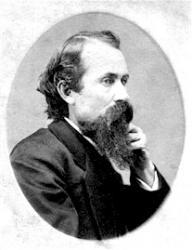
1840 - 1904 Person Name: A. S. Kieffer Composer of "[I am kneeling at the threshold so weary, faint and sore]" in Sweet Fields of Eden Full name Aldine Silliman Kiefer
Aldine S. Kieffer
W. S. Marshall
Composer of "[I am kneeling at the threshold, weary, faint, and sore]" in The Master's Praise He composed tunes for gospel lyric writers.
John Perry
W. S. Marshall
William Lindsay Alexander
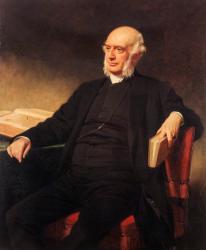
1808 - 1884 Author of "Kneeling At The Threshold" in The Cyber Hymnal Alexander, William Lindsay , DD. LL.D., of Pinkieburn, Musselburgh, son of William Alexander, Esq., Leith, born in the vicinity of Leith, August 24, 1808. After studying at the Universities of Edinburgh and St. Andrew's, he became, in 1828, Classical Tutor in what is now The Lancashire College. After studying for some time at Halle, he, in 1835, became minister of North College St. Congregational Church, Edinburgh, removing with his congregation in 1861 to a new church in George IV. Bridge, called the Augustine Church, and retired from the pastoral charge of the same in 1877. He died at Pinkieburn, Dec. 20, 1884. He was, from 1854 to 1881, Professor in the Scottish Congregational Hall. In 1846 he received the degree of D.D. from the University of St. Andrew's, and in 1884 that of LL.D., from Edinburgh. He became a member of the O. T. Revision Company in 1870. He wrote and edited many valuable theological works. His Selection of Hymns known as the Augustine Hymn Book, in which his original hymns and translations appeared, was first published in 1849.
--John Julian, Dictionary of Hymnology (1907)
===========================
Alexander, W. L., p. 39, ii. As Dr. Alexander's hymns are all signed in his Augustine Hymn Book, they are not enumerated here. Died Dec. 20, 1884.
--John Julian, Dictionary of Hymnology, Appendix, Part II (1907)
William Lindsay Alexander
Karl Reden
Composer of "[I am kneeling at the threshold]" in Calvary Songs See Converse, Charles C. (Charles Crozat), 1832-1918
Karl Reden
John Guthrie
1814 - 1878 Person Name: Rev. Dr. Guthrie Author of "Kneeling at the Threshold" in Calvary Songs Guthrie, John, D.D., son of John Guthrie, Milnathort, Kinross-shire, was born at Milnathort, May 30, 1814, and after studying at the University of Edinburgh, where he graduated M.A. in 1835, was in 1840 ordained minister of the United Secession Church in Kendal. Sympathising with the views of Dr. James Morison, he was, in 1843, deposed, and joined with Dr. Morison in forming the Evangelical Union. He continued in Kendal till 1848, becoming then minister of Dundas St. Evangelical Union Church, Glasgow. In 1851 he went to Greenock; thence, in 1862, to Tolmer's Square, London, returning in 1860 to Glasgow as minister of Howard St. E. U. Church. He died in London, September 18, 1878, while on his way to New Zealand. From 1846 to 1861 he was Professor to the Evangelical Union, and was re-elected in 1875. He received the degree of D.D. from Coburg University, U.S.A., in 1875. He was Convener of the Committee which compiled the Evangelical Hymn Book of 1856, and a member of that which compiled the Evangelical Hymnal of 1878 (to which he contributed four hymns). His hymns appeared in The Daystar, The Evangelical Magazine, &c. In 1869 he published Sacred Lyrics; Hymns, original and translated from the German, with versions of Psalms, London, J. Nisbet & Co., 1869. This work consists of 28 hymns, 17 translations, and 37 Psalm versions. Some of the hymns have much beauty and sweetness. The translations from the German are accompanied by interesting notes, and, while not ranking with the best by Miss Winkworth, are yet very good. The Psalm versions are of average merit. His hymns in common use are:—
1. Blood of sprinkling, healing tide. [Blood of Sprinkling.] Appeared in The Evangelical Union Hymn Book, 1856, in 3 st. of 8 1., and again, unaltered, in The Evangelical Union Hymnal, 1878. Composed in 1844.
2. How lovely are thy tents, [Public Worship]. First published in Hymns & Spiritual Songs, collected by James Morison, Kilmarnock, Pt. ii., 1844, in 7 st. of 6 1. It was repeated, unaltered, in The Evangelical Union Hymn Book, 1856; and The Evangelical Union Hymnal, 1878.
3. ‘Tis evening: over Salem's towers, &c. [Christ weeping over Jerusalem.] Appeared in The Evangelical Union Hymn Book 1856, in 4 st. of 8 double lines, and again, unaltered, in The Evangelical Union Hymnal, 1878, No. 62, where it is dated 1846.
4. Ye ransomed of Jesus. [Praise to Jesus.] First published in Hymns & Spiritual Songs, &c. (see No. 2), Pt. ii., 1844, in 7 st. of 6 1.; and again, unaltered, in The Evangelical Union Hymn Book, 1856; and The Evangelical Union Hymnal, 1878, No. 98.[Rev. James Mearns, M.A.]
-- John Julian, Dictionary of Hymnology (1907)
John Guthrie