You help make Hymnary.org possible. More than 10 million people from 200+ countries found hymns, liturgical resources and encouragement on Hymnary.org in 2025, including you. Every visit affirms the global impact of this ministry.

If Hymnary has been meaningful to you this year, would you take a moment today to help sustain it? A gift of any size—paired with a note of encouragement if you wish—directly supports the server costs, research work and curation that keep this resource freely available to the world.

Give securely online today, or mail a check to:
Hymnary.org
Calvin University
3201 Burton Street SE
Grand Rapids, MI 49546

Thank you for your partnership, and may the hope of Advent fill your heart.

Search Results

Text Identifier:"^o_lamb_of_god_that_takest_away_the_sin$"

Planning worship? Check out our sister site, ZeteoSearch.org, for 20+ additional resources related to your search.

Texts

text icon
Text authorities
Page scans

O Lamb of God, that takest away the sins of the world

Appears in 6 hymnals Used With Tune: [O Lamb of God, that takest away the sins of the world]

Tunes

tune icon
Tune authorities
Page scans

[O Lamb of God, that takest away the sins]

Appears in 1 hymnal Composer and/or Arranger: H. Hudson Incipit: 16455 67157 66555 Used With Text: O Lamb of God
Page scans

[O Lamb of God, that takest away the sins of the world]

Appears in 3 hymnals Composer and/or Arranger: The Rev. Herbert Hall Woodward (1847- ) Incipit: 33356 71177 63554 Used With Text: O Lamb of God, that takest away the sins of the world
Page scans

AGNUS DEI

Appears in 3 hymnals Composer and/or Arranger: John Stainer Incipit: 51233 53217 63217 Used With Text: O Lamb of God, Who takest away the sins of the world

Instances

instance icon
Published text-tune combinations (hymns) from specific hymnals
Page scan

O Lamb of God, that takest away the sins of the world

Hymnal: The Institute Hymnal #200 (1899) Languages: English Tune Title: [O Lamb of God, that takest away the sins of the world]
Page scan

O Lamb of God, that takest away the sins of the world

Hymnal: The Packer Hymnal #218 (1895) Languages: English Tune Title: [O Lamb of God, that takest away the sins of the world]

O Lamb of God, that takest away the sins of the world

Hymnal: The Methodist Hymnal #586 (1935) Languages: English Tune Title: [O Lamb of God, that takest away the sins of the world]

People

person icon
Authors, composers, editors, etc.

John Stainer

1840 - 1901 Composer of "AGNUS DEI" in Hymns of the Christian Life

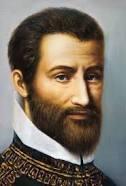
Giovanni Pierluigi da Palestrina

1525 - 1594 Person Name: Giovanni P. da Palestrina, 1525-0594 Composer of "[O Lamb of God, that takest away the sins of the world]" in The Methodist Hymnal Giovanni Pierluigi (da Palestrina) Italy 1525-1594. Born at Palestrina, Italy, near Rome, then part of the Papal States to Neopolitan parents. As a youth he became a chorister at the Santa Maria Maggiore basilica in the Rome Diocese. This allowed him to learn literature and music. In 1540 he moved to Rome, where he studied in the school ofr the Hugenot, Claude Goudimel. He also studied with Robin Mallapert and Firmin Lebel. Orlando Di Lasso was also a musical advisor to him. From 1544-1551 he was organist at the Cathedral of St Agapito, the principle church of his native city. In 1547 he married Lucrezia Gori, and they had four children: Rodolfo, Angelo, Iginio, and a daughter. In 1551 Pope Julius III (previously Bishop of Palestrina) appointed him ‘maestro di cappella’, or musical director of the Cappella Giulia (choir). Pierluigi dedicated his first published compositions to Pope Julius III (1554), known as ‘the book of Masses’. It was the first book of masses by a native composer, since most sacred works in those days were from low countries (France or Spain). In 1555 Pope Paul IV ordered that all papal choristers should be clerical. As Pierluigi married early in life and had four children, he was unable to continue in the chapel as a layman. During the next decade he held positions similar to his Julian Chapel appointment at other chapels and churches in Rome, including St John Lateran (1555-1560), and Santa Maria Maggiore (1561-1566). In 1571 he returned to the Julian Chapel and remained at St Peter’s for the rest of his life. The 1570s was a decade of difficulty for him, as he lost his brother, two sons, and his wife in three separate outbreaks of plague (1572-1575-1580). In 1578 he was given the title of ‘Master of Music’ at the Vatican Basilica. He thought of becoming a priest at this time, but instead married a wealthy widow, Virginia Formoli, in 1581, widow of a wealthy merchant, which gave him financial independence (he was not well-paid as choirmaster). He spent considerable time administering to her fortune, but also was able to compose prolifically until his death. He also helped to found an association of professional musicians called the Vertuosa Compagnia dei Musici. He died in Rome of pleurisy. He left hundreds of compositions, including 1045 masses, 68 offertories, 140 madrigals, 300+ motets, 72 hymns, 35 magnificats, 11 litanies and several sets of lamentations. There are two comprehensive editions of his works: a 33-volume edition published by Breitkopf and Hartel, in Leigzig, Germany, between 1862-1894, edited by Franz Xaver Habert, and a 34-volume edition published in the mid 20th century by Fratelli Scalera, in Rome, Italy, edited by R Casimiri and others. As a Renaissance musician and composer of sacred music he was the best known 16th century representative of the Roman School of musical composition. He had a long-lasting influence on the development of church and secular music in Europe, especially on the development of counterpoint, his work considered the culmination of Renaissance polyphony. Very famous in his day, he was considered by some the legendary ‘savior of church music’. A 2009 film was produced by German television about him, titled: ‘Palestrina – Prince of Music’. John Perry

John Merbecke

1510 - 1585 Person Name: John Merbecke, 1523-1585 Composer of "[O Lamb of God, that takest away the sins of the world]" in The Methodist Hymnal John Marbeck, Merbeck or Merbecke (c. 1510 – c. 1585) was an English theological writer and musician who produced a standard setting of the Anglican liturgy. He is also known today for his setting of the Mass, Missa Per arma justitiae. Probably a native of Beverley in Yorkshire, Merbecke appears to have been a boy chorister at St. George's Chapel, Windsor, and was employed as an organist there from about 1541. Two years later he was convicted with four others of heresy and sentenced to be burnt at the stake, but received a pardon owing to the intervention of Stephen Gardiner, Bishop of Winchester. An English Concordance of the Bible which Merbecke had been preparing at the suggestion of Richard Turner, was however confiscated and destroyed. A later version of this work, the first of its kind in English, was published in 1550 with a dedication to Edward VI. In the same year, Merbecke published his Booke of Common Praier Noted, intended to provide for musical uniformity in the use of the First Prayer Book of Edward VI. This set the liturgy to semi-rhythmical melodies partly adapted from Gregorian chant; it was rendered obsolete when the Prayer Book was revised in 1552. Merbecke wrote several devotional and controversial works of a strongly Calvinistic character, and a number of his musical compositions are preserved in manuscript in the British Library, and at Oxford and Cambridge. He died, probably while still organist at Windsor, about 1585. His son, Roger Marbeck (1536–1605), was a noted classical scholar and physician. In the first half of the 19th century, the Oxford Movement inspired renewed interest in liturgical music within the Church of England. John Jebb first drew attention to Merbecke's Prayer Book settings in 1841. In 1843, William Dyce published plain song music for all the Anglican services, which included nearly all of Merbecke's settings, adapted for the 1662 edition of the Book of Common Prayer then in use. During the latter half of the 19th century, many different editions of Merbecke's settings were published, especially for the Communion Service, with arrangements by noted musicians such as Sir John Stainer, Charles Villiers Stanford and Basil Harwood, Merbecke's Communion setting was very widely sung by choirs and congregations throughout the Anglican Communion until the 1662 Book of Common Prayer began to be supplanted by more modern liturgy in the late 20th century. Parts of his service, notably the Nicene Creed, have been adapted to "modern" wording. His setting has also been adapted for the liturgy of many other denominations; the Roman Catholic Church used it for the new English language rite following the Second Vatican Council of 1962-65. His complete Latin Church music was recorded by The Cardinall's Musick under the direction of Andrew Carwood in 1996. A voluntary choir for young men and women at Southwark Cathedral in London is named the Merbecke Choir in his honour, because Merbecke's heresy trial had been partly held at the church in 1543. Merbecke is honoured, together with William Byrd and Thomas Tallis, with a feast day in the liturgical calendar of the Episcopal Church (United States) on 21 November. --en.wikipedia.org/wiki/
It looks like you are using an ad-blocker. Ad revenue helps keep us running. Please consider white-listing Hymnary.org or getting Hymnary Pro to eliminate ads entirely and help support Hymnary.org.