

 My Starred Hymns
 My FlexScores
 My Hymnals
 My Purchased Files
Planning worship?
Check out our sister site, ZeteoSearch.org,
for 20+ additional resources related to your search.
- |
User Links
Person Results
Arthur Sullivan
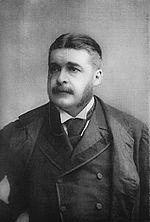
1842 - 1900 Person Name: Sir Arthur Sullivan (1842- ) Arranger of "LEOMINSTER" in Carmina Sanctorum Arthur Seymour Sullivan (b Lambeth, London. England. 1842; d. Westminster, London, 1900) was born of an Italian mother and an Irish father who was an army bandmaster and a professor of music. Sullivan entered the Chapel Royal as a chorister in 1854. He was elected as the first Mendelssohn scholar in 1856, when he began his studies at the Royal Academy of Music in London. He also studied at the Leipzig Conservatory (1858-1861) and in 1866 was appointed professor of composition at the Royal Academy of Music. Early in his career Sullivan composed oratorios and music for some Shakespeare plays. However, he is best known for writing the music for lyrics by William S. Gilbert, which produced popular operettas such as H.M.S. Pinafore (1878), The Pirates of Penzance (1879), The Mikado (1884), and Yeomen of the Guard (1888). These operettas satirized the court and everyday life in Victorian times. Although he composed some anthems, in the area of church music Sullivan is best remembered for his hymn tunes, written between 1867 and 1874 and published in The Hymnary (1872) and Church Hymns (1874), both of which he edited. He contributed hymns to A Hymnal Chiefly from The Book of Praise (1867) and to the Presbyterian collection Psalms and Hymns for Divine Worship (1867). A complete collection of his hymns and arrangements was published posthumously as Hymn Tunes by Arthur Sullivan (1902). Sullivan steadfastly refused to grant permission to those who wished to make hymn tunes from the popular melodies in his operettas.
Bert Polman
Arthur Sullivan
W. H. Havergal
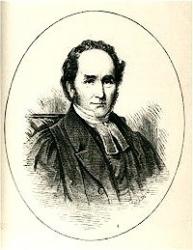
1793 - 1870 Person Name: William H. Havergal Arranger of "SWABIA" in The Cyber Hymnal Havergal, William Henry, M.A, son of William Havergal, was born at High Wycombe, Buckinghamshire, 1793, and was educated at St. Edmund's Hall, Oxford (B.A. 1815, M.A. 1819). On taking Holy Orders he became in 1829 Rector of Astley, Worcestershire; in 1842, Rector of St. Nicholas, Worcester; and in 1860, Rector of Shareshill, near Wolverhampton. He was also Hon. Canon in Worcester Cathedral from 1845. He died April 18, 1870. His hymns, about 100 in all, were in many instances written for special services in his own church, and printed as leaflets. Several were included in W. Carus Wilson's Book of General Psalmody, 1840 (2nd ed., 1842); and in Metrical Psalms & Hymns for Singing in Churches, Worcester, Deighton, 1849, commonly known as the Worcester Diocesan Hymn Book, and of which he was the Editor. In Life Echoes, 1883, his hymns are given with those of Miss Havergal. Of those in common use the greater part are in Mercer, and Snepp's Songs of Grace & Glory. Although his hymns are all good, and two or three are excellent, it is not as a hymnwriter but as a musician that Canon Havergal is best known. His musical works and compositions included, in addition to numerous individual hymn tunes and chants, the Gresham Prize Service, 1836; the Gresham Prize Anthem, 1845; Old Church Psalmody, 1849; History of the Old 100th Psalm tune, 1854, &c. He also reprinted Ravenscroft’s Psalter of 1611. His hymns in common use include:—
1. Blessed Jesus, lord and Brother. School Festivals, 1833. Published in Life Echoes, 1883.
2. Brighter than meridian splendour. Christ the glory of His Church. 1830. Published in W. C. Wilson's Book of General Psalms, 1840; the Worcester Psalms & Hymns, 1849, &c.
3. Christians, awake to joy and praise. Christmas Carol, c. 1860. Printed on broadsheet, with music by the author, and sold on behalf of the Lancashire Cotton Distress Fund.
4. Come, Shepherds, come, 'tis just a year. Christmas Carol. 1860. Published in Snepp's Songs of Grace & Glory,
5. For ever and for ever, Lord. Missions, 1866, for the Church Mission Society. Published in Snepp's Songs of Grace & Glory, 1872, and the Life Echoes, 1883.
6. Hallelujah, Lord, our voices. Sunday. 1828. Published in W. C. Wilson's Book of General Psalms, 1840; the Worcester Psalms & Hymns, 1849; Life Echoes, 1883, &c.
7. Heralds of the Lord of glory. Missions. First sung in Astley Church, Sep. 23, 1827. Published in Miss Havergal's Starlight through the Shadows, 1880; Snepp's Songs of Grace & Glory, 1872, &c.
8. Hosanna, raise the pealing hymn. Praise to Christ, 1833, and first sung in Astley Church, June 9, 1833. Published in W. C. Wilson's Book of General Psalmody, 1840; the Worcester Psalms & Hymns, 1849; Life Echoes 1883, &c.
9. How vast the field of souls. Missions. 1858. Printed for Shareshill Church Miss. Anniversary, 1863, and published in Snepp's Songs of Grace & Glory, 1872, and the Life Echoes, 1883.
10. In doubt and dread dismay. Missions. Written in 1837, and published in W. C. Wilson's Book of General Psalmody, 1840; the Worcester Psalms & Hymns, 1849, &c.
11. Jerusalem the golden, The home of saints shall be. Heaven. Published in Life Echoes, 1883.
12. My times are in Thy hand, Their best, &c. 1860. Published in Snepp's Songs of Grace & Glory, 1872, the Records of the author's life and work, and Life Echoes, 1883. The editor of the Records says (p. 159) "this hymn has been much appreciated, and well illustrates the devotional and cheerful spirit of the writer."
13. No dawn of holy light. Sunday. 1825. Printed in 1831 on a leaflet, and published in W. C. Wilson's Book of General Psalmody, 1840; the Worcester Psalms & Hymns, 1849; Life Echoes, 1883, &c.
14. Our faithful God hath sent us. Harvest. Written at Shareshill in 1863, for a Harvest Festival. Published in Snepp's Songs of Grace & Glory 1872, and Life Echoes, 1883.
15. Shout, 0 earth! from silence waking. Praise to Jesus for Redemption. 1841. Published in the Worcester Psalms & Hymns, 1849; Snepp's Songs of Grace & Glory, 1872, &c.
16. So happy all the day. Christmas Carol, c. 1834. Published in Snepp's Songs of Grace & Glory, 1872.
17. Soon the trumpet of salvation. Missions. 1826. Published in Snepp's Songs of Grace & Glory, 1872.
18. To praise our Shepherd's [Saviour's] care. The Good Shepherd. Written after witnessing the death of Elizabeth Edwards, aged 12, of St. Nicholas, Worcester, and printed as a leaflet. Published in W. C. Wilson's Book of General Psalmody, 1840; the Worcester Psalms & Hymns, 1849; Life Echoes, &c, 1883. The author also published a Memoir of the child.
19. Widely 'midst the slumbering nations. Missions. 1828. Published in the Worcester Psalms & Hymns, 1849; Snepp's Songs of Grace & Glory, 1872, &c.
In addition to these hymns, his carols, "How grand, and how bright," "Our festal morn is come," and others are annotated under their respective first lines. Most of these carols and hymns were reprinted in Christmas Carols & Sacred Songs, Chiefly by the Rev. W. H. Havergal, London, Nisbet, 1869.
--John Julian, Dictionary of Hymnology (1907)
=====================
Havergal, W. H., p. 498, i. Other hymns are: —
1. Lord, if judgments now are waking. Second Advent. Published in W. Carus Wilson's Book of General Psalmody, 1840; in Kennedy, 1863, &c.
2. Remember, Lord, Thy word of old displayed. Missions. "Composed for a special prayer-meeting for missionary labourers, held in the author's schoolroom, in the parish of St. Nicholas's, Worcester." (W. F. Stevenson's Hymns for Church and Home, 1873, where the original text is also given.)
It must be noted that No. 17, at p. 498, ii., "Soon the trumpet of salvation," was first published in A Collection of Original Airs adapted to Hymns, &c, 1826.
--John Julian, Dictionary of Hymnology, Appendix, Part II (1907)
W. H. Havergal
George F. Root
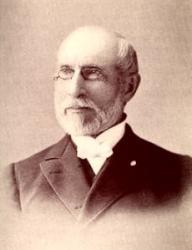
1820 - 1895 Person Name: G. F. Root Composer of "CLYMER" in Book of Worship Root, George F., MUS. DOC, born in Sheffield, Berkshire County, Mass., Aug. 30, 1820. He is much more widely known as a composer of popular music than as a hymn writer. Four of his hymns are in I. D. Sankey's Sacred Songs & Solos, 1878. Nos. 16, 100, 293, and 297. A sympathetic biographical sketch, with portrait, is in The Tonic Sol-Fa Reporter, Sep. 1886. He died Aug. 6, 1895.
--John Julian, Dictionary of Hymnology, Appendix, Part II (1907)
=====================
George Frederick Root was born in Sheffield, Mass., August 30, 1820. His father moved to North Reading, near Boston, when the boy was six years old, and there his youth was spent.
He was always fond of music— not singing at all as a boy, but played upon every kind of instrument that came in his way. At thirteen it was his pride that he could "play a tune" on as many instruments as he was years old. His dream of life was to be a musician, although such an ambition was looked down upon by all his relatives and friends, excepting a fond mother. In the fall of 1838 he went to Boston and made an engagement to work for Mr. A. N. Johnson and take lessons on the piano.
His father and one of the brothers were at the time in South America, and the mother, with six younger children, was at home on the farm. When he secured the engagement with Mr. Johnson to receive three dollars a week and board and lessons, the neighbors became interested and encouraged him to go ahead, they promising to help look after the farm and see that the family got along. The young man's happiness over these events can better be imagined than described.
On the second day of October, 1838, he entered upon his duties in his new heaven on earth located at Harmony Hall, Mr. Johnson's music-room, in Boston. His duties were to see to the fires, care for the room, answer callers, give information about Mr. Johnson when he was out, and practice his lessons when not otherwise engaged. He worked industriously and made steady progress. It was but a few weeks till Mr. Johnson had him playing for the prayer-meeting, and but a few more till he began turning over pupils to him. In about seven weeks' time Mr. Johnson encouraged him by a considerable increase of salary. A most important event to him was meeting Dr. Lowell Mason and being accepted as a bass singer in the celebrated Bowdoin Street choir. Also, on Mr. Johnson's recommendation, he began taking private voice lessons of Mr. Geo. Jas. Webb, the then celebrated voice teacher of Boston. He continued at least a year with Mr. Webb.
His first real singing class was taught the following fall, 1839, at the North End. It lasted nearly through the winter, and on the closing night his class made him a present of a silver goblet, suitably engraved, which he kept among his treasures.
Before the first year was up Mr. Johnson proposed a five year partnership, by which Mr. Root was to receive one-third of their earnings, and the former was to have the privilege of visiting Germany part of the time if he chose. They then changed their quarters to three rooms in the basement of Park Street Church. The annual rental was six hundred dollars. They were kept quite busy.
At this time Dr. Mason's music teaching in the public schools was a growing success, and Messrs. Johnson and Root were employed to assist him. Drs. Mason and Webb had introduced what is now called Musical Conventions a year or two previous to this. They called them "The Teachers' Class." Teachers and singers were called to Boston from surrounding territory to study and practice pretty much as they do now at normals.
In 1841 Mr. Root became one of the teachers in this class. He taught vocal training and continued this work for years afterward in Dr. Mason's teachers' classes, and later incorporated the same method in his own normals. During this year Mr. Johnson went to Germany, and left the two large church choirs (Winter Street and Park Street) in charge of Mr. Root. One of the organs was played by a pupil — Mr. S. A. Bancroft.
Everything went smoothly during Mr. Johnson's absence as it did also after his return. During the last year of the five-year partnership, Mr. Root was called to take the organ at Bowdoin Street, Mr. Mason changing to Winter Street. An amicable settlement was made between Messrs. Johnson and Root, and the partnership dissolved.
In 1811, Mr. Jacob Abbott (father of Lyman Abbott)and his three brothers had established a young ladies' school in New York City. They wanted a music teacher, and offered the position to Mr. Root. They also secured him the organ and choir of the Mercer Street Church, with prospects for other good work. It required pretty strong persuasive arguments to tempt Mr. Root to leave Boston, he was doing well there, and as the sequel shows, there was an attraction in Boston that held him in too tight a grasp to be relinquished by the mere offer of greater power and place. He made up his mind, however, only after getting the consent of the powders of Boston to take with him this [to him] the greatest attraction of the city — Miss Mary Olive Woodman — an accomplished lady, a sweet singer, and a member of a prominent family of musicians. He went to New York first to prepare a home, and in August, 1845, returned for his bride, who took her place in his New York choir as leading soprano, and through his long and eventful career she was ever at his side, a true helpmeet.
He was soon employed at Rutger's Female Institute, Miss Haines' School for Young Ladies, Union Theological Seminary and the New York State Institution for the Blind. Within six weeks after he arrived in New York his time was fully occupied. He continued with Mr. Abbott's young ladies' school ten years.
While teaching in New York he continued his summer work with Messrs. Mason and Webb in Teachers' Classes. Up to the year 1849 he had written but little music; only a few hymn tunes while in Boston. He needed more music for the young ladies of his schools, so he made his first book, The Young Ladies' Choir, of which he had enough copies made for his own use, as he had no thought of offering it to the public. Then in connection with Mr. J. E. Sweetser, they compiled the Root and Sweetser's Collection.
Mr. Root did work enough for two men, hence broke down in health. Mr. Abbott suggested that he take a trip to Paris. After weighing the matter carefully, in December, 1853, he sailed, and in due time arrived at Paris, where he began studying French, voice culture and piano under celebrated teachers. After spending nearly a year abroad, he returned home in improved health and ready for active work. He began to feel the need of new music for his classes, and after some thought decided upon a musical play ; the subject and title, The Flower Queen.
At the Institution for the Blind was a young lady, a former pupil, but now a teacher who had shown some poetical talent. He asked her to help him with the words. He would suggest in prose what the flowers might say and she would put it into rhyme. She did it so well that it seldom needed any alteration. This lady was the now famous Fanny Crosby. The cantata became very popular. About this time Mr. Root wrote a half dozen simple songs for the people. They all sold pretty well, but Hazel Dell and Rosalie, the Prairie Flower, became the most popular, and had a large sale.
It was in the summer of 1853 that the first real normal was held. Mr. Root originated it, and held it in New York. The principal teachers were Messrs. Mason, Root, Hastings, and Bradbury. This school became famous. Sessions were also held at North Reading, Mass., a village near Mr. Root's "Willow Farm Home," with Dr. Mason, Mr. Webb, Mr. Bradbury and himself as principal teachers.
About this time Mr. Root decided to give up his work in New York, and devote himself entirely to conventions, normal work and authorship. He was eminently successful. Among the most eminent teachers and composers of our country have been students in Dr. Geo. F. Root's Normal Musical Institute.
In 1860 Dr. Root settled in Chicago and entered the music publishing business with his brother E. T. Root, and C. M. Cady, as "Root & Cady," Mr. Root's reputation being the most important capital of the firm. His books and popular songs soon made the new firm prosperous. Then came the war with its horror. Dr. Root wielded his musical sword in the way of writing war songs, which made him famous. The Battle Cry of Freedom, Just Before the Battle, Mother, and others, made thousands of dollars for the music house.
In the great Chicago fire of 1871 the interests of the firm of Root & Cady became engulfed in the general ruin. Their loss was upward of a quarter of a million dollars. They then sold their book catalogue, plates and copyrights to John Church & Co., of Cincinnati, and the sheet music plates and copyrights to S. Brainard's Sons, Cleveland. These sales realized about §130,000. The final result was that Dr. Root, his talented son F. W., and others became connected with John Church & Co. Under this new business relationship Mr. Root went right on with his normal and convention work; also issued a great many new books and cantatas. In 1872 the Chicago University very worthily conferred upon him the degree Doctor of Music.
In 1886 he made a trip to Scotland and England, and arranged with publishers to issue some of his cantatas. He was royally received.
Dr. Root was the author of about seventy-five books, nearly two hundred songs in sheet form, and many popular gospel songs. Dr. Root occupies a prominent place in the musical history of this country. It was Dr. Mason who lifted music from almost nothing and gave it an impetus, but he left no better follower than Dr. Root to carry on his work. He was a man of spotless integrity and high Christian character, and to know him was to love him.
At the time of Dr. Root's death he was at Bailey Island, Maine, a summer resort, where he and other relatives had cottages. On August 6, 1895, he was seized with neuralgia of the heart — and died within one hour. He was buried at North Reading, Mass., his old home.
--Hall, J. H. (c1914). Biographies of Gospel Song and Hymn Writers. New York: Fleming H. Revell Company.
George F. Root
Charles Lockhart
1745 - 1815 Person Name: C. Lockhart, 1745-1815 Composer of "CARLISLE" in The English Hymnal Born: 1745, London, England.
Died: February 9, 1815, London, England.
Lockhart was first organist of the Lock Hospital, and was for some years associated with Martin Madan in the musical arrangements there. Though blind from infancy, Lockhart had a distinct musical gift, and was especially known for training children’s choirs. His earliest tunes were printed on separate sheets. He published a set of hymn tunes about 1810.
Sources:
Frost, p. 680
Lightwood, p. 155
Nutter, p. 460
Music:
CARLISLE
TAMWORTH
http://www.hymntime.com/tch/bio/l/o/c/lockhart_c.htm
================
http://en.wikipedia.org/wiki/Charles_Lockhart_%28musician%29
Charles Lockhart
V. S. S. Coles
1845 - 1929 Person Name: V. S. C. Coles Author of "O Shepherd of the sheep" in Carmina Sanctorum Coles, Vincent Stuckey Stratton, son of Rev. James Stratton Coles, born at Shepton Beauchamp, March 27, 1845, and educated at Balliol College, Oxford, graduating B.A. 1868, and M.A. 1872. On taking Holy Orders in 1869, he became Curato of Wantage. In 1872 he was preferred as Rector of Shepton-Beauchamp, Somerset, and in 1884 Librarian of the Pusey Library, Oxford. Mr. Coles has contributed the following hymns to Hymns Ancient & Modern, and the Society for Promoting Christian Knowledge Church Hymns.
1. Lord, in whose eternal counsels. For guidance and growth in holiness. It was first printed as a leaflet, written for E. C. U. Festival, c. 1870; and then included, after revision, in S. P. C. K. Church Hymns, 1871.
2. Most Holy Father, bending low. Lent. No. 45 in the Bucharistic Hymnal, 1877.
3. 0 Lamb of God, whose love divine. Martyrs ( Virgins). Given in the Appendix to Hymns Ancient & Modern, 1868.
4. O Shepherd of the sheep. Martyrs (Bishop). Also given in the Appendix to Hymns Ancient & Modern 1868.
5. We pray Thee, heavenly Father. Preparation for Holy Communion. Originally written for a Communicants' class, it was included in S. P. C. K. Church Hymns, 1871, and in the revised Hymns Ancient & Modern 1875.
6. Lord, I cannot seek Thee. Spiritual Communion. Contributed to Lyra Eucharistica, 1863, and repeated in the Churchman's Altar Manual, 1882.
--John Julian, Dictionary of Hymnology (1907)
=====================
Coles, V. S. S., p. 242, ii. Recently additional hymns by Mr. Coles have come into common use, including:—
1. Almighty Father, Lord most high. [Holy Communion.] Written for Hymns Ancient & Modern and given in the 1904 edition, No. 264, to be sung "At the Offertory." It is admirably suited for the purpose.
2. Father, Whose love we have wrong'd by transgression. This "Litany for Lent," in Hymns Ancient & Modern 1904, No. 633, is a cento from the author's Metrical Litany, published by Novello. The Pt. ii. in Hymns Ancient & Modern begins “Christ with the twelve the last Passover keeping."
3. We pray Thee, heavenly Father, p. 242, ii., 5. This hymn, with the exception of stanza i., is entirely rewritten in The English Hymnal, 1906.
4. Ye who own the faith of Jesus. [B. V. M.] This appeared in The English Hymnal, 1906, for "St. Mary the Virgin.”
--John Julian, Dictionary of Hymnology, New Supplement (1907)
V. S. S. Coles