Go Ad-Free
If you regularly use Hymnary.org, you will definitely enjoy all the perks of a Hymnary Pro subscription. Plus, your subscription supports our mission in a big way!
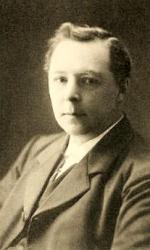
| Short Name: | Henry Cary Shuttleworth |
| Full Name: | Shuttleworth, Henry Cary, 1850-1900 |
| Birth Year: | 1850 |
| Death Year: | 1900 |
Shuttleworth, Henry Cary, M.A., son of the Rev. Edward Shuttleworth, was born at Egloshayle Vicarage, Cornwall, Oct. 20, 1850, educated at St. Mary's Hall, Oxford; B.A. 1873, M.A. 1876. Ordained D. 1873, P. 1874; Chaplain Ch. Ch., Oxford; Minor Canon of St. Paul's; and Rector of St. Nicholas, Cole-Abbey, London, 1883. He was also Prof. of Pastoral and Liturgical Theology, and Lect. Eccl. Hist, and English Lit., and in the New T., in K.C.L. He published The Last Words of the Saviour (3rd ed. 1879), Song, 1885, The Place of Music in Public Worship (2nd ed. 1893), Hymns for Private Use, 1896. He also compiled a small Appendix to Church Hymns for use in St. Nicholas' Church, in which several of his own hymns appeared. Of these hymns the following were included in the 1903 ed. of Church Hymns;—
1. Father, ere yet another day is ended. [Evening.]
2. Father of men, in Whom are one. [Friendly Societies.] This appeared with music by the author in the Church Monthly, 1898, p. 124.
He died Oct. 24, 1900, and a Memoir of him was published in 1902.
--John Julian, Dictionary of Hymnology, New Supplement (1907)
Texts by Henry Cary Shuttleworth (2) | As | Authority Languages | Instances |
|---|---|---|---|
| Father of men, in whom are one | H. C. Shuttleworth (Author) | English | 21 |
| Man lives not for himself alone | Henry Cary Shuttleworth (Author) | English | 2 |







 My Starred Hymns
 My FlexScores
 My Hymnals
 My Purchased Files