

 My Starred Hymns
 My FlexScores
 My Hymnals
 My Purchased Files
Planning worship?
Check out our sister site, ZeteoSearch.org,
for 20+ additional resources related to your search.
- |
User Links
Person Results
Edwin Pond Parker
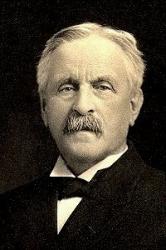
1836 - 1920 Person Name: Rev. Edwin P. Parker Topics: The Kingdom of God on Earth Brotherhood Author of "Master, no offering" in The Hymnal Parker, Edwin Pond, D.D., born at Castine, Maine, Jan. 13, 1836, and educated at Bowdoin College, Maine, and Bangor Theo. Sem., Maine. Entering the Congregational ministry, he became pastor of the Second Church of Christ, Hartford, Conn., Jan. 1860, and has remained there to the present date. Besides editing some Sunday School Hymn and Tune Books, now out of use, he was chief Editor of The Book of Praise . . . (Congregational) . . ., Phila., 1874; and Editor of The Christian Hymnal, Hartford, Conn., 1877, revised ed. 1889. His hymns in common use include:—
1. Blest are they in Christ departed. [Death and Burial.] Dated 1886. In the Christian Hymnal, 1889, and several other collections.
2. Come to Jesus, ye who labour. [Invitation.] Written in 1898, and included in The Pilgrim Hymnal , 1904.
3. Hail, Holy Light, the world rejoices. [Morning.] Dated 1889, and given in The Christian Hymnal, 1889, The Pilgrim Hymnal, 1904, and others.
4. I would tell Jesus. [The Soul's Desire.] Written in 1887, and included in The Christian Hymnal, 1889.
5. Lord, as we Thy Name profess. [Sincerity.] Dated 1889, first published in The Christian Hymnal, 1889, and subsequently in several other collections, including The Pilgrim Hymnal, 1904.
6. Master, no offering costly and sweet. [Love and Service.] Originally written in 1888, to close a sermon, and first published in The Christian Hymnal, 1889, together with music by the author. It has been adopted, together with the original music, by many compilers. For both words and music see The Pilgrim Hymnal, 1904.
7. O Master, Brother, Lord, and Friend. [Christmas.] Written to close a Christmas sermon, 1903; first printed in a local newspaper, and then included in The Pilgrim Hymnal, 1904.
8. Thy Name, O Lord, in sweet accord. [Divine Worship.] First published in The Christian Hymnal, 1889, and subsequently in several collections, including The Pilgrim Hymnal, 1904.
Dr. Parker received his D.D. from Yale University, and is at the present time (1906) Chaplain to the Senate of the State of Connecticut. The above annotations are based upon Dr. Parker's manuscript notes.
--John Julian, Dictionary of Hymnology, New Supplement (1907)
Edwin Pond Parker
Adelaide Thrupp
1831 - 1908 Topics: The Kingdom of God on Earth Home, Marriage, Parents Author (stanzas 1, 3) of "Lord, who at Cana's wedding feast" in The Hymnal Adelaide Thrupp was born in London St. Georges, Hanover Square, London, Middlesex, England and died in 1908 in Guildford, Surrey, England. With her brother, Joseph she published Psalms and Hymns for Public Worship, 1853.
NN, Hymnary
Adelaide Thrupp
S. L. Findlater
1823 - 1907 Person Name: Sarah L. Findlater Topics: The Kingdom of God on Earth Home, Marriage, Parents Trans., Arr. and Alt. of "O happy home, where thou art loved the dearest" in The Hymnal Sarah Laurie Borthwick Findlater United Kingdom 1823-1907. Born in Edinburgh, Scotland, sister of Jane Laurie Borthwick, she married Erick John Findlater, a pastor in the Free Church of Scotland at Lochearnhead, Perthshire, and they had three daughters: Sarah Jemima, Mary Williamina, and Jane Helen. Findlater and her sister Jane's translations were collected in “German hymns from the land of Luther”, appearing in four volumes (1854-1862). As an author, Sarah wrote fiction, juvenile works, music scores, anthems, and musical parts. She died at Torquay, Devon, England.
John Perry
S. L. Findlater
A. Cleveland Coxe
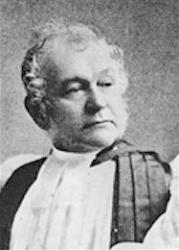
1818 - 1896 Person Name: Bishop Arthur Cleveland Coxe Topics: The Kingdom of God on Earth Discipleship and Service Author of "We are living, we are dwelling" in The Hymnal Coxe, Arthur Cleveland, D.D. LL.D. One of the most distinguished of American prelates, and son of an eminent Presbyterian minister, the Rev. Samuel H. Cox, D.D., was born at Mendham, New Jersey, May 10,1818. Graduating at the University of New York in 1838, and taking Holy Orders in 1841, he became Rector of St. John's, Hartford, Connecticut, in the following year. In 1851 he visited England, and on his return was elected Rector of Grace Church, Baltimore, 1854, and Calvary, New York, 1863. His consecration as Bishop of the Western Diocese of New York took place in 1865. His residence is at Buffalo. Bishop Coxe is the author of numerous works. His poetical works were mostly written in early life, and include Advent, 1837; Athanasion, &c, 1842; Christian Ballads, 1840 (Preface to the English edition, April, 1848); Hallowe'en and Other Poems, 1844; Saul, a Mystery, 1845, &c. Some of Bishop Coxe's hymns are found in the collections of every religious body in America, except the official collections of his own. This is accounted for by his too scrupulous modesty. As a member of the Hymnal Committee, in 1869-71, he refused to permit the insertion of his own lyrics. As he has not preserved memoranda, and has no precise recollection of dates, several dates here given are somewhat uncertain.
1. Behold an Israelite indeed. St. Bartholomew. First appeared in "Poems," published with his Christian Ballads, 1840, and found in an altered form in the People's H. and the Hymnary.
2. Body of Jesus, 0 sweet Food. Holy Communion. Written at St. James's College, Maryland (since broken up by the Civil War), Ascension Day, 1858. It was first printed for private use, and then published in the Cantate Domino, Boston, 1859, No. 53, and again in other American collections. It is also in Schaff’s Christ in Song, 1869, and in The Churchman's Altar Manual, 2nd ed., 1883.
3. Breath of the Lord, 0 Spirit blest.Whitsuntide. Bishop Coxe considers this more worthy of being called a hymn than anything else from his pen. It was written long before it appeared in the New York Independent, Whitsuntide, 1878. It is in the Schaff-Gilman Library of Religious Poetry, 1881, and Brooke's Churchman's Manual of Private and Family Devotion, 1883.
4. Christ is arisen. Easter. This is suggested by, and partly translated from, the famous Easter Chorus in Goethe's Faust, "Christ ist erstanden" (see Goethe), and appeared in Hallowe'en, 1844.
5. He who for Christ hath left behind. St. Matthew. From his Christian Ballads, &c, 1840.
6. In the silent midnight watches. Christ knocking. From his Athanasion, &c, 1842; an impressive moral poem rather than a hymn on Christ knocking at the door, extensively used in America, and sometimes in England. Original text, Schaff's Christ in Song, 1869.
7. Lord, when Thou didst come from heaven. A hymn for Epiphany, on behalf of Western Missions, appeared among the "Lays "appended to Hallowe'en, 1844, and again in later editions of the Christian Ballad. It is sometimes abbreviated, as in Lyra Sac. Amer., " Westward, Lord, the world alluring."
8. Now pray we for our country. National Hymn. A stanza from Chronicles, or meditations on events in the history of England, called up by visiting her abbeys and cathedrals, and appeared in Christian Ballads, 1840. Originally it began, "Now pray we for our mother," and, with the succeeding stanza, was a call upon Americans to pray for their mother country. It is adopted by Dr. Martineau in his Hys., 1873.
9. 0 walk with God, and thou shalt find. Holiness. Appeared in his Hallowe’en, &c, 1844, and is found in Lyra Sac. Amer.
10. 0 where are kings and empires now! Church of God. The 6th stanza of his ballad "Chelsea," which appeared in the Churchman, 1839, and again in his Christian Ballads, 1840.
11. Saviour, sprinkle many nations. Missions. “Begun on Good Friday, 1850, and completed 1851, in the grounds of Magdalen College, Oxford." 1st published. in Verses for 1851, in Commemoration of the third Jubilee of the Society for the Propagation of the Gospel, edited by the Rev. Ernest Hawkins, 1851. It was subsequently appended to the English edition of his Christian Ballads. It is regarded as Bishop Coxe's best piece, and to many minds it is the loveliest of missionary hymns. Its use in England is very extensive. It is not found in the American Episcopal hymnal for the reason given above.
12. Still as our day our strength shall be. Temptation. Appeared in his Hallowe'en, &c, 1844, and Lyra Sac. Amer.
13. Soldier, to the contest pressing. Christian Conflict. From his Hallowe'en, &c, 1844, and Lyra Sac. Amer. It was written in 1834.
14. There is a land like Eden fair. From Hallowe'en, &c, into a few collections.
15. We are living, we are dwelling. Christian Soldiers. An impressive moral poem rather than a hymn, but extensively used. It appeared in his Athanasion, &c, 1840, and Lyra &xc.
16. Who is this, with garments gory. Passiontide. From his “Lays" appended to Hallowe'en, 1844, and again in his Christian Ballads. It is found in the Child's Christian Year, 4th ed. N.D., the People's Hymns, and other collections. It is in 4 stanza of 8 1. The last stanza is sometimes given as a separate hymn:—"Hail, all hail, Thou Lord of Glory."
17. When o'er Judea's vales and hills. Written cir. 1840, and published in his Hallowe'en, &c, 1844, and again, with the author's final corrections, made in 1869, in Schaff's Christ in Song (1870 ed. p. 112). Also in the English edition of his Christian Ballads. From this "Hymn to the Redeemer," two shorter hymns have been com¬piled : (1) " How beauteous were the marks divine." This is in almost universal American and occasional English use. (2) "O who like Thee, so calm, so bright," in the Hymnary, 1872.
Bishop Coxe has also translated the Pange lingua gloriosi corporis (q. v.), and is the author of the beautiful Christmas Carol, "Carol, carol, Christians," given in his Christian Ballads, &c. [Rev. F. M. Bird]
-- John Julian, Dictionary of Hymnology (1907)
A. Cleveland Coxe
Henry Hallam Tweedy
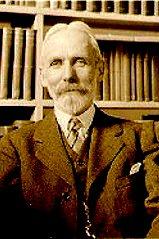
1868 - 1953 Topics: Kingdom of God on Earth, The World Friendship and Peace Author of "Eternal God, Whose Power Upholds" in The Hymnbook Born: August 5, 1868, Binghamton, New York.
Died: April 11, 1953, Brattleboro, Vermont.
Buried: Mountain View Cemetery, New Fairfield, Connecticut.
Tweedy attended Phillips Andover Academy, Yale University (BA & MA), Union Theological Seminary, and the University of Berlin. Ordained a Congregationalist minister in 1898, he pastored at Plymouth Church, Utica, New York (1892-1902), and South Church, Bridgeport, Connecticut (1902-09). He then became Professor of Homiletics at Yale Divinity School (1909-37). He taught liturgy, music, and the arts, and was interested in religious architecture. His works include:
The Minister and His Hymnal
Christian Worship and Praise, 1939
Lyrics:
"Eternal God, Whose Power Upholds"
"O Gracious Father of Mankind"
"O Spirit of the Living God"
--www.hymntime.com/tch
Henry Hallam Tweedy
John Milton
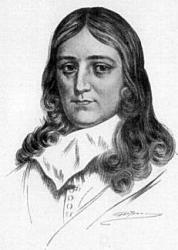
1608 - 1674 Person Name: Milton Topics: The Kingdom of God on Earth Author of "The Lord will come and not be slow" in Hymns for Christian Devotion Milton, John, was born in London, Dec. 9, 1608, and died there Nov. 8, 1674. His poetical excellences and his literary fame are matters apart from hymnology, and are fully dealt with in numerous memoirs. His influence on English hymn-writing has been very slight, his 19 versions of various Psalms having lain for the most part unused by hymnal compilers. The dates of his paraphrases are:—
Ps. cxiv. and cxxxvi., 1623, when he was 15 years of ago. These were given in his Poems in English and Latin 1645.
Ps. lxxx.-lxxxviii., written in 1648, and published as Nine Psalmes done into Metre, 1645.
Ps. i., 1653; ii., “Done August 8, 1653;" iii., Aug. 9, 1653; iv. Aug. 10, 1653; v., Aug. 12, 1653; vi., Aug. 13, 1653; vii.Aug. 14, 1653; viii., Aug. 14, 1653.
These 19 versions were all included in the 2nd ed. of his Poems in English and Latin, 1673. From these, mainly in the form of centos, the following have come into common use:—
1. Cause us to see Thy goodness, Lord. Ps. lxxxv.
2. Defend the poor and desolate. Ps. lxxxii.
3. God in the great assembly stands. Ps. lxxxii.
4. How lovely are Thy dwellings fair. Ps. lxxxiv. From this, "They pass refreshed the thirsty vale," is taken.
5. Let us with a gladsome [joyful] mind. Ps. cxxxvi.
6. O let us with a joyful mind. Ps. cxxxvi.
7. The Lord will come and not be slow. Ps. lxxxv.
Of these centos Nos. 4 and 5 are in extensive use. The rest are mostly in Unitarian collections. There are also centos from his hymn on the Nativity, "This is the month, and this the happy morn" (q.v.).
--John Julian, Dictionary of Hymnology (1907)
John Milton
John Stafford Smith
1750 - 1836 Person Name: John Stafford Smith, 1750-1836 Topics: The Kingdom of God on Earth The Nation, Peace Composer of "THE STAR-SPANGLED BANNER" in The Hymnal
John Stafford Smith
G. S. English
Topics: The Kingdom of God on Earth The Nation, Peace Arranger of "In joyful strains then let us sing" in The Hymnal
G. S. English
Ebenezer Elliott
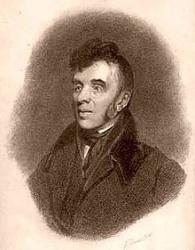
1781 - 1849 Topics: The Kingdom of God on Earth Discipleship and Service Author of "When wilt Thou save the people?" in The Hymnal Elliott, Ebenezer, commonly known as the "Corn Law Rhymer," was born near Rotherham, Yorkshire, 1781, and died at Barnsley, in the same county, in 1849. The greater part of his life was spent in Sheffield, where he was engaged in the iron trade, and it was in a Sheffield newspaper that many of his poetical pieces first appeared.
He published:—
(1) Night, a Descriptive Poem, 1818. (2) The Village Patriarch, 1829. (3) Corn Law Rhymes, 1831. (4) Poems, 1834 ; and (5) More Prose and Verse, 1850.
A piece or two from these works have been adapted as hymns in some Unitarian Collections. They include "Another year is swallowed by the sea," for the old and new year.
-- John Julian, Dictionary of Hymnology (1907)
Ebenezer Elliott
Johann Martin Spiess
1691 - 1772 Person Name: J. M. Spiess, 1715-1772 Topics: The Kingdom of God on Earth Missions and World Fellowship Composer of "SWABIA" in The Hymnal
Johann Martin Spiess
Pages