

 My Starred Hymns
 My FlexScores
 My Hymnals
 My Purchased Files
Planning worship?
Check out our sister site, ZeteoSearch.org,
for 20+ additional resources related to your search.
- |
User Links
Person Results
Sydney Carter
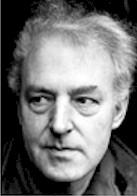
1915 - 2004 Person Name: Sydney Carter, 1915-2004 Meter: 8.7.8.7 with refrain Author of "God above, Man below" in New English Praise
Sydney Carter
Antonio L. Haskell
Meter: 8.7.8.7 with refrain Author of "Though the Clouds May Hover O'er Us" in African Methodist Episcopal Church Hymnal
Antonio L. Haskell
George W. Bethune
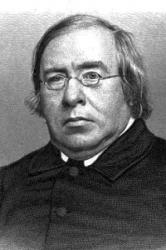
1805 - 1862 Meter: 8.7.8.7 with refrain Author of "There Is No Name So Sweet on Earth" in Hymns for the Living Church Bethune, George Washington, D.D. A very eminent divine of the Reformed Dutch body, born in New York, 1805, graduated at Dickinson Coll., Carlisle, [PA], 1822, and studied theology at Princeton. In 1827 he was appointed Pastor of the Reformed Dutch Church, Rinebeck, New York. In 1830 passed to Utica, in 1834 to Philadelphia, and in 1850 to the Brooklyn Heights, New York. In 1861 he visited Florence, Italy, for his health, and died in that city, almost suddenly after preaching, April 27, 1862. His Life and Letters were edited by A. R. Van Nest, 1867. He was offered the Chancellorship of New York University, and the Provostship of the University of Pennsylvania, both of which he declined. His works include The Fruits of the Spirit, 1839; Sermons, 1847; Lays of Love & Faith, 1847; The British Female Poets, 1848, and others. Of his hymns, some of which liave attained to some repute, we have:—
1. Tossed upon life's raging billow. Sailor's Hymn. Appeared in the Christian Lyre, 1830; in the Seamen's Devotional Assistant the same year, and in Dr. Bethune's Lays, 1847, p. 168, in 3 stanzas of 8 lines. It "is said to have been the Author's first and favourite hymn, having been written when he was on a voyage to the West Indies, for the benefit of his health, in the year 1825" (Lyra Sac. Amer. p. 297). It is a "Sailor's Hymn;" as such it was given in Lyra Sac. Amer., and thence passed into The Hymnary, 1872, and other English collections.
2. O for the happy hour. Whitsuntide. "A Prayer for the Spirit," contributed to the Parish Hymns, Phila., 1843, and republished in the Lays, &c, 1847, p. 158, in 6 stanzas of 4 lines. It is found in many modern collections.
3. It is not death to die. A translation of Caesar Malan's "Non, ce n'est pas mourir," (q.v.) from his Lays, 1847, p. 141, in 5 stanzas of 4 lines. As stated above, Dr. Bethune died at Florence. His remains were taken to New York, and buried in Greenwood Cemetery. This hymn, in compliance with a request made by him before his death, was sung at his funeral. It is found in several English hymnals.
4. Light of the Immortal Father's glory. Evening. A translation of a Greek hymn. (q.v.). It appeared in his Lays, &c, 1847, p. 137, in 2 stanzas of 8 lines, and is in common use.
5. Farewell to thee, brother. Parting. "The departing Missionary," published in his Lays, &c, 1847, p. 170, in 5 stanzas of 4 lines, and included in Lyra Sac. Amer., 1868, and thence into English collections. It is not in common use in America.
6. O Jesus, when I think of Thee. Easter. This is said to bear the date of 1847. It was 1st pub. in his Life, &c, 1867. Included in Lyra Sac. Americana (where it is stated to have been found in MS. amongst the author's papers), and from the Lyra into English collections. It is an Easter hymn of no special merit.
7. Come, let us sing of Jesus. S. Schools. Published in 1850, suited to Sunday schools, and is found in Snepp's Songs of Grace and Glory and others.
8. O Thou Who in Jordan didst bow Thy meek head. Adult Baptism. Written for and much used by the Baptists. It is dated 1857.
9. There is no Name so sweet on earth. Name of Jesus. Said by Mr. H. P. Main to be by Dr. Bethune. It has been wrongly ascribed to E. Roberts, a musician.
10. When time seems short and death is near. Death anticipated. This was found in the author's portfolio, and was written on Saturday, April 27th, 1862, the day before his death at Florence (Life, &c, p. 409). It was included in the Lyra Sac. Amer., 1808, and from thence passed into one or two English hymnals.
In his Lays, &c, 1847, Dr. Bethune included the following "Christmas Carols for Sunday School Children”:
1. The Almighty Spirit to a poor, &c.
2. Joy and gladness, joy and gladness.
3. Full many a year has sped.
4. We come, we come, with loud acclaim.
In the same work there are also metrical renderings of Psalms ix., xix., xxiii., cxxvi., and cxxvii. In the Lyra Sacra Americana, 14 pieces by Dr. Bethune are given, including many of the above.
-John Julian, Dictionary of Hymnology (1907)
====================
Bethune, George Washington, p. 138, ii. Other hymns from his Lays of Love and Faith, 1847, are in common use:-
1. 'Tis He, 'tis He, I know Him now. Easter.
2. Upon the well by Sychar's gate. Resignation.
3. Yes, boar them to their rest. Evening. "Hymn to Night, suggested by the Bas-relief of Thorwaldsen."
--John Julian, Dictionary of Hymnology, Appendix, Part II (1907)
George W. Bethune
Carrie Ellis Breck

1855 - 1934 Person Name: Carrie E. Breck Meter: 8.7.8.7 with refrain Author of "Face to Face" in The Worshiping Church Carrie Ellis Breck was born 22 January 1855 in Vermont and raised in a Christian home. She later moved to Vineland, New Jersey, and then to Portland, Oregon. She wrote verse and prose for religious and household publications, In 1884 she married Frank A. Breck. She has written between fourteen and fifteen hundred hymns.
Dianne Shapiro, from "The Singers and Their Songs: sketches of living gospel hymn writers" by Charles Hutchinson Gabriel (Chicago: The Rodeheaver Company, 1916)
See also Mrs. Frank A. Breck.
Carrie Ellis Breck
John Frybarger
Meter: 8.7.8.7 with refrain Composer of "[Don't you hear him sweetly calling] (Frybarger)"
John Frybarger
Robert Robinson
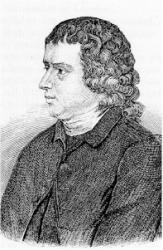
1735 - 1790 Meter: 8.7.8.7 with refrain Author of "Come, Thou Fount of Every Blessing" in Baptist Hymnal 2008 Robert Robinson was born at Swaffham, Norfolk, in 1735. In 1749, he was apprenticed to a hairdresser, in Crutched Friars, London. Hearing a discourse preached by Whitefield on "The Wrath to Come," in 1752, he was deeply impressed, and after a period of much disquietude, he gave himself to a religious life. His own peculiar account of this change of life is as follows:--"Robertus Michaelis Marineque Robinson filius. Natus Swaffhami, comitatu Norfolciae, Saturni die Sept. 27, 1735. Renatus Sabbati die, Maii 24, 1752, per predicationem potentem Georgii Whitefield. Et gustatis doloribus renovationis duos annos mensesque septem, absolutionem plenam gratuitamque, per sanguinem pretiosum i secula seculorum. Amen." He soon after began to preach, and ministered for some time in connection with the Calvinistic Methodists. He subsequently joined the Independents, but after a short period preferred the Baptist connection. In 1761, he became pastor of a Baptist congregation at Cambridge. About the year 1780, he began to incline towards Unitarianism, and at length his people deemed it essential to procure his resignation. While arrangements for this purpose were in progress he died suddenly at Bingham, in June 1790. He wrote and published a good many works of ability.
--Annotations of the Hymnal, Charles Hutchins, M.A. 1872.
=============================
Robinson, Robert, the author of "Come, Thou fount of every blessing," and "Mighty God, while angels bless Thee," was born at Swaffham, in Norfolk, on Sept. 27, 1735 (usually misgiven, spite of his own authority, as Jan. 8), of lowly parentage. Whilst in his eighth year the family migrated to Scarning, in the same county. He lost his father a few years after this removal. His widowed mother was left in sore straits. The universal testimony is that she was a godly woman, and far above her circumstances. Her ambition was to see her son a clergyman of the Church of England, but poverty forbade, and the boy (in his 15th year) was indentured in 1749 to a barber and hairdresser in London. It was an uncongenial position for a bookish and thoughtful lad. His master found him more given to reading than to his profession. Still he appears to have nearly completed his apprenticeship when he was released from his indentures. In 1752 came an epoch-marking event. Out on a frolic one Sunday with like-minded companions, he joined with them in sportively rendering a fortune-telling old woman drunk and incapable, that they might hear and laugh at her predictions concerning them. The poor creature told Robinson that he would live to see his children and grandchildren. This set him a-thinking, and he resolved more than ever to "give himself to reading”. Coincidently he went to hear George Whitefield. The text was St. Matthew iii. 7, and the great evangelist's searching sermon on "the wrath to come" haunted him blessedly. He wrote to the preacher six years later penitently and pathetically. For well nigh three years he walked in darkness and fear, but in his 20th year found "peace by believing." Hidden away on a blank leaf of one of his books is the following record of his spiritual experience, the Latin doubtless having been used to hold it modestly private:—
"Robertus, Michaelis Mariseque Robinson filius. Natus Swaffhami, comitatu Norfolciae, Saturni die Sept. 27, 1735. Renatus Sabbati die, Maii 24,1752, per predicationem potentem Georgii Whitefield. Et gustatis doloribus renovationis duos annosque septem absolutionem plenam gratuitamque, per sanguinem pretiosum Jesu Christi, inveni (Tuesday, December 10, 1755) cui sit honor et gloria in secula seculorum. Amen."
Robinson remained in London until 1758, attending assiduously on the ministry of Gill, Wesley, and other evangelical preachers. Early in this year he was invited as a Calvinistic Methodist to the oversight of a chapel at Mildenhall, Norfolk. Thence he removed within the year to Norwich, where he was settled over an Independent congregation. In 1759, having been invited by a Baptist Church at Cambridge (afterwards made historically famous by Robert Hall, John Foster, and others) he accepted the call, and preached his first sermon there on Jan. 8, 1759, having been previously baptized by immersion. The "call" was simply "to supply the pulpit," but he soon won such regard and popularity that the congregation again and again requested him to accept the full pastoral charge. This he acceded to in 1761, alter persuading the people to "open communion." In 1770 he commenced his abundant authorship by publishing a translation from Saurin's sermons, afterwards completed. In 1774 appeared his masculine and unanswerable Arcana, or the Principles of the Late Petitioners to Parliament for Relief in the matter of Subscription. In 1776 was published A Plea for the Divinity of our Lord Jesus Christ in a Pastoral Letter to a Congregation of Protestant Dissenters at Cambridge. Dignitaries and divines of the Church of England united with Nonconformists in lauding this exceptionally able, scholarly, and pungently written book. In 1777 followed his History and Mystery of Good Friday. The former work brought him urgent invitations to enter the ministry of the Church of England, but he never faltered in his Nonconformity. In 1781 he was asked by the Baptists of London to prepare a history of their branch of the Christian Church. This resulted, in 1790, in his History of Baptism and Baptists, and in 1792, in his Ecclesiastical Researches. Other theological works are included in the several collective editions of his writings. He was prematurely worn out. He retired in 1790 to Birmingham, where he was somehow brought into contact with Dr. Priestley, and Unitarians have made much of this, on exceedingly slender grounds. He died June 9, 1790.
His Life has been fully written by Dyer and by William Robinson respectively, both with a bias against orthodoxy. His three changes of ecclesiastical relationship show that he was somewhat unstable and impulsive. His hymns are terse yet melodious, evangelical but not sentimental, and on the whole well wrought. His prose has all…that vehement and enthusiastic glow of passion that belongs to the orator. (Cf. Dyer and Robinson as above, and Gadsby's Memoirs of Hymn-Writers(3rd ed., 1861); Belcher's Historical Sketches of Hymns; Millers Singers and Songs of the Church; Flower's Robinson's Miscellaneous Works; Annual Review, 1805, p. 464; Eclectic Review, Sept. 1861. [Rev. A. B. Grosart, D.D., LL.D.]
--John Julian, Dictionary of Hymnology (1907)
Robert Robinson
Joseph Barnby
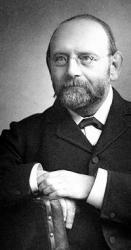
1838 - 1896 Person Name: Joseph Barnby, 1838-1896 Meter: 8.7.8.7 with refrain Composer of "THE BLESSED NAME" in The Book of Praise Joseph Barnby (b. York, England, 1838; d. London, England, 1896) An accomplished and popular choral director in England, Barnby showed his musical genius early: he was an organist and choirmaster at the age of twelve. He became organist at St. Andrews, Wells Street, London, where he developed an outstanding choral program (at times nicknamed "the Sunday Opera"). Barnby introduced annual performances of J. S. Bach's St. John Passion in St. Anne's, Soho, and directed the first performance in an English church of the St. Matthew Passion. He was also active in regional music festivals, conducted the Royal Choral Society, and composed and edited music (mainly for Novello and Company). In 1892 he was knighted by Queen Victoria. His compositions include many anthems and service music for the Anglican liturgy, as well as 246 hymn tunes (published posthumously in 1897). He edited four hymnals, including The Hymnary (1872) and The Congregational Sunday School Hymnal (1891), and coedited The Cathedral Psalter (1873).
Bert Polman
Joseph Barnby
Dmitriĭ Stepanovich Bortnianskiĭ
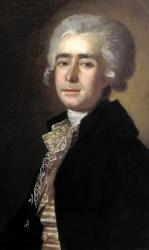
1751 - 1825 Person Name: Dimitri Bortniansky, 1752-1828 Meter: 8.7.8.7 with refrain Composer of "VESPER HYMN" in Psalter Hymnal (Blue) Dimitri Stepanovitch Bortniansky (1751-1825) Ukraine 1751-1825
Born in Glukhov, Ukraine, he joined the imperial choir at age 8 and studied with Galuppi, who later took the lad with him to Italy, where he studied for 10 years, becoming a composer, harpsichordist, and conductor. While in Italy he composed several operas and other instrumental music, composing more operas and music later in Russia. In 1779 he returned to Russia, where he was appointed Director to the Imperial Chapel Choir, the first as a native citizen. In 1796 he was appointed music director. With such a great instrument at his disposal, he produced many compositions, 100+ religious works, sacred concertos, cantatas, and hymns. He influenced Rachmaninoff and Tchaikovshy, the latter editing Bortniansky's sacred work, amassing 10 volumnes. He died in St. Petersburg. He was so popular in Russia that a bronze statue was erected in his honor in the Novgorod Kremlin. He composed in different musical styles, including choral works in French, Italian, Latin, German, and Church Slavonic.
John Perry
Dmitriĭ Stepanovich Bortnianskiĭ
D. S. Warner
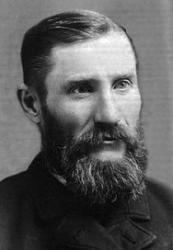
1842 - 1895 Person Name: Daniel S. Warner Meter: 8.7.8.7 with refrain Author of "The Bond of Perfectness" in Our Great Redeemer's Praise Warner, Daniel Sidney. (near Marshallville, Wayne County, Ohio, 1842--1895). Church of God. Reared on an Ohio farm. During the Civil War, he substituted for a brother. Later he taught school. He attended Oberlin College briefly in 1865. By 1867 he was licensed to preach by the Western Ohio Eldership of the Church of God (Winebrennerian). His experience in preaching was gained on circuits in Nebraska and Ohio. In 1874 he was in trouble with the Eldership for preaching entire sanctification. Soon he joined the Indiana Eldership. In 1881 he was in trouble with this Eldership over sectism.
Warner was an associate editor of the Herals of Gospel Freedom in 1878. this paper was merged with the Pilgrim about 1881, and the new paper was called the Gospel Trumpet, with Warner as its editor. Warner was forced to move the paper about, seeing for firm financial foundations. The publishing work was at last established in Grand Junction, Michigan, enabling Warner to travel more extensively with a group of evangelists. Warner's time was spent in editing the Trumpet, writing books, tracts, and songs, and making evangelistic tours of the United States.
--John W.V. Smith, DNAH Archives
===================================
Daniel Sidney Warner, 1842-1895
Born: June 25, 1842, Bristol (now Marshallville), Ohio.
Died: December 12, 1895, Grand Junction, Michigan, of pneumonia.
Buried: Near Grand Junction, Michigan, at the edge of the Church of God campground that was once there.
As of 1880, Warner was living in Rome City, Indiana. His works include:
Echoes From Glory, with Barney Warren (Grand Junction, Michigan: The Gospel Trumpet Publishing Company, 1893)
Lyrics--
Ah Poor Alien Far from the Fold of Love
Ah Poor Sinner, Think of Calvary
All This World, Its Wealth and Honor
All Ye People, Come Down to the Judgment Begun
Along a Dark and Gloomy Path
Are You of the Holy Remnant
Are You Ready, Waiting for the Lord?
Are You Sowing Seeds of Kindness?
Asleep in Jesus, Oh, How Sweet
A Gentle Hand Unseen by Us
A Long Time I Wandered Away
Beautiful, Peaceful Zion
Behold a Form upon the Lonely Mount
Behold, What Love, What Boundless Love
Bond of Perfectness, The
Borne Away in Mind and Spirit
Brighter Days Are Sweetly Dawning
By Thy Blessed Word Obeying
Can the Spirit of a Mortal
Church of God, Thou Spotless Virgin
Church of the Living God
Come, Behold the Love of Jesus
Come unto Me, All Ye That Labor
Come, Within That Upper Chamber
Dear Friends, We Have Precious Tidings of Old
Don’t Resist the Holy Spirit
Down into the Flowing River
Do You Triumph, O My Brother?
Ere Christ Will Reign Within Thy Heart
Fair City of the Gospel Day
Far Down o’er the Ages a Promise Divine
Fill Me with Thy Spirit
From My Soul and All Within
From the Mount of Heavenly Vision
God Is Sitting in the Awful Valley
God Is Sweeping through the Nations
God of Mercy, God of Love
Great Peace Have They That Love Thy Law
Hallelujah to Jesus!
Hark, in the Bible a Warning
Hear the Tidings of a Kingdom
Hear the Voice of Our Commander
Hear Ye the Moan of a Soul That Is Lost
Here We Meet and Part in Jesus
His Yoke Is Easy
How Often I’ve Pondered My Struggles Within
How Sweet Is My Walk with Jesus!
How Sweet This Bond of Perfectness
I Am Resting in Jesus, Hallelujah!
I Know My Name Is There
I Heard the Dear Redeemer Say
I Lost My Life for Jesus on the Cross
I Ought to Love My Savior
I Seem to Hear an Angel Choir
I Will Be with Thee, O, Child of Love
I Will Part with Thee, Old Master
I Will Trust Thee, O My Father
If Thou Wilt Know the Fountain Deep
I’ll Sing of a River Divine
In the Chambers of Thy Bosom
In the Light of God
In the Morning of the Lord
Is the Spirit Glowing in Thy Heart?
It Is Written in the Bible
I’ve Found a Friend in Jesus
I’ve Found My Lord and He Is Mine
I’ve Reached the Land of Pure Delight
Jesus Drank the Cup of Sorrow
Jesus Has Taken My Load of Sin
Jesus, Thou a Fountain Art
Last Great Day, The
Let Us Sing an Invitation
Let Us Sing a Sweet Song of the Home of the Soul
Let Us Sing the Name of Jesus
Life Is Not a Mystic Dream
Light in Our Darkness, Brother
Lord Our Shepherd, The
Listen, Sinner, to the Voice
Lord, the Shades of Night
Lo, Heaven Now Opens to Rapturous View
Lo the Kingdom of Heaven We See
Lo, wisdom Crieth in the Streets
Mansion Is Waiting in Glory, A
Men Speak of a Church Triumphant
Mighty Messengers Are Running
My Jesus Died for Me upon the Cross
My Name Is in the Book of Life
My Soul in Trouble Roamed
My Soul Is Satisfied
My Soul Is Saved from Sin
Not in the Temples Made with Hands
Now My Pilgrim toils Are Over
Now the Great King of Babel
O Blessed Jesus, for Thee W Are Waiting
O Blessed Jesus, Thy Love Is Supreme
O Careless Sinner, Wake to Mercy’s Call
O God, Inspire Our Morning Hymn
O How Can Anyone Refuse
O How Sublime Is the Life of the Christian
O Let Us Sing the Mighty Love
O Love Divine, Unfathomed!
O Praise the Lord, My Soul Is Saved
O Precious Bible! Burning Words from Heaven
O Sinner, Come Home to the Savior
O W Love the Children’s Meeting
O What Deep and Pure Compassion
O Worship God, the Father
O Ye Pilgrims, Sing an Exhortation
O’er the Door of Heaven’s Kingdom
Oft My Heart Has Bled with Sorrow
Oh, Worship God the Father, Just and True
Oh, Come and Praise the Lord Today
Oh, When We Remember the Goodness
O Who Can Stand the Judgment Day
Oh, Why Should I Be Lost
Onward Moves the Great Eternal
Our God Is Love, the Angels Know
Perishing Souls at Stake Today!
Pilgrim of Jesus, o’er Life’s Troubled Sea
Praise the Lord with Songs of Glory
Rejoice, Little Ones, in the Promise Divine
River of Peace
Salvation Is the Sweetest Thing
See the Great King of Babel
Shall I Tell You Why I Ceased from Folly?
Shall My Soul Ascend with Rapture
Shield of Faith, The
Since I Have Found My Savior
Sing of Salvation, O, it Was Love
Sinner, will You Lose Your Soul
Sunbeams Sparkling and Glancing
Sweet Fellowship, Thy Crystal Tide
Sweetly Whispered the Lord in My Mind
Take the Shield of Faith, My Brother
Tell Me, Pilgrim, Traveling Homeward
Tell Me, Watchman, Oh, What of the Morning
There Are Some Rays of Hope Divine
There Are Tidings of a Land Far Away
There Is a Blest Pavilion
There Is a Grace Few Mortals Find
There Is a Story I Often Must Ponder
There Is Joy in the Service of the Master
There Was a Bright and Lovely Boy
There’s an Angel of Mercy from Heaven
There’s a Fact No Mortal Ever Can Deny
There’s a Fountain of Blood That Atones for the Soul
There’s a Land of Everlasting Song
There’s a Peaceful Valley of Decision Found
There’s a Song We Love to Sing
There’s an Awful Day That’s Coming
There’s Mercy, Poor Sinner, for Thee
There’s Music in My Soul
This Is Why I Love My Savior
Tho’ All Along My Happy Pilgrim Race
Time Enough, the Sluggard Cries
Time Onward Flows Like a River Vast
Trusting in Jesus, My Savior and Friend
’Twas Sung by the Poets
Two Little Hands Are Sweetly Folded
Unheeding Winter’s Cruel Blast
Universe Is God’s Domain, The
We Are Coming, Hallelujah!
We Are Going Home to Heaven’s Golden City
We Are the Happy Children
We Have Met Today on the Old Campground
We Have Reached an Awful Era
We Have Read in Sacred Story
We Stand upon the Sea of Glass
We Tread upon the Awful Verge
We Will Work for Jesus
We’ll Follow the Lord All the Way
We’re a Happy Christian Band
What Awful Darkness Shrouds All the Earth!
When Lost in the Darkness of Guilt and Despair
When We Pass the Golden Summer
Where Art Thou, Wand’ring Sinner?
Where Shall We Look for Help in Affliction?
While Sleeping Careless on the Brink
Whiter Than Snow
Who but the Christian Is Happy and Free?
Who Can Sing the Wondrous Love of the Son Divine??
Who Is My Life but Christ Alone?
Who Will Suffer with the Savior?
Why Should a Doubt or Fear Arise?
Why Should a Mortal Man Complain?
Wonderful Fountain of Glory
--hymntime.com/tch
D. S. Warner
Pages