You help make Hymnary.org possible. More than 10 million people from 200+ countries found hymns, liturgical resources and encouragement on Hymnary.org in 2025, including you. Every visit affirms the global impact of this ministry.

If Hymnary has been meaningful to you this year, would you take a moment today to help sustain it? A gift of any size—paired with a note of encouragement if you wish—directly supports the server costs, research work and curation that keep this resource freely available to the world.

Give securely online today, or mail a check to:
Hymnary.org
Calvin University
3201 Burton Street SE
Grand Rapids, MI 49546

Thank you for your partnership, and may the hope of Advent fill your heart.

Person Results

Topics:accepted time
In:people

Planning worship? Check out our sister site, ZeteoSearch.org, for 20+ additional resources related to your search.
Showing 41 - 47 of 47Results Per Page: 102050

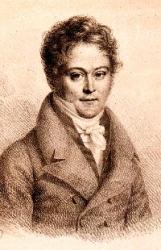
Pierre Marie François de Sales Baillot

1771 - 1842 Person Name: Pierre-Marie-Francois de Sales Baillot (1771-1842) Topics: Accepted Time Composer of "OLIPHANT" in Many Voices; or, Carmina Sanctorum, Evangelistic Edition with Tunes Pierre Marie François De Sales, born at Passy, France, Oct. 1, 1771, died in Paris, Sept. 15 1842. Instrumental composer, critic, and last great representative of the classical school of violin playing in Paris. Professor of the violin at the Conservatoire. His first master on the violin was an Italian named Polidori, but his real musical education began in 1780 under Sainte-Marie in Paris, and was continued in 1783 under Pollani, in Rome, where he was sent by M. de Boucheport; his playing was influenced also by Viotti, whom he heard in his tenth year. Baillot firs appeared in public in 1791, Viotti procuring him a place in the Théâtre Feydeau, which he soon resigned for an appointment in the Ministère des Finances using his musical talent merely as a recreation, In 1795, after studying compositions of Corelli, Tartini, Geminiani, Locatelli, Bach, and Handel he determined to become a professional musician, and made a successful debut in a concrto by Viotti, which secured his reputation and gained him a professorship of the violin in the newly opened Conservatoire, which he held till his death. He studied also harmony under Catel, and counterpoint with Reicha and Cherubini. Member of Napoleon's private band in 1802. He made a professional tour with the violoncello player Lamare in Russian in 1805-08, but the war brought him home; he gave concerts in the South of France, and started chamber music concerts in Paris in 1815, which gained him great reputation as a quartet player. In 1815-16 he made a second professional tour in Holland, Belgium, and England, becoming a member of the English Philharmonic Society, at one of whose concerts he played on Feb 25, 1816. Director of the band at the Paris Opéra in 1821-31; director of the Concerts spirtuels given at the Opéra, 1822, 1823, 1824; of the Royal Band from 1825; his last tour was made through Switzerland and part of Italy in 1833. Baillot's quartet playing is highly praised by Mednelssohn and Hiller. He had celebrated pupils. He assisted Rode and Kreutzer in compiling a work for the violoncello, and the Méthode de Violon, adopted by the Conservatoire (1803); with the exception of the Art du Violon, which is considered by Fétis the best elementary work of the kind (1834), his works are almost forgotten. His music is difficult. Among his published compositions are: 15 trios for two violins and bass; 6 duets for two violins; 12 études for violins; 9 concertos; Symphonie concertante for two violins, with orchestral accompaniment; 30 airs variés; 3 string quartets; Sonata for pianoforte and violin; 24 préludes in all keys, and several smaller compositions for the violin. Cyclopedia of Music and Musicians by John Denison Camplin, Jr. and William Foster Apthorp (Charles Scribner’s Sons, 1888) https://archive.org/details/cyclopediaofmusi01cham/mode/2up

John Clarke-Whitfield

1770 - 1836 Person Name: John Clarke Topics: Accepted Time Composer of "CLARKE'S" in Book of Worship with Hymns and Tunes

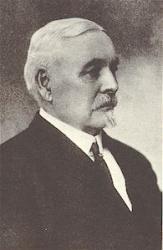
John M. Wigner

1844 - 1911 Person Name: John M. Wigner (1844-1911) Topics: Warning Message The Accepted Time Author of "Come to the Saviour Now" in The Christian Hymnary Wigner, John Murch, second son of J. T. Wigner, was born at Lynn, June 19, 1844. He was educated at the Grammar School of Lynn, and afterwards graduated B.A. and B.SC. in the London University. Mr. J. M. Wigner now resides near London, and has been for many years in the India Home Civil Service. He is connected with his father's church, and has done much to promote the spiritual welfare of the young. He is the author of several hymns, three of which are in the Baptist Psalms and Hymns for School and Home, 1882;— 1. "Come to the Saviour now!" Invitation. 2. "Lost one! wandering on in sadness." Return to God. 3. "Lo, a loving Friend is waiting." The Call of Jesus. The first of these is in the Baptist Psalms & Hymns, 1880, and is dated 1871. [Rev. W.R. Stevenson, M.A.] -- John Julian, Dictionary of Hymnology (1907)

C. C. Case

1843 - 1918 Topics: Gospel Time of Acceptance; Salvation Accepted Time of Composer of "[O come, let us in songs to God]" in Bible Songs Charles Clinton Case USA 1843-1918. Born in Linesville, PA, his family moved to Gustavus, OH, when he was four. His father was an accomplished violinist, but a neighbor gave him a small violin when he was nine, and he mastered it before he could read music. At age 16 he went to singing school (without parental consent), borrowing the money from a neighbor. C. A. Bentley, a prominent conductor, was his first vocal music instructor, and William Bradbury's “Jubilee” was the school textbook. For three winters in a row, he attended Bentley's singing school, working his father's farm in the summer. He married Annie Williams. In 1866 he studied music in Boston with B. F. Baker. He also studied under George Root, Horatio Palmer, Philip Bliss, George Webb, and others, hymnwriters in their own right. Soon after, Case began teaching music, and when James McGranahan moved two miles from his home, they became friends. Case wrote and edited a number of Gospel song books in his life. 6 works. John Perry

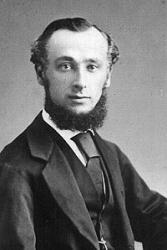
Ernest R. Kroeger

1862 - 1934 Person Name: E. R. Kroeger Topics: Gospel Time of Acceptance; Salvation Accepted Time of Composer of "[O come and let us sing to God]" in Bible Songs Born: August 10, 1862, St. Louis, Missouri. Died: April 7, 1934, St. Louis, Missouri. Buried: Bellefontaine Cemetery, St. Louis, Missouri. Kroeger was a charter member of the American Guild of Organists; member the National Institute of Arts of Letters; conductor of the Amphion Male Chorus in St. Louis (1883-84); organist at the Unitarian Church of the Messiah, St. Louis (1886); director of the College of Music at Forest Park University (1887); president of the Music Teachers’ National Association (1896-97); president of the Missouri State Music Teachers’ Association (1897-99); instrumental adjudicator at the annual Kansas Jubilee (1900-03); master of programs in the Bureau of Music at the St. Louis World’s Fair, 1904; adjudicator at the Welsh Eisteddfod in Canton, Ohio (1906); and director of the music department at Washington University, St. Louis (1925-34). He also ran the Kroeger School of Music in St. Louis (1904-34). --www.hymntime.com/tch/ ============ Successful American composer and teacher; born at St. Louis, Mo. He began studying violin and piano when he was five years old, and received his entire musical education in this country, principally in St. Louis, where he is located at present, and holds a prominent position as a teacher, pianist and composer. He is director of the College of Music at the Forest Park University for Women and is concert pianist of the Kroeger School of Music. Was president of the Music Teachers' National Association from 1895 to 1896, and of the Missouri State Music Teachers' Association from 1897 to 1899. Is a fellow of the American Guild of Organists and was master of programs of the Bureau of Music at the St. Louis Exposition in 1904. He has written a great many different kinds of music, and is one of a very few Americans who have published fugues. Mr. Kroeger says that some of his ideas are entirely musical, while others are attempts to illustrate poems in tones, such as his symphony, a suite, and overtures on Endymion, Thanatopis, Sardanapalus and Hiawatha. He has also published a very clever group of sonnets, on various themes; Twelve Concert Studies, which Hughes says "show the influence of Chopin upon a composer who writes with a strong German accent;" an etude, Castor and Pollux; a Romanze; and other studies. A Danse Negre and Caprice Negre resemble similar works of Gottschalk; and his Dance of the Elves is dedicated to Mme. Rive-King. --grandemusica.net/musical-biographies

Christian Gingrich Buerge

1863 - 1948 Person Name: C. G. Buerge (1863-1948) Topics: Warning Message The Accepted Time Author of "'Tis Midnight, and the Saviour Calls" in The Christian Hymnary

J. B. Burley

Topics: Salvation Accepted Time of Composer of "[O Lord, give ear when with my voice]" in Bible Songs

Pages


Export as CSV
It looks like you are using an ad-blocker. Ad revenue helps keep us running. Please consider white-listing Hymnary.org or getting Hymnary Pro to eliminate ads entirely and help support Hymnary.org.