

 My Starred Hymns
 My FlexScores
 My Hymnals
 My Purchased Files
Planning worship?
Check out our sister site, ZeteoSearch.org,
for 20+ additional resources related to your search.
- |
User Links
Person Results
Matthew Camidge
1764 - 1844 Person Name: Matthew Camidge, 1758-1844 Topics: The Nation and Commonweal Composer of "[We praise Thee, O God]" in The Book of Praise Matthew Camidge (25 May 1758 - 23 Oct 1844 in York) was a well-known local musician in Northern England, famous for his organ playing and conducting oratorios. His compositions are solid in craftsmanship though quite conservative. He was the son of John Camdige,who was also an organist and composer and Elizabeth Camidge.
After some time as a chorister of the Chapel Royal under James Nares, Matthew returned to York where he lived the rest of his life. He served as his father's assistant and in 1799 he succeeded his father as organist of York Minster. He played an active part in the musical life of York, appearing as a soloist in piano and organ concertos and promoting music festivals in York Minster. After Matthew retired in 1842, his son, John Camidge, succeeded him as organist.
Matthew Camidge was known for his brilliant organ improvisations. He organized huge music festivals given at York in 1823, 1825, and later. As a violinist, he led the orchestra of the York Musical Society. He contributed 30 excellent hymn tunes for William Richardson's Collection of Psalms, which in later editions became widely known as The York Psalm and Hymn Book. It is likely that Camidge introduced the practice of psalm chanting to St Michael-le-Belfrey, his other church job, which he obtained in 1801.
Matthew Camidge published works of practical material written for his work as a church musician and teacher as well as anthems and service settings in Cathedral Music, Hymn and psalm tunes, an edition of Henry Lawes' Psalmody for a single voice, Instructions for the Piano forte or Harpsichord and some songs.
From Camidge family wiki (https://en.m.wikipedia.org/wiki/Camidge_family), Creative Commons License
Matthew Camidge
William Cullen Bryant
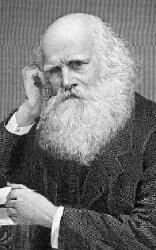
1794 - 1878 Person Name: William Cullen Bryant, 1794-1878 Topics: The Nation and Commonweal Author of "Look from the sphere of endless day" in The Book of Praise Bryant, William Cullen. First in order of time of the great American poets, Bryant was born at Cummington, Mass., Nov. 3, 1794, and was educated at Williams College. In 1815 he'was called to the Bar, and practised for a time at Great Barrington. In 1825 he retired from the Bar, settled at New York, and devoted himself to literary pursuits, founding the New York Review, and editing for a short time the New York Evening Post. He died June 12, 1878. His poetical and other works are well known. His hymns were written at intervals during his long life. They were collected and privately printed in 1869, and number over 20. Those in common use are:—
1. Almighty, listen while we raise. Praise. This is given as "Almighty hear us,” &c, in the Unitarian Hymn and Tune Book, Boston, 1868. It was introduced into Great Britain through Beard's Collection, 1857.
2. Deem not that they are blest alone. Mourning. In this form it is in Beard's Collection, 1837. It is best known as "0 deem not they are," &c, and in this form it is No. 964 in Songs for the Sanctuary, N. Y., 1865-72, No. 452, in Dr. Martineau's Hymns of Prayer and Praise, Lond., 1873, &c.
3. Father, to Thy kind love we owe. God's Lovingkindness. This is given in several modern collections, including the Unitarian Hymn and Tune Book, Boston, 1868, Martineau, 1873, &c.
4. 0 God, whose dread and dazzling brow. Compassion desired. Is No. 57 in the Boston Hymn and Tune Book, 1868, as above.
5. When he who from the scourge of wrong. Hope of the Resurrection. This is seldom found in modern hymnals. Text in Lyra Sacra Americana, 1868.
The above hymns (1-5) appeared in Dr. H. D. Sewall's (Unitarian) Psalms & Hymns for Social and Private Worship, 1820, and were written at the instance of a Miss Sedgwick. Following as near as possible the chronological order of the hymns we have next:—
6. O Thou Whose own vast temple stands. Opening of a Place of Worship. Written in 1835 for the Dedication of a Chapel in Prince Street, N. Y. This is the most widely known of this author's hymns. It was introduced into Great Britain as early as 1837, when it was included in Beard's Collection, No. 405. It is in 4 stanzas of 4 lines. Orig. text in Songs for the Sanctuary, N. Y., 1865, No. 1017, and Martineau, 1873, No. 727. Another form of the hymn is "Thou, Whose unmeasured temple stands," This is No. 569 in the American Presb. Psalms and Hymns, Richmond, 1867, Horder's Congregational Hymns, Lond. 1884, No. 747, and others.
7. All that in this wide world we see. Omnipresence. This is dated 1836. In his Collection in 1837, No. 17, Beard gives it as an original contributed thereto, thus fixing its first publication.
8. Thou unrelenting past. The Past. Dates from 1836. Also in Martineau, 1873, No. 508.
9. Not in the solitude. God in the City. Dates from 1836, and is No. 26 in Martineau, 1873.
10. Whither, midst falling dew. Divine Guidance. This, in common with Nos. 8 and 9, is more a poem than hymn. It is addressed "To a Waterfowl," and dates from 1836. In Martineau, 1873.
11. Dear ties of mutual succour bind. Charity Sermons. No. 905 in the Amer. Methodist Episcopal Hymnal, 1878. It dates from about 1836.
12. 0 Thou whose love can ne'er forget. Ordination. Given (but not as an original contributed thereto) in Beard's Collection (Eng.), 1837.
13. Mighty One, before Whose face. Ordination. This is dated 1840 (but is probably earlier), and is given in several collections, including Mr. Beecher's Plymouth Collection, 1855, and others.
14. Look from Thy sphere of endless day. Home Missions. This hymn has also attained to considerable use both in Great Britain and America. It dates from 1840. It is in the Song. for the Sanctuary, N. Y., 1865, Horder's Congregational Hymns, 1884, &c.
15. Lord, who ordainest for mankind. Thanks for a Mother's love. Written at Dr. Osgood's suggestion, and printed in his Christian Worship, 1862. It is repeated in Martineau, 1873.
16. All praise to Him of Nazareth. Holy Communion. Dr. Hatfield in his Church Hymn Bk., 1872, No. 736, gives this in 3 stanzas of 4 lines. In the Songs for the Sanctuary it is in its full form of 5 stanzas. It dates from 1864.
17. As shadows cast by cloud and sun. Epiphany. In the Methodist Episcopal Hymnal, N. Y., 1878. It was contributed to that Hymnal, 1877, but was composed for the Semi-Centennial Celebration of the Church of the Messiah, Boston, March 19, 1875.
18. When doomed to death the Apostle lay. On behalf of Drunkards. Also in the Methodist Episcopal Hymnal, 1878.
In addition to the above the following hymns by Bryant are in limited use:—
19. All things that are on earth. Love of God. In Beard's Collection, 1837.
20. Close softly, fondly, while ye weep. Death. In Mr. Beecher's Plymouth Coll., 1855.
21. How shall I know thee in the sphere which keeps? The Future Life. In the Supplement to the Boston Hymns for the Church of Christ, 1853.
22. Standing forth in life's rough way. On behalf of Children. In Dr. Alton's Children's Worship, 1878; Horder's Congregational Hymns, 1884, and others.
23. When this song of praise shall cease. Death anticipated. In his Hymns, 1869, and W. R. Stevenson's School Hymnal, 1880, No 313.
24. When the blind suppliant in the way. Opening the eyes of the blind. In the Methodist Episcopal Hymnal, 1878, N. Y., No. 201. It dates from 1874.
25. Wild was the day, the wintry sea. The Pilgrim Fathers. In Hymns of the Spirit, by Longfellow and Johnson. Boston, 1864.
In 1869, Hymns by W. C. Bryant, 12mo, were privately printed. In this work the texts of many of the older hymns are altered. The dates of his hymns are difficult to determine, and many of those given above are approximate only. Bryant's genius was cool, meditative, and not distinguished by lyric fire. His hymns are correct and solid, but none reach the highest rank. [Rev. F. M. Bird, M.A.]
-- John Julian, Dictionary of Hymnology (1907)
William Cullen Bryant
William Crotch
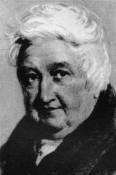
1775 - 1847 Person Name: William Crotch, 1775-1847 Topics: The Nation and Commonweal Composer of "[We praise Thee, O God]" in The Book of Praise William Crotch (5 July 1775 – 29 December 1847) was an English composer, organist and artist.
Born in Norwich, Norfolk to a master carpenter he showed early musical talent as a child prodigy. The three and a half year old Master William Crotch was taken to London by his ambitious mother, where he not only played on the organ of the Chapel Royal in St James's Palace, but for King George III. The London Magazine of April 1779 records:
He appears to be fondest of solemn tunes and church musick, particularly the 104th Psalm. As soon as he has finished a regular tune, or part of a tune, or played some little fancy notes of his own, he stops, and has some of the pranks of a wanton boy; some of the company then generally give him a cake, an apple, or an orange, to induce him to play again...
Crotch was later to observe that this experience led him to become a rather spoiled child, excessively indulged so that he would perform.
He was for a time organist at Christ Church, Oxford, from which he was later to graduate with a Bachelor of Music degree.
His composition The Captivity of Judah was played at Trinity Hall, Cambridge, on 4 June 1789; his most successful composition in adulthood was the oratorio Palestine (1812). He may have composed the Westminster Chimes in 1793.
In 1797 Crotch was given a professorship at Oxford University, and in 1799 he acquired a doctorate in music. While at Oxford, he became acquainted with the musician and artist John Malchair, and took up sketching. He followed Malchair's style in recording the exact time and date of each of his pictures, and when he met John Constable in London in 1805, he passed the habit along to the more famous artist.
In 1834, to commemorate the installation of the Duke of Wellington as chancellor of the University of Oxford, Crotch penned a second oratorio titled The Captivity of Judah. The 1834 work bears little resemblance to the oratorio he wrote as a child in 1789.
In 1822, Crotch was appointed to the Royal Academy of Music as its first Principal, but resigned ten years later.[2] He spent his last years at his son's house in Taunton, Somerset, where he died suddenly in 1847. Among his notable pupils were William Sterndale Bennett, Lucy Anderson, Stephen Codman, George Job Elvey, Cipriani Potter, and Charles Kensington Salaman
--en.wikipedia.org/
William Crotch
Thomas Sanders Dupuis
1733 - 1796 Person Name: Thomas Sanders Dupuis, 1730-1796 Topics: The Nation and Commonweal Composer of "[We praise Thee, O God]" in The Book of Praise
Thomas Sanders Dupuis
Albert Durrant Watson
1859 - 1926 Person Name: Albert Durrant Watson, 1859- Topics: The Nation and Commonweal Author of "Lord of the lands, beneath Thy bending skies" in The Book of Praise Watson, Albert Durrant. (Dixie, Ontario, January 8, 1859--May 3, 1926, Toronto, Ont.). Methodist. Victoria University, M.D., C.M., 1883; Edinburgh, P.R.C.P., 1883. While practising medicine in Toronto, he published nine books of prose and verse, culminating in Poetical Works (1924), and served on the compilation committee of the 1917, Methodist Hymn and Tune Book. For it, he wrote "Lord of the lands" to fit Calixa Lavallee's tune for "O Canada", since no English version of its French words had yet to gain general acceptance, and its Quebec origin worked against its use in Protestant churches. His words were widely used on patriotic occasions for the next fifty years, but only in church services, never in state celebrations.
--Hugh D. McKellar, DNAH Archives
Albert Durrant Watson
Edward Patrick Crawford
1846 - 1912 Person Name: Edward Patrick Crawford, 1846-1912 Topics: The Nation and Commonweal Composer of "JEHOVAH NISSI" in The Book of Praise
Edward Patrick Crawford
Pages




