

 My Starred Hymns
 My FlexScores
 My Hymnals
 My Purchased Files
Planning worship?
Check out our sister site, ZeteoSearch.org,
for 20+ additional resources related to your search.
- |
User Links
Person Results
William Hayes
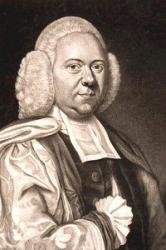
1706 - 1777 Person Name: Dr. W. Hayes, 1706-1777 Topics: Doxologies, Ancient Hymns and Canticles Composer of "DEUS MISEREATUR" in Methodist Hymn and Tune Book William Hayes (26 January 1708 (baptised) – 27 July 1777) was an English composer, organist, singer and conductor.
Hayes was born in Gloucester. He trained at Gloucester Cathedral and spent the early part of his working life as organist of St Mary’s, Shrewsbury (1729) and Worcester Cathedral (1731). The majority of his career was spent at Oxford where he was appointed organist of Magdalen College in 1734, and established his credentials with the degrees of B.Mus in 1735 and D.Mus in 1749. (He was painted by John Cornish in his doctoral robes around 1749.) In 1741 he was unanimously elected Professor of Music and organist of the University Church. He presided over the city’s concert life for the next 30 years, and was instrumental in the building of the Holywell Music Room in Oxford in 1748, the oldest purpose-built music room in Europe. He was one of the earliest members of the Royal Society of Musicians, and in 1765 was elected a ‘privileged member’ of the Noblemen’s and Gentlemen’s Catch Club. He died in Oxford, aged 69.
William Hayes was an enthusiastic Handelian, and one of the most active conductors of his oratorios and other large-scale works outside London. His wide knowledge of Handel left a strong impression on his own music, but by no means dominated it. As a composer he tended towards genres largely ignored by Handel—English chamber cantatas, organ-accompanied anthems and convivial vocal music—and his vocal works show an English preference for non-da capo aria forms. Hayes also cultivated a self-consciously ‘learned’ polyphonic style (perhaps inspired by his antiquarian interests) which can be seen in his many canons, full-anthems, and the strict fugal movements of his instrumental works. Nevertheless, several of his late trio sonatas show that he was not deaf to newly emerging Classical styles. Although he published virtually none of his instrumental music, his vocal works were extremely popular, and the printed editions were subscribed to by large numbers of amateur and professional musicians. Substantial works like his ode The Passions, the one-act oratorio The Fall of Jericho, and his Six Cantatas demonstrate that Hayes was one of the finest English composers of the eighteenth century.
As a writer, his Art of Composing Music includes the first published description of aleatoric composition—music composed by chance—albeit deliberately satirical in intent. In his Remarks he reveals much about his aesthetic outlook: in particular that he valued the music of Handel and Corelli over that of Rameau, Benedetto Marcello and Geminiani. Finally, the Anecdotes offer insights into the organization of provincial music festivals in the mid-eighteenth century. Hayes bequeathed his important and wide-ranging music library to his son Philip Hayes; the manuscripts of both father and son eventually passed to the Bodleian Library, Oxford, in 1801.
Sacred works
The Fall of Jericho, oratorio, c. 1740–50
Sixteen Psalms (London, 1773)
David, oratorio, completed by Philip Hayes
around 20 anthems and service music, in Cathedral Music in Score, edited by Philip Hayes (Oxford, 1795)
--en.wikipedia.org/wiki
William Hayes
H. T. Heathcote
Person Name: H. Heathcote Topics: Canticles and Ancient Hymns Composer of "" in The Riverdale Hymn Book
H. T. Heathcote
G. Herbert
1862 - 1962 Person Name: G. Herbert, c. 1854 Topics: Doxologies, Ancient Hymns and Canticles Arranger of "[Lord, have mercy upon us]" in Methodist Hymn and Tune Book
G. Herbert
Edward Elgar
Person Name: E. Elgar Topics: Ancient Hymns and Canticles Composer of "[Blessed be the Lord God of Israel]" in The Methodist Hymn-Book with Tunes
Edward Elgar
George Cooper
1820 - 1876 Person Name: G. Cooper Topics: Ancient Hymns and Canticles Composer of "[My soul doth magnify the Lord]" in The Methodist Hymn-Book with Tunes Cooper (actually George Cooper III) came from a long line of organists who played at St. Sepulchre’s Church, Newgate Street, London, throughout the 19th Century. One of his earliest appointments was to St. Benet’s Church in Upper Thames Street, where later John Stainer officiated (1854-56). Cooper was also one of the organists of the Chapel Royal, was organist and music master at Christ’s Hospital, and in 1843, he succeeded his father as assistant to John Goss at St. Paul’s. He was the first editor to supervise the production of the new Wesleyan Tune-Book (both he and his successor Gauntlett passed away while the work was in progress; it was finished by Edward Hopkins). Cooper’s works include:
Organ Arrangements
Organist’s Assistant
Organist’s Manual
--www.hymntime.com/tch/
George Cooper
E. J. Moore
b. 1882 Person Name: E. J. Moore, 1882- Topics: Doxologies, Ancient Hymns and Canticles Author of "As the shades of evening gather" in Methodist Hymn and Tune Book
E. J. Moore
Herbert Sanders
1878 - 1938 Person Name: Dr. Herbert Sanders, 1879- Topics: Doxologies, Ancient Hymns and Canticles Composer of "VESPER" in Methodist Hymn and Tune Book
Herbert Sanders
Frederick A. J. Hervey
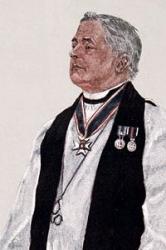
1846 - 1910 Person Name: Frederick Alfred John Hervey, 1846-1910 Topics: Ancient Hymns and Canticles Composer of "[Lord, now lettest thou thy servant depart in peace]" in The Book of Praise Born: May 18, 1846, Westminster, Middlesex, England.
Died: August 8, 1910, Norwich, England.
Buried: St. Mary Magdalene’s Church, Sandringham, Norfolk, England.
Son of Alfred, Lord Hervey, Frederick was educated at Marlborough and Trinity College, Cambridge (BA 1868, MA 1872). He was ordained a deacon in 1869, and priest in 1870. He served as Rector of Upton-Pyne, Devon (1876); Sandringham (1878-1907); Canon of Norwich (1897); and Domestic Chaplain to King Edward VII (1901).
--www.hymntime.com/tch/
Frederick A. J. Hervey
William Henry Hewlett
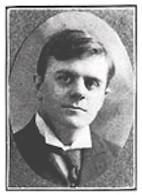
1873 - 1940 Person Name: H. Hewlett, 1873- Topics: Doxologies, Ancient Hymns and Canticles Composer of "[Teach me, O Lord the way of Thy statutes]" in Methodist Hymn and Tune Book Born: January 16, 1873, Batheaston, Somerset, England.
Died: June 13, 1940, Hamilton, Ontario, Canada.
Buried: Woodlawn Cemetery, Hamilton, Ontario, Canada.
Hewlett studied music as a child with several teachers in England, with A. S. Vogt at the Toronto College of Music, and Signor D’Auria and A. E. Fisher at the Toronto Conservatory. He received the gold medal upon graduating from the Toronto Conservatory, and won the Conservatory’s Blackstock gold medal for extemporization in 1894.
Hewlett served as organist at Carlton Street Methodist Church, Toronto; conductor of the London, Ontario, Vocal Society; accompanist of the Mendelssohn Choir of Toronto; organist and choirmaster of Dundas Centre Methodist Church in London; and secretary of the London chapter of the Associated Musicians of Ontario.
--www.hymntime.com/tch
William Henry Hewlett
William Vincent Wallace
1812 - 1865 Person Name: William Vincent Wallace, 1813-1865 Topics: Ancient Hymns and Canticles Composer of "[O be joyful in the Lord all ye lands]" in The Book of Praise
William Vincent Wallace
Pages




