You help make Hymnary.org possible. More than 10 million people from 200+ countries found hymns, liturgical resources and encouragement on Hymnary.org in 2025, including you. Every visit affirms the global impact of this ministry.

If Hymnary has been meaningful to you this year, would you take a moment today to help sustain it? A gift of any size—paired with a note of encouragement if you wish—directly supports the server costs, research work and curation that keep this resource freely available to the world.

Give securely online today, or mail a check to:
Hymnary.org
Calvin University
3201 Burton Street SE
Grand Rapids, MI 49546

Thank you for your partnership, and may the hope of Advent fill your heart.

Person Results

Text Identifier:"^ah_think_not_the_lord_delayeth$"
In:people

Planning worship? Check out our sister site, ZeteoSearch.org, for 20+ additional resources related to your search.
Showing 1 - 4 of 4Results Per Page: 102050

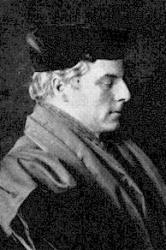
Percy Dearmer

1867 - 1936 Person Name: Percy Deamer Author of "Ah! Think Not the Lord Delayeth" in Rejoice in the Lord Dearmer, Percy, M.A., son of Thomas Dearmer, was born in London, Feb. 27, 1867, and educated at Westminster School and at Christ Church, Oxford (B.A. 1890, M.A. 1896). He was ordained D. 1891, P. 1892, and has been since 1901 Vicar of S. Mary the Virgin, Primrose Hill, London. He has been Secretary of the London Branch of the Christian Social Union since 1891, and is the author of The Parson's Handbook, 1st edition, 1899, and other works. He was one of the compilers of the English Hymnal, 1906, acting as Secretary and Editor, and contributed to it ten translations (38, 95, 150, 160, 165, 180, 215, 237, 352, 628) and portions of two others (242, 329), with the following originals:— 1. A brighter dawn is breaking. Easter. Suggested by the Aurora lucis, p. 95, but practically original. 2. Father, Who on man dost shower. Temperance. 3. God, we thank Thee, not in vain. Burial. 4. Holy God, we offer here. Holy Communion. 5. Jesu, good above all other. For Children. 6. Lord, the wind and sea obey Thee. For those at Sea. 7. The winter's sleep was long and deep. St. Philip and St. James. [Rev. James Mearns, M.A.] --John Julian, Dictionary of Hymnology, New Supplement (1907)

Johann Balthasar König

1691 - 1758 Person Name: J. B. König, 1691-1758 Composer (attributed to) of "ALLES IST AN GOTTES SEGEN" in Pilgrim Hymnal Johann Balthasar König; b. 1691, Waltershausen, near Gotha; d. 1758, Frankfort Evangelical Lutheran Hymnal, 1908

Johann Löhner

1645 - 1705 Person Name: J. Lohner Composer of "AUCTOR OMNIUM BONORUM" in Rejoice in the Lord

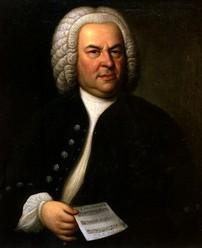
Johann Sebastian Bach

1685 - 1750 Person Name: J. S. Bach Adapter of "AUCTOR OMNIUM BONORUM" in Rejoice in the Lord Johann Sebastian Bach was born at Eisenach into a musical family and in a town steeped in Reformation history, he received early musical training from his father and older brother, and elementary education in the classical school Luther had earlier attended. Throughout his life he made extraordinary efforts to learn from other musicians. At 15 he walked to Lüneburg to work as a chorister and study at the convent school of St. Michael. From there he walked 30 miles to Hamburg to hear Johann Reinken, and 60 miles to Celle to become familiar with French composition and performance traditions. Once he obtained a month's leave from his job to hear Buxtehude, but stayed nearly four months. He arranged compositions from Vivaldi and other Italian masters. His own compositions spanned almost every musical form then known (Opera was the notable exception). In his own time, Bach was highly regarded as organist and teacher, his compositions being circulated as models of contrapuntal technique. Four of his children achieved careers as composers; Haydn, Mozart, Beethoven, Mendelssohn, Schumann, Brahms, and Chopin are only a few of the best known of the musicians that confessed a major debt to Bach's work in their own musical development. Mendelssohn began re-introducing Bach's music into the concert repertoire, where it has come to attract admiration and even veneration for its own sake. After 20 years of successful work in several posts, Bach became cantor of the Thomas-schule in Leipzig, and remained there for the remaining 27 years of his life, concentrating on church music for the Lutheran service: over 200 cantatas, four passion settings, a Mass, and hundreds of chorale settings, harmonizations, preludes, and arrangements. He edited the tunes for Schemelli's Musicalisches Gesangbuch, contributing 16 original tunes. His choral harmonizations remain a staple for studies of composition and harmony. Additional melodies from his works have been adapted as hymn tunes. --John Julian, Dictionary of Hymnology (1907)

Export as CSV
It looks like you are using an ad-blocker. Ad revenue helps keep us running. Please consider white-listing Hymnary.org or getting Hymnary Pro to eliminate ads entirely and help support Hymnary.org.