
1 I know that my Redeemer lives;
He lives, and on the earth shall stand;
And though to worms my flesh he gives,
My dust lies numbered in his hand.
2 In this re-animated clay
I surely shall behold him near,
Shall see him in the latter day
In all his majesty appear.
3 With mine and not another's eyes
The King in beauty I shall view;
I shall from him receive the prize,
The starry crown to victors due.
Source: The Seventh-Day Adventist Hymn and Tune Book: for use in divine worship #923
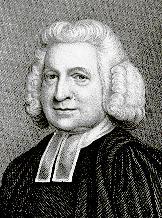
Charles Wesley, M.A. was the great hymn-writer of the Wesley family, perhaps, taking quantity and quality into consideration, the great hymn-writer of all ages. Charles Wesley was the youngest son and 18th child of Samuel and Susanna Wesley, and was born at Epworth Rectory, Dec. 18, 1707. In 1716 he went to Westminster School, being provided with a home and board by his elder brother Samuel, then usher at the school, until 1721, when he was elected King's Scholar, and as such received his board and education free. In 1726 Charles Wesley was elected to a Westminster studentship at Christ Church, Oxford, where he took his degree in 1729, and became a college tutor. In the early part of the same year his religious impressions were much deepene… Go to person page >| First Line: | I know that my Redeemer lives, He lives, and on the earth shall stand |
| Author: | Charles Wesley |
| Language: | English |
| Copyright: | Public Domain |
I know that my Redeemer lives, He lives, and on the earth, &c. C. Wesley. [Resurrection.] Appeared in Hymns & Sacred Poems, 1742, in 4 stanzas of 8 lines, and based on Job xix. 25. (Poetical Works, 1868-72, vol. ii. p. 182.) It was included in the 1830 supplement to the Wesleyan Hymn Book, and retained in the 1875 edition. This hymn was included in Toplady’s Psalms & Hymns, 1776, No. 64, with an additional stanza from Wesley's Funeral Hymns, 1st series, 1746, No. 9, stanza xiii., "Ev'n now I taste that bliss divine."
--John Julian, Dictionary of Hymnology (1907)
My Starred Hymns