You help make Hymnary.org possible. More than 10 million people from 200+ countries found hymns, liturgical resources and encouragement on Hymnary.org in 2025, including you. Every visit affirms the global impact of this ministry.

If Hymnary has been meaningful to you this year, would you take a moment today to help sustain it? A gift of any size—paired with a note of encouragement if you wish—directly supports the server costs, research work and curation that keep this resource freely available to the world.

Give securely online today, or mail a check to:
Hymnary.org
Calvin University
3201 Burton Street SE
Grand Rapids, MI 49546

Thank you for your partnership, and may the hope of Advent fill your heart.

Person Results

Text Identifier:"^o_living_will_that_shalt_endure$"
In:person

Planning worship? Check out our sister site, ZeteoSearch.org, for 20+ additional resources related to your search.
Showing 1 - 2 of 2Results Per Page: 102050

John Warrington Hatton

1710 - 1793 Person Name: J. Hatton Composer of "DUKE STREET" in Song-Hymnal of Praise and Joy John Warrington Hatton (b. Warrington, England, c. 1710; d, St. Helen's, Lancaster, England, 1793) was christened in Warrington, Lancashire, England. He supposedly lived on Duke Street in Lancashire, from where his famous tune name comes. Very little is known about Hatton, but he was most likely a Presbyterian, and the story goes that he was killed in a stagecoach accident. Bert Polman

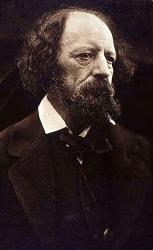
Alfred Tennyson, Baron Tennyson

1809 - 1892 Person Name: A. Tennyson Author of "O Living Will, that shalt endure" in Song-Hymnal of Praise and Joy Tennyson, Alfred, Lord, son of the Rev. G. C. Tennyson, Rector of Somersby, Lincolnshire, was born at Somersby, Aug. 6, 1809; educated at Trinity College, Cambridge; appointed Poet Laureate in 1850, and raised to the Peerage in 1884. Although Lord Tennyson has not written any hymns, extracts from his poems are sometimes used as such, as "Strong Son of God, immortal Love" (Faith in the Son of God), from the Introduction to his In Memoriam, 1850; the well-known "Too late, too late, ye cannot enter now," and others. The former is sometimes given as "Spirit of immortal Love," and again as "Eternal God, immortal Love." --John Julian, Dictionary of Hymnology, Appendix, Part II (1907)

Export as CSV
It looks like you are using an ad-blocker. Ad revenue helps keep us running. Please consider white-listing Hymnary.org or getting Hymnary Pro to eliminate ads entirely and help support Hymnary.org.