You help make Hymnary.org possible. More than 10 million people from 200+ countries found hymns, liturgical resources and encouragement on Hymnary.org in 2025, including you. Every visit affirms the global impact of this ministry.

If Hymnary has been meaningful to you this year, would you take a moment today to help sustain it? A gift of any size—paired with a note of encouragement if you wish—directly supports the server costs, research work and curation that keep this resource freely available to the world.

Give securely online today, or mail a check to:
Hymnary.org
Calvin University
3201 Burton Street SE
Grand Rapids, MI 49546

Thank you for your partnership, and may the hope of Advent fill your heart.

Person Results

Text Identifier:"^o_thou_who_didst_prepare$"
In:person

Planning worship? Check out our sister site, ZeteoSearch.org, for 20+ additional resources related to your search.
Showing 1 - 3 of 3Results Per Page: 102050

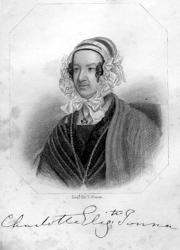
Charlotte Elizabeth

1790 - 1846 Person Name: "Charlotte Elizabeth" Tonna Author of "O Thou Who Didst Prepare the Ocean" in The New Alleluia Charlotte Elizabeth was born at Norwich in 1790. Her father, the Rev. Michael Browne, was Rector of S. Giles' parish in that city. She married Captain George Phelan, of the army, but the union proved an unhappy one. Thrown upon her own resources, she contributed to the Dublin Tract Society, and in 1834, became editor of "The Christian Ladies' Magazine." Her husband died in 1837. In 1840, she married Mr. L.H. Tonna, but continued to retain her two Christian names as her literary designation. She died in 1846. Her works are very numerous. --Annotations of the Hymnal, Charles Hutchins, M.A. 1872. =========================== Other names: Charlotte Elzabeth Browne Tonna, Mrs. Tonna, Author of Zadoo, Charlotte Elizabeth Phelan =========================== Tonna, Charlotte Elizabeth, née Browne, commonly known as "Charlotte Elizabeth," was the only daughter of Michael Browne, Rector of St. Giles, Norwich, and was born in Norwich, Oct. 1, 1790. She was first married to Captain George Phelan, of the 60th Rifles (who died in 1837), and secondly to the Rev. Lewis H. Tonna. Her death took place at Ramsgate, July 12, 1846. Under the name of "Charlotte Elizabeth" she published several works, including Chapters on Flowers, Derry, a Tale of the Revolution, Personal Recollections, &c. Her hymns in common use include:— 1. Holy Father, heavenly King (1832). God Man's only Refuge. 2. O God of Israel, deign to smile. For Resignation. 3. O Thou Who didst prepare. For Use at Sea. 4. Sinner, what hast thou to show? Christians' Joy. 5. Soldier go, but not to claim. The Good Fight of Faith. Of these hymns Nos. 3, 4 appeared in W. Urwick's Dublin Collection of Hymns, 1829. -- John Julian, Dictionary of Hymnology (1907)

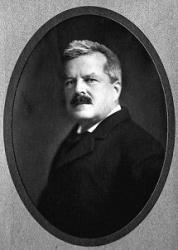
Melancthon Woolsey Stryker

1851 - 1929 Person Name: M. Woolsey Stryker Composer of "[O Thou Who didst prepare]" in The New Alleluia Stryker, Melancthon Woolsey, D.D., son of the Rev. Isaac Pierson Stryker, was born at Vernon, New York, Jan. 7, 1851, and educated at Hamilton College (1872) and Auburn Theological Seminary (1876). In 1876 he entered the Presbyterian ministry as Pastor at Auburn, New York. In 1878 he removed to Ithaca, N. Y.; in 1883 to Holyoke, Massachusetts, and in 1885 to Chicago, Illinois. He received his degree of D.D. from Hamilton College in 1889. He has edited Christian Chorals, 1885 ; New Alleluia, 1880-86; and Church Song, 1889. He was also joint editor with H. P. Main of The Church Praise Book, 1882. He has also published Hymns and Verses, 1883, and Song of Miriam, and Other Hymns and Verses, 1888. To two of these works which have been designed for daily use in divine worship Dr. Stryker contributed the following original hymns:— i. The Church Praise Book, 1882. 1. Burst forth, 0 Bridegroom, from Thy chamber bright. Second Advent Desired. (1880.) 2. Death cannot make my soul afraid. Death Contemplated. (1881.) 3. Eternal day hath dawned. Heaven. (1881.) 4. Mighty God, Thy Church recover. Missions. (1881.) 5. King again, ye starry chime. Christmas. (1881.) 6. Sing, Israel, for the Lord your strength. Passing the Red Sea. (1878.) 7. The tribes of faith from all the earth. Heaven. (1881.) 8. Thy Kingdom come, 0 blessed Son of God. Second Advent Desired, (1880.) Re-written in Church Song, 1889, as "Thy Kingdom come, 0 everlasting Lord." 9. When the everlasting Lord. Morning. (1880.) ii. Church Song, 1889. 10. Arouse Thy Church, Almighty God. Missions. (1887.) 11. Father, as here we bow. Holy Trinity. (1886.) 12. Four hundred years their course have sped. American National Hymn. (1888.) 13. God of our Fathers, our God to-day. National Hymn. (1889.) 14. Lo, where that spotless Lamb for sin provided. Passiontide. (1884.) 15. My Maker, at Thy holy throne. Holy Baptism. (1888.) 16. O God, Thy judgments give the King, Thy Son. Missions. (1883.) 17. O Thou, Eternal, Changeless, Infinite. Praise to God. (1882.) 18. 0 Thou, Omnipresent. Omnipresence of the Father. (1885.) 19. O Thou Shepherd of Thine Israel, hear us. Ps. lxxz. (1883.) 20. Our God, and our Redeemer. Opening of a Place of Worship. (1883.) 21. Robbed, bruised, and dying, once I lay. The Good Samaritan. (1886.) 22. Sing, every boy and maiden. Praise to God. (1885.) 23. Thou, Lord of my life, by the words Thou hast said. Lent. (1887.) 24. Thy grace is all of grace. Divine Grace. (1886.) 25. To Thee, our God, these babes we bring. Holy Baptism. (1886.) 26. Tranquilly, slowly, solemnly, lowly. Burial. (1884.) 27. We close Thy blessed Word. Sunday Evening. (1S87.) 28. While all the night-stars fade and wane. Easter. (1884.) In addition to these original hymns Dr. Stryker has several translations from the German which are in common use. One of his hymns, No. 513, "Now I lay me down to sleep" (Child's Evening hymn), in Church Song, 1889 (dated 1884), begins with a stanza by another hand. In the same work there are also several of his tunes. Dr. Stryker's hymns are massive and rugged, full of dogmatism and fire, but they lack unity and purity of rhythm. In some instances words stand for thoughts, and exclamations for ideas. Nevertheless a few will live. -- John Julian, Dictionary of Hymnology (1907) ================= Stryker, M. W., pp. 1098, i.; 1525, ii. 7; 1615, iv. In 1892, Dr. Stryker became Presi¬dent of Hamilton College and also received the LL.D. from Lafayette College. His College Hymnal, 1897, 1904, contains 28 of his hymns, the majority of which date 1890-1894. Of these "From doubt and all its sullen pain" (Faith), written in 1890, is found in other collections. Dr. Stryker d. in 1905. His Dies Irae was published 1892, and his Latermath (verse) 1896. --John Julian, Dictionary of Hymnology, New Supplement (1907)

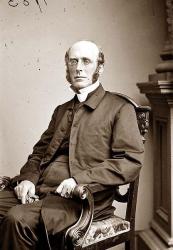
J. Williams

1817 - 1899 Person Name: John Williams Author of "O thou who didst prepare" in The Hymnal of the Reformed Church in the United States John Williams was born at Deerfield, Mass., in 1817; graduated at Trinity College, Hartford, in 1835; was ordained Deacon, 1838; Priest, 1841; Rector of S. George's, Schenectady, N.Y., 1842; President of Trinity College, 1848-1853; Assistant Bishop of Connecticut, 1851, and sole Bishop, by the death of Bishop Brownell, in 1865. He has edited a number of works of value. --Annotations of the Hymnal, Charles Hutchins, M.A. 1872. ================ Williams, John, D.D., LL.D., was born at Deerfield, Massachusetts, Aug. 30, 1817; graduated at Trinity College, 1835, and was ordained in 1838. From 1842 to 1848 he was Rector at Schenectady, New York, and President of Trinity College, Hartford, Connecticut, from 1848 to 1853. In 1861 he was consecrated Assistant Bishop of Connecticut, taking, in 1865, the full charge of that diocese. Bishop Williams is an eminent scholar. His contributions to hymnology were Ancient Hymns of Holy Church , Hartford, 1845, being translations from the Latin; the "Additional Hymns," pp. 81-127, were selected from the translations from the Latin by Isaac Williams. A few of Bishop Williams's translations have come into common use. -- John Julian, Dictionary of Hymnology (1907)

Export as CSV
It looks like you are using an ad-blocker. Ad revenue helps keep us running. Please consider white-listing Hymnary.org or getting Hymnary Pro to eliminate ads entirely and help support Hymnary.org.