You help make Hymnary.org possible. More than 10 million people from 200+ countries found hymns, liturgical resources and encouragement on Hymnary.org in 2025, including you. Every visit affirms the global impact of this ministry.

If Hymnary has been meaningful to you this year, would you take a moment today to help sustain it? A gift of any size—paired with a note of encouragement if you wish—directly supports the server costs, research work and curation that keep this resource freely available to the world.

Give securely online today, or mail a check to:
Hymnary.org
Calvin University
3201 Burton Street SE
Grand Rapids, MI 49546

Thank you for your partnership, and may the hope of Advent fill your heart.

Person Results

Text Identifier:"^to_the_name_that_is_salvation$"
In:person

Planning worship? Check out our sister site, ZeteoSearch.org, for 20+ additional resources related to your search.
Showing 1 - 3 of 3Results Per Page: 102050

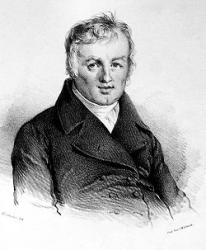
Henry Thomas Smart

1813 - 1879 Person Name: Henry Smart Composer of "REGENT SQUARE" in Christian Worship and Praise Henry Smart (b. Marylebone, London, England, 1813; d. Hampstead, London, 1879), a capable composer of church music who wrote some very fine hymn tunes (REGENT SQUARE, 354, is the best-known). Smart gave up a career in the legal profession for one in music. Although largely self taught, he became proficient in organ playing and composition, and he was a music teacher and critic. Organist in a number of London churches, including St. Luke's, Old Street (1844-1864), and St. Pancras (1864-1869), Smart was famous for his extemporiza­tions and for his accompaniment of congregational singing. He became completely blind at the age of fifty-two, but his remarkable memory enabled him to continue playing the organ. Fascinated by organs as a youth, Smart designed organs for impor­tant places such as St. Andrew Hall in Glasgow and the Town Hall in Leeds. He composed an opera, oratorios, part-songs, some instrumental music, and many hymn tunes, as well as a large number of works for organ and choir. He edited the Choralebook (1858), the English Presbyterian Psalms and Hymns for Divine Worship (1867), and the Scottish Presbyterian Hymnal (1875). Some of his hymn tunes were first published in Hymns Ancient and Modern (1861). Bert Polman

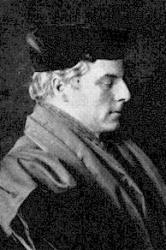
Percy Dearmer

1867 - 1936 Author of "To the Name that is salvation" in Christian Worship and Praise Dearmer, Percy, M.A., son of Thomas Dearmer, was born in London, Feb. 27, 1867, and educated at Westminster School and at Christ Church, Oxford (B.A. 1890, M.A. 1896). He was ordained D. 1891, P. 1892, and has been since 1901 Vicar of S. Mary the Virgin, Primrose Hill, London. He has been Secretary of the London Branch of the Christian Social Union since 1891, and is the author of The Parson's Handbook, 1st edition, 1899, and other works. He was one of the compilers of the English Hymnal, 1906, acting as Secretary and Editor, and contributed to it ten translations (38, 95, 150, 160, 165, 180, 215, 237, 352, 628) and portions of two others (242, 329), with the following originals:— 1. A brighter dawn is breaking. Easter. Suggested by the Aurora lucis, p. 95, but practically original. 2. Father, Who on man dost shower. Temperance. 3. God, we thank Thee, not in vain. Burial. 4. Holy God, we offer here. Holy Communion. 5. Jesu, good above all other. For Children. 6. Lord, the wind and sea obey Thee. For those at Sea. 7. The winter's sleep was long and deep. St. Philip and St. James. [Rev. James Mearns, M.A.] --John Julian, Dictionary of Hymnology, New Supplement (1907)

Caspar Ett

1788 - 1847 Composer of "ORIEL" in The Cyber Hymnal Born: January 5, 1788, Eresing, Bavaria. Died: May 16, 1847, Munich, Germany. Buried: Alten Südfriedhof, Munich, Germany. Caspar [Kaspar] Ett was a German composer. At age nine, he became a chorister in a Benedictine abbey, then went to the Elector's School in Munich. In 1816, he was appointed organist at St. Michael's Church in Munich, where he remained until his death. Caspar Ett composed several Masses and other Catholic church music. His works include Cantica Sacra (1840), Ave maris stella, Stabat Mater for two mixed choirs, Attollite portas, Haec Dies, Laudate Dominum, Pange lingua, Tantum Ergo Sacramentum, Requiem in C minor for choir and orchestra or choir and organ. --www.free-scores.com/

Export as CSV
It looks like you are using an ad-blocker. Ad revenue helps keep us running. Please consider white-listing Hymnary.org or getting Hymnary Pro to eliminate ads entirely and help support Hymnary.org.