You help make Hymnary.org possible. More than 10 million people from 200+ countries found hymns, liturgical resources and encouragement on Hymnary.org in 2025, including you. Every visit affirms the global impact of this ministry.

If Hymnary has been meaningful to you this year, would you take a moment today to help sustain it? A gift of any size—paired with a note of encouragement if you wish—directly supports the server costs, research work and curation that keep this resource freely available to the world.

Give securely online today, or mail a check to:
Hymnary.org
Calvin University
3201 Burton Street SE
Grand Rapids, MI 49546

Thank you for your partnership, and may the hope of Advent fill your heart.

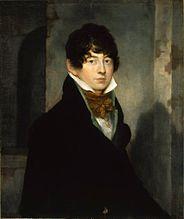
Washington Allston

Washington Allston
Self-portrait, 1805 Museum of Fine Arts, Boston
Short Name: Washington Allston
Full Name: Allston, Washington, 1779-1843
Birth Year: 1779
Death Year: 1843

Allston, Washington. (Waccamaw, South Carolina, November 5, 1779-July 9, 1843, Cambridge Port, Massachusetts). American painter and author. Graduated Harvard 1800. Went to London in 1801, Paris in 1803, Rome in 1805, returned to England 1810-1818. While in England, 1815, confirmed in the Anglican Church, and from then on devoted himself to an intensive cultivation of the Christian virtues. The Sylphs of the Seasons, first book of poems, published in 1813. Monaldi, a romance, published 1841. A sonnet of 14 lines entitled "Immortality" in Lectures on Art and Poems of 1850, ed. by Richard Henry Dana, Jr. provided the text for a hymn "To Think for aye; to breathe immortal breath" in Hymns for all Christians, 1869.

-Carlton York Smith, DNAH Archives

Wikipedia Biography

Washington Allston ARA (November 5, 1779 – July 9, 1843) was an American painter and poet, born in Waccamaw Parish, South Carolina. Allston pioneered America's Romantic movement of landscape painting. He was well known during his lifetime for his experiments with dramatic subject matter and his bold use of light and atmospheric color. While his early artworks concentrate on grandiose and spectacular aspects of nature, his later pieces represent a more subjective and visionary approach.

Data Sources

Suggestions or corrections? Contact us
It looks like you are using an ad-blocker. Ad revenue helps keep us running. Please consider white-listing Hymnary.org or getting Hymnary Pro to eliminate ads entirely and help support Hymnary.org.