You help make Hymnary.org possible. More than 10 million people from 200+ countries found hymns, liturgical resources and encouragement on Hymnary.org in 2025, including you. Every visit affirms the global impact of this ministry.

If Hymnary has been meaningful to you this year, would you take a moment today to help sustain it? A gift of any size—paired with a note of encouragement if you wish—directly supports the server costs, research work and curation that keep this resource freely available to the world.

Give securely online today, or mail a check to:
Hymnary.org
Calvin University
3201 Burton Street SE
Grand Rapids, MI 49546

Thank you for your partnership, and may the hope of Advent fill your heart.

Person Results

Tune Identifier:"^holmes_brown$"
In:people

Planning worship? Check out our sister site, ZeteoSearch.org, for 20+ additional resources related to your search.
Showing 1 - 4 of 4Results Per Page: 102050

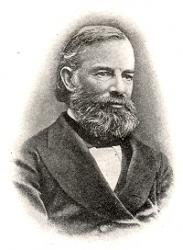
Samuel Longfellow

1819 - 1892 Author of "God of the earth, the sky, the sea!" in The Students' Hymnal Longfellow, Samuel, B. A., brother of the Poet, was born at Portland, Maine, June 18, 1819, and educated at Harvard, where he graduated in Arts in 1839, and in Theology in 1846. On receiving ordination as an Unitarian Minister, he became Pastor at Fall River, Massachusetts, 1848; at Brooklyn, 1853; and at Germantown, Pennsylvania, 1860. In 1846 he edited, with the Rev. S. Johnson (q. v.), A Book of Hymns for Public and Private Devotion. This collection was enlarged and revised in 1848. In 1859 his Vespers was published, and in 1864 the Unitarian Hymns of the Spirit , under the joint editorship of the Rev. S. Johnson and himself. His Life of his brother, the Poet Longfellow, was published in 1886. To the works named he contributed the following hymns:— i. To A Book of Hymns , revised ed., 1848. 1. Beneath the shadow of the Cross. Love. 2. 0 God, thy children gathered here. Ordination. ii. To the Vespers 1859. 3. Again as evening's shadow falls. Evening. 4. Now on land and sea descending. Evening. iii. To the Hymns of the Spirit, 1864. 5. A voice by Jordan's shore. Advent. 6. Father, give Thy benediction. Ordination. 7. Go forth to life, 0 child of earth. Life's Mission. 8. God of ages and of nations. Holy Scriptures. 9. Holy Spirit, Truth divine. The Holy Spirit desired. 10. I look to Thee in every need. Trust in God. 11. In the beginning was the Word. The Word. 12. Love for all, and can it be? Lent. The Prodigal Son. 13. 0 God, in Whom we live and move. God's Law and Love. 14. 0 God, Thou Giver of all good. Prayer for Food. 15. O still in accents sweet and strong. Missions. 16. 0 Thou, Whose liberal sun and rain. Anniversary of Church dedication. 17. One holy Church of God appears. The Church Universal. 18. Out of the dark, the circling sphere. The Outlook. 19. Peace, peace on earth! the heart of man for ever. Peace on Earth. 20. The loving Friend to all who bowed. Jesus of Nazareth. 21. ’Tis winter now, the fallen snow. Winter. Of these, hymn No. 2 was written for the Ordination of E. E. Hale (q. v.), at Worcester, 1846. Several are included in Martineau's Hymns, 1873. Died Oct. 3, 1892. [Rev. F. M. Bird, M.A.] --John Julian, Dictionary of Hymnology (1907), p. 685 =============== Longfellow, S., p. 685, i. Since Mr. Longfellow's death on Oct. 3, 1892, his hymns have been collected by his niece, Miss Alice Longfellow, as Hymns and Verses(Houghton, Mifflin & Co., 1904.) From this work we find many of the hymns signed Anon, in the Index to Longfellow and Johnson's Hymns of the Spirit, 1864, were his; several of these, including E. Osier's "O God unseen, yet ever near," were popular English hymns which he rewrote from his own theological standpoint. These re¬written hymns are very widely used by Unitarians and others. During the last ten years the following additional hymns by S. Long¬fellow have come into common use:— 1. Eternal One, Thou living God. Faith in God. 2. God of the earth, the sky, the sea. God in Nature. 3. God's trumpet wakes the slumbering world. Call to duty. 4. Light of ages and of nations. God in and through all time. 5. Lo, the earth is risen again. Spring. (1876.) 6. Now while we sing our closing psalm. Close of Worship. 7. O Life that maketh all things new. Unity. (1874.) 8. O Thou in Whom we live and move. The Divine Law. 9. The summer days are come again. Summer. From his hymn,"The sweet[bright] June days are come again." 10. Thou Lord of lite, our saving health. In Sickness. (1886.) Of these hymns Nos. 2, 3 appeared in the Hymns of the Spirit, 1864, and all with the dates appended in Hymns and Verses, 1904. --John Julian, Dictionary of Hymnology, New Supplement (1907) ================== http://en.wikipedia.org/wiki/Samuel_Longfellow

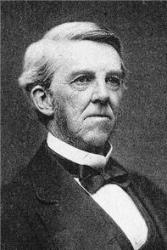
Oliver Wendell Holmes

1809 - 1894 Author of "Lord of all being, throned afar" in The Morning Hour Holmes, Oliver Wendell, M.D, LL.D., son of the Rev. Abiel Holmes, D.D. of Cambridge, U.S.A., was born at Cambridge, Aug. 29, 1809, and educated at Harvard, where he graduated in 1829. After practising for some time in Boston, he was elected in 1847 to the chair of Anatomy, in Harvard. His writings in prose and verse are well known and widely circulated. They excel in humour and pathos. Although not strictly speaking a hymnwriter, a few of his hymns are in extensive use, and include:— 1. Father of mercies, heavenly Friend. Prayer during war. 2. Lord of all being, throned afar. God's Omnipresence. This is a hymn of great merit. It is dated 1848. 3. 0 Lord of hosts, Almighty King. Soldiers’ Hymn. Dated 1861. 4. 0 Love divine that stoop'st to share. Trust. 1859. Of these Nos. 2 and 4 are in his Professor at the Breakfast Table, and are in common use in Great Britain, in Martineau's Hymns, 1873, and others. In 1886 the D.C.L. degree was conferred upon Professor Holmes by the University of Oxford. He was a member of the Unitarian body. He died Oct 7, 1894. [Rev. F. M. Bird, M.A.] --John Julian, Dictionary of Hymnology (1907) ================== Holmes, O. W. , p. 530, i. His Songs in Many Keys was published in 1861, his Poems, 1869, and the Cambridge edition of his Complete Poetical Works, 1895. Additional hymns of his have come into common use of late, including:— 1. Land where the banners wave last in the sun. [American National Hymn.] Appeared in his Songs in Many Keys, 1861 (7th ed. 1864, p. 289) as "Freedom, our Queen." 2. Lord, Thou hast led us as of old. [Promised Unity.] In his Before the Curfew and other Poems, chiefly occasional, Boston, 1888, as "An hymn set forth to bo sung by the Great Assembly at Newtown [Mass.]." In the Complete Poetical Works it is dated 1886. The hymn "Soon shall the slumbering morn awake," in Hymns for Church and Home, Boston, 1895, is composed of stanzas v.-vii. 3. Our Father, while our hearts unlearn The creeds that wrong Thy name. [Fruits of the Spirit.] Written for the 25th Anniversary Reorganization of the Poston Young Men's Christian Union, May 31, 1893. In his Complete Poetical Works, 1895, p. 298, Horder's Worship Song, 1905, and other collections. 4. Thou gracious [God] Power Whose mercy lends. [Reunion.] "Written for the annual meeting of the famous class '29, Harvard University, in 1869. ln the Methodist Hymn Book, 1904, it begins "Thou gracious God, Whose mercy lends." [Rev. L. F. Benson, D.D.] --John Julian, Dictionary of Hymnology, New Supplement (1907)

O. B. Brown

Composer of "HOLMES" in The Morning Hour

John Reynell Wreford

1800 - 1891 Person Name: John R. Wreford Author of "God of the earth, the sky, the sea!" in The Students' Hymnal Wreford, John Reynell, an English Unitarian minister, was born December 12, 1800, at Barnstaple; educated at Manchester College, and in 1826 became pastor of a Church in Birmingham. In 1831, on account of the failure of his voice, he withdrew from the active work of the ministry and, in conjunction with Rev. Hugh Hutton, established a school at Edgbaston. He wrote a History of Presbyterian Nonconformity in Birmingham, 1832, and Lays of Loyalty, 1837. He contributed fifty-five hymns to Rev. J. R. Beard's Collection, 1837. His most popular and valuable hymn is the one given in this book. The last years of his life were spent in retirement at Bristol, where he died in 1891. —Hymn Writers of the Church by Charles Nutter ================= Wreford, John Keynell, D.D., born Dec. 12, 1800, educated at Manchester College, York, and in 1826 succeeded the Rev. James Yates as co-pastor to the Rev. John Kentish at the New Meeting, Birmingham. In 1830 he published a translation of Cellerier's Discourse on the Authenticity and Divine Origin of the Old Testament. In the following year, in consequence of failure of voice, he withdrew from the Ministry, and in conjunction with the Rev. Hugh Hutton, Minister of the Old Meeting, opened a school at Edgbaston. In 1832 he published a Sketch of the History of Presbyterian Nonconformity in Birmingham; and in 1837, Lays of Loyalty, in celebration of the Queen's accession. He also contributed, in 1837, to the Rev. J. R. Beard's Collection of Hymns for Public and Private Worship 55 hymns, of which the following are still in common use:— 1. God of the ocean, earth, and sky. God seen in His Works. In various collections, including those by Page Hopps, G. Dawson, and others. 2. Lord, I believe; Thy power I own. For increase of Faith. In Martineau's Hymns, &c, 1840. 3. Lord, while for all mankind we pray. National Hymn. This is in a large number of collections of various denominations, and is by far the most popular of his hymns. Sometimes it begins with stanza iii., "O! guard our shores from every foe." 4. When my love to Christ[God]grows weak. Passiontide. In Longfellow and Johnson's Unitarian Hymns of the Spirit, Boston, U. S. A., 1864, "When my love to God grows weak." This is repeated in Martineau's Hymns, &c, 1873. Dr. Wreford was also the author of several volumes of verse, chiefly devotional. The latter years of his life he spent in retirement at Bristol, and died there in 1881. [Rev. Valentine D. Davis, B.A.] -- John Julian, Dictionary of Hymnology (1907)

Export as CSV
It looks like you are using an ad-blocker. Ad revenue helps keep us running. Please consider white-listing Hymnary.org or getting Hymnary Pro to eliminate ads entirely and help support Hymnary.org.