Can I See Another's Woe

Representative Text

1 Can I see another’s woe,
and not be in sorrow too?
Can I see another’s grief,
and not seek for kind relief?

2 Can I see a falling tear,
and not feel my sorrow’s share?
Can a father see his child weep,
nor be with sorrow filled?

3 Can a mother sit and hear
infant groan, an infant fear?
No, no, never can it be!
Never, never can it be!

Source: Singing the Living Tradition #127

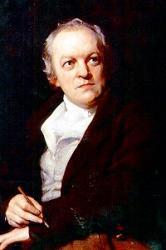
Author: William Blake

Blake, William, poet and painter, born 1757, and died 1827. Published Songs of Innocence in 1789, in which appeared a poem in 9 stanzas of 4 lines beginning. "Can I see another's woe" (Sympathy), and headed "On Another's Sorrow." (See also The Poems of William Blake, &c, Lond., W. Pickering, 1874, p. 105.) This poem is repeated in Martineau's Hymns, &c, 1873, and others. --John Julian, Dictionary of Hymnology, Appendix, Part II (1907)… Go to person page >

Text Information

First Line: Can I see another's woe
Title: Can I See Another's Woe
Author: William Blake
Meter: 7.7.7.7
Language: English
Copyright: Public Domain

Tune

LITANY (Woodward)


SONG 13

Orlando Gibbons (PHH 167) composed SONG 13 in soprano and bass parts. Used as a setting for a text from the Song of Songs, the tune was published in George Withers' Hymnes and Songs of the Church (1623) as hymn number 13 (hence the tune name). As in other hymnals, the melody is presented in a simpli…

Go to tune page >


MELLING


Timeline

Instances in all hymnals

Instances (1 - 3 of 3)

A New Hymnal for Colleges and Schools #477

Common Praise (1998) #544

Text

Singing the Living Tradition #127

Include 10 pre-1979 instances
Suggestions or corrections? Contact us
It looks like you are using an ad-blocker. Ad revenue helps keep us running. Please consider white-listing Hymnary.org or getting Hymnary Pro to eliminate ads entirely and help support Hymnary.org.