You help make Hymnary.org possible.

In 2025, more than 10 million people from 200+ countries found hymns, liturgical resources, and encouragement here. If Hymnary has meant something to you this year, would you take a moment to help sustain it? A gift of any size — and a note of encouragement, if you'd like to share one — directly supports the server costs, research, and curation that keep this resource freely available to the world.

Give securely online today, or mail a check to:
Hymnary.org (c/o Calvin University)
3201 Burton Street SE
Grand Rapids, MI 49546

Thank you for being part of this important online ministry resource.

Death is the fading of a cloud

Representative Text

1 Death is the fading of a cloud,
The breaking of a chain;
The rending of a mortal shroud
We ne'er shall see again.

2 Death is the conquerors welcome home,
The heav'nly city's door;
The entrance of the world to come,
'Tis life forevermore.

3 Death is the close of life's alarms,
The watchlight on the shore,
The clasping in immortal arms
Of lov'd ones gone before.

Source: Spiritualist Hymnal (3rd ed.) #100

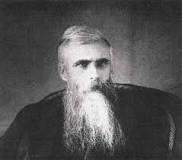
Author: Thomas Lake Harris

Harris, Thomas Lake, born May 15, 1823. Under his name three hymns are given in the American Unitarian Hymns of the Spirit, 1864:—(1) "In every human mind we see" (The Soul God's Temple); (2) "Look up, O man, behold the same" (God All in All); (3) "O earth, thy past is crowned and consecrated" (Past, Present and Future). --John Julian, Dictionary of Hymnology, Appendix, Part II (1907)… Go to person page >

Text Information

First Line: Death is the fading of a cloud
Author: Thomas Lake Harris
Language: English
Copyright: Public Domain

Timeline

Instances in all hymnals

Instances (1 - 8 of 8)
Page Scan

Christian Life Songs #207

Page Scan

Church Harmonies #655

Prayers and Hymns for the Church and the Home #d109

Progressive Songster #d23

Page Scan

Spiritualist Hymnal #91

Text

Spiritualist Hymnal (3rd ed.) #100

Page Scan

The Psalms of Life #146

The Spiritual Harp #d42

Suggestions or corrections? Contact us
It looks like you are using an ad-blocker. Ad revenue helps keep us running. Please consider white-listing Hymnary.org or getting Hymnary Pro to eliminate ads entirely and help support Hymnary.org.