
 My Starred Hymns
 My FlexScores
 My Hymnals
 My Purchased Files
Hinos e Cânticos #760
Display Title: VIDA ETERNA First Line: Deus a vida eterna dá Tune Title: EVERLASTING LIFE IS FREE Author: Robert Harkness (1880-1961); William Anglin (1882-1965) Date: 1999
Hinos e Cânticos #760

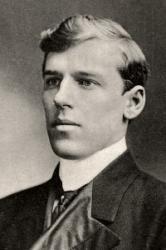 After attending a revival meeting by Reuben Torrey and Charles M. Alexander, Harkness became Alexander’s pianist. He came to Christ shortly thereafter (on a bicycle, he said), and made several round the world tours with Torrey and Alexander.
Harkness was especially well known for his program The Music of the Cross, and as the author of correspondence courses in hymn playing. He wrote over 2,000 hymns and Gospel songs in his lifetime.
(hymntime.com/tch) Go to person page >
After attending a revival meeting by Reuben Torrey and Charles M. Alexander, Harkness became Alexander’s pianist. He came to Christ shortly thereafter (on a bicycle, he said), and made several round the world tours with Torrey and Alexander.
Harkness was especially well known for his program The Music of the Cross, and as the author of correspondence courses in hymn playing. He wrote over 2,000 hymns and Gospel songs in his lifetime.
(hymntime.com/tch) Go to person page > William Anglin (1882–1965) was born in Stockton-on-Tees, England, where he was successful as a steel mill manager until he felt God's call to missionary work. He arrived in Brazil in 1926 and worked primarily in the Zona da Mata region (MG, RJ, and ES), dedicating himself to evangelization, teaching children to read and write, and supporting other missionaries.
He distinguished himself as a hymnologist, contributing 63 compositions to the hymnal Hinos e Cânticos and authoring the adaptation of A. E. Knight's History of Christianity. After health problems, he returned to England in 1960, declaring with emotion: "Brazil is my homeland." He died on September 7, 1965, leaving behind an important missionary and musical legacy.
[Source?] Go to person page >
William Anglin (1882–1965) was born in Stockton-on-Tees, England, where he was successful as a steel mill manager until he felt God's call to missionary work. He arrived in Brazil in 1926 and worked primarily in the Zona da Mata region (MG, RJ, and ES), dedicating himself to evangelization, teaching children to read and write, and supporting other missionaries.
He distinguished himself as a hymnologist, contributing 63 compositions to the hymnal Hinos e Cânticos and authoring the adaptation of A. E. Knight's History of Christianity. After health problems, he returned to England in 1960, declaring with emotion: "Brazil is my homeland." He died on September 7, 1965, leaving behind an important missionary and musical legacy.
[Source?] Go to person page >