You help make Hymnary.org possible. More than 10 million people from 200+ countries found hymns, liturgical resources and encouragement on Hymnary.org in 2025, including you. Every visit affirms the global impact of this ministry.

If Hymnary has been meaningful to you this year, would you take a moment today to help sustain it? A gift of any size—paired with a note of encouragement if you wish—directly supports the server costs, research work and curation that keep this resource freely available to the world.

Give securely online today, or mail a check to:
Hymnary.org
Calvin University
3201 Burton Street SE
Grand Rapids, MI 49546

Thank you for your partnership, and may the hope of Advent fill your heart.

The Trinity

Add to Starred Hymns

Representative Text

1 Hail! holy, holy, holy Lord!
whom One in Three we know;
By all Thy heav'nly host adored,
by all Thy church below,
by all Thy church below.

2 One undivided Trinity
with triumph we proclaim;
Thy universe is full of Thee
and speaks Thy glorious name,
and speaks Thy glorious name.

3 Thee, Holy Father, we confess,
Thee, Holy Son, adore,
Thee, Spirit of truth and holiness,
we worship evermore,
we worship evermore.

4 Thee Persons equally divine
we magnify and love;
And both the choirs ere long shall join
to sing Thy praise above,
to sing Thy praise above.

5 Hail! holy, holy, holy Lord,
our heavenly song shall be;
Supreme, essential One, adored
in co-eternal Three,
in co-eternal Three.

Source: Our Great Redeemer's Praise #24

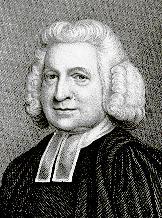
Author: Charles Wesley

Charles Wesley, M.A. was the great hymn-writer of the Wesley family, perhaps, taking quantity and quality into consideration, the great hymn-writer of all ages. Charles Wesley was the youngest son and 18th child of Samuel and Susanna Wesley, and was born at Epworth Rectory, Dec. 18, 1707. In 1716 he went to Westminster School, being provided with a home and board by his elder brother Samuel, then usher at the school, until 1721, when he was elected King's Scholar, and as such received his board and education free. In 1726 Charles Wesley was elected to a Westminster studentship at Christ Church, Oxford, where he took his degree in 1729, and became a college tutor. In the early part of the same year his religious impressions were much deepene… Go to person page >

Notes

Hail, holy, holy, holy Lord, Whom One in Three. C. Wesley. [Holy Trinity.] From Hymns on the Trinity, 1767, into The Methodist Hymn Book, 1904. (Poetical Works, vi., p. 280.)

--John Julian, Dictionary of Hymnology, New Supplement (1907)

Hymnary Pro Subscribers
Access an additional article on the Canterbury Dictionary of Hymnology:
Hymnary Pro subscribers have full access to the Canterbury Dictionary of Hymnology. Get Hymnary Pro

Tune

DUNFERMLINEDOGGETTDUNDEE (Ravenscroft)OtherHighcharts.com
Frequency of use
DUNFERMLINE

DUNFERMLINE is one of the "common" tunes from Andro Hart's psalter The CL Psalms of David, Edinburgh (l615)–a "common" tune was one that was not matched with a specific text in a songbook. Millar Patrick, author of Four Centuries of Scottish Psalmody (London, 1949) and The Story of the Church's So…

Go to tune page >


DOGGETT


DUNDEE (Ravenscroft)

DUNDEE first appeared in the 1615 edition of the Scottish Psalter published in Edinburgh by Andro Hart. Called a "French" tune (thus it also goes by the name of FRENCH), DUNDEE was one of that hymnal's twelve "common tunes"; that is, it was not associated with a specific psalm. In the Psalter Hymnal…

Go to tune page >


Timeline

Appearance of this hymn in hymnals18201840186018801900192019401960198020002020050100Percent of hymnalsHighcharts.com

Instances

Instances (1 - 3 of 3)

Hymns and Psalms #6

TextAudio

Our Great Redeemer's Praise #24

Singing the Faith #9

Include 68 pre-1979 instances
Suggestions or corrections? Contact us
It looks like you are using an ad-blocker. Ad revenue helps keep us running. Please consider white-listing Hymnary.org or getting Hymnary Pro to eliminate ads entirely and help support Hymnary.org.