Go Ad-Free
If you regularly use Hymnary.org, enhance your experience with Hymnary Pro—ad-free browsing plus powerful tools for planning, discovery and customization.
1 O that I were as heretofore!
When warm in my first love;
I only live my God t'adore,
And seek the things above!
2 Upon my head his candle shone,
And lavish of his grace,
With cords of love he drew me on,
And half unveil'd his face.
3 Far, far above all earthly things
Triumphantly I rode;
I soar'd to heaven on eagles' wings,
And found and talk'd with God.
4 Where am I now, from what a height
Of happiness cast down!
The glory swallow'd up in night,
And faded is the crown.
5 O God, thou art my home, my rest,
For which I sigh in pain!
How shall I 'scape into thy breast,
My Eden how regain?
Source: Hymns, Selected and Original: for public and private worship (1st ed.) #418
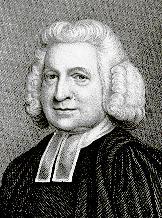
Charles Wesley, M.A. was the great hymn-writer of the Wesley family, perhaps, taking quantity and quality into consideration, the great hymn-writer of all ages. Charles Wesley was the youngest son and 18th child of Samuel and Susanna Wesley, and was born at Epworth Rectory, Dec. 18, 1707. In 1716 he went to Westminster School, being provided with a home and board by his elder brother Samuel, then usher at the school, until 1721, when he was elected King's Scholar, and as such received his board and education free. In 1726 Charles Wesley was elected to a Westminster studentship at Christ Church, Oxford, where he took his degree in 1729, and became a college tutor. In the early part of the same year his religious impressions were much deepene… Go to person page >| First Line: | O that I were as heretofore! When warm in my first love |
| Title: | The Backslider: His Retrospect |
| Author: | Charles Wesley |
| Meter: | 8.6.8.6 |
| Language: | English |
| Copyright: | Public Domain |
O that I was as heretofore. C. Wesley. [A Minister’s Prayer.] Published in Hymns and Sacred Poems, 1749, vol. i., No. 188, in 8 stanzas of 6 lines. (Poetical Works, vol. v., 1868-72, p. 105). Two centos from this hymn are in common use:—
1. Give me the faith which can remove. Composed of stanzas iii.-vii. in the Wesleyan Hymn Book, 1780, No. 421, and later collections.
2. I would the precious time redeem. Composed of stanzas v.-vii. in the Baptist Hymnal, 1879.
--John Julian, Dictionary of Hymnology (1907)
My Starred Hymns