"Probably the hymn written on his conversion by Charles Wesley. Compare his Journal, under date May 23, 1738: ‘Least of all would he [the enemy] have us tell what things God has done for our souls.....In His name, therefore, and through His strength, I will perform my vows unto the Lord, of not hiding His righteousness within my heart, if it should ever please Him to plant it there' (vol. i. p. 94). The same hymn was probably sung next day, when his brother John was able to declare, 'I believe' (lb. p. 95)."
Where shall my wondering soul begin? C. Wesley. [Praise for Pardon and Peace.] Written in May, 1738, together with the hymn, "And can it be that I should gain?", on the occasion of the great spiritual change which the author then underwent. Minute details of the event are given in the author's Diary, May 21-23, 1738. Its biographical interests, together with that of “And can it be," &c, are not inconsiderable, showing as they do the struggles and triumphs of a sincere and cultured man. This hymn was first published in the Hymns and Sacred Poems, 1739, in 8 stanzas of 6 lines, and again, with the omission of stanza vi., in the Wesleyan Hymn Book, 1780, No. 29, from whence it has passed into other collections. Original text Poetical Works, 1868-72, vol. i. p. 91. Dr. Osborn's note on this hymn, vol. i. p. 91, is:—
"Probably the hymn written on his conversion by Charles Wesley. Compare his Journal, under date May 23, 1738: ‘Least of all would he [the enemy] have us tell what things God has done for our souls.....In His name, therefore, and through His strength, I will perform my vows unto the Lord, of not hiding His righteousness within my heart, if it should ever please Him to plant it there' (vol. i. p. 94). The same hymn was probably sung next day, when his brother John was able to declare, 'I believe' (lb. p. 95)."
Further extracts from the Journal are given in G. J. Stevenson's Methodist Hymn Book Notes, 1883, p. 40, together with other comments which are worthy of attention, but are too lengthy to transcribe.
--John Julian, Dictionary of Hymnology (1907)


 My Starred Hymns
 My FlexScores
 My Hymnals
 My Purchased Files

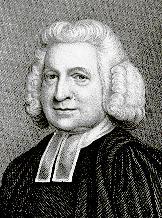 Charles Wesley, M.A. was the great hymn-writer of the Wesley family, perhaps, taking quantity and quality into consideration, the great hymn-writer of all ages. Charles Wesley was the youngest son and 18th child of Samuel and Susanna Wesley, and was born at Epworth Rectory, Dec. 18, 1707. In 1716 he went to Westminster School, being provided with a home and board by his elder brother Samuel, then usher at the school, until 1721, when he was elected King's Scholar, and as such received his board and education free. In 1726 Charles Wesley was elected to a Westminster studentship at Christ Church, Oxford, where he took his degree in 1729, and became a college tutor. In the early part of the same year his religious impressions were much deepene… Go to person page >