- |
User Links


 My Starred Hymns
 My FlexScores
 My Hymnals
 My Purchased Files
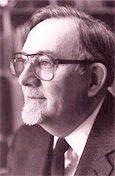
Carl Schalk
www.hymntime.com/tch
| Short Name: | Carl Schalk |
| Full Name: | Schalk, Carl, 1929-2021 |
| Birth Year: | 1929 |
| Death Year: | 2021 |
Carl F. Schalk (b. Des Plaines, IL, 1929; d. 2021) is professor of music emeritus at Concordia University, River Forest, Illinois, where he taught church music since 1965. He completed graduate work at the Eastman School of Music in Rochester, New York, and at Concordia Seminary, St. Louis, Missouri. From 1952 to 1956 he taught and directed music at Zion Lutheran Church in Wausau, Wisconsin, and from 1958 to 1965 served as director of music for the International Lutheran Hour. Honored as a Fellow of the Hymn Society in the United States and Canada in 1992, Schalk was editor of the Church Music journal (1966-1980), a member of the committee that prepared the Lutheran Book of Worship (1978), and a widely published composer of church music. Included in his publications are The Roots of Hymnody in The Lutheran Church-Missouri Synod (1965), Key Words in Church Music (1978), and Luther on Music: Paradigms of Praise (1988). His numerous hymn tunes and carols are collected in the Carl Schalk Hymnary (1989) and its 1991 Supplement.
Bert Polman
Hymnary Pro Subscribers
Access an additional article on the Canterbury Dictionary of Hymnology:
Access an additional article on the Canterbury Dictionary of Hymnology:
Hymnary Pro subscribers have full access to the Canterbury Dictionary of Hymnology.
Get Hymnary Pro
Texts by Carl Schalk (2) | As | Authority Languages | Instances |
|---|---|---|---|
| Amid the world's bleak wilderness | Carl F Schalk (Author) | English | 1 |
| Through desert and mountain they came from afar | Carl Schalk (Author) | English | 1 |
Suggestions or corrections? Contact us