You help make Hymnary.org possible. More than 10 million people from 200+ countries found hymns, liturgical resources and encouragement on Hymnary.org in 2025, including you. Every visit affirms the global impact of this ministry.

If Hymnary has been meaningful to you this year, would you take a moment today to help sustain it? A gift of any size—paired with a note of encouragement if you wish—directly supports the server costs, research work and curation that keep this resource freely available to the world.

Give securely online today, or mail a check to:
Hymnary.org
Calvin University
3201 Burton Street SE
Grand Rapids, MI 49546

Thank you for your partnership, and may the hope of Advent fill your heart.

Person Results

Text Identifier:"^this_little_light_of_mine_im_gonna_let$"
In:people

Planning worship? Check out our sister site, ZeteoSearch.org, for 20+ additional resources related to your search.
Showing 11 - 19 of 19Results Per Page: 102050

David Sexton

b. 1962 Arranger of "LITTLE LIGHT" in Songs of Faith and Praise

Nolan Williams

Person Name: Nolan Williams, Jr. b. 1969 Arranger of "LIGHT OF MINE" in African American Heritage Hymnal

John W. Work

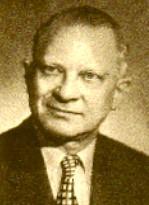
1901 - 1967 Person Name: John W. Work, 1901-1967 Adapter of "LATTIMER" in One Lord, One Faith, One Baptism John Wesley Work III (1901-1967) Composer, educator, choral director, and ethnomusicologist John Wesley Work III was born on June 15, 1901, in Tullahoma, Tennessee, to a family of professional musicians. His grandfather, John Wesley Work, was a church choir director in Nashville, where he wrote and arranged music for his choirs. Some of his choristers were members of the original Fisk Jubilee Singers. His father, John Wesley Work Jr., was a singer, folksong collector and professor of music, Latin, and history at Fisk, and his mother, Agnes Haynes Work, was a singer who helped train the Fisk group. His uncle, Frederick Jerome Work, also collected and arranged folksongs, and his brother, Julian, became a professional musician and composer. Work began his musical training at the Fisk University Laboratory School, moving on to the Fisk High School and then the university, where he received a B.A. degree in 1923. After graduation, he attended the Institute of Musical Art in New York City (now the Julliard School of Music), where he studied with Gardner Lamson. He returned to Fisk and began teaching in 1927, spending summers in New York studying with Howard Talley and Samuel Gardner. In 1930 he received an M.A. degree from Columbia University with his thesis American Negro Songs and Spirituals. He was awarded two Julius Rosenwald Foundation Fellowships for the years 1931 to 1933 and, using these to take two years leave from Fisk, he obtained a B.Mus. degree from Yale University in 1933. Work spent the remainder of his career at Fisk, until his retirement in 1966. He served in a variety of positions, notably as a teacher, chairman of the Fisk University Department of Music, and director of the Fisk Jubilee Singers from 1947 until 1956. He published articles in professional journals and dictionaries over a span of more than thirty years. His best known articles were "Plantation Meistersingers" in The Musical Quarterly (Jan. 1940), and "Changing Patterns in Negro Folksongs" in the Journal of American Folklore (Oct. 1940). Work began composing while still in high school and continued throughout his career, completing over one hundred compositions in a variety of musical forms -- for full orchestra, piano, chamber ensemble, violin and organ -- but his largest output was in choral and solo-voice music. He was awarded first prize in the 1946 competition of the Federation of American Composers for his cantata The Singers, and in 1947 he received an award from the National Association of Negro Musicians. In 1963 he was awarded an honorary doctorate from Fisk University. Following Work's collection Negro Folk Songs, the bulk of which was recorded at Fort Valley, he and two colleagues from Fisk University, Charles S. Johnson, head of the department of sociology (later, in October 1946, chosen as the university's first black president), and Lewis Jones, professor of sociology, collaborated with the Archive of American Folk Song on the Library of Congress/Fisk University Mississippi Delta Collection (AFC 1941/002). This project was a two-year joint field study conducted by the Library of Congress and Fisk University during the summers of 1941 and 1942. The goal of the partnership was to carry out an intensive field study documenting the folk culture of a specific community of African Americans in the Mississippi Delta region. The rapidly urbanizing commercial area of Coahoma County, Mississippi, with its county seat in Clarksdale, became the geographical focus of the study. Some of the correspondence included in this collection between Work and Alan Lomax, then head of the Archive of American Folk Song, touches on both the Fort Valley and the emerging Fisk University recording projects. John Wesley Work died on May 17, 1967. --memory.loc.gov/ammem/ftvhtml/

Robert Jay Taylor

b. 1950 Person Name: R. J. Taylor Arranger of "[This little light of mine] (Taylor)" in I'm Gonna Sing

Verolga Nix

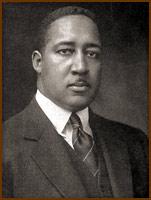
1933 - 2014 Person Name: Verolga Nix, 1933- Arranger of "[This little light of mine]" in Songs of Zion Verolga Nix (Apr. 6, 1933-Dec. 9, 2014) Born in Cleveland, Verolga moved with her family at an early age to Philadelphia. She studied for two years at New England Conservatory of Music and then earned a music degree from Oberlin Conservatory of Music in 1955. She was awarded an honorary doctorate of humane letters from Bennett College in 2000. After retiring from twenty years as a full-time music teacher in Philadelphia public schools she served as minister of music at several churches in Philadelphia, trained and conducted many choirs and served as a seminar leader nationwide. She was a member of Broadcast Music, Inc. (BMI), National Association of Negro Musicians and the Hymn Society in U.S. and Canada. In 1980 the United Methodist Church asked her to co-edit with J. Jefferson Cleveland the supplemental hymnal Songs of Zion. She published nearly 200 original songs an arrangements. (further details in The Philadelphia Tribune, Dec.19, 2014 obituary). Mary Louise VanDyke

Alma Blackmon

1921 - 2009 Person Name: Alma Blackmon, 1921-2009 Arranger of "LATTIMER" in One Lord, One Faith, One Baptism

Kathryn Tae Ritsema

Arranger of "[This little light of mine]" in Sing With Me

Jeffrey Radford

1953 - 2002 Arranger of "THIS JOY" in The New Century Hymnal Jeffrey Radford (b. 1953; d. Chicago, Illinois, August 12, 2002), music director at Trinity United Church of Christ (UCC) in Chicago, the largest UCC congregation in the United States. Sing! A New Creation

Harry Dixon Loes

1895 - 1965 Person Name: Harry Dixon Loes, 1895-1965 Author of "This Little Light of Mine" in Lead Me, Guide Me (2nd ed.) Pseudonyms: Deal Bartells Born Harold Loes, the American gospel song writer took the middle name Dixon in honour of A. C. Dixon, the pastor of Moody Church at the time. Harry Dixon Loes studied at Moody Bible Institute, and after extensive training in music he served a number of churches with a ministry of music. From 1939 until his retirement he was a member of the music faculty of Moody Bible Institute. He wrote the lyrics for 1,500 gospel songs, and composed 3,000 tunes. One day in 1915, Paul Rader preached a sermon in Moody Church, in Chicago. His theme was, “All that I want is in Jesus.” In the congregation was young Harry Dixon Loes, then a senior at Moody Bible Institute, where he would eventually teach. Inspired by Dr. Rader’s message, Harry Loes wrote the words and music for a song he called "All Things in Jesus." It was first sung by the church’s youth group. Friends all around me are trying to find What the heart yearns for, by sin undermined; I have the secret, I know where ’tis found: Only true pleasures in Jesus abound. All that I want is in Jesus. He satisfies, joy He supplies; Life would be worthless without Him; All things in Jesus I find. Some carry burdens whose weight has for years Crushed them with sorrow and blinded with tears. Yet One stands ready to help them just now, If they will humbly in penitence bow. --http://wordwisehymns.com/2010/02/09/ ================== Harry Dixon Loes was born in Kalamazoo, Michigan, on October 20, 1892. After serving several churches as music director and later being active for more than twelve years in evangelist work, he joined the music faculty of Moody Bible Institute, in 1939, where he remained as a popular music teacher until his death in 1965. Mr. Loes was the writer of numerous gospel songs and choruses. One day, while listening to a sermon on the subject of Christ's atonement entitled “Blessed Redeemer,” Mr. Loes was inspired to compose this tune. He then sent the melody with the suggested title to Mrs. Christiansen, a friend for many years, asking her to write the text. The hymn first appeared in Songs of Redemption, compiled by Marin and Jelks, in 1920, and published by the Baptist Home Mission Board, Atlanta, Georgia. --http://www.gracecommunitycog.org/

Pages


Export as CSV
It looks like you are using an ad-blocker. Ad revenue helps keep us running. Please consider white-listing Hymnary.org or getting Hymnary Pro to eliminate ads entirely and help support Hymnary.org.