You help make Hymnary.org possible. More than 10 million people from 200+ countries found hymns, liturgical resources and encouragement on Hymnary.org in 2025, including you. Every visit affirms the global impact of this ministry.

If Hymnary has been meaningful to you this year, would you take a moment today to help sustain it? A gift of any size—paired with a note of encouragement if you wish—directly supports the server costs, research work and curation that keep this resource freely available to the world.

Give securely online today, or mail a check to:
Hymnary.org
Calvin University
3201 Burton Street SE
Grand Rapids, MI 49546

Thank you for your partnership, and may the hope of Advent fill your heart.

Person Results

Tune Identifier:"^harmony_grove_oliver$"
In:people

Planning worship? Check out our sister site, ZeteoSearch.org, for 20+ additional resources related to your search.
Showing 11 - 20 of 20Results Per Page: 102050

Samuel Wesley

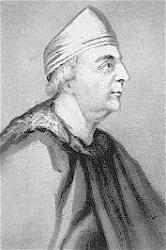
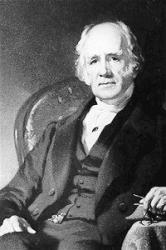
1662 - 1735 Person Name: Samuel Wesley, Sr., 1662-1735 Author of "Behold the Saviour of Mankind" in Church Hymnal, Mennonite Father of Samuel Wesley, John Wesley, and Charles Wesley. See also in: Hymn Writers of the Church ====================================================================================================== Samuel Wesley, M.A., the elder, was born in 1662 at Whitchurch in Dorsetshire, of which parish his father, John Wesley, was Vicar until the Act of Uniformity caused him to resign his living. He was educated at a Dissenting academy by a Mr. Morton, and was designed for the Nonconformist Ministry. But having been, on account of his talents, selected as a champion to defend the dissenters against some severe invectives, and having commenced a course of controversial reading for this purpose, he was led by his studies to embrace the opposite views, and became, and continued through life, a pronounced churchman. With the impetuosity which was a family trait, he set forth on foot to Oxford, and entered himself at Exeter College. In spite of his straitened means, he managed to keep his terms and take his degrees at the University. He then received Holy Orders and took a curacy of £28 a year. Having held this curacy for a year, he obtained a naval chaplaincy, and then took another curacy in London. About the year 1690 he married Susanna, daughter of Dr. Annesley, a famous Nonconformist minister, and a scion of the noble house of Anglesey. The wife, like the husband, had been brought up as a dissenter, but at the early age of 13 she had come over to the Church of England, and was afterwards a Jacobite in politics. In 1693 Mr. Wesley was presented to the living of South Ormsby in Lincolnshire. He was also chaplain to the Marquis of Normandy, afterwards Duke of Buckingham. In 1697 he was appointed by the Crown to the Rectory of Epworth, and there he spent the remainder of his life, nearly forty years. The first part of his residence at Epworth was marked by a series of troubles arising partly from his pecuniary embarrassments, which increased with his increasing family, partly from the animosity of his parishioners, who resented the part which he felt it his duty to take, as a staunch churchman, in politics, and partly from unfortunate accidents. These troubles reached their climax in 1705, when he was thrown into Lincoln gaol for debt. They are graphically described by his own pen. "I have been thrown behind," he writes to his good friends at Oxford, "by a series of misfortunes. My Parsonage Barn was blown down ere I had recovered the Taking my Living; My House great part of it burnt down about 2 years since. My Flax, great part of my Income now in my own Hands, I doubt wilfully fir'd and burnt in ye night, whilst I was last in London. My Income sunk about one half by the low price of Grain and my credit lost by the taking away my Regiment. I was brought to Lincoln Castle June 23rd last past. About 3 weeks since my very unkind People, thinking they had not yet done enough, have in ye night stabbed my 3 cows, wch were a great part of my poor Numerous Family's Subsistence.—For wch God forgive them." Some points in this letter require explanation. When he speaks of being in London, he means on Convocation business; for he was elected Proctor for the Diocese, and in one of his absences Mrs. Wesley instituted those religious meetings at the Rectory which are thought by some to have been the precursors of the Wesleyan Society Meetings. “His Regiment" was a Chaplaincy in the army which had been given him in reward for a poem in praise of the Duke of Marlborough. The last and worst of the many fires through which he suffered was in 1709, when the rectory was entirely burnt down, and the present house erected in its place. The latter part of his time at Epworth was more free from troubles. He met with many generous friends who enabled him to emerge from his pecuniary difficulties, the firmest and most constant of these friends being the admirable Archbishop of York, Dr. John Sharp; his sons grew up to be a comfort and a credit to him; his income was slightly increased by the addition of the neighbouring living of Wroot; and his parishioners gradually became more tractable. The annoyance caused by the famous Epworth Ghost can scarcely be reckoned among his serious troubles. In 1731 he met with an accident which probably hastened his end, and in 1735 he passed away and was buried in Epworth churchyard, leaving behind him the character of an excellent parish priest, a good husband and father, and a man of very considerable abilities and attainments. Mr. Wesley was a somewhat voluminous writer. His first publication was a volume of poems bearing the unpromising, not to say repulsive, title of Maggots. It appeared in 1685. In 1691 he became the clerical correspondent to the Athenian Gazette (afterwards Mercury) published by his brother-in-law, John Dunton. In 1693 appeared an Heroic Poem on the Life of Our Blessed Lord and Saviour Jesus Christ. This was dedicated to Queen Mary, and led to his appointment to the living of Epworth. In 1695 he published Elegies on Queen Mary and Archbishop Tillotson; and in 1698 A Sermon preached before the Society for the Reformation of Manners. The Elegies are rather fulsome and in bad taste according to the standard of the present day; but it should be remembered that high-flown panegyrics were the fashion of the age. The Sermon is a spirited and energetic defence of the "Societies," which were regarded with some suspicion by many high-churchmen, but of which Mr. Wesley, like his friend Robert Nelson, was a warm supporter. In 1700 he published The Pious Communicant rightly prepared; or a Discourse concerning the Blessed Sacrament, &c, With Prayers and Hymns suited to the several parts of that holy office. To which is added A short Discourse of Baptism. In this work appeared his version of the "Great Hallel" or "Paschal Hymn." In 1704 he published The History of the Old and New Testaments in Verse, in three volumes, which he dedicated to Queen Anne. This, like his Life of Christ, was illustrated with numerous and costly engravings. In 1705 he published a poem of nearly 600 lines on the "Battle of Blenheim," entitled Maryborough, or The Fate of Europe. For this he was rewarded with the Chaplaincy of Colonel Lepell's regiment; but his political enemies at Epworth soon succeeded in getting him deprived of this office. In 1707 appeared A Reply to Mr. Palmer's Vindication of the Learning, Loyalty, Morals, and most Christian Behaviour of the Dissenters towards the Church of England. This originated in the publication, without his consent or knowledge, of a Letter he wrote to a friend Concerning the Education of the Dissenters in their Private Academies. The letter was attacked anonymously and defended by Mr. Wesley in a pamphlet (1704). The pamphlet was answered by Mr. Palmer. After this, Mr. Wesley's pen seems to have rested for some time; but during the last ten years of his life he was engaged in his elaborate Dissertation on the Book of Job, his incessant labours upon which are said to have hastened his end. This work was dedicated to Queen Caroline, the wife of George II., and presented to her by John Wesley some months after the author's death. Perhaps if he had written less, and spent more time in elaborating what he did write, he might have been more successful; but, after all, the "Divine afflatus" must have been wanting; and the best service which he rendered to sacred poetry was in being father of his children. Two of his hymns are in common use:— 1. Behold the Saviour of mankind. 2. 0 Thou Who, when I did complain. -- Excerpts from John Julian, Dictionary of Hymnology (1907)

Phoebe Palmer

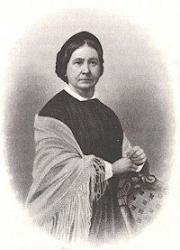
1807 - 1874 Author of "Behold thy temple, God of grace" in Hymn and Tune Book of the Methodist Episcopal Church, South (Round Note Ed.) Palmer, Phoebe, an American Methodist, b. 1807, and d. in 1874, wrote "Blessed Bible! how I love thee" (Holy Scriptures), and “O! when shall I sweep through the gates" (Heaven Anticipated). The latter is in I. D. Sankey's Sacred Songs and Solos, 1878. --John Julian, Dictionary of Hymnology, Appendix, Part II (1907)

Christoph Carl Ludwig von Pfeil

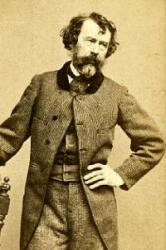
1712 - 1784 Person Name: C. C. L. von Pfeil, 1782 Author of "O Blest the House, Whate'er Befall" in Ambassador Hymnal Pfeil, Christoph Carl Ludwig, Baron von, was born January 20, 1712, at Grünstadt, near Worms, where his father, Quirin Heinrich v. Pfeil, was then in the service of the Count of Leiningen. He matriculated at the University of Halle in 1728, as a student of law. After completing his course at the University of Tübingen, he was appointed, in 1732, Württemberg secretary of legation at Regensburg; then, in 1737, Justiz-und-Regierungsrath at Stuttgart; in 1745 Tutelar-raths-Präsident; in 1755 Kreisdirectorialgesandter to the Swabian Diet; in 1758 Geheim Legationsrath; and in 1759 Geheimrath. He found himself however at last no longer able to cooperate in carrying out the absolutism of the Württemberg prime minister Count Montmartin. When his resignation was accepted, April 13, 1763, he retired to the estate of Deufstetten, near Crailsheim, which he had purchased in 1761. In Sept., 1763, he was appointed by Frederick the Great as Geheimrath, and accredited Prussian minister or ambassador to the Diets of Swabia and Franconia. He was thereafter created Baron by the Emperor Joseph II., and in 1765 received the cross of the Red Eagle Order from Frederick the Great. An intermittent fever which developed itself in August, 1783, confined him to bed, where he remained till his death, at Deufstetten, Feb. 14, 1784 (Koch v. 176; Allgemeine Deutsche Biographie xxv. 646). v. Pfeil was a man of deep and genuine piety. His hymnwriting began immediately after the spiritual change which he experienced on the 10th Sunday after Trinity, 1730; and it continued to be a favourite occupation, especially in his later years at Deufstetten. He was one of the most productive of German hymnwriters, his printed hymns being about 950, besides many in manuscript. The other hymns printed in his lifetime appeared in his (1) Lieder von der offenbarten Herrlichkeit und ZuJcunft des Herrn, Esslingen, 1741, 2nd ed. Memmingen, 1749, as Apocalyptische Lieder von der, &c. (2) Evangelisches Gesangbuch, Memmingen, 1782, with 264 hymns dating from 1730 to 1781, edited by J. G. Schellhorn. (3) Evangelische Glaubens-und Herzens-gesänge, Dinkelsbühl, 1783, with 340 hymns dating from 1763 to 1783. In recent times a number of his hymns have come into German use (they originally appeared, it must be remembered, during the Rationalistic Period), and Knapp includes 26 of them in his Evangelischer Lieder-Schatz, 1850. Two have passed into English, viz.:— i. Am Grab der Christen singet man. Burial. Written in 1780. First published in No. 3, 1783, as above, p. 201, in 10 st., entitled, "We sing joyfully of Victory at the grave of the righteous: the right hand of the Lord hath gotten Him the victory." In the Berlin Geistliche Lieder,ed. 1863, No. 1433. Translated as, "The Christian's grave with joy we see," by Dr. G. Walker, 1860, p. 111. ii. Wohl einem Haus, da Jesus Christ. Family Prayer. First published in No. 2, 1782, as above, No. 61, in 8 st. of 4 1., entitled, "Delightful picture of a house that serves the Lord. On the Parents of Jesus." It was apparently written for the 1st Sunday after Epiphany, 1746. In the Unverfälschter Liedersegen, 1851, No. 682. Translated as:— Oh blest the house, whatever befall. A good translation omitting st. ii., vi., by Miss Winkworth, in her Chorale Book for England, 1863, No. 175. Including, omitting the trs. of st. iii., v.t and adding a translation of st. vi., as No. 344 in the Ohio Lutheran Hymnal, 1880. [Rev. James Mearns, M.A.] -- John Julian, Dictionary of Hymnology (1907)

Rowland Hill

1744 - 1833 Author of "With heavenly power, O Lord, defend" in The Coronation Hymnal Hill, Rowland, M.A., son of Sir Rowland Hill, Bart., was born at Hawkstone, near Shrewsbury, Aug. 23,1744, and educated at Shrewsbury Grammar School, Eton, and St. John's College, Cambridge (B.A. 1769). Taking Holy Orders, he was for a time curate of Kingston, near Taunton. Leaving his curacy, but without renouncing his Orders or his connection with the Church of England, he itinerated for some twelve years, preaching mostly in Wilts, Gloucestershire, Somersetshire, and London. At Wotton-under-Edge he built a Chapel, where he often preached, and also opened the well-known Surrey Chapel, London, in 1783. At the latter place he ministered for nearly fifty years. He took great interest in Evangelical and Mission work, was one of the founders of the London Missionary Society, and a member of the first committee of the Religious Tract Society. He died April 11, 1833, He was the author of several prose works; he also compiled the following hymnbooks:— (1) A Collection of Psalms and Hymns for the Use of the Poor, 1774. (2) A Collection of Psalms and Hymns, chiefly intended for Public Worship, 1783. This was enlarged in 1787, and a Supplement was added in 1796. Other revisions followed, the last being in 1830. (3) Divine Hymns attempted in easy language for the Use of Children, 1790 (2nd ed. 1794; later editions 1808 & 1819). The hymns in this work, he tells us, are, with the exception of Nos. 24 and 37, his own, revised and corrected by some one he is not permitted to name (Preface iv.-viii.). (4) A Collection of Hymns for Children, 1808. (5) Hymns for Schools, 1832. In these collections no authors' names are given, and his own contributions, except in the case of the children's Hymns, 1790, are difficult to determine. By common consent the following, including some from the 1790 Hymns, are attributed to him:— 1. Come, Holy Ghost, the Comforter. Whitsuntide. No. 30 of his Divine Hymns for Children, 1790, in 5 st. of 4 1. and headed "A Child's Prayer to God the Holy Spirit." It was repeated in the later editions of the Divine Hymns, and is found in modern hymn books. 2. Dear Friend of friendless sinners, hear. A Prayer for Rest in God. In his Psalms & Hymns &c, 1783, No. 89, in 4 st. of 6 1., and headed "A Prayer for the promised Rest." In modern hymnbooks its use is limited. 3. Happy the children who betimes. Godly Education. No. 8 in his Divine Hymns, 1790, in 5 st. of 4 1., and headed " The Blessings of a godly Education." It was repeated in later editions, and, sometimes with the omission of st. v. in modern collections for children. 4. Lord, we raise our feeble voices. Praise to Jesus . Major, in his Book of Praise for Home & School, dates this hymn 1800. It is found in several collections for children. 5. My parents gave me, Lord. A Child's Dedication to God. No. 13 in his Divine Hymns, 1790, in 6 stanzas of 6 lines, and headed "A Child's Hymn on easy Dedication to God in Holy Baptism." It is in a few modern collections. 6. We sing His love Who once was slain. The Resurrection. Appeared in the 1796 Supplement to his Psalms & Hymns It is in American common use. 7. When Jesus first at heaven's Command. The Kingdom, of Christ exalted. Composed for the London Missionary Society, and printed in the Evangelical Magazine, 1797, vol. v. p. 263. It is appended to the author's sermon to the volunteers preached at Surrey Chapel, 1803, and was also included in the 1810 ed. of his Psalms & Hymns, No. 302, in 6 stanzas of 4 lines with the chorus, "Hail Immanuel," &c. 8. With heavenly power, 0 Lord defend. Departure of Ministers. Published in his Psalms & Hymns, 1783, No. 234, in 4 stanzas of 4 l,ines and headed "For Ministers at their Departure." In modern hymn books it is generally given in 2 stanzas. 9. Ye that in these [His] courts are found. Public Worship. This is usually attributed to R. Hill. It appeared, however, in Lady Huntingdon's Hymn Book, 1765, p. 404 (ed. 1773, p. 256), and can scarcely be his. In his Psalms & Hymns 1783. It is usually given as "Ye that in His courts," in modern collections. The person referred to as having revised the Divine Hymns, 1790, was the poet Cowper. The best known of R. Hill's hymns, "Cast thy burden on the Lord," and "Gently, my Saviour, let me down," are annotated under their respective first lines. His Life, by the Rev. E. Sidney, M.A., was published in 1834. --John Julian, Dictionary of Hymnology (1907)

Thomas Campbell

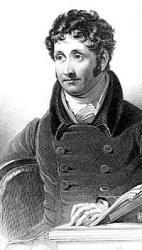
1777 - 1844 Author of "When Jordan hushed his waters still" in The Seventh-Day Adventist Hymn and Tune Book Campbell, Thomas, the Poet, has little in common with hymnody. A few of his pieces, including," When Jordan hushed its waters still," are found in a limited number of hymnals. His poetical works, The Pleasures of Hope, Gertrude of Wyoming, and others, have been reprinted several times. He was born at Glasgow, 1777; died at Boulogne, 1844, and was buried in Westminster Abbey. --John Julian, Dictionary of Hymnology (1907)

Ralph Wardlaw

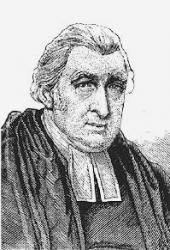
1779 - 1853 Person Name: R. Wardlaw Author of "Hail! morning known among the blest" in The Otterbein Hymnal Wardlaw, Ralph, D.D. This venerable and (in his generation) influential Scottish divine contributed twelve hymns to the praise of the Church Universal that are likely to live in a humble and useful way. As having so done, and besides edited several collections of hymns, he claims a place of honour in this work. Critically, and regarded as literature, his hymns have little of poetry in them; no "winged words" to lift the soul heavenward. They reflect simply and plainly the lights and shadows of everyday experiences of the spiritual life, rather than its etherialities and subtleties. His "Lift up to God the voice of praise " is the most widely known; and there is a certain inspiriting clangour about it when well sung; yet it is commonplace. His "Hail morning, known among the blest," is narrative and prosaic, though it filled a gap at the time in Sabbath morning worship. “At the time by God appointed," "Remember Thee! remember Christ!" and "Contemplate, saints, the source divine," have vanishing gleams of imaginative light and fine and tender emotion. "O how good the hallowed union," "Where the sounds of plaintive wailing," and "See the Sun of truth arise," are melodious and singable, and pleasant but shallow. “Christ of all my hopes the ground," (Pt. ii.) "When with wasting sickness worn," is much too long, but is a fairly good song of Zion. Wardlaw published in 1803 a Selection of Hymns, to displace what was called The Tabernacle Collection, 1800, that had been used by the Congregationalists of Scotland, and to which he contributed a few hymns. He was assisted in the preparation of this compilation by Dr. Charles Stuart, of Dunearn. The first edition contained 322 hymns. In 1817 a Supplement was added of 171, bringing up the number to 493. Of these eleven (or twelve strictly) were by Wardlaw. Two of these had previously appeared in the Scottish Missionary Magazine (vol. viii. 48). His hymns bear so very slight a proportion to Dr. Wardlaw's writings as a profound theologian and expositor and thoroughly-equipped controversialist on the chief problems of the period, as to make it necessary to refer the reader to his remarkable Life, by the Rev. Dr. W. L. Alexander, entitled, Memoirs of the Life and Writings of Ralph Wardlaw, D.D. (2nd ed., 1856). Wardlaw was born at Dalkeith on December 22, 1779, where he received his early education, later attending Glasgow University. His only church was in Glasgow. He died at Easterhouse near Glasgow on Dec. 17, 1853, and his public funeral is still remembered for the representative character of the vast multitude who attended it. [Rev. A. B. Grosart, D.D., LL.D.] Of Dr. Wardlaw's hymns the following are still in common use:— 1. Glad when they saw the Lord. Easter. 2. Hail, morning known amongst the blest [saints]. Sunday Morning. 3. Lift up to God the voice of praise. Praise to the Father. 4. 0 Lord our God, arise. Missions. 5. Remember Thee, remember Christ. Holy Communion. 6. See the Sun of Truth arise. Christ the Light. Of these Nos. 3-5 appeared in the Tabernacle Collection, 1800. -- John Julian, Dictionary of Hymnology (1907) ============= Wardlaw, R., p. 1232, ii. Of his hymns, Nos. 1, 2 are in his Selection, 1803, and No. 6 was added in the Supplement of 1817. This Supplement also contains "O how good the hallowed union," and "Whence the sounds of plaintive wailing," p. 1232, ii. --John Julian, Dictionary of Hymnology, New Supplement (1907)

Nathaniel Parker Willis

1806 - 1867 Person Name: Nathaniel P. Willis Author of "The perfect world by Adam trod" in Hymn and Tune Book of the Methodist Episcopal Church, South (Round Note Ed.) Willis, Nathaniel Parker, was born at Portland, Maine, Jan. 20, 1807, and educated at Yale College, graduating in 1826. After writing for a time for the American Monthly Magazine, which he established, and theNew York Mirror, into which the former was merged, he was attached to the American Legation at the French Court. His stay in Europe extended from 1831 to 1837. On his return he became in 1839 one of the editors of The Corsair. His works are numerous, and include Sacred Poems, 1843. He died Jan. 29, 1867. His sister, Mrs. Parton, is the well-known "Fanny Fern." His hymn —"The perfect world by Adam trod" (Dedication of a Place of Worship), was "Written to be sung at the Consecration of Hanover Street [Unitarian] Church, Boston," in 1826, and since then has been widely used, although of no exceeding merit. [Rev F. M. Bird, M.A.] -- John Julian, Dictionary of Hymnology (1907)

E. Cronenwett

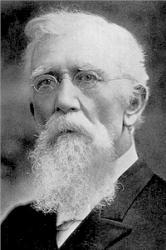
1841 - 1931 Person Name: Emanuel Cronenwett Author of "To Thee, Our Fathers' God, We Bow" in American Lutheran Hymnal Cronenwett, Emmanuel, a Lutheran Pastor at Butler, Pennsylvania, U.S.A., contributed to the Evangelical Lutheran Hymnal, Published by Order of the Evangelical Lutheran Joint Synod of Ohio and other States, 1880, in addition to 20 translations from the German, the following original hymns, some of which rank with the best in the collection:— 1. A holy state is wedded life. Domestic Worship. 2. Faith is wisdom from on high. Faith. 3. Heavenly Father, Jesus taught us. Prayer. 4. Lord, Thine omniscience I adore. Omniscience. 5. O Triune God, Thy blessing great. Domestic Worship. 6. Of omniscient grace I sing. Omniscience. 7. Of Zion's honour angels sing. Ordination. 8. The precepts of the word are pure. Holy Scripture. 9. The Spirit's fruits are peace and love. Fruits of the Spirit. 10. 'Tis a marvel in our eyes. Foundation Stone laying of a Church. 11. To Thee, our fathers' God, we bow. Domestic Worship. 12. Unto Caesar let us render. National Thanksgiving. 13. We have a sure, prophetic word. Holy Scripture. --John Julian, Dictionary of Hymnology (1907)

Lucius Manlius Sargent

1786 - 1867 Person Name: Lucius M. Sargent Author of "Bondage and death the cup contains" in Evangelical Hymnal Sargent, Lucius Manlius. (Boston, Massachusetts, June 25, 1786--June 2, 1867, Boston). A layman of independent mans, author of many articles advocating temperance. His temperance hymn beginning "Slavery and death the cup contains" was written during the Washingtonian Temperance Revival and appeared in Adams' and Chapin's Unitarian Hymns for Christian Devotion (Boston, 1846). In the American Methodist Episcopal Hymnal (1878), the first line is altered to read "Bondage and death the cup contains." The hymn is included, with the original wording, in the Universalist Church Harmonies (1895). --Henry Wilder Foote, DNAH Archives

Martin Luther

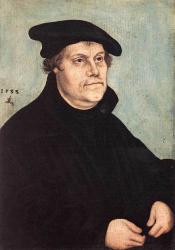
1483 - 1546 Author of "All praise to thee, eternal Lord" in The Seventh-Day Adventist Hymn and Tune Book Luther, Martin, born at Eisleben, Nov. 10, 1483; entered the University of Erfurt, 1501 (B.A. 1502, M.A.. 1503); became an Augustinian monk, 1505; ordained priest, 1507; appointed Professor at the University of Wittenberg, 1508, and in 1512 D.D.; published his 95 Theses, 1517; and burnt the Papal Bull which had condemned them, 1520; attended the Diet of Worms, 1521; translated the Bible into German, 1521-34; and died at Eisleben, Feb. 18, 1546. The details of his life and of his work as a reformer are accessible to English readers in a great variety of forms. Luther had a huge influence on German hymnody. i. Hymn Books. 1. Ellich cristlich lider Lobgesang un Psalm. Wittenberg, 1524. [Hamburg Library.] This contains 8 German hymns, of which 4 are by Luther. 2. Eyn Enchiridion oder Handbuchlein. Erfurt, 1524 [Goslar Library], with 25 German hymns, of which 18 are by Luther. 3. Geystliche Gesangk Buchleyn. Wittenberg, 1524 [Munich Library], with 32 German hymns, of which 24 are by Luther. 4. Geistliche Lieder auffs new gebessert. Wittenberg. J. Klug, 1529. No copy of this book is now known, but there was one in 1788 in the possession of G. E. Waldau, pastor at Nürnberg, and from his description it is evident that the first part of the Rostock Gesang-Buch, 1531, is a reprint of it. The Rostock Gesang-Buch, 1531, was reprinted by C. M. Wiechmann-Kadow at Schwerin in 1858. The 1529 evidently contained 50 German hymns, of which 29 (including the Litany) were by Luther. 5. Geistliche Lieder auffs new gebessert. Erfurt. A. Rauscher, 1531 [Helmstädt, now Wolfenbüttel Library], a reprint of No. 4. 6. Geistliche Lieder. Wittenberg. J. Klug, 1535 [Munich Library. Titlepage lost], with 52 German hymns, of which 29 are by Luther. 7. Geistliche Lieder auffs new gebessert. Leipzig. V. Schumann, 1539 [Wernigerode Library], with 68 German hymns, of which 29 are by Luther. 8. Geistliche Lieder. Wittenberg. J. Klug, 1543 [Hamburg Library], with 61 German hymns, of which 35 are by Luther. 9. Geystliche Lieder. Leipzig. V. Babst, 1545 [Gottingen Library]. This contains Luther's finally revised text, but adds no new hymns by himself. In pt. i. are 61 German hymns, in pt. ii. 40, of which 35 in all are by Luther. For these books Luther wrote three prefaces, first published respectively in Nos. 3, 4, 9. A fourth is found in his Christliche Geseng, Lateinisch und Deudsch, zum Begrebnis, Wittenberg, J. Klug, 1542. These four prefaces are reprinted in Wackernagel’s Bibliographie, 1855, pp. 543-583, and in the various editions of Luther's Hymns. Among modern editions of Luther's Geistliche Lieder may be mentioned the following:— Carl von Winterfeld, 1840; Dr. C. E. P. Wackernagel, 1848; Q. C. H. Stip, 1854; Wilhelm Schircks, 1854; Dr. Danneil, 1883; Dr. Karl Gerok, 1883; Dr. A. F. W. Fischer, 1883; A. Frommel, 1883; Karl Goedeke, 1883, &c. In The Hymns of Martin Luther. Set to their original melodies. With an English version. New York, 1883, ed. by Dr. Leonard Woolsey Bacon and Nathan H. Allen, there are the four prefaces, and English versions of all Luther's hymns, principally taken more or less altered, from the versions by A. T. Russell, R. Massie and Miss Winkworth [repub. in London, 1884]. Complete translations of Luther's hymns have been published by Dr. John Anderson, 1846 (2nd ed. 1847), Dr. John Hunt, 1853, Richard Massie, 1854, and Dr. G. Macdonald in the Sunday Magazine, 1867, and his Exotics, 1876. The other versions are given in detail in the notes on the individual hymns. ii. Classified List of Luther's Hymns. Of Luther's hymns no classification can be quite perfect, e.g. No. 3 (see below) takes hardly anything from the Latin, and No. 18 hardly anything from the Psalm. No. 29 is partly based on earlier hymns (see p. 225, i.). No. 30 is partly based on St. Mark i. 9-11, and xvi., 15, 16 (see p. 226, ii.). No. 35 is partly based on St. Luke ii. 10-16. The following arrangement, however, will answer all practical purposes. A. Translations from the Latin. i. From Latin Hymns: 1. Christum wir sollen loben schon. A solis ortus cardine 2. Der du bist drei in Einigkeit. O Lux beata Trinitas. 3. Jesus Christus unser Heiland, Der von. Jesus Christus nostra salus 4. Komm Gott Schopfer, heiliger Geist. Veni Creator Spiritus, Mentes. 5. Nun komm der Beidenheiland. Veni Redemptor gentium 6. Was flirchst du Feind Herodes sehr. A solis ortus cardine ii. From Latin Antiphons, &c.: 7. Herr Gott dich loben wir. Te Deum laudamus. 8. Verleih uns Frieden gnädiglich. Dapacem, Domine 9. Wir glauben all an einen Gott. iii. Partly from the Latin, the translated stanzas being adopted from Pre-Reformation Versions: 10. Komm, heiliger Geist, Herre Gott. 11. Mitten wir im Leben sind. Media vita in morte sumus. B. Hymns revised and enlarged from Pre-Reformation popular hymns. 12. Gelobet seist du Jesus Christ. 13. Gott der Vater wohn uns bei. 14. Gott sei gelobet und gebenedeiet. 15. Nun bitten wir den heiligen Geist. C. Psalm versions. 16. Ach Gott vom Himmel, sieh darein. 17. Aus tiefer Noth schrei ich zu dir. 18. Ein' feste Burg ist unser Gott. 19. Es spricht der Unweisen Mund wohl. 20. Es wollt uns Gott genädig sein. 21. War Gott nicht mit uns diese Zeit. 22. Wohl dem, der in Gotten Furcht steht. D. Paraphrases of other portions of Holy Scripture. 23. Diess sind die heilgen zehn Gebot. 24. Jesaia dem Propheten das geschah. 25. Mensch willt du leben seliglich. 26. Mit Fried und Freud ich fahr dahin. 27. Sie ist mir lieb die werthe Magd. 28. Vater unser im Himmelreich. E. Hymns mainly Original. 29. Christ lag in Todesbanden. 30. Christ unser Herr zum Jordan kam. 31. Ein neues Lied wir heben an. 32. Erhalt uns Herr bei deinem Wort. 33. Jesus Christus unser Heiland, Der den, 34. Nun freut euch lieben Christengemein. 35. Vom Himmel hoch da komm ich her. 36. Vom Himmel kam der Engel Schaar. In addition to these — 37. Fur alien Freuden auf Erden. 38. Kyrie eleison. In the Blätter fur Hymnologie, 1883, Dr. Daniel arranges Luther's hymns according to what he thinks their adaptation to modern German common use as follows:— i. Hymns which ought to be included in every good Evangelical hymn-book: Nos. 7-18, 20, 22, 28, 29, 30, 32, 34, 35, 36, 38. ii. Hymns the reception of which into a hymn-book might be contested: Nos. 2, 3, 4, 19, 21, 22, 23, 24, 25, 33. iii. Hymns not suited for a hymn-book: Nos. 1, 5, 6, 27, 31, 37. [Rev. James Mearns, M.A.] --John Julian, Dictionary of Hymnology (1907)

Pages


Export as CSV
It looks like you are using an ad-blocker. Ad revenue helps keep us running. Please consider white-listing Hymnary.org or getting Hymnary Pro to eliminate ads entirely and help support Hymnary.org.