You help make Hymnary.org possible. More than 10 million people from 200+ countries found hymns, liturgical resources and encouragement on Hymnary.org in 2025, including you. Every visit affirms the global impact of this ministry.

If Hymnary has been meaningful to you this year, would you take a moment today to help sustain it? A gift of any size—paired with a note of encouragement if you wish—directly supports the server costs, research work and curation that keep this resource freely available to the world.

Give securely online today, or mail a check to:
Hymnary.org
Calvin University
3201 Burton Street SE
Grand Rapids, MI 49546

Thank you for your partnership, and may the hope of Advent fill your heart.

Person Results

Text Identifier:"^lord_when_we_bend_before_thy_throne$"
In:people

Planning worship? Check out our sister site, ZeteoSearch.org, for 20+ additional resources related to your search.
Showing 11 - 20 of 28Results Per Page: 102050

Joseph Dacre Carlyle

1759 - 1804 Person Name: Joseph D. Carlyle Author of "Lord, when we bend before Thy throne" in The Hymnal Joseph Dacre Carlyle was born at Carlisle, in 1759. He became Professor of Arabic in the University of Cambridge, in 1794, and afterwards Vicar of Newcastle-on-Tyne. He was the author of several works. His death occurred in 1804. --Annotations of the Hymnal, Charles Hutchins, M.A., 1872 ====================== Carlyle, Joseph Dacre, B.D., some time Professor of Arabic in the University of Cambridge, and afterwards Vicar of Newcastle-on-Tyne, was born at Carlisle, June 4, 1758. In 1799 he accompanied the Earl of Elgin to Constantinople with the object of exploring the literary treasures of the public Library of that city. He extended his journey into Asia Minor, and the islands and shores of the Archipelago. He died at Newcastle, April 12, 1804. Amongst his manuscripts were Poems, suggested chiefly by Scenes in Asia Minor, Syria, &c. These were published under that title, in 1805, by Susanna Maria Carlyle. His hymns, which appeared in J. Fawcett's Psalms & Hymns, Carlisle, 1802, include, "Lord, when we bend before Thy throne "—his most popular production; a paraphrase of the Lord's Prayer,"Father of heaven, Whose gracious hand"; and "Lord, when we creation scan." His works include Specimens of Arabian Poetry, 1796. --John Julian, Dictionary of Hymnology (1907)

Johann Crüger

1598 - 1662 Person Name: J. Cruger Composer of "[Lord, when we bend before Thy throne]" in The Hymnal, Revised and Enlarged, as adopted by the General Convention of the Protestant Episcopal Church in the United States of America in the year of our Lord 1892 Johann Crüger (b. Grossbriesen, near Guben, Prussia, Germany, 1598; d. Berlin, Germany, 1662) Crüger attended the Jesuit College at Olmutz and the Poets' School in Regensburg, and later studied theology at the University of Wittenberg. He moved to Berlin in 1615, where he published music for the rest of his life. In 1622 he became the Lutheran cantor at the St. Nicholas Church and a teacher for the Gray Cloister. He wrote music instruction manuals, the best known of which is Synopsis musica (1630), and tirelessly promoted congregational singing. With his tunes he often included elaborate accom­paniment for various instruments. Crüger's hymn collection, Neues vollkomliches Gesangbuch (1640), was one of the first hymnals to include figured bass accompaniment (musical shorthand) with the chorale melody rather than full harmonization written out. It included eighteen of Crüger's tunes. His next publication, Praxis Pietatis Melica (1644), is considered one of the most important collections of German hymnody in the seventeenth century. It was reprinted forty-four times in the following hundred years. Another of his publications, Geistliche Kirchen Melodien (1649), is a collection arranged for four voices, two descanting instruments, and keyboard and bass accompaniment. Crüger also published a complete psalter, Psalmodia sacra (1657), which included the Lobwasser translation set to all the Genevan tunes. Bert Polman =============================== Crüger, Johann, was born April 9, 1598, at Gross-Breese, near Guben, Brandenburg. After passing through the schools at Guben, Sorau and Breslau, the Jesuit College at Olmütz, and the Poets' school at Regensburg, he made a tour in Austria, and, in 1615, settled at Berlin. There, save for a short residence at the University of Wittenberg, in 1620, he employed himself as a private tutor till 1622. In 1622 he was appointed Cantor of St. Nicholas's Church at Berlin, and also one of the masters of the Greyfriars Gymnasium. He died at Berlin Feb. 23, 1662. Crüger wrote no hymns, although in some American hymnals he appears as "Johann Krüger, 1610,” as the author of the supposed original of C. Wesley's "Hearts of stone relent, relent" (q.v.). He was one of the most distinguished musicians of his time. Of his hymn tunes, which are generally noble and simple in style, some 20 are still in use, the best known probably being that to "Nun danket alle Gott" (q.v.), which is set to No. 379 in Hymns Ancient & Modern, ed. 1875. His claim to notice in this work is as editor and contributor to several of the most important German hymnological works of the 16th century, and these are most conveniently treated of under his name. (The principal authorities on his works are Dr. J. F. Bachmann's Zur Geschichte der Berliner Gesangbücher 1857; his Vortrag on P. Gerhard, 1863; and his edition of Gerhardt's Geistliche Lieder, 1866. Besides these there are the notices in Bode, and in R. Eitner's Monatshefte für Musik-Geschichte, 1873 and 1880). These works are:— 1. Newes vollkömmliches Gesangbuch, Augspur-gischer Confession, &c, Berlin, 1640 [Library of St. Nicholas's Church, Berlin], with 248 hymns, very few being published for the first time. 2. Praxis pietatis melica. Das ist: Ubung der Gottseligkeit in Christlichen und trostreichen Gesängen. The history of this, the most important work of the century, is still obscure. The 1st edition has been variously dated 1640 and 1644, while Crüger, in the preface to No. 3, says that the 3rd edition appeared in 1648. A considerable correspondence with German collectors and librarians has failed to bring to light any of the editions which Koch, iv. 102, 103, quotes as 1644, 1647, 1649, 1650, 1651, 1652, 1653. The imperfect edition noted below as probably that of 1648 is the earliest Berlin edition we have been able to find. The imperfect edition, probably ix. of 1659, formerly in the hands of Dr. Schneider of Schleswig [see Mützell, 1858, No. 264] was inaccessible. The earliest perfect Berlin edition we have found is 1653. The edition printed at Frankfurt in 1656 by Caspar Röteln was probably a reprint of a Berlin edition, c. 1656. The editions printed at Frankfurt-am-Main by B. C. Wust (of which the 1666 is in the preface described as the 3rd) are in considerable measure independent works. In the forty-five Berlin and over a dozen Frankfurt editions of this work many of the hymns of P. Gerhardt, J. Franck, P. J. Spener, and others, appear for the first time, and therein also appear many of the best melodies of the period. 3. Geistliche Kirchen-Melodien, &c, Leipzig, 1649 [Library of St. Katherine's Church, Brandenburg]. This contains the first stanzas only of 161 hymns, with music in four vocal and two instrumental parts. It is the earliest source of the first stanzas of various hymns by Gerhardt, Franck, &c. 4. D. M. Luther's und anderer vornehmen geisU reichen und gelehrten Manner Geistliche Lieder und Psalmen, &c, Berlin, 1653 [Hamburg Town Library], with 375 hymns. This was edited by C. Runge, the publisher, and to it Crüger contributed some 37 melodies. It was prepared at the request of Luise Henriette (q.v.), as a book for the joint use of the Lutherans and the Re¬formed, and is the earliest source of the hymns ascribed to her, and of the complete versions of many hymns by Gerhardt and Franck. 5. Psalmodia Sacra, &c, Berlin, 1658 [Royal Library, Berlin]. The first section of this work is in an ed. of A. Lobwasser's German Psalter; the second, with a similar title to No. 4, and the date 1657, is practically a recast of No. 4,146 of those in 1653 being omitted, and the rest of the 319 hymns principally taken from the Praxis of 1656 and the hymn-books of the Bohemian Brethren. New eds. appeared in 1676, 1700, 1704, 1711, and 1736. [Rev. James Mearns, M.A.] -- Excerpt from John Julian, Dictionary of Hymnology (1907) ======================= Crüger, Johann, p. 271, ii. Dr. J. Zahn, now of Neuendettelsau, in Bavaria, has recently acquired a copy of the 5th ed., Berlin, 1653, of the Praxis. --John Julian, Dictionary of Hymnology, Appendix, Part II (1907)

James Turle

1802 - 1882 Person Name: J. Turle Composer of "ST. JOHN" in The Christian Hymnal TURLE, JAMES (1802–1882), organist and composer, son of James Turle, an amateur 'cello-player, was born at Taunton, Somerset, on 5 March 1802. From July 1810 to December 1813 he was a chorister at Wells Cathedral under Dodd Perkins, the organist. At the age of eleven he came to London, and was articled to John Jeremiah Goss, but he was largely self-taught. He had an excellent voice and frequently sang in public. John Goss [q. v.], his master's nephew, was his fellow student, and thus the future organists of St. Paul's Cathedral and Westminster Abbey were pupils together. Turle was organist of Christ Church, Surrey (Blackfriars Road), 1819–1829, and of St. James's, Bermondsey, 1829–31. His connection with Westminster Abbey began in 1817, when he was only fifteen. He was at first pupil of and assistant to G. E. Williams, and subsequently deputy to Thomas Greatorex [q. v.], Williams's successor as organist of the abbey. On the death of Greatorex on 18 July 1831, Turle was appointed organist and master of the choristers, an office which he held for a period of fifty-one years. Turle played at several of the great musical festivals, e.g. Birmingham and Norwich, under Mendelssohn and Spohr, but all his interests were centred in Westminster Abbey. His playing at the Handel festival in 1834 attracted special attention. At his own request the dean and chapter relieved him of the active duties of his post on 26 Sept. 1875, when his service in D was sung, and Dr. (now Professor Sir John Frederick) Bridge, the present organist, became permanent deputy-organist. Turle continued to hold the titular appointment till his death, which took place at his house in the Cloisters on 28 June 1882. The dean offered a burial-place within the precincts of the abbey, but he was interred by his own express wish beside his wife in Norwood cemetery. A memorial window, in which are portraits of Turle and his wife, was placed in the north aisle of the abbey by one of his sons, and a memorial tablet has been affixed to the wall of the west cloister. Turle married, in 1823, Mary, daughter of Andrew Honey, of the exchequer office. She died in 1869, leaving nine children. Henry Frederic Turle [q. v.] was his fourth son. His younger brother Robert was for many years organist of Armagh Cathedral. Turle was an able organist of the old school, which treated the organ as essentially a legato instrument. He favoured full ‘rolling’ chords, which had a remarkable effect on the vast reverberating space of the abbey. He had a large hand, and his ‘peculiar grip’ of the instrument was a noticeable feature of his playing. His accompaniments were largely traditional of all that was best in his distinguished predecessors, and he greatly excelled in his extemporaneous introductions to the anthems. Like Goss, he possessed great facility in reading from a ‘figured bass.’ Of the many choristers who passed through his hands, one of the most distinguished is Mr. Edward Lloyd, the eminent tenor singer. His compositions include services, anthems, chants, and hymn-tunes. Several glees remain in manuscript. In conjunction with Professor Edward Taylor [q. v.] he edited ‘The People's Music Book’ (1844), and ‘Psalms and Hymns’ (S. P. C. K. 1862). His hymn-tunes were collected by his daughter, Miss S. A. Turle, and published in one volume (1885). One of these, ‘Westminster,’ formerly named ‘Birmingham,’ has become widely known, and is very characteristic of its composer. --en.wikisource.org/

Guillaume Franc

1500 - 1570 Person Name: G. Franc Composer of "DUNDEE" in The National Baptist Hymnal

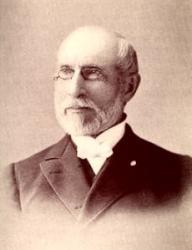
George F. Root

1820 - 1895 Person Name: G. F. Root Composer of "DENNY" in Christian Melodies Root, George F., MUS. DOC, born in Sheffield, Berkshire County, Mass., Aug. 30, 1820. He is much more widely known as a composer of popular music than as a hymn writer. Four of his hymns are in I. D. Sankey's Sacred Songs & Solos, 1878. Nos. 16, 100, 293, and 297. A sympathetic biographical sketch, with portrait, is in The Tonic Sol-Fa Reporter, Sep. 1886. He died Aug. 6, 1895. --John Julian, Dictionary of Hymnology, Appendix, Part II (1907) ===================== George Frederick Root was born in Sheffield, Mass., August 30, 1820. His father moved to North Reading, near Boston, when the boy was six years old, and there his youth was spent. He was always fond of music— not singing at all as a boy, but played upon every kind of instrument that came in his way. At thirteen it was his pride that he could "play a tune" on as many instruments as he was years old. His dream of life was to be a musician, although such an ambition was looked down upon by all his relatives and friends, excepting a fond mother. In the fall of 1838 he went to Boston and made an engagement to work for Mr. A. N. Johnson and take lessons on the piano. His father and one of the brothers were at the time in South America, and the mother, with six younger children, was at home on the farm. When he secured the engagement with Mr. Johnson to receive three dollars a week and board and lessons, the neighbors became interested and encouraged him to go ahead, they promising to help look after the farm and see that the family got along. The young man's happiness over these events can better be imagined than described. On the second day of October, 1838, he entered upon his duties in his new heaven on earth located at Harmony Hall, Mr. Johnson's music-room, in Boston. His duties were to see to the fires, care for the room, answer callers, give information about Mr. Johnson when he was out, and practice his lessons when not otherwise engaged. He worked industriously and made steady progress. It was but a few weeks till Mr. Johnson had him playing for the prayer-meeting, and but a few more till he began turning over pupils to him. In about seven weeks' time Mr. Johnson encouraged him by a considerable increase of salary. A most important event to him was meeting Dr. Lowell Mason and being accepted as a bass singer in the celebrated Bowdoin Street choir. Also, on Mr. Johnson's recommendation, he began taking private voice lessons of Mr. Geo. Jas. Webb, the then celebrated voice teacher of Boston. He continued at least a year with Mr. Webb. His first real singing class was taught the following fall, 1839, at the North End. It lasted nearly through the winter, and on the closing night his class made him a present of a silver goblet, suitably engraved, which he kept among his treasures. Before the first year was up Mr. Johnson proposed a five year partnership, by which Mr. Root was to receive one-third of their earnings, and the former was to have the privilege of visiting Germany part of the time if he chose. They then changed their quarters to three rooms in the basement of Park Street Church. The annual rental was six hundred dollars. They were kept quite busy. At this time Dr. Mason's music teaching in the public schools was a growing success, and Messrs. Johnson and Root were employed to assist him. Drs. Mason and Webb had introduced what is now called Musical Conventions a year or two previous to this. They called them "The Teachers' Class." Teachers and singers were called to Boston from surrounding territory to study and practice pretty much as they do now at normals. In 1841 Mr. Root became one of the teachers in this class. He taught vocal training and continued this work for years afterward in Dr. Mason's teachers' classes, and later incorporated the same method in his own normals. During this year Mr. Johnson went to Germany, and left the two large church choirs (Winter Street and Park Street) in charge of Mr. Root. One of the organs was played by a pupil — Mr. S. A. Bancroft. Everything went smoothly during Mr. Johnson's absence as it did also after his return. During the last year of the five-year partnership, Mr. Root was called to take the organ at Bowdoin Street, Mr. Mason changing to Winter Street. An amicable settlement was made between Messrs. Johnson and Root, and the partnership dissolved. In 1811, Mr. Jacob Abbott (father of Lyman Abbott)and his three brothers had established a young ladies' school in New York City. They wanted a music teacher, and offered the position to Mr. Root. They also secured him the organ and choir of the Mercer Street Church, with prospects for other good work. It required pretty strong persuasive arguments to tempt Mr. Root to leave Boston, he was doing well there, and as the sequel shows, there was an attraction in Boston that held him in too tight a grasp to be relinquished by the mere offer of greater power and place. He made up his mind, however, only after getting the consent of the powders of Boston to take with him this [to him] the greatest attraction of the city — Miss Mary Olive Woodman — an accomplished lady, a sweet singer, and a member of a prominent family of musicians. He went to New York first to prepare a home, and in August, 1845, returned for his bride, who took her place in his New York choir as leading soprano, and through his long and eventful career she was ever at his side, a true helpmeet. He was soon employed at Rutger's Female Institute, Miss Haines' School for Young Ladies, Union Theological Seminary and the New York State Institution for the Blind. Within six weeks after he arrived in New York his time was fully occupied. He continued with Mr. Abbott's young ladies' school ten years. While teaching in New York he continued his summer work with Messrs. Mason and Webb in Teachers' Classes. Up to the year 1849 he had written but little music; only a few hymn tunes while in Boston. He needed more music for the young ladies of his schools, so he made his first book, The Young Ladies' Choir, of which he had enough copies made for his own use, as he had no thought of offering it to the public. Then in connection with Mr. J. E. Sweetser, they compiled the Root and Sweetser's Collection. Mr. Root did work enough for two men, hence broke down in health. Mr. Abbott suggested that he take a trip to Paris. After weighing the matter carefully, in December, 1853, he sailed, and in due time arrived at Paris, where he began studying French, voice culture and piano under celebrated teachers. After spending nearly a year abroad, he returned home in improved health and ready for active work. He began to feel the need of new music for his classes, and after some thought decided upon a musical play ; the subject and title, The Flower Queen. At the Institution for the Blind was a young lady, a former pupil, but now a teacher who had shown some poetical talent. He asked her to help him with the words. He would suggest in prose what the flowers might say and she would put it into rhyme. She did it so well that it seldom needed any alteration. This lady was the now famous Fanny Crosby. The cantata became very popular. About this time Mr. Root wrote a half dozen simple songs for the people. They all sold pretty well, but Hazel Dell and Rosalie, the Prairie Flower, became the most popular, and had a large sale. It was in the summer of 1853 that the first real normal was held. Mr. Root originated it, and held it in New York. The principal teachers were Messrs. Mason, Root, Hastings, and Bradbury. This school became famous. Sessions were also held at North Reading, Mass., a village near Mr. Root's "Willow Farm Home," with Dr. Mason, Mr. Webb, Mr. Bradbury and himself as principal teachers. About this time Mr. Root decided to give up his work in New York, and devote himself entirely to conventions, normal work and authorship. He was eminently successful. Among the most eminent teachers and composers of our country have been students in Dr. Geo. F. Root's Normal Musical Institute. In 1860 Dr. Root settled in Chicago and entered the music publishing business with his brother E. T. Root, and C. M. Cady, as "Root & Cady," Mr. Root's reputation being the most important capital of the firm. His books and popular songs soon made the new firm prosperous. Then came the war with its horror. Dr. Root wielded his musical sword in the way of writing war songs, which made him famous. The Battle Cry of Freedom, Just Before the Battle, Mother, and others, made thousands of dollars for the music house. In the great Chicago fire of 1871 the interests of the firm of Root & Cady became engulfed in the general ruin. Their loss was upward of a quarter of a million dollars. They then sold their book catalogue, plates and copyrights to John Church & Co., of Cincinnati, and the sheet music plates and copyrights to S. Brainard's Sons, Cleveland. These sales realized about §130,000. The final result was that Dr. Root, his talented son F. W., and others became connected with John Church & Co. Under this new business relationship Mr. Root went right on with his normal and convention work; also issued a great many new books and cantatas. In 1872 the Chicago University very worthily conferred upon him the degree Doctor of Music. In 1886 he made a trip to Scotland and England, and arranged with publishers to issue some of his cantatas. He was royally received. Dr. Root was the author of about seventy-five books, nearly two hundred songs in sheet form, and many popular gospel songs. Dr. Root occupies a prominent place in the musical history of this country. It was Dr. Mason who lifted music from almost nothing and gave it an impetus, but he left no better follower than Dr. Root to carry on his work. He was a man of spotless integrity and high Christian character, and to know him was to love him. At the time of Dr. Root's death he was at Bailey Island, Maine, a summer resort, where he and other relatives had cottages. On August 6, 1895, he was seized with neuralgia of the heart — and died within one hour. He was buried at North Reading, Mass., his old home. --Hall, J. H. (c1914). Biographies of Gospel Song and Hymn Writers. New York: Fleming H. Revell Company.

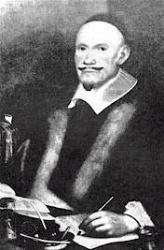
Melchior Vulpius

1570 - 1615 Composer of "VULPIUS" in The Harvard University Hymn Book Born into a poor family named Fuchs, Melchior Vulpius (b. Wasungen, Henneberg, Germany, c. 1570; d. Weimar, Germany, 1615) had only limited educational oppor­tunities and did not attend the university. He taught Latin in the school in Schleusingen, where he Latinized his surname, and from 1596 until his death served as a Lutheran cantor and teacher in Weimar. A distinguished composer, Vulpius wrote a St. Matthew Passion (1613), nearly two hundred motets in German and Latin, and over four hundred hymn tunes, many of which became popular in Lutheran churches, and some of which introduced the lively Italian balletto rhythms into the German hymn tunes. His music was published in Cantiones Sacrae (1602, 1604), Kirchengesangund Geistliche Lieder (1604, enlarged as Ein schon geistlich Gesanglmch, 1609), and posthumous­ly in Cantionale Sacrum (1646). Bert Polman

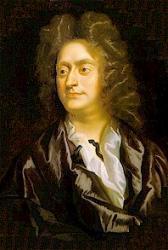
Henry Purcell

1659 - 1695 Person Name: H. Purcell Composer of "BURFORD" in The Westminster Abbey Hymn-Book Henry Purcell (b. Westminster, London, England, 1659; d. Westminster, 1695), was perhaps the greatest English composer who ever lived, though he only lived to the age of thirty-six. Purcell's first piece was published at age eight when he was also a chorister in the Chapel Royal. When his voice changed in 1673, he was appointed assistant to John Hingston, who built chamber organs and maintained the king's instruments. In 1674 Purcell began tuning the Westminster Abbey organ and was paid to copy organ music. Given the position of composer for the violins in 1677, he also became organist at Westminster Abbey in 1679 (at age twenty) and succeeded Hingston as maintainer of the king's instruments (1683). Purcell composed music for the theater (Dido and Aeneas, c. 1689) and for keyboards, provided music for royal coronations and other ceremonies, and wrote a substantial body of church music, including eighteen full anthems and fifty-six verse anthems. Bert Polman

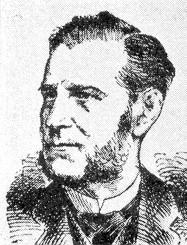
Henry Hiles

1826 - 1904 Composer of "ST. LEONARD" in Hymns of the Faith with Psalms Born: December 31, 1826, Shrewsbury, England. Died: October 20, 1904, Worthing, England. Hiles was educated at Oxford (BMus 1862, DMus 1867). He played the organ at Shrewsbury, as his brother’s deputy (1846); Bishopwearmouth (1847); St. Michael’s, Wood Street (1859); the Blind Asylum, Manchester (1859); Bowden (1861); and St. Paul’s, Manchester (1863-67). He lectured in harmony and composition at Owen’s College in Manchester (1867) and Victoria University (1879), and was Professor at the Manchester College of Music (1893). He also conducted musical societies in Lancashire and Yorkshire, and owned and edited the Quarterly Music Review (1885-88). He retired in 1904, moving to Pinner, near Harrow. His works include: Twelve Tunes to Original or Favourite Hymns, 1867 Harmony of Sounds, three editions: 1871, 1872, 1879 Wesley Tune Book, 1872 (editor) Grammar of Music, 1879 First Lessons in Singing (Manchester: Hime & Addison, 1881) Part Writing or Modern Counterpoint (Novello: 1884) Harmony or Counterpoint, 1889 Harmony, Choral or Counterpun --www.hymntime.com/tch/

Christopher Tye

1497 - 1572 Composer of "WINDSOR" in The Hymnal Tye, Christopher, MUS. D., born at Westminster in the reign of Henry VIII. He was celebrated as a musician, and was granted the degree of MUS. D. at Cambridge in 1545. He was musical tutor to King Edward VI., and organist of the Chapel Royal under Queen Elizabeth. Besides composing numerous anthems, he rendered the first fourteen chapters of the Acts of the Apostles into metre, which were set to music by him and sung in Edward 6th's Chapel, and published in 1553. He died circa 1580. -- John Julian, Dictionary of Hymnology (1907)

George Kirbye

1565 - 1634 Person Name: G. Kirbye Composer of "WINDSOR" in University Hymns George Kirbye (c. 1565 – buried October 6, 1634) was an English composer of the late Tudor period and early Jacobean era. He was one of the members of the English Madrigal School, but also composed sacred music. Little is known of the details of his life, though some of his contacts can be inferred. He worked at Rushbrooke Hall near Bury St Edmunds, evidently as a tutor to the daughters of Sir Robert Jermyn. In 1598 he married Anne Saxye, afterwards moving to Bury St Edmunds. Around this time he probably made the acquaintance of John Wilbye, a much more famous madrigalist, who lived and worked only a few miles away, and whose style he sometimes approaches. In 1626 his wife died, and he is known to have been a churchwarden during the next several years until his death. Kirbye's most significant musical contributions were the psalm settings he wrote for East's psalter in 1592, the madrigals he wrote for the Triumphs of Oriana (1601), the famous collection dedicated to Elizabeth I, and an independent set of madrigals published in 1597. Stylistically his madrigals have more in common with the Italian models provided by Marenzio than do many of the others by his countrymen: they tend to be serious, in a minor mode, and show a careful attention to text setting; unlike Marenzio, however, he is restrained in his specific imagery. Kirbye avoided the light style of Morley, which was hugely popular, and brought into the madrigal serious style of pre-madrigal English music. He is not as often sung as Morley, Weelkes or Wilbye, but neither was he as prolific; still, some of his madrigals appear in modern collections. --en.wikipedia.org/wiki/

Pages


Export as CSV
It looks like you are using an ad-blocker. Ad revenue helps keep us running. Please consider white-listing Hymnary.org or getting Hymnary Pro to eliminate ads entirely and help support Hymnary.org.