You help make Hymnary.org possible. More than 10 million people from 200+ countries found hymns, liturgical resources and encouragement on Hymnary.org in 2025, including you. Every visit affirms the global impact of this ministry.

If Hymnary has been meaningful to you this year, would you take a moment today to help sustain it? A gift of any size—paired with a note of encouragement if you wish—directly supports the server costs, research work and curation that keep this resource freely available to the world.

Give securely online today, or mail a check to:
Hymnary.org
Calvin University
3201 Burton Street SE
Grand Rapids, MI 49546

Thank you for your partnership, and may the hope of Advent fill your heart.

Person Results

Topics:character and perfections of god
In:people

Planning worship? Check out our sister site, ZeteoSearch.org, for 20+ additional resources related to your search.
Showing 11 - 20 of 31Results Per Page: 102050

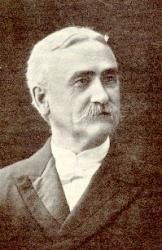
George C. Stebbins

1846 - 1945 Topics: Aspirations For Holiness; Aspirations For the Holy Spirit; Bible A Guide; Bible Inspired; Bible Instrument of Salvation; Bible Perfect and Pure; Bible Precious; Character New Birth Essential to Good; Christ Prophetic Office of; Christians Duties of; Godly Fear Described; Gospel Fulness of ; Gospel Prevalence and Power of; Gospel Privileges of; Gospel Sanctifying and Saving; Grace Growth in; Spiritual Illumination; Law of God; Obedience; Praise For Spiritual Blessings; Prayer For Grace and Salvation; Sin Hindrance to Communion with God; Sin Salvation from Composer of "ESKRIDGE" in The Psalter Stebbins studied music in Buffalo and Rochester, New York, then became a singing teacher. Around 1869, he moved to Chicago, Illinois, to join the Lyon and Healy Music Company. He also became the music director at the First Baptist Church in Chicago. It was in Chicago that he met the leaders in the Gospel music field, such as George Root, Philip Bliss, & Ira Sankey. At age 28, Stebbins moved to Boston, Massachusetts, where he became music director at the Claredon Street Baptist Church; the pastor there was Adoniram Gordon. Two years later, Stebbins became music director at Tremont Temple in Boston. Shortly thereafter, he became involved in evangelism campaigns with Moody and others. Around 1900, Stebbins spent a year as an evangelist in India, Egypt, Italy, Palestine, France and England. (www.hymntime.com/tch)

William J. Kirkpatrick

1838 - 1921 Person Name: Wm. J. Kirkpatrick Topics: Aspirations For Holiness; Backsliding; Bereavement; Bible Perfect and Pure; Character Vicious; Christians Death of; Covenant False to; Death Of Saints; Glory of God In Creation; Gospel Sanctifying and Saving; Heart Evil, Hard, and Stubborn; Prayer For Divine Favor; Prayer For the Church; Prayer Promises to; Retribution Threatened; Royalty of Christ For the Salvation of His People; Rulers Wicked; Sin Indwelling; Sin Salvation from; Vanity Of Sinners; The Wicked Fate of Composer of "[Jehovah help the godly cease]" in Bible Songs William J. Kirkpatrick (b. Duncannon, PA, 1838; d. Philadelphia, PA, 1921) received his musical training from his father and several other private teachers. A carpenter by trade, he engaged in the furniture business from 1862 to 1878. He left that profession to dedicate his life to music, serving as music director at Grace Methodist Church in Philadelphia. Kirkpatrick compiled some one hundred gospel song collections; his first, Devotional Melodies (1859), was published when he was only twenty-one years old. Many of these collections were first published by the John Hood Company and later by Kirkpatrick's own Praise Publishing Company, both in Philadelphia. Bert Polman

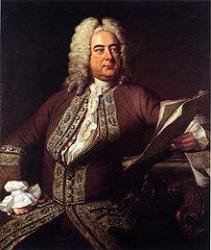
George Frideric Handel

1685 - 1759 Person Name: Handel Topics: Afflictions Promises for; Afflictions Refuge in; Assurance Declared; Backsliding; Character Value of Good; Christ Abiding with Believers; Christ Preciousness of; Christians Believers; Christians Graces of; Church Security of; Covenant Promises; Faith Act of; God Our Guardian; Grace Sovereign ; Grace Sustaining; Heart Claimed of God; Heart God the Strength of; Heart Good, Perfect, Pure and Upright; Nature An Emblem of Grace; Prayer For Divine Favor; Prayer Intercession in; Prayer Promise to; Preservation; Protection Unceasing; The Christian's Reward; The Righteous Contrasted with the Wicked; The Righteous Honor and Safety of; Safety Assured; Steadfastness; Temptation; Trust in God Blessedness of Composer of "BRADFORD" in The Psalter George Frideric Handel (b. Halle, Germany, 1685; d. London, England, 1759) became a musician and composer despite objections from his father, who wanted him to become a lawyer. Handel studied music with Zachau, organist at the Halle Cathedral, and became an accomplished violinist and keyboard performer. He traveled and studied in Italy for some time and then settled permanently in England in 1713. Although he wrote a large number of instrumental works, he is known mainly for his Italian operas, oratorios (including Messiah, 1741), various anthems for church and royal festivities, and organ concertos, which he interpolated into his oratorio performances. He composed only three hymn tunes, one of which (GOPSAL) still appears in some modern hymnals. A number of hymnal editors, including Lowell Mason, took themes from some of Handel's oratorios and turned them into hymn tunes; ANTIOCH is one example, long associated with “Joy to the World.” Bert Polman

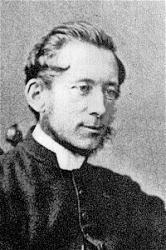
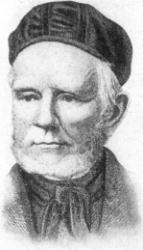
Henry Burton

1840 - 1930 Topics: Almsgiving; Blessedness Of Those Who Fear God; Character Good and Bad Contrasted; Character Value of Good; Christian Charity; Christians Conscious of Safety; Christians Graces of; Enemies Restrained; Godly Fear The Blessedness of; Fearlessness; Heart Claimed of God; Heart Good, Perfect, Pure, and Upright; Liberality; Love to man; Parents and Children; Patience; The Poor Duty Towards; Providence of God Over Saints; Riches; The Righteous Blessed; The Righteous Character of; The Righteous Reward of; Safety Enjoyed; Steadfastness; The Wicked Fate of; Worship Commanded Composer of "[How blest the man that fears the Lord]" in Bible Songs Rv Alfred Henry Burton DD United Kingdom 1840-1930. Born at Swannington, Leicestershire, he emigrated with family to America and became a student at Beloit College, WI, graduating with honours. After a pastorate in the Methodist Episcopal Church at Monroe, WI, he returned to England and entered the Wesleyan Ministry in 1865. He married Ellen Pearse. He then ministered mostly in Lanca-shire and London. Published works include ”Gleanings in the gospels:, “Wayside songs”, “St. Luke in Expositor's Bible”. John Perry ===================== Burton, H. In I. D. Sankey's Sacred Songs and Solos, 1878, the hymns, "Come, for the feast is spread," (The Gospel Invitation), and "Look away to Jesus" (Looking unto Jesus) are attributed to the "Rev. H. Burton” --John Julian, Dictionary of Hymnology, Appendix, Part II (1907) ===================== Burton, Henry, D.D., p. 1555, i., born at Swannington, Leicestershire, in 1840. His parents having emigrated to America, he became a student at Beloit College, and graduated in honours. After labouring as a minister of the Methodist Episcopal Church for a time he returned to England, entered the Wesleyan Ministry in 1865, and has since laboured chiefly in Lanca¬shire and London. His published works include Gleanings in the Gospels, Wayside Songs, 1886, St. Luke in the Expositor's Bible, &c. His hymns in common use, in addition to those named on p. 1555, i., include:— 1. Break, day of God, 0 break. [Second Advent.] Written at Blundell Sauds, near Liverpool, on Christmas Eve, 1900, and included in The Methodist Hymn Book, 1904. "The opening stanza was composed on the Railway Bridge where I lingered on my way home" (Author's MS!.). 2. In the secret of His presence. [Peace in Christ.] Written at Acton, London, published in his Wayside Songs, 1886, and included in the Epworth Hymnal, U.S.A. 3. 0 King of Kings, 0 Lord of hosts. [National Hymn.] Dr. Burton's history of this hymn is: "In the late Queen's Jubilee year, 1887, I composed an Ode which was set to music by Sir J. Stainer, and sung at a Jubilee Festival in the Royal Albert Hall, London. As the Ode could not be sung at any other time, Sir J. Stainer requested me to compose a hymn to which the same music should be set [and of a national character]. This led me to write the hymn" Author's MS.). It is No. 975 in The Methodist Hymn Book, 1904. 4. Have you had a kindness shown? Pass it on. [Kind Deeds.] "This is based on a little incident in the life of my brother-in-law, the Rev. Mark Guy Pearse. When a boy returning home from a Moravian school in Holland, the steward of the boat on which he sailed from Bristol to Hayle showed him marked attention and kindness, because Mr. Pearse's father, years before, had proved a great friend to his mother. And so he was simply 'passing on' the kindness." (Author's MS.). The hymn was written at Acton on April 8, 1885, and first printed in The Christian Advocate, N.Y., 1886, and again in Wayside Songs, 1886, p. 81. The first stanza has been adopted as a motto by the "International Sunshine Society," of New York. --John Julian, Dictionary of Hymnology, New Supplement (1907) ========================== See also in: Hymn Writers of the Church

Lowell Mason

1792 - 1872 Topics: Aspirations For Holiness; Aspirations For the Holy Spirit; Bible A Guide; Bible Inspired; Bible Instrument of Salvation; Bible Perfect and Pure; Bible Precious; Character New Birth Essential to Good; Christ Prophetic Office of; Christians Duties of; Godly Fear Described; God Our Guide; Gospel Fulness of ; Gospel Prevalence and Power of; Gospel Privileges of; Gospel Sanctifying and Saving; Grace Growth in; Spiritual Illumination; Law of God; Obedience; Praise For Spiritual Blessings; Prayer For Grace and Salvation; Prayer For Pardon; Sin Hindrance to Communion with God; Sin Salvation from Arranger of "HADDAM" in The Psalter Dr. Lowell Mason (the degree was conferred by the University of New York) is justly called the father of American church music; and by his labors were founded the germinating principles of national musical intelligence and knowledge, which afforded a soil upon which all higher musical culture has been founded. To him we owe some of our best ideas in religious church music, elementary musical education, music in the schools, the popularization of classical chorus singing, and the art of teaching music upon the Inductive or Pestalozzian plan. More than that, we owe him no small share of the respect which the profession of music enjoys at the present time as contrasted with the contempt in which it was held a century or more ago. In fact, the entire art of music, as now understood and practiced in America, has derived advantage from the work of this great man. Lowell Mason was born in Medfield, Mass., January 8, 1792. From childhood he had manifested an intense love for music, and had devoted all his spare time and effort to improving himself according to such opportunities as were available to him. At the age of twenty he found himself filling a clerkship in a banking house in Savannah, Ga. Here he lost no opportunity of gratifying his passion for musical advancement, and was fortunate to meet for the first time a thoroughly qualified instructor, in the person of F. L. Abel. Applying his spare hours assiduously to the cultivation of the pursuit to which his passion inclined him, he soon acquired a proficiency that enabled him to enter the field of original composition, and his first work of this kind was embodied in the compilation of a collection of church music, which contained many of his own compositions. The manuscript was offered unavailingly to publishers in Philadelphia and in Boston. Fortunately for our musical advancement it finally secured the attention of the Boston Handel and Haydn Society, and by its committee was submitted to Dr. G. K. Jackson, the severest critic in Boston. Dr. Jackson approved most heartily of the work, and added a few of his own compositions to it. Thus enlarged, it was finally published in 1822 as The Handel and Haydn Society Collection of Church Music. Mason's name was omitted from the publication at his own request, which he thus explains, "I was then a bank officer in Savannah, and did not wish to be known as a musical man, as I had not the least thought of ever making music a profession." President Winchester, of the Handel and Haydn Society, sold the copyright for the young man. Mr. Mason went back to Savannah with probably $500 in his pocket as the preliminary result of his Boston visit. The book soon sprang into universal popularity, being at once adopted by the singing schools of New England, and through this means entering into the church choirs, to whom it opened up a higher field of harmonic beauty. Its career of success ran through some seventeen editions. On realizing this success, Mason determined to accept an invitation to come to Boston and enter upon a musical career. This was in 1826. He was made an honorary member of the Handel and Haydn Society, but declined to accept this, and entered the ranks as an active member. He had been invited to come to Boston by President Winchester and other musical friends and was guaranteed an income of $2,000 a year. He was also appointed, by the influence of these friends, director of music at the Hanover, Green, and Park Street churches, to alternate six months with each congregation. Finally he made a permanent arrangement with the Bowdoin Street Church, and gave up the guarantee, but again friendly influence stepped in and procured for him the position of teller at the American Bank. In 1827 Lowell Mason became president and conductor of the Handel and Haydn Society. It was the beginning of a career that was to win for him as has been already stated the title of "The Father of American Church Music." Although this may seem rather a bold claim it is not too much under the circumstances. Mr. Mason might have been in the average ranks of musicianship had he lived in Europe; in America he was well in advance of his surroundings. It was not too high praise (in spite of Mason's very simple style) when Dr. Jackson wrote of his song collection: "It is much the best book I have seen published in this country, and I do not hesitate to give it my most decided approbation," or that the great contrapuntist, Hauptmann, should say the harmonies of the tunes were dignified and churchlike and that the counterpoint was good, plain, singable and melodious. Charles C. Perkins gives a few of the reasons why Lowell Mason was the very man to lead American music as it then existed. He says, "First and foremost, he was not so very much superior to the members as to be unreasonably impatient at their shortcomings. Second, he was a born teacher, who, by hard work, had fitted himself to give instruction in singing. Third, he was one of themselves, a plain, self-made man, who could understand them and be understood of them." The personality of Dr. Mason was of great use to the art and appreciation of music in this country. He was of strong mind, dignified manners, sensitive, yet sweet and engaging. Prof. Horace Mann, one of the great educators of that day, said he would walk fifty miles to see and hear Mr. Mason teach if he could not otherwise have that advantage. Dr. Mason visited a number of the music schools in Europe, studied their methods, and incorporated the best things in his own work. He founded the Boston Academy of Music. The aim of this institution was to reach the masses and introduce music into the public schools. Dr. Mason resided in Boston from 1826 to 1851, when he removed to New York. Not only Boston benefited directly by this enthusiastic teacher's instruction, but he was constantly traveling to other societies in distant cities and helping their work. He had a notable class at North Reading, Mass., and he went in his later years as far as Rochester, where he trained a chorus of five hundred voices, many of them teachers, and some of them coming long distances to study under him. Before 1810 he had developed his idea of "Teachers' Conventions," and, as in these he had representatives from different states, he made musical missionaries for almost the entire country. He left behind him no less than fifty volumes of musical collections, instruction books, and manuals. As a composer of solid, enduring church music. Dr. Mason was one of the most successful this country has introduced. He was a deeply pious man, and was a communicant of the Presbyterian Church. Dr. Mason in 1817 married Miss Abigail Gregory, of Leesborough, Mass. The family consisted of four sons, Daniel Gregory, Lowell, William and Henry. The two former founded the publishing house of Mason Bros., dissolved by the death of the former in 1869. Lowell and Henry were the founders of the great organ manufacturer of Mason & Hamlin. Dr. William Mason was one of the most eminent musicians that America has yet produced. Dr. Lowell Mason died at "Silverspring," a beautiful residence on the side of Orange Mountain, New Jersey, August 11, 1872, bequeathing his great musical library, much of which had been collected abroad, to Yale College. --Hall, J. H. (c1914). Biography of Gospel Song and Hymn Writers. New York: Fleming H. Revell Company.

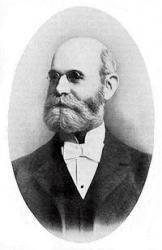
William B. Bradbury

1816 - 1868 Topics: Aspirations For Heaven; Character Tests of; Christ Ascension of; Christ Communion with; Christ Exaltation of; Christ Power of; Christ Ressurection of; Christ Worshiped; Christians Graces of; Fidelity; Glory of God In Church and Heaven; God Creator of All; God Glorious; God Kingly Character of; Gospel Invitations of ; Heart Claimed of God; Heart Good, Perfect, Pure and Upright; Lord's Supper; The Righteous Character of; Royalty of Christ Universal Domain of; Sin Hindrance to Communion with God; Sincerity; Temperance Songs; Worship Sincerity in Composer of "JAZER" in The Psalter William Batchelder Bradbury USA 1816-1868. Born at York, ME, he was raised on his father's farm, with rainy days spent in a shoe-shop, the custom in those days. He loved music and spent spare hours practicing any music he could find. In 1830 the family moved to Boston, where he first saw and heard an organ and piano, and other instruments. He became an organist at 15. He attended Dr. Lowell Mason's singing classes, and later sang in the Bowdoin Street church choir. Dr. Mason became a good friend. He made $100/yr playing the organ, and was still in Dr. Mason's choir. Dr. Mason gave him a chance to teach singing in Machias, ME, which he accepted. He returned to Boston the following year to marry Adra Esther Fessenden in 1838, then relocated to Saint John, New Brunswick. Where his efforts were not much appreciated, so he returned to Boston. He was offered charge of music and organ at the First Baptist Church of Brooklyn. That led to similar work at the Baptist Tabernacle, New York City, where he also started a singing class. That started singing schools in various parts of the city, and eventually resulted in music festivals, held at the Broadway Tabernacle, a prominent city event. He conducted a 1000 children choir there, which resulted in music being taught as regular study in public schools of the city. He began writing music and publishing it. In 1847 he went with his wife to Europe to study with some of the music masters in London and also Germany. He attended Mendelssohn funeral while there. He went to Switzerland before returning to the states, and upon returning, commenced teaching, conducting conventions, composing, and editing music books. In 1851, with his brother, Edward, he began manufacturring Bradbury pianos, which became popular. Also, he had a small office in one of his warehouses in New York and often went there to spend time in private devotions. As a professor, he edited 59 books of sacred and secular music, much of which he wrote. He attended the Presbyterian church in Bloomfield, NJ, for many years later in life. He contracted tuberculosis the last two years of his life. John Perry

George Kingsley

1811 - 1884 Topics: Aspirations For Holiness; Aspirations For the Holy Spirit; Bible Inspired; Bible Instrument of Salvation; Bible Perfect and Pure; Bible Precious; Character New Birth Essential to Good; Christ Prophetic Office of; Christians Duties of; Godly Fear Described; Gospel Fulness of ; Gospel Prevalence and Power of; Gospel Privileges of; Gospel Sanctifying and Saving; Grace Growth in; Spiritual Illumination; Law of God; Obedience; Praise For Spiritual Blessings; Prayer For Grace and Salvation; Sin Hindrance to Communion with God; Sin Salvation from Composer of "MOUNT AUBURN" in The Psalter Born: July 7, 1811, Northampton, Massachusetts. Died: March 14, 1884, Northampton, Massachusetts. Kingsley played the organ at the Old South Church and Hollis Street Church in Boston, Massachusetts. He also taught music at Girard College in Philadelphia, Pennsylvania, served as music supervisor for public schools in Philadelphia, and compiled a number of music books, including: Sunday School Singing Book, 1832 The Harmonist, 1833 The Social Choir, 1836 The Sacred Choir, 1838 The Harp of David, 1844 The Young Ladies’ Harp, 1847 Templi Carmina (Northampton, Massachusetts: 1853) The Juvenile Choir, 1865 --www.hymntime.com/tch

H. P. Danks

1834 - 1903 Topics: Aspirations For Holiness; Christians Graces of; Civil Magistracy; Families; Heart Good, Perfect, Pure, and Upright; Holiness; Mercy of God Celebrated; Pride; Retribution Threatened; The Righteous Character of; Rulers Duties of; Rulers Wicked; Sin Hatred of; The Wicked Separation from; Zeal True Composer of "[Of mercy and of judgement]" in Bible Songs

John Bacchus Dykes

1823 - 1876 Person Name: John B. Dykes Topics: Access to God; Christian Activity; Aspirations For Grace; Aspirations For Holiness; Assurance Desired; Character New Birth Essential to Good; Christ Confessing; Christians Debt of; Christians Evangelists; Christians Graces of; Christians Saved by Grace; Deliverance From Sin; Faith Walking by; God Love and Mercy; Gospel Freeness of ; Gospel Preaching of; Gospel Prevalence and Power of; Gospel Sanctifying and Saving; Grace Restoring; Grace Sovereign ; Heart Broken and Contrite; Heart Claimed of God; Heart Good, Perfect, Pure and Upright; Holiness Of Christians; The Holy Spirit; Humility; Joy Prayer for; Offerings; Penitence; Praise For Work of Redemption; Prayer Confession in; Prayer For Grace and Salvation; Prayer For Pardon; Prayer For the Church; Prayer Intercession in; Regeneration; Repentance; Revival; Spritual Sacrifices; Sin Confession of; Sin Conviction of; Sin Hatred of; Sin Salvation from; Thanksgiving For God's Mercies; Worship Acts of; Worship Sincerity in; Zion Kept by God Composer of "GETHSEMANE" in The Psalter As a young child John Bacchus Dykes (b. Kingston-upon-Hull' England, 1823; d. Ticehurst, Sussex, England, 1876) took violin and piano lessons. At the age of ten he became the organist of St. John's in Hull, where his grandfather was vicar. After receiving a classics degree from St. Catherine College, Cambridge, England, he was ordained in the Church of England in 1847. In 1849 he became the precentor and choir director at Durham Cathedral, where he introduced reforms in the choir by insisting on consistent attendance, increasing rehearsals, and initiating music festivals. He served the parish of St. Oswald in Durham from 1862 until the year of his death. To the chagrin of his bishop, Dykes favored the high church practices associated with the Oxford Movement (choir robes, incense, and the like). A number of his three hundred hymn tunes are still respected as durable examples of Victorian hymnody. Most of his tunes were first published in Chope's Congregational Hymn and Tune Book (1857) and in early editions of the famous British hymnal, Hymns Ancient and Modern. Bert Polman

H. R. Palmer

1834 - 1907 Topics: Access to God; Aspirations For Heaven; Christ Ascension of; Christ Exaltation; Christ Power of; Christ Worshiped; Christians Graces of; Fidelity; God Creator; God Glorious; God King; God Omnipotent; Gospel Invitations of ; Heart Claimed of God; Heart Good, Perfect, Pure, and Upright; Lord's Supper; Praise For God's Power; The Righteous Character of; Royalty of Christ Over All; Sin Hinders Communion with God; Worship Sincerity required in Composer of "[The earth and the fulness with which it is stored]" in Bible Songs Palmer, Horatio Richmond, MUS. DOC, was born April 26, 1834. He is the author of several works on the theory of music; and the editor of some musical editions of hymnbooks. To the latter he contributed numerous tunes, some of which have attained to great popularity, and 5 of which are in I. D. Sankey's Sacred Songs and Solos, London, 1881. His publications include Songs of Love for the Bible School; and Book of Anthems, the combined sale of which has exceeded one million copies. As a hymnwriter he is known by his "Yield not to temptation," which was written in 1868, and published in the National Sunday School Teachers' Magazine, from which it passed, with music by the author, into his Songs of Love, &c, 1874, and other collections. In America its use is extensive. Dr. Palmer's degree was conferred by the University of Chicago in 1880. -- John Julian, Dictionary of Hymnology (1907) =============== Palmer, H. R., p. 877, i. The hymn "Would you gain the best in life" (Steadfastness), in the Congregational Sunday School Supplement, 1891, the Council School Hymn Book, 1905, and others, is by this author. --John Julian, Dictionary of Hymnology, New Supplement (1907)

Pages


Export as CSV
It looks like you are using an ad-blocker. Ad revenue helps keep us running. Please consider white-listing Hymnary.org or getting Hymnary Pro to eliminate ads entirely and help support Hymnary.org.