You help make Hymnary.org possible. More than 10 million people from 200+ countries found hymns, liturgical resources and encouragement on Hymnary.org in 2025, including you. Every visit affirms the global impact of this ministry.

If Hymnary has been meaningful to you this year, would you take a moment today to help sustain it? A gift of any size—paired with a note of encouragement if you wish—directly supports the server costs, research work and curation that keep this resource freely available to the world.

Give securely online today, or mail a check to:
Hymnary.org
Calvin University
3201 Burton Street SE
Grand Rapids, MI 49546

Thank you for your partnership, and may the hope of Advent fill your heart.

Person Results

Tune Identifier:"^easter_hymn_lyra_davidica$"
In:people

Planning worship? Check out our sister site, ZeteoSearch.org, for 20+ additional resources related to your search.
Showing 11 - 20 of 57Results Per Page: 102050

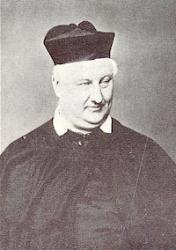
Frederick William Faber

1814 - 1863 Person Name: F. W. Faber Author of "Jesus Christ is Risen Today" in The New Hosanna Raised in the Church of England, Frederick W. Faber (b. Calverly, Yorkshire, England, 1814; d. Kensington, London, England, 1863) came from a Huguenot and strict Calvinistic family background. He was educated at Balliol College, Oxford, and ordained in the Church of England in 1839. Influenced by the teaching of John Henry Newman, Faber followed Newman into the Roman Catholic Church in 1845 and served under Newman's supervision in the Oratory of St. Philip Neri. Because he believed that Roman Catholics should sing hymns like those written by John Newton, Charles Wesley, and William Cowpe, Faber wrote 150 hymns himself. One of his best known, "Faith of Our Fathers," originally had these words in its third stanza: "Faith of Our Fathers! Mary's prayers/Shall win our country back to thee." He published his hymns in various volumes and finally collected all of them in Hymns (1862). Bert Polman ================= Faber, Frederick William, D.D., son of Mr. T. H. Faber, was born at Calverley Vicarage, Yorkshire, June 28, 1814, and educated at Balliol College, Oxford, graduating B.A. in 1836. He was for some time a Fellow of University College, in the same University. Taking Holy Orders in 1837, he became Rector of Elton, Huntingdonshire, in 1843, but in 1846 he seceded to the Church of Rome. After residing for some time at St. Wilfrid's, Staffordshire, he went to London in 1849, and established the London "Oratorians," or, "Priests of the Congregation of St. Philip Neri," in King William Street, Strand. In 1854 the Oratory was removed to Brompton. Dr. Faber died Sept. 26, 1863. Before his secession he published several prose works, some of which were in defence of the Church of England; and afterwards several followed as Spiritual Conferences, All for Jesus, &c. Although he published his Cherwell Waterlily and Other Poems, 1840; The Styrian Lake, and Other Poems, 1842; Sir Lancelot, 1844; and The Rosary and Other Poems, 1845; and his Lives of the Saints, in verse, before he joined the Church of Rome, all his hymns were published after he joined that communion. They were included in his:— (1) A small book of eleven Hymns1849, for the School at St. Wilfrid's, Staffordshire. (2) Jesus and Mary: or, Catholic Hymns for Singing and Reading, London 1849. In 1852 the 2nd edition was published with an addition of 20 new hymns. (3) Oratory Hymns, 1854; and (4) Hymns, 1862, being a collected edition of what he had written and published from time to time. Dr. Faber's account of the origin of his hymn-writing is given in his Preface to Jesus & Mary. After dwelling on the influence, respectively, of St. Theresa, of St. Ignatius, and of St. Philip Neri, on Catholicism; and of the last that "sanctity in the world, perfection at home, high attainments in common earthly callings…was the principal end of his apostolate," he says:— “It was natural then that an English son of St. Philip should feel the want of a collection of English Catholic hymns fitted for singing. The few in the Garden of the Soul were all that were at hand, and of course they were not numerous enough to furnish the requisite variety. As to translations they do not express Saxon thought and feelings, and consequently the poor do not seem to take to them. The domestic wants of the Oratory, too, keep alive the feeling that something of the sort was needed: though at the same time the author's ignorance of music appeared in some measure to disqualify him for the work of supplying the defect. Eleven, however, of the hymns were written, most of them, for particular tunes and on particular occasions, and became very popular with a country congregation. They were afterwards printed for the Schools at St. Wilfrid's, and the very numerous applications to the printer for them seemed to show that, in spite of very glaring literary defects, such as careless grammar and slipshod metre, people were anxious to have Catholic hymns of any sort. The manuscript of the present volume was submitted to a musical friend, who replied that certain verses of all or nearly all of the hymns would do for singing; and this encouragement has led to the publication of the volume." In the same Preface he clearly points to the Olney Hymns and those of the Wesleys as being the models which for simplicity and intense fervour he would endeavour to emulate. From the small book of eleven hymns printed for the schools at St. Wilfrid's, his hymn-writing resulted in a total of 150 pieces, all of which are in his Hymns, 1862, and many of them in various Roman Catholic collections for missions and schools. Few hymns are more popular than his "My God, how wonderful Thou art," "O come and mourn with me awhile," and "Sweet Saviour, bless us ere we go." They excel in directness, simplicity, and pathos. "Hark, hark, my soul, angelic songs are swelling," and "O Paradise, O Paradise," are also widely known. These possess, however, an element of unreality which is against their permanent popularity. Many of Faber's hymns are annotated under their respective first lines; the rest in common use include:— i. From his Jesus and Mary, 1849 and 1852. 1. Fountain of love, Thyself true God. The Holy Ghost. 2. How shalt thou bear the Cross, that now. The Eternal Years. 3. I come to Thee, once more, O God. Returning to God. 4. Joy, joy, the Mother comes. The Purification. 5. My soul, what hast thou done for God? Self-Examination 6. O how the thought of God attract. Holiness Desired. 7. O soul of Jesus, sick to death. Passiontide. Sometimes this is divided into two parts, Pt. ii. beginning, “My God, my God, and can it be." ii. From his Oratory Hymns, 1854. 8. Christians, to the war! Gather from afar. The Christian Warfare. 9. O come to the merciful Saviour that calls you. Divine Invitation. In many collections. 10. O God, Thy power is wonderful. Power and Eternity of God. 11. O it is sweet to think, Of those that are departed. Memory of the Dead. 12. O what are the wages of sin? The Wages of Sin. 13. O what is this splendour that beams on me now? Heaven. 14. Saint of the Sacred Heart. St. John the Evangelist. iii. From his Hymns, 1862. 15. Father, the sweetest, dearest Name. The Eternal Father. 16. Full of glory, full of wonders, Majesty Divine. Holy Trinity. 17. Hark ! the sound of the fight. Processions. 18. How pleasant are thy paths, 0 death. Death Contemplated. 19. O God, Whose thoughts are brightest light. Thinking no Evil. 20. O why art thou sorrowful, servant of God? Trust in God. 21. Souls of men, why will ye scatter? The Divine Call. 22. The land beyond the sea. Heaven Contemplated. 23. The thought of God, the thought of thee. Thoughts of God. 24. We come to Thee, sweet Saviour. Jesus, our Rest. In addition to these there are also several hymns in common use in Roman Catholic hymn-books which are confined to those collections. In the Hymns for the Year, by Dr. Rawes, Nos. 77, 110, 112, 117, 120, 121, 122, 125, 127, 128, 131, 140, 152, 154,169, 170, 174, 179, 180, 192, 222, 226, 230, 271, 272, are also by Faber, and relate principally to the Blessed Virgin Mary. Several of these are repeated in other Roman Catholic collections. --John Julian, Dictionary of Hymnology (1907 ================== Faber, Frederick William, p. 361, i. To this article the following additions have to be made:— 1. Blood is the price of heaven. Good Friday. (1862.) 2. Exceeding sorrowful to death. Gethsemane. This in the Scottish Ibrox Hymnal, 1871, is a cento from "O soul of Jesus, sick to death," p. 362, i., 7. 3. From pain to pain, from woe to woe. Good Friday. (1854.) 4. I wish to have no wishes left. Wishes about death. (1862.) 5. Why is thy face so lit with smiles? Ascension. (1849.) The dates here given are those of Faber's works in which the hymns appeared. In addition to these hymns there are also the following in common use:— 6. Dear God of orphans, hear our prayer. On behalf of Orphans. This appeared in a miscellaneous collection entitled A May Garland, John Philip, n.d. [1863], No. 1, in 7 stanzas of 4 lines. In the Roman Catholic Parochial Hymn Book, 1880, it begins, "O God of orphans, hear our prayer." 7. Sleep, sleep my beautiful babe. Christmas Carol. This carol we have failed to trace. 8. By the Archangel's word of love. Pt. i. Life of our Lord. This, and Pt. ii., “By the blood that flowed from Thee"; Pt. iii., "By the first bright Easter day"; also, "By the word to Mary given"; "By the name which Thou didst take"; in The Crown Hymn Book and other Roman Catholic collections, we have seen ascribed to Dr. Faber, but in the Rev. H. Formby's Catholic Hymns, 1853, they are all signed "C. M. C," i.e. Cecilia M. Caddell (p. 200, i.). --John Julian, Dictionary of Hymnology, Appendix, Part II (1907) ====================== Faber, F. W., pp. 361, i.; 1562, ii. We are informed by members of Dr. Faber's family that his father was Mr. Thomas Henry Faber, sometime Lay Secretary of the Bishop of Durham. In addition to his hymns already noted in this Dictionary, the following are found in various Roman Catholic collections, viz.:— i. From St. Wilfrid's Hymns, 1849:— 1. Dear Father Philip, holy Sire. S. Philip Neri. 2. Hail, holy Joseph, hail. S. Joseph. 3. Mother of Mercy, day by day. Blessed Virgin Mary. ii. Jesus and Mary, 1849:— 4. Ah ! dearest Lord! I cannot pray. Prayer. 5. Dear Husband of Mary. S. Joseph. 6. Dear Little One, how sweet Thou art. Christmas. 7. Father and God! my endless doom. Predestination. 8. Hail, holy Wilfrid, hail. S. Wilfrid. 9. O Jesus, if in days gone by. Love of the World. 10. O turn to Jesus, Mother, turn. B. V. M. 11. Sing, sing, ye angel bands. Assum. B. V. M. iii. Jesus and Mary, 1852:— 12. All ye who love the ways of sin. S. Philip Neri. 13. Day set on Rome! its golden morn. S. Philip Neri. 14. Hail, bright Archangel! Prince of heaven. S. Michael. 15. Hail, Gabriel, hail. S. Gabriel. 16. O Flower of Grace, divinest Flower. B. V. M. 17. Saint Philip! 1 have never known. S. Philip Neri. 18. Sweet Saint Philip, thou hast won us. S. Philip Neri. Previously in the Rambler, May, 1850, p. 425. iv. Oratory Hymns, 1854:— 19. Day breaks on temple roofs and towers. Expect. of B. V. M. 20. How gently flow the silent years. S. Martin and S. Philip. 21. How the light of Heaven is stealing. Grace. 22. Like the dawning of the morning. Expect. of B. V. M. 23. Mother Mary ! at thine altar. For Orphans. 24. My God! Who art nothing but mercy and kindness. Repentance. 25. O blessed Father! sent by God. S. Vincent of Paul. 26. O do you hear that voice from heaven? Forgiveness. 27. The chains that have bound me. Absolution. 28. The day, the happy day, is dawning. B. V. M. 29. The moon is in the heavens above. B. V. M. 30. Why art thou sorrowful, servant of God? Mercy. v. Hymns, 1862:— 31. At last Thou art come, little Saviour. Christmas. 32. By the spring of God's compassions. S. Raphael. 33. Fair are the portals of the day. B. V. M. 34. Father of many children. S. Benedict. 35. From the highest heights of glory. S. Mary Magdalene. 36. Like the voiceless starlight falling. B. V. M. 37. Mary! dearest mother. B. V. M. 38. Mother of God, we hail thy heart. B. V. M. 39. O Anne! thou hadst lived through those long dreary years. S. Anne. Previously in Holy Family Hymns, 1860. 40. O balmy and bright as moonlit night. B. V. M. 41. O Blessed Trinity! Thy children. Holy Trinity. 42. O dear Saint Martha, busy saint. S. Martha 43. O Mother, will it always be. B. V. M. 44. O vision bright. B. V. M. 45. Summer suns for ever shining. B. V. M. 46. There are many saints above. S. Joseph. Previously in Holy Family Hymns, 1860. vi. Centos and altered forms:— 47. Confraternity men to the fight. From "Hark the sound of the fight," p. 362, i. 48. Hail, sainted Mungo, hail. From No. 8. 49. I bow to Thee, sweet will of God. From "I worship Thee," p. 559, ii. 50. They whom we loved on earth. From "0 it is sweet to think," p. 362, i. 51. Vincent! like Mother Mary, thou. From No. 25. When Dr. Faber's hymns which are in common use are enumerated, the total falls little short of one hundred. In this respect he outnumbers most of his contemporaries. [Rev. James Mearns] --John Julian, Dictionary of Hymnology, New Supplement (1907) -------------- See also in: Hymn Writers of the Church

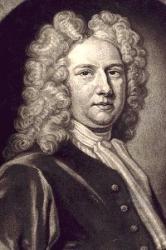
Nahum Tate

1652 - 1715 Translator of "Jesus Christ is ris'n today, Alleluia!" in Magnify the Lord Nahum Tate was born in Dublin and graduated from Trinity College, Dublin, B.A. 1672. He lacked great talent but wrote much for the stage, adapting other men's work, really successful only in a version of King Lear. Although he collaborated with Dryden on several occasions, he was never fully in step with the intellectual life of his times, and spent most of his life in a futile pursuit of popular favor. Nonetheless, he was appointed poet laureate in 1692 and royal historiographer in 1702. He is now known only for the New Version of the Psalms of David, 1696, which he produced in collaboration with Nicholas Brady. Poverty stricken throughout much of his life, he died in the Mint at Southwark, where he had taken refuge from his creditors, on August 12, 1715. --The Hymnal 1940 Companion See also in: Hymn Writers of the Church

Henry Carey

1687 - 1743 Person Name: Henry Carey, 1665-1743 Adapter of "EASTER HYMN" in The Evangelical Hymnal with Tunes Henry Carey, b. 1685 (?); d. London, 1743 Evangelical Lutheran Hymnal, 1908

Nolan Williams

Person Name: Nolan Williams, Jr., b. 1969 Composer (descant) of "EASTER HYMN" in Total Praise

Thomas Cotterill

1779 - 1823 Person Name: T. Cotterill Author of "Hail the day that sees him rise, Alleluya!" in Songs of Praise Thomas Cotterill (b. Cannock, Staffordshire, England, 1779; d. Sheffield, Yorkshire, England, 1823) studied at St. John's College, Cambridge, England, and became an Anglican clergyman. A central figure in the dispute about the propriety of singing hymns, Cotterill published a popular collection of hymns (including many of his own as well as alterations of other hymns), Selection of Psalms and Hymns in 1810. But when he tried to introduce a later edition of this book in Sheffield in 1819, his congregation protested. Many believed strongly that the Church of England should maintain its tradition of exclusive psalm singing. In a church court the Archbishop of York and Cotterill reached a compromise: the later edition of Selection was withdrawn, and Cotterill was invited to submit a new edition for the archbishop's approval. The new edition was published in 1820 and approved as the first hymnal for the Anglican church of that region. Cotterill's suppressed book, however, set the pattern for Anglican hymnals for the next generation, and many of its hymns are still found in modern hymnals. Bert Polman =============== Thomas Cotterill was born in 1779; studied at S. John's College, Cambridge, graduating M.A.; ordained in 1806, and enterred upon parochial work at Tutbury; afterwards removed to Lane End, where he remained for nine years among the Potteries; in 1817, became perpetual Curate of S. Paul's, Sheffield. He died in 1823. He was the author of several books; among them, "A Selection of Psalms and Hymns for Public and Private Use, adapted to the Services of the Church of England." In the preparation of this collection (the 8th ed., 1819), he had the assistance of Montgomery, who in this work did what he condemned in others, viz., altering and remodeling other authors' hymns. --Annotations of the Hymnal, Charles Hutchins, M.A., 1872. ====================== Cotterill, Thomas, M.A., was the son of a woolstapler at Cannock, Staffordshire, where he was born Dec. 4, 1779. After attending the local boarding-school of the Rev. J. Lomax, he proceeded to the Free School, Birmingham. He graduated at St. John's College, Cambridge (B.A. 1801, M.A. 1805), of which he became a Fellow. Taking Holy Orders, he became Curate of Tutbury in June, 1803 (not 1806, as stated by Miller in Singers & Songs of the Church). His subsequent charges were the Incumbency of Lane End, Staffordshire, 1808-17, and the Perpetual Curacy of St. Paul's Sheffield, 1817-23. He died at Sheffield Dec. 29, 1823 (not Jan. 5, 1824, as in the Gentleman’s Magazine), aged 44. His volume of Family Prayers attained to the sixth edi¬tion in 1824. As a hymn-writer, Cotterill is less known than as the compiler of a Selection of Psalms and Hymns which has had a most marked effect on modern hymnals. The first edition of that Selection was published in 1810, and the 9th in 1820. All subsequent issues were reprints of the last. The most important edition is the 8th, 1819. To that Selection Cotterill contributed at various dates 25 original hymns and versions of individual psalms. These, in common with all the hymns in the Selection, are given without author's name. Through the aid, however, of marked copies [in the collections of Brooke and Julian] and of members of Cotterill's family, we are enabled to identify most, if not all, of his original productions. In addition to those which are annotated under their first lines, we have— i. In his Selection of Psalms & Hymns for Public and Private Use, adapted to the Festivals of the Church of England, &c, 1st ed., 1810:— 1. Awake, O sword, the Father cried. Atonement. 2. Before Thy throne of grace, O Lord. Lent. 3. From Sinai's mount, in might array'd. The Law and the Gospel. 4. From Thine all-seeing Spirit, Lord. Ps. 139. 5. In all the ways and works of God. Ps. 145. 6. Out of the deeps, O Lord, we call. Ps. 130. 7. The Lord, who once on Calvary. The Intercessor. This is based on “Where high the heavenly temple stands," q. v. ii. In the Appendix to the 6th ed. of the same Selection, Staffordshire, 1815:— 8. Blessed are they who mourn for sin. Lent. 9. Father of mercies, let our songs [way, ways]. Thanksgiving. 10. I was alive without the law. Lent. 11. Lord of the Sabbath, 'tis Thy day. Sunday. iii. In the 8th edition of the same, 1819 :— 12. Help us, O Lord, Thy yoke to wear. Charity Sermons. This is sometimes given as "Lord, let us learn Thy yoke to wear," as in Kennedy, 1863, &c. 13. I love the Lord, for He hath heard. Ps. 116. 14. Lo in the East a star appears. Epiphany. This in an altered form begins in Kennedy, 1863, No. 188, with stanza ii., "The ancient sages from afar." 15. Lord, cause Thy face on us to shine. For Unity. 16. When Christ, victorious from the grave. Easter. The 9th ed. of the Selection, 1820, was practically a new work. It was compiled by Cotterill, but revised by Dr. Harcourt, the Archbishop of York, and was dedi¬cated to him. It was the outcome of the compromise in the legal proceedings over the 8th ed., 1819. The 8th ed. contained 367 hymns in addition to 128 versions of the Psalms and 6 Doxologies, the 9th only 152. Its full title was A Selection of Psalms and Hymns for Public Worship, Lond., T. Cadell, 1820. It may be noted that copies of the 8th ed., 1819, are found with two distinct title-pages. One of these, accompanied with the preface, was for the general public, the second, without the preface, for the use of the congregations of St. James's and St. Paul's, Sheffield. Of Cotterill's hymns the most popular are, "O'er the realms of pagan darkness," "Let songs of praises fill the sky," and "Jesus exalted far on high," but these are not distinguished by any striking features of excellence. He was more happy in some of his alterations of older hymns, and in the com¬piling of centos. Many of the readings introduced into the great hymns of the Church first appeared in his Selection. The most notable amongst these are, "Rock of Ages," in 3 stanzas, as in Hymns Ancient & Modern, 1861, the Wesleyan Hymn Book, and other collections; "Lo! He comes with clouds descending;" and “Great God, what do I see and hear." Cotterill's connection with the Uttoxeter Psalms & Hymns, 1805, is given in detail in the article on Staffordshire Hymn-books, and his lawsuit over the 8th ed. of his Selection, 1819, in the article on England Hymnody, Church of. --John Julian, Dictionary of Hymnology (1907)

Michael Weisse

1480 - 1534 Person Name: Michael Weisse, siglo XVI Author (estrs. 1-3) of "Cristo ya resucitó, ¡Aleluya!" in Mil Voces para Celebrar Michael Weiss was born at Neisse, in Silesia. He was a pastor among the Bohemian Brethren, and a contemporary with Luther. His hymns have received commendation. He died in 1540. --Annotations of the Hymnal, Charles Hutchins, M.A. 1872. ============ Weisse, Michael (Weiss, Wiss, Wegs, Weys, Weyss), was born circa 1480, in Neisse, Silesia, took priest's orders, and was for some time a monk at Breslau. When the early writings of Luther came into his hands, Weisse, with two other monks, abandoned the convent, and sought refuge in the Bohemian Brethren's House at Leutomischl in Bohemia. He became German preacher (and apparently founder of the German communities) to the Bohemian Brethren at Landskron in Bohemia, and Fulnck in Moravia, and died at Landskron in 1534 (Koch, ii. 115-120; Wackernagel's D. Kirchenlied, i. p. 727; Fontes rerum Austricarum, Scriptores, vol. ii. pt. ii. p. 227, Vienna, 18G3, &c). Weisse was admitted as a priest among the Brethren at the Synod of Brandeis, in 1531, and in 1532 was appointed a member of their Select Council, but he had previously performed important missions for the Brethren. He was, e.g., sent by Bishop Lucas, in 1522, along with J. Roh or Horn, to explain the views of the Bohemian Brethren to Luther; and again, in 1524, when they were appointed more especially to report on the practices and holiness of life of the followers of the German Reformers. He was also entrusted with the editing of the first German hymn-book of the Bohemian Brethren, which appeared as Ein New Gesengbuchlen at Jungen Bunzel (Jung Bunzlau) in Bohemia in 1531. This contained 155 hymns, all apparently either translations or else originals by himself. The proportion of translations is not very clear. In the preface to the 1531, Weisse addressing the German Communities at Fulnek and Landskron says, "I have also, according to my power, put forth all my ability, your old hymn-book as well as the Bohemian hymn-book (Cantional) being before me, and have brought the same sense, in accordance with Holy Scripture, into German rhyme." Luther called Weisse "a good poet, with somewhat erroneous views on the Sacrament" (i.e. Holy Communion); and, after the Sacramental hymns had been revised by Roh (1544), included 12 of his hymns in V. Babst's Gesang-Buch, 1545. Many of his hymns possess considerable merit. The style is flowing and musical, the religious tone is earnest and manly, but yet tender and truly devout, and the best of them are distinguished by a certain charming simplicity of thought and expression. At least 119 passed into the German Lutheran hymnbooks of the 16th and 17th centuries, and many are still in use. The following hymns by Weisse have also passed into English:— i. Christus ist erstanden. Von des Todes Banden. Easter. First published 1531 as above, and thence in Wackernagel, iii. p. 273, in 7 stanzas of 4 lines. It is suggested by the older hymn, "Christ ist erstanden". In the Unverfälschter Liedersegen, 1851, No. 129. The translation in common use is:— Christ the Lord is risen again! This is a full and very good translation by Miss Winkworth, in her Lyra Germanica, 2nd Ser., 1858, p. 37, and her Chorale Book for England, 1863, No. 58. It has been included in many recent English and American hymnals. Other translations are:— (1) "Christ (and 'tis no wonder"). This is No. 260 in pt. i. of the Moravian Hymn Book, 1754. (2) "Christ our Lord is risen," by Dr. H. Mills, 1856, p. 322. ii. Es geht daher des Tages Schein. Morning. 1531 as above, and thence in Wackernagel, iii. p. 318, in 7 stanzas of 4 lines. In the Unverfälschter Liedersegen, 1851, No. 455. The translations in common use are:— 1. The Light of Day again we see. In full, by H. J. Buckoll in his Hymns from German, 1842, p. 14. His translations of stanzas iii., iv., vi., vii., beginning “Great God, eternal Lord of Heaven," were included in the Rugby School Hymn Book, 1843. 2. Once more the daylight shines abroad. This is a full and very good translation by Miss Winkworth, in her Lyra Germanica, 2nd Ser., 1858, p. 69, and her Chorale Book for England, 1863, No. 18. Repeated in Thring's Collection, 1880-82. iii. Gelobt sei Gott im höchsten Thron. Easter. 1531 as above, and thence in Wackernagel, iii. p. 265, in 20 stanzas of 3 lines, with Alleluia. The translations in common use are: — 1. Praise God upon His heavenly throne. This is a free translation of stanzas 1, 4, 10, 19, 20, by A. T. Russell, as No. 112, in his Psalms & Hymns, 1851. 2. Glory to God upon His throne. By Mrs. H. R. Spaeth, in the Southern Lutheran Service and Hymns for Sunday Schools , Philadelphia, 1883. iv. Gott sah zu seiner Zeit. Christmas. 1531 as above, and thence in Wackernagel, iii. p. 244, in 10 stanzas of 9 lines. The translation in common use is:— When the due Time had taken place. By C. Kinchen, omitting stanza v., as No. 169 in the Moravian Hymn Book, 1742 (1849, No. 20). In the ed. of 1886, No. 954 consists of stanza x., beginning “Ah come, Lord Jesus, hear our prayer." v. Lob sei dem allmächtigen Gott. Advent. 1531 as above, and thence in Wackernagel, iii. p. 230, in 14 stanzas of 4 lines. Included in V. Babst's Gesang-Buch, 1545, and recently as No. 12 in the Unverfälschter Liedersegen , 1851. In the larger edition of the Moravian Hymn Book, 1886, it is marked as a translation from a Bohemian hymn, beginning "Cirkev Kristova Boha chval." The translations are:— 1. Praise be to that Almighty God. By J. Gambold, omitting stanza xi.-xiii., as No, 246, in pt. i. of the Moravian Hymn Book, 1754. In the 1789 and later eds. (1886, No. 31), it begins “To God we render thanks and praise." 2. O come, th' Almighty's praise declare. By A. T. Russell, of stanzas i.-iii., v., as No. 26 in his Psalms & Hymns, 1851. vi. O Herre Jesu Christ, der du erschienen bistanza. For Children. On Christ's Example in His early years on earth . 1531 as above, and in Wackernagel, iii. p. 326, in 7 stanzas of 7 lines. The first three stanzas are translated as “Christ Jesus, Lord most dear," in the Moravian Hymn Book, 1754, pt. i., No. 278. The form in common use is that in Knapp's Evangelischer Lieder-Schatz , 1837, No. 2951, which begins "Nun hilf uns, o Herr Jesu Christ," and is in 3 stanzas of 4 lines, entirely recast. This is translated as:— Lord Jesus Christ, we come to Thee . In full from Knapp, by Miss Winkworth, in her Chorale Book for England , 1863, No. 179. Hymns not in English common use:— vii. Den Vater dort oben. Grace after Meat. 1531, and thence in Wackernagel, iii., p. 321, in 5 stanzas of 7 lines. In the Berlin Geistliche Lieder, ed. 1863, No. 1136. Translated as, "Father, Lord of mercy," by J. V. Jacobi, 1122, p. 117. In his edition, 1732, p. 183, slightly altered, and thence in the Moravian Hymn Book, 1754, pt. i., No. 290. viii. Die Sonne wird mit ihrem Schein. Evening. 1531, and thence in Wackernagel, iii., p. 323, in 6 stanzas of 4 lines. In the Unverfälschter Liedersegen, 1851, No. 517. Translated as, "Soon from our wishful eyes awhile," by H. J. Buckoll, 1842. ix. Komm, heiliger Geist, wahrer Gott. Whitsuntide . 1531, and in Wackernagel , iii., p. 282, in 9 stanzas of 5 lines From the Bohemian as noted at p. 157, and partly suggested by the "Veni Sancte Spiritus reple " (q.v.). The translations are: (1) “Come, Holy Ghost, Lord God indeed." This is No. 285 in pt. i. of the Moravian Hymn Book, 1754. (2) "Thou great Teacher, Who instructest." This is a translation of stanza vii., as No. 234 in the Moravian Hymn Book, 1801 (1849, No. 267). x. Lob und Ehr mit stettem Dankopfer. The Creation: Septuagesima . 1531, and in Wackernagel, iii., p. 287, in 5 stanzas of 16 lines. Translated as, “Praise, glory, thanks, be ever paid," by Miss Winkworth, 1869, p. 137. xi. 0 Jesu Christ, der Heiden Licht. Epiphany. 1531, and in Wackernagel , iii. p. 248, in 2 stanzas of 14 lines. Translated as, "0 Jesus Christ, the Gentiles' Light." This is No. 253 in pt. i. of the Moravian Hymn Book, 1754. In the Brüder Gesang-Buch, 1778, No. 1467, stanza ii. was rewritten. This form begins, "Erscheine alien Auserwahlten," and is in 4 stanzas of 4 lines. Translated as, "Lord, to Thy chosen ones appear," by Miss Winkworth, 1869, p. 139. xii. Singet lieben Leut. Redemption by Christ. 1531, and in Wackernagel, iii. p. 243, in 16 stanzas of 4 lines. Translated as, "Sing, be glad, ye happy sheep." This is a translation of stanza xiv., by C. G. Clemens, as No. 299 in the Moravian Hymn Book, 1789. In the 1801 and later editions (1849, No. 403) it begins, "O rejoice, Christ's happy sheep." [Rev. James Mearns, M.A.] -- Excerpts from John Julian, Dictionary of Hymnology (1907)

Nicholas Brady

1659 - 1726 Translator of "Jesus Christ is ris'n today, Alleluia!" in Magnify the Lord Nicholas Brady, the son of an officer in the Royalist army, was born in Brandon, Ireland, 1659. He studied at Westminster School, and at Christ Church College, oxford, and graduated at Trinity College, Dublin. He held several positions in the ministry, but later in life retired to Richmond Surrey, where he established a school. Here he translated some of the Psalms. Several volumes of his sermons and smaller works were published, but his chief work, like that of his co-colabourer Tate, was the "Metrical Version of Psalms." This version was authorized by King William in 1696, and has, since that time, taken the place of the earlier translation by Sternhold and Hopkins, which was published in 1562. The whole of the Psalms, with tunes, appeared in 1698, and a Supplement of Church Hymns in 1703. Of this version, which has little poetic merit, Montgomery says "It is nearly as inanimate as the former, though a little more refined." None of the "Metrical Psalms" are to be compared with the Psalms of the Prayer Book Psalter, and very few of them are worthy a place in a collection of hymns. --Annotations of the Hymnal, Charles Hutchins, 1872.

Donald S. Marsh

1923 - 2010 Person Name: Don Marsh Arranger (last st.) of "EASTER HYMN" in Baptist Hymnal 2008 Donald Stuart Marsh USA 1923-2010. Born at Akron, OH, he spent his early years in Singapore and Sumatra, Indonesia, where his father was an accountant for rubber plantations. He attended Western Maryland College, Westminster, MD (now McDaniel College). He then attended the U of Houston, TX, and received Masters degrees in music, art, and drama. For 17 years he was involved with theatre, concert, and TV work in NYC as actor, choreographer, teacher, and pianist. For three decades he served at the First Presbyterian Church of Port Jervis (FPCPJ), along with pastor, Richard K Avery, his friend and partner for 50 years. As an ordained elder, he directed 75+ plays and musicals, and conducted three choirs. With pastor Avery, the two wrote and published 150+ songs. They formed Proclamation Productions to publish their works. Later, Hope Publishing handled their sales. Don spent his retirement years at Santa Fe, NM, with his friend, Avery. He died at Santa Fe, never having married. His record is staggering. He directed two full productions each year; created the church’s High Tea concerts; and for years, wrote a new musical to be performed at the annual Thanksgiving weekend Holiday Fair. All this in addition to directing the choirs for Sunday services. He was head of the ‘Presby Players’ there, and is believed to be the longest-running director of a church arts group in America. Proclamation Publications collections of works include: ‘Hymns Hot and Carols Cool’ (1967); ‘More, More, More’ (1970); ‘Songs For the Search’ (1970; ‘Alive and Singing’ (1971); ‘Songs For Easter People’ (1972); three volumes of ‘Hymns and Carols’ (1974-1979); and ‘Songs For Special Occasions’ (1980). John Perry

Pedro Castro

1840 - 1887 Person Name: Pedro Castro Author of "Sólo a Ti, Dios y Señor" in Himnario Bautista Pedro Castro Iriarte was converted to Christianity while he was a young man working for a printing company in Madrid. He then served as a pastor, organizing churches in Valladolid and Madrid. He was also a prolific writer of prose, poetry, and children's stories. He also translated many hymns. Dianne Shapiro from Celebremos su Gloria (Colombia/Illinois: Libros Alianza/Celebration), 1992

Ruben Saillens

1855 - 1942 Translator (French) of "Jesus Christ is risen today" in The Book of Praise

Pages


Export as CSV
It looks like you are using an ad-blocker. Ad revenue helps keep us running. Please consider white-listing Hymnary.org or getting Hymnary Pro to eliminate ads entirely and help support Hymnary.org.