You help make Hymnary.org possible. More than 10 million people from 200+ countries found hymns, liturgical resources and encouragement on Hymnary.org in 2025, including you. Every visit affirms the global impact of this ministry.

If Hymnary has been meaningful to you this year, would you take a moment today to help sustain it? A gift of any size—paired with a note of encouragement if you wish—directly supports the server costs, research work and curation that keep this resource freely available to the world.

Give securely online today, or mail a check to:
Hymnary.org
Calvin University
3201 Burton Street SE
Grand Rapids, MI 49546

Thank you for your partnership, and may the hope of Advent fill your heart.

Person Results

Tune Identifier:"^helmsley$"
In:people

Planning worship? Check out our sister site, ZeteoSearch.org, for 20+ additional resources related to your search.
Showing 11 - 20 of 20Results Per Page: 102050

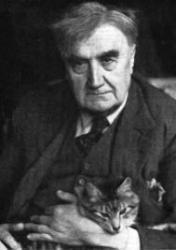
Ralph Vaughan Williams

1872 - 1958 Harmonizer of "HELMSLEY" in The Presbyterian Hymnal Through his composing, conducting, collecting, editing, and teaching, Ralph Vaughan Williams (b. Down Ampney, Gloucestershire, England, October 12, 1872; d. Westminster, London, England, August 26, 1958) became the chief figure in the realm of English music and church music in the first half of the twentieth century. His education included instruction at the Royal College of Music in London and Trinity College, Cambridge, as well as additional studies in Berlin and Paris. During World War I he served in the army medical corps in France. Vaughan Williams taught music at the Royal College of Music (1920-1940), conducted the Bach Choir in London (1920-1927), and directed the Leith Hill Music Festival in Dorking (1905-1953). A major influence in his life was the English folk song. A knowledgeable collector of folk songs, he was also a member of the Folksong Society and a supporter of the English Folk Dance Society. Vaughan Williams wrote various articles and books, including National Music (1935), and composed numerous arrange­ments of folk songs; many of his compositions show the impact of folk rhythms and melodic modes. His original compositions cover nearly all musical genres, from orchestral symphonies and concertos to choral works, from songs to operas, and from chamber music to music for films. Vaughan Williams's church music includes anthems; choral-orchestral works, such as Magnificat (1932), Dona Nobis Pacem (1936), and Hodie (1953); and hymn tune settings for organ. But most important to the history of hymnody, he was music editor of the most influential British hymnal at the beginning of the twentieth century, The English Hymnal (1906), and coeditor (with Martin Shaw) of Songs of Praise (1925, 1931) and the Oxford Book of Carols (1928). Bert Polman

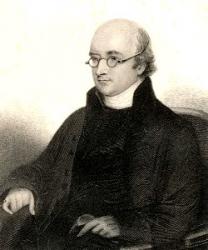
Richard Mant

1776 - 1848 Person Name: Richard Mant, 1776-1848 Author (attributed to) of "Lo! He Comes, An Infant Stranger" in The Cyber Hymnal Mant, Richard D.D., son of the Rev. Richard Mant, Master of the Grammar School, Southampton, was born at Southampton, Feb. 12, 1776. He was educated at Winchester and Trinity, Oxford (B.A. 1797, M.A., 1799). At Oxford he won the Chancellor's prize for an English essay: was a Fellow of Oriel, and for some time College Tutor. On taking Holy Orders he was successively curate to his father, then of one or two other places, Vicar of Coggeshall, Essex, 1810; Domestic Chaplain to the Archbishop of Canterbury, 1813, Rector of St. Botolph, Bishopsgate, London. 1816, and East Horsley, 1818, Bishop of Killaloe, 1820, of Down and Connor, 1823, and of Dromore, 1842. He was also Bampton Lecturer in 1811. He died Nov. 2, 1848. His prose works were numerous, and although now somewhat obsolete, they were useful and popular in their day. His poetical works, and other works which contain poetical pieces, are:— (1) The Country Curate, 1804; (2) Poems in three Parts, 1806; (3) The Slave, 1807; (4) The Book of Psalms in an English Metrical Version, &c, 1824; (5) The Holydays of the Church; or Scripture Narratives of Our Blessed Lord's Life and Ministry, and Biographical Notices of the Apostles, Evangelists, and Other Saints, with Reflections, Collects, and Metrical Sketches, vol. i., 1828; vol. ii., 1831; (6) The Gospel Miracles in a series of Poetical Sketches, &c., 1832; (7) The British Months, 2 vols., 1836; (8) Ancient Hymns from the Roman Breviary, for Domestick Use. . . .To which are added Original Hymns, principally of Commemoration and Thanksgiving for Christ's Holy Ordinances, 1837: new ed., 1871. (9) The Happiness of the Blessed Dead, 1847. Bishop Mant is known chiefly through his translations from the Latin. He was one of the earliest of the later translators, I. Williams and J. Chandler being his contemporaries. Concerning his translations, Mr. Ellerton, in his Notes on Church Hymns, 1881, p. xlviii. (folio ed.), says justly that:— "Mant had little knowledge of hymns, and merely took those of the existing Roman Breviary as he found them: consequently he had to omit many, and so to alter others that they have in fact become different hymns: nor was he always happy in his manipulation of them. But his book has much good taste and devout feeling, and has fallen into undeserved neglect." His metrical version of the Psalms has yielded very few pieces to the hymnals, the larger portion of his original compositions being from his work of 1837. The most popular of these is "Come Holy Ghost, my soul inspire, Spirit of," &c, and its altered forms; "Bright the vision that delighted," and its altered form of "Round the Lord in glory seated;" and "For all Thy saints, O Lord." His hymns in common use which are not annotated under their respective first lines are:— i. From his Metrical Version of the Psalms, 1824. 1. God, my King, Thy might confessing. Ps. cxlv. 2. Lord, to Thee I make my vows. Ps. xxvii. 3. Blessed be the Lord most High. Ps. xxviii. Pt. ii. 4. My trust is in the highest Name. Ps. xi. 5. Reign, Jehovah, King supreme. Ps. xcix. 6. Thy listening ear, O Lord, incline. Ps. Ixxxvi. 7. To God my earnest voice I raise. Ps. cxlii. 8. To Jehovah hymn the lay. Ps. cxviii. Two centos in Spurgeon's Our Own Hymn Book, 1866. (1) st. i., ii., v.; and (2) "Thee, Jehovah, will I bless" from st. vii.-x. ii. From his Holydays of the Church, &c, 1828-31. 9. Lo, the day the Lord hath made. Easter. 10. There is a dwelling place above. All Saints. iii. From his Ancient Hymns, &c, 1837. 11. Before Thy mercy's throne. Lent. 12. Father of all, from Whom we trace. Unity. 13. For these who first proclaimed Thy word. Apostles. 14. No! when He bids me seek His face. Holy Communion. 15. Oft as in God's own house we sit. Divine Worship. 16. Put off thy shoes, 'tis holy ground. The House of God . 17. Saviour of men, our Hope [Life] and Rest. The Greater Festivals. 18. Thy House each day of hallowed rest. Holy Communion. 19. We bless Thee for Thy Church, 0 Lord. Thanksgiving for the Church. 26. We deem and own it, Lord, a proof. Divine Grace. When all Bishop Mant's translations of original hymns, and versions of the Psalms in common use are taken into account, it is found that he is somewhat strongly represented in modern hymnody. -- John Julian, Dictionary of Hymnology (1907) ==================== http://en.wikipedia.org/wiki/Richard_Mant

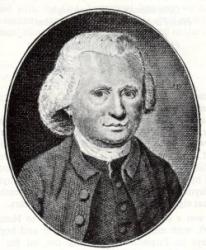
Thomas Olivers

1725 - 1799 Composer of "HELMSLEY" in The Presbyterian Hymnal Thomas Olivers was born in Tregonan, Montgomeryshire, in 1725. His youth was one of profligacy, but under the ministry of Whitefield, he was led to a change of life. He was for a time apprenticed to a shoemaker, and followed his trade in several places. In 1763, John Wesley engaged him as an assistant; and for twenty-five years he performed the duties of an itinerant ministry. During the latter portion of his life he was dependent on a pension granted him by the Wesleyan Conference. He died in 1799. --Annotations of the Hymnal, Charles Hutchins, M.A., 1872. ================== Olivers, Thomas, was born at Tregynon, near Newtown, Montgomeryshire, in 1725. His father's death, when the son was only four years of age, followed by that of the mother shortly afterwards, caused him to be passed on to the care of one relative after another, by whom he was brought up in a somewhat careless manner, and with little education. He was apprenticed to a shoemaker. His youth was one of great ungodliness, through which at the age of 18 he was compelled to leave his native place. He journeyed to Shrewsbury, Wrexham, and Bristol, miserably poor and very wretched. At Bristol he heard G. Whitefield preach from the text "Is not this a brand plucked out of the fire?" That sermon turned the whole current of his life, and he became a decided Christian. His intention at the first was to join the followers of Whitefield, but being discouraged from doing so by one of Whitefield's preachers, he subsequently joined the Methodist Society at Bradford-on-Avon. At that town, where he purposed carrying on his business of shoemaking, he met John Wesley, who, recognising in him both ability and zeal, engaged him as one of his preachers. Olivers joined Wesley at once, and proceeded as an evangelist to Cornwall. This was on Oct. 1, 1753. He continued his work till his death, which took place suddenly in London, in March 1799. He was buried in Wesley's tomb in the City Road Chapel burying ground, London. Olivers was for some time co-editor with J. Wesley of the Arminian Magazine, but his lack of education unfitted him for the work. As the author of the tune Helmsley, and of the hymn “The God of Abraham praise," he is widely known. He also wrote “Come Immortal King of glory;" and "O Thou God of my salvation," whilst residing at Chester; and an Elegy on the death of John Wesley. His hymns and the Elegy were reprinted (with a Memoir by the Rev. J. Kirk) by D. Sedgwick, in 1868. --John Julian, Dictionary of Hymnology (1907)

Jonathan Allen

Person Name: J. Allen Author of "Sinners, Will You Scorn?" in The Gospel Trumpeter Allen, Jonathan. Concerning this hymn-writer, to whom is credited the hymn, "Sinners, will you scorn the message?" we can only say that this hymn appeared in Hymns adapted to Public Worship, collected from various Authors, Exeter, S. Woolmer, 1801, edited by Richard Pearsell Allen, Minister of Castle Street Meeting, Exeter; and that in D. Sedgwick's marked copy of John Dobell's New Selection, &c., 1806, it is attributed to Jonathan Allen. What authority Sedgwick had for this ascription we cannot determine. It is through him that it has gained currency. Allen's hymn, "Sinners, will you scorn, &c," is sometimes given with stanzas i. and ii. transposed, as "Hear the heralds of the Gospel," as in the American Baptist Praise Book, N. Y. 1871. [William T. Brooke] -- John Julian, Dictionary of Hymnology (1907)

Lois Fyfe

1927 - 2014 Composer (descant) of "HELMSLEY" in The United Methodist Hymnal Music Supplement

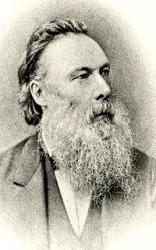
John R. MacDuff

1818 - 1895 Person Name: John R. Macduff Author of "Christ is Coming!" in The Popular Hymnal Macduff, John Ross, D.D., second son of Alexander Macduff, of Bonhard, near Perth, was born at Bonhard, May 23, 1818. After studying at the University of Edinburgh, he became in 1842 parish minister of Kettins, Forfarshire, in 1849 of St. Madoes, Perthshire, and in 1855 of Sandyford, Glasgow. He received the degree of D.D. from the University of Glasgow in 1862, and about the same time also from the University of New York. He retired from pastoral work in 1871, lived at Chislehurst, Kent and died in 1887. He has published many practical and devotional works which have attained a wide circulation. In 1857 he was appointed by the General Assembly a member of their Hymnal Committee. His 31 hymns appeared in his Altar Stones, 1853, and were also included with his later poems in his The Gates of Praise, 1876. Of these hymns the following are in common use:— 1. Christ Is coming! Let creation. Second Advent. 2. Eternal Rock! To Thee I flee. (1853.) Christ the Rock. 3. Everlasting arms of love. (1853.) Support in Christ. 4. From Thy habitation holy. Whitsuntide. 5. Hasten, Lord, that morn of glory. Second Advent. 6. Jesus wept! Those tears are over. (1853.) The raising of Lazarus. 7. O do not, blessed Lord, depart. Christ's presence desired. 8. Where shall I look for holy calm. (1853.) Passiontide. 9. Why should I murmur or repine? Resignation. Of these hymns those dated 1853 are parts only of Dr. Macduff’s originals. [Rev. James Mearns, M.A.] -- John Julian, Dictionary of Hymnology (1907) ============== Macduff, J. R., p. 708, i. Another hymn from his Gates of Praise, 1876, is "Blessed feast! most gracious token" (Holy Communion). He died April 30, 1895. --John Julian, Dictionary of Hymnology, Appendix, Part II (1907) ============== http://en.wikipedia.org/wiki/John_Ross_Macduff

James P. Martin

Person Name: James P. Martin, 1923- Author (v. 3) of "Lo! Christ comes with clouds" in The Book of Praise

M. Mason

Composer of "HELMSLEY" in The Church Hymnal

Andrew Donaldson

b. 1951 Person Name: Andrew Donaldson, 1951- Author of "Wordless, ancient earth's foundations" in The Book of Praise Andrew Donaldson, a composer and church musician, grew up in northern Ontario, Canada. He attended Glendon College, York University in Toronto, receiving a Bachelor of Arts degree in 1974. He went on to study classical guitar performance at the Royal Conservatory of Music in Toronto, receiving its ARCT (Associate of Royal Conservatory Teachers) degree in 1979. Since then he has worked as a composer and performer in many contexts, in both French and English. Andrew co-edited the Book of Praise (1997), Presbyterian Church in Canada, with Donald Anderson. Their company, Binary Editions, continues to administer copyright for the PCC. In 2007 he was made a Doctor of Divinity, honoris causa, by Knox College of the University of Toronto, for his body of work in congregational song in the Presbyterian Church in Canada. In 2011 Andrew and his wife, Wendy, moved to Geneva, Switzerland where Andrew works as a worship consultant to the World Council of Churches. --Submitted by Andrew and Wendy Donaldson, 13 August 2013

Ibrāhīm Sarkīs

1834 - 1885 Person Name: ابراهيم سركيس Author of "سوف يأتي في سحاب" in كتاب الترانيم الروحية للكنائس الإنجيلية Ibrahim Sarkis, Lebanese poet and historian. He managed the American Press in Beirut. إبراهيم بن خطار سركيس

Pages


Export as CSV
It looks like you are using an ad-blocker. Ad revenue helps keep us running. Please consider white-listing Hymnary.org or getting Hymnary Pro to eliminate ads entirely and help support Hymnary.org.