You help make Hymnary.org possible. More than 10 million people from 200+ countries found hymns, liturgical resources and encouragement on Hymnary.org in 2025, including you. Every visit affirms the global impact of this ministry.

If Hymnary has been meaningful to you this year, would you take a moment today to help sustain it? A gift of any size—paired with a note of encouragement if you wish—directly supports the server costs, research work and curation that keep this resource freely available to the world.

Give securely online today, or mail a check to:
Hymnary.org
Calvin University
3201 Burton Street SE
Grand Rapids, MI 49546

Thank you for your partnership, and may the hope of Advent fill your heart.

Person Results

Meter:14.14.14.14
In:person

Planning worship? Check out our sister site, ZeteoSearch.org, for 20+ additional resources related to your search.
Showing 21 - 30 of 36Results Per Page: 102050

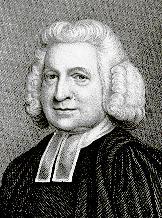
Charles Wesley

1707 - 1788 Meter: 14.14.14.14 Author of "I Want a Principle Within" in Timeless Truths Charles Wesley, M.A. was the great hymn-writer of the Wesley family, perhaps, taking quantity and quality into consideration, the great hymn-writer of all ages. Charles Wesley was the youngest son and 18th child of Samuel and Susanna Wesley, and was born at Epworth Rectory, Dec. 18, 1707. In 1716 he went to Westminster School, being provided with a home and board by his elder brother Samuel, then usher at the school, until 1721, when he was elected King's Scholar, and as such received his board and education free. In 1726 Charles Wesley was elected to a Westminster studentship at Christ Church, Oxford, where he took his degree in 1729, and became a college tutor. In the early part of the same year his religious impressions were much deepened, and he became one of the first band of "Oxford Methodists." In 1735 he went with his brother John to Georgia, as secretary to General Oglethorpe, having before he set out received Deacon's and Priest's Orders on two successive Sundays. His stay in Georgia was very short; he returned to England in 1736, and in 1737 came under the influence of Count Zinzendorf and the Moravians, especially of that remarkable man who had so large a share in moulding John Wesley's career, Peter Bonier, and also of a Mr. Bray, a brazier in Little Britain. On Whitsunday, 1737, [sic. 1738] he "found rest to his soul," and in 1738 he became curate to his friend, Mr. Stonehouse, Vicar of Islington, but the opposition of the churchwardens was so great that the Vicar consented that he "should preach in his church no more." Henceforth his work was identified with that of his brother John, and he became an indefatigable itinerant and field preacher. On April 8, 1749, he married Miss Sarah Gwynne. His marriage, unlike that of his brother John, was a most happy one; his wife was accustomed to accompany him on his evangelistic journeys, which were as frequent as ever until the year 1756," when he ceased to itinerate, and mainly devoted himself to the care of the Societies in London and Bristol. Bristol was his headquarters until 1771, when he removed with his family to London, and, besides attending to the Societies, devoted himself much, as he had done in his youth, to the spiritual care of prisoners in Newgate. He had long been troubled about the relations of Methodism to the Church of England, and strongly disapproved of his brother John's "ordinations." Wesley-like, he expressed his disapproval in the most outspoken fashion, but, as in the case of Samuel at an earlier period, the differences between the brothers never led to a breach of friendship. He died in London, March 29, 1788, and was buried in Marylebone churchyard. His brother John was deeply grieved because he would not consent to be interred in the burial-ground of the City Road Chapel, where he had prepared a grave for himself, but Charles said, "I have lived, and I die, in the Communion of the Church of England, and I will be buried in the yard of my parish church." Eight clergymen of the Church of England bore his pall. He had a large family, four of whom survived him; three sons, who all became distinguished in the musical world, and one daughter, who inherited some of her father's poetical genius. The widow and orphans were treated with the greatest kindness and generosity by John Wesley. As a hymn-writer Charles Wesley was unique. He is said to have written no less than 6500 hymns, and though, of course, in so vast a number some are of unequal merit, it is perfectly marvellous how many there are which rise to the highest degree of excellence. His feelings on every occasion of importance, whether private or public, found their best expression in a hymn. His own conversion, his own marriage, the earthquake panic, the rumours of an invasion from France, the defeat of Prince Charles Edward at Culloden, the Gordon riots, every Festival of the Christian Church, every doctrine of the Christian Faith, striking scenes in Scripture history, striking scenes which came within his own view, the deaths of friends as they passed away, one by one, before him, all furnished occasions for the exercise of his divine gift. Nor must we forget his hymns for little children, a branch of sacred poetry in which the mantle of Dr. Watts seems to have fallen upon him. It would be simply impossible within our space to enumerate even those of the hymns which have become really classical. The saying that a really good hymn is as rare an appearance as that of a comet is falsified by the work of Charles Wesley; for hymns, which are really good in every respect, flowed from his pen in quick succession, and death alone stopped the course of the perennial stream. It has been the common practice, however for a hundred years or more to ascribe all translations from the German to John Wesley, as he only of the two brothers knew that language; and to assign to Charles Wesley all the original hymns except such as are traceable to John Wesley through his Journals and other works. The list of 482 original hymns by John and Charles Wesley listed in this Dictionary of Hymnology have formed an important part of Methodist hymnody and show the enormous influence of the Wesleys on the English hymnody of the nineteenth century. -- Excerpts from John Julian, Dictionary of Hymnology (1907) ================== Charles Wesley, the son of Samuel Wesley, was born at Epworth, Dec. 18, 1707. He was educated at Westminster School and afterwards at Christ Church, Oxford, where he graduated M.A. In 1735, he took Orders and immediately proceeded with his brother John to Georgia, both being employed as missionaries of the S.P.G. He returned to England in 1736. For many years he engaged with his brother in preaching the Gospel. He died March 29, 1788. To Charles Wesley has been justly assigned the appellation of the "Bard of Methodism." His prominence in hymn writing may be judged from the fact that in the "Wesleyan Hymn Book," 623 of the 770 hymns were written by him; and he published more than thirty poetical works, written either by himself alone, or in conjunction with his brother. The number of his separate hymns is at least five thousand. --Annotations of the Hymnal, Charles Hutchins, M.A., 1872.

Samuel J. Vélez Santiago

Person Name: Samuel J. Veléz Santiago Meter: 14.14.14.14 Translator of "¡Cuán grande es en majestad!" in El Himnario

Gerard Moultrie

1829 - 1885 Meter: 14.14.14.14 Translator of "Behold, the Bridegroom cometh" in The Hymnal Moultrie, Gerard, M.A., son of the Rev. John Moultrie, was born at Rugby Rectory, Sept. 16, 1829, and educated at Rugby and Exeter College, Oxford (B.A. 1851, M.A. 1856). Taking Holy Orders, he became Third Master and Chaplain in Shrewsbury School; Chaplain to the Dowager Marchioness of Londonderry, 1855-59; curate of Brightwaltham, 1859; and of Brinfield, Berks, 1860; Chaplain of the Donative of Barrow Gurney, Bristol, 1864: Vicar of Southleigh, 1869, and Warden of St. James's College, Southleigh,1873. He died April 25, 1885. His publications include: 1) The Primer set forth at large for the use of the Faithful. In Family and Private Prayer. Edited from the Post Reformation editions, 1864. (2) Hymns and Lyrics for the Seasons and Saints' Days of the Church, 1867. The hymns of his sister, Mary Dunlop Moultrie (q.v.), were included in this volume. (3) The Espousals of S. Dorothea and Other Verses, 1870. (5) The Devout Communicant, 1867. (6) Six Years' work in Southleigh, 1875. (7) Cantica Sanctorum, or Hymns for the Black Letter Saints Days in the English and Scottish Calendars, to which are added a few Hymns for Special Occasions, 1880. Mr. Moultrie's hymns include translations from the Greek, Latin, and German, in addition to original compositions. A large number appeared in the Church Times, and other papers; and many were written for special Saints' Days, and Other Festivals, for the People's Hymnal, 1867, in which some were signed "D. P." (i.e. Desiderius Pastor). The following are in common use:— i. In The Primer, 1864. 1. Father of all, to Thee we pray. Lord's Prayer. 2. In the Name of God the Father. Laying Foundation Stone. (2nd stanza: "And as on the morning stillness.") First appeared in the Church Times, Oct. 1, 1864, and again (as rewritten for the laying of the foundation stone of St. Margaret's, East Grinstead), July 29, 1865. ii. In Hymns and Lyrics, 1867. 3. Bishop of the souls of men. St. Matthias. 4. Come, faithful people, come away. Palm Sunday. 5. Easter-day is here, and we. Easter. 6. Heavenly Father, God alone. Harvest. 7. Mother, from whose bosom's veil. St. Anne. July 26. 8. 0 Jesu, 0 Redeemer. St. Luke. 9. Mary, maiden undefiled. Visitation of the Blessed Virgin Mary. 10. Silence reigns at eventide. Whitsuntide. In the Altar Hymnal, 1884, it begins with st. iii., "Hark, a rushing mighty sound." 11. The Marriage feast is ready. All Saints. Usually given in an abbreviated form. 12. Virgin-born the King of heaven. Christmas Midnight Hymn. ("To be sung at the Midnight Cele¬bration.") In the Church Times, Nov. 26, 1864, and revised for Hymns & Lyrics. 13. We march, we march to victory. Processional. In the Church Times, Aug, 19, 1865, and headed "Processional hymn before service (written expressly for use during present troubles)." 14. Who is this that shines so bright! St. Laurence. In the People's Hymnal, 1867. 15. Who keeps his birthday feast tonight? Beheading of St. John Baptist. In the People's Hymnal, 1867. iii. In The People's Hymnal, 1867. 16. Heart to heart, and side by side. Holy Matrimony. 17. I know that my Redeemer liveth. Burial. A paraphrase of the Responsory in the Roman Office for the Dead. 18. Jesus Christ, we humbly pray. Opening of a School House. 19. Lord of heaven, Whose faithful love. Ember Days. 20. Lord, today we bring to Thee. Reception of a Privately Baptized Child. 21. Lord, we come today to Thee. Choir Festival. 22. 0 God, Who bad'st Thine angel sheathe. National Thanksgiving for restored Public Health. This is given in the Society for Promoting Christian Knowledge Church Hymns, 1871, as "0 God, Whose angel stayed his hand," and in the Hymnary, 1872, as "Lord, Who didst bid Thine angel sheathe." 23. 0 Lord of Hosts, Thou God of might. National Thanksgiving for Peace. In several collections. 24. Sevenfold Spirit, Lord of life. Consecration of a Bishop. First sung at the consecration of an American bishop at New York, in 1867. Included in the author's Espousals of St. Dorothea, 1870. 25. Sounds the bell in solemn cadence. Burial. In The Espousals of S. Dorothea, 1870, p. 82, the note is added, "This hymn was first sung at the funeral of the Rev. Warwick Wroth of Clerkenwell." It is headed "Funeral Hymn for a Priest." iv. In Cantica Sanctorum, 1880. 26. In the midst of gladness, sorrow. Annunciation in Holy Week. 27. Jesus, tender Shepherd. Holy Communion. 28. Swing the censer, wave the banner. Processional. v. In The Altar Hymnal, 1884. 29. Our great High Priest is standing. Holy Communion. 30. Lo, the Sacrifice atoning. Holy Communion. vi. Various. 31. Forward, Christians, forward. Processional. Written for the Church of England Working Men's Society in 1879, and issued as a leaflet, of which 40,000 copies were sold during the first year. 32. Laid in this garden full of bloom. Easter Eve. In the Churchman's Companion, April, 1879. 33. On the wings of the wind fell a hymn from the sky. Christmas. In Husband's Supplemental Hymns, N.D. [1873]. 34. Shades of night are falling round us. Evening. Novello & Co., with Music by Shad Frost. 35. There is a sound of rejoicing around the great throne. Processional. Written for St. Michael's Church, Folkestone, and published in E. Husband's Appendix to Hymns Ancient & Modern, N.D. [1873]. It was set to music by Mr. Husband, and is commonly known as "The Folkestone Processional." 36. This is the festal day of jubilation. Sunday School Anniversary. A hymn to be sung alternately by men and boys during the collection, written in 1877 for St. Agnes's, Kennington, London. 37. This is the hour of peace and blest communion. Holy Communion. Written for the English Church Union Commemoration held at St. Agnes's, Kennington Park, London, June 9, 1880. From the subjects of the hymns noted above it will be seen that Mr. Moultrie wrote principally on matters not usually dealt with by hymnwriters. This is specially the case with his Cantica Sanctorum, in which most of the 103 hymns are for "Black Letter Saints' Days." --John Julian, Dictionary of Hymnology (1907) =================== Moultrie, G., p. 771, ii. We find that Mr. Moultrie wrote the preface to the Cantica Sanctorum, 1880, but did not edit the book. He and others contributed some thirteen hymns thereto. It was edited by Miss Isabella Leefe, p. 1663, i., who wrote 90 of the hymns. --John Julian, Dictionary of Hymnology, New Supplement (1907) See also in: Hymn Writers of the Church

Fred Pratt Green

1903 - 2000 Person Name: Fred Pratt Green, 1903-2000 Meter: 14.14.14.14 Author of "Now Let Us All in Hymns of Praise" in Christian Worship (2008) The name of the Rev. F. Pratt Green is one of the best-known of the contemporary school of hymnwriters in the British Isles. His name and writings appear in practically every new hymnal and "hymn supplement" wherever English is spoken and sung. And now they are appearing in American hymnals, poetry magazines, and anthologies. Mr. Green was born in Liverpool, England, in 1903. Ordained in the British Methodist ministry, he has been pastor and district superintendent in Brighton and York, and now served in Norwich. There he continued to write new hymns "that fill the gap between the hymns of the first part of this century and the 'far-out' compositions that have crowded into some churches in the last decade or more." --Seven New Hymns of Hope , 1971. Used by permission.

M. D. Ridge

1938 - 2017 Person Name: M. D. Ridge, b. 1938 Meter: 14.14.14.14 Author of "I Sing a Maid" in Gather Comprehensive

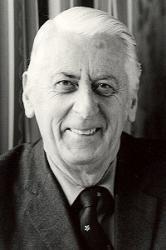
Michael Joncas

b. 1951 Person Name: Michael Joncas, b. 1951 Meter: 14.14.14.14 Harmonizer of "THE FLIGHT OF THE EARLS" in Gather Comprehensive

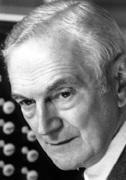
Alec Wyton

1921 - 2007 Person Name: Alec Wyton (b. 1921) Meter: 14.14.14.14 Composer of "INDIFFERENCE" in Wonder, Love, and Praise Alec Wyton is described in Grove's Dictionary of Music and Musicians, by saying, "Wyton has brought together and caused to flourish three separate traditions: English church music, American church music and music from outside the churches." Also bringing together clergy and musicians of the Episcopal Church, he was the Coordinator of the Standing Commission on Church Music from 1974 to 1985; he was Minister of Music at St. Stephen's Church, in Ridgefield, Conn., from 1987 until his appointment as Minister of Music Emeritus in 2004; and he was Founder and Chairman of the Church Music Department of the Manhattan School of Music. Wyton is the award-winning ASCAP composer of over 100 published works; editor of the Anglican Chant Psalter; contributor of articles to professional journals; performer, teacher and lecturer: he is the complete musician. From 1954 to 1974 he was Organist and Master of the Choristers at the Cathedral of St. John the Divine and Headmaster of the Cathedral Choir School. He taught at Union Theological Seminary in NYC and was Chairman of the Organ Department at Westminster Choir College, Princeton. Wyton was born in London in 1921. He earned degrees from the Royal Academy of Music and Oxford University. He came to the United States in 1950, working briefly in Dallas and St. Louis. Wyton died on March 18, 2007, after a prolonged illness. He has traveled throughout the US and Canada playing recitals, conducting workshops, master classes and hymn festivals stressing the coexistence in liturgy of great music and literature of the past with new and exciting works by artists of our time. --www.selahpub.com

John Mannin

1802 - 1865 Meter: 14.14.14.14 Composer of "MOUNTAIN CHRISTIANS"

Adelaide Thrupp

1831 - 1908 Meter: 14.14.14.14 Author of "Lord, Who at Cana's Wedding Feast" in Timeless Truths Adelaide Thrupp was born in London St. Georges, Hanover Square, London, Middlesex, England and died in 1908 in Guildford, Surrey, England. With her brother, Joseph she published Psalms and Hymns for Public Worship, 1853. NN, Hymnary

Barbara C. Mink

b. 1937 Person Name: Barbara Mink Meter: 14.14.14.14 Translator of "Venimos hoy a ti, Señor" in El Himnario

Pages


Export as CSV
It looks like you are using an ad-blocker. Ad revenue helps keep us running. Please consider white-listing Hymnary.org or getting Hymnary Pro to eliminate ads entirely and help support Hymnary.org.