

 My Starred Hymns
 My FlexScores
 My Hymnals
 My Purchased Files
Planning worship?
Check out our sister site, ZeteoSearch.org,
for 20+ additional resources related to your search.
- |
User Links
Person Results
Greg Nelson
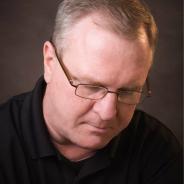
b. 1948 Topics: Choruses Scripture and Praise Author of "People Need the Lord" in The Hymnal for Worship and Celebration
Greg Nelson
Hugh Martin
1890 - 1964 Person Name: Hugh Martin, 1890-1964 Topics: The Church of Jesus Christ The Scriptures Author (v. 6) of "Tell me the stories of Jesus" in Complete Mission Praise Martin, Hugh. (1890--1964). Chair of the Editorial Committee of the Psalms and Hymns Trust of the Baptist Churches of Britain; active in the Christian Student Movement Press which he served from 1929 to 1950. Graduate of Glasgow University.
--The Hymn Society, DNAH Archives
===============
http://en.wikipedia.org/wiki/Hugh_Martin_(minister)
Hugh Martin
David Rutherford McGuire
1929 - 1971 Person Name: David Rutherford McGuire, 1929-1971 Topics: Holy Scriptures Reviser of "Jesus loves me, this I know" in The Book of Praise McGuire was born in St. Catherines, Ontario, Canada. He attended University and Wycliffe Colleges at the University of Toronto. Ordained as an Anglican priest, he pastored four churches in Ontario. He also served on the committee that produced the 1971 Hymn Book, used by the United Church of Canada and by Canadian Anglicans.
© The Cyber Hymnal™. Used by permission. (www.hymntime.com)
David Rutherford McGuire
Max Landsberg
1845 - 1927 Person Name: Max Landsberg, 1845-1928 Topics: Scriptures Translator of "Praise to the Living God" in Hymns of the Saints Max Landsberg was born in Berlin as the eldest son of a long-established Jewish family, shortly before his father, Meyer Landsberg, in Hildesheim took a job as a rabbi.
First, Landsberg was privately educated, but then went to the high school Josephinum in Hildesheim . After graduation he studied in Göttingen, Breslau and Berlin. The training to become a rabbi he received from Lazarus eagle at the University of Kassel, Samuel Ephraim Meyer at the University of Hanover and of Abraham Geiger in Wroclaw. On 7 November 1866 he was codd at the University of Halle with his work Vita sultani Muradi "a Mohammed Amyn Mohibby, e. Mss. Bibliothecae regiae Berolinensis, addita versione latina atque adjectis adnotationibus Dr. phil. Doctorate. Since 1866, he was pin Rabbi and teachers at the seminar for Jewish teachers in Hanover. rabbi he was to his Semicha 1870.
Shortly before his departure to the U.S. married Landsberg on 26 February 1871 in Hanover Miriam Isengarten (* 1847, † April 16, 1912 in Baltimore)
In the fall of 1869, as in 1848 decided orthodox founded community in Rochester, hire a rabbi who could preach both in German and in English and should be a "gentleman of advanced ideas and reformed religious views". This quote is an excerpt from the ad for the position of rabbi in Rochester in the weekly magazine "The American Israelite", the public forum of the American Reform Judaism. After they found no suitable person in the country, they turned to Abraham Geiger, a pioneer of Reform Judaism in Europe. Geiger encouraged his former students to apply to this job. Because of its application in December 1870 Landsberg was invited and settled for Passover 1871 (early April 1871) to Rochester. By 1915, he stayed on as chief rabbi.
What the liturgical reforms were concerned in the community, so Landsberg based on that of David Einhorn in 1858 published prayer book Olat Tamid. It contained the majority of prayers in German and was printed according to and read from left to right. However, there were already 10 days after launch on 27th April 1873 in the town of B'rith Kodesh to controversy. Then the parish council withdrew this prayer book and replaced it with a more tradition-setting, but also reforming the liturgy, which from Temple Emanu El was published in New York City. Despite the shortcomings Landsberg used this prayer book over a decade. On the other hand, it prompted him to contribute their own ideas of liturgical revision. The result was that in 1880, along with Sol[omon] Wile (1853-1931) published book Hymn Book for Jewish Worship. For two-thirds of it contained English-language songs, and the remaining were in German. Sol Wile at the time was president of the Temple B'rith Kodesh and in his preface to the hymnal, which was more intended for the community, as for the rabbi and the choir, he wrote that he is a "inbrünstigeren" of these songs worship hoped.
But only the ritual prayer book for Jewish Worship by Max Landsberg itself, introduced in 1884, the community took to the center of the radical Jewish reform movement. It was the result of Landsberg efforts, in accordance with the ideas of community members to create a new liturgy, which "conform to the sentiments of the living generation" was. Landsberg not only received praise, but also harsh criticism, including by Isaac Mayer Wise. Even in our own community Landsberg faced a opposition, but this did not change in a takeover of the liturgy. It Landsberg, despite all the criticism has managed to create a completely appropriate in the English language and the Reform movement liturgy.
An outstanding event for Max Landsberg in 1895 was the focus of the annual meeting of the Central Conference of American Rabbis (CCAR). He himself was in this movement since its founding in 1889 active. At this meeting there was a full agreement in the views of Isaac Mayer Wise and Landsberg that the greatest achievements of American Reform Judaism was to have freed the Jews from the ceremonial constraints.
Another special feature of this period was the increased involvement of women in the community and especially in community work. There were just the women who took part in the worship and wanted to have more influence on the fortunes of the community. Here, Max Landsberg did show, by advocating openly for the rights of women. In his essay The Position of Women Among the Jews he grappled with the theological implications of women's emancipation.
But Max Landsberg himself alienated since that time increasingly of the community. Maybe because it a lifelong Office guidance was issued never, but he had to extend from the council's term of office again and again. Already in July 1910, adjusted for the community Horace J. Wolf as an assistant. His contract was also extended several times. They tried to limit Landsberg's influence on the community.
Particularly hard hit Landsberg his wife Miriam's death in 1912. This event was marked by bitterness his last years, so it took every joy of life. When, in March 1913, a committee at Landsberg "the lack of interest in the religious life of the congregation" found and published recommendations in October, Max Landsberg offered his resignation. Well with regard to the posted position of Landsberg gave you his resignation until December 1914 known, but he stepped into force on 1 März 1915.
In the United States, Max Landsberg sat for a reform of Jewish worship one. So he held his services in English and not in Hebrew. Also published by him prayer books passed to two-thirds of English songs and the rest in German language. He also pushed for the marriage of Jews and non-Jews. As part of the American Reform Judaism Landsberg was among the rabbis, which began in the municipality for exemption from the ceremonial constraints, to use appropriate liturgies and thereafter led worship.
--de.wikipedia.org/wiki (excerpts)
Max Landsberg
Hugh Stowell
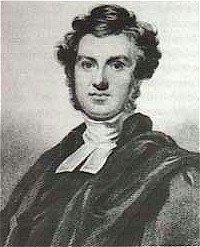
1799 - 1865 Topics: The Holy Scripture Author of "Lord of All Power and Might" in The A.M.E. Zion Hymnal Stowell, Hugh, an able and popular minister of the Church of England, was born at Douglas, Isle of Man, December 3, 1799. He graduated at Oxford in 1822, and took holy orders the following year. He held various offices in his Church; became rector at Salford in 1831; was appointed honorary Canon of Chester Cathedral in 1845, and later Rural Dean of Eccles. He published several volumes. He also edited a book of hymns: A Selection of Psalms and Hymns Suited to the Services of the Church of England, 1831. To the several editions of this book most of his hymns were contributed. He died at Safford October 8, 1865.
From every stormy wind that blows 495
Lord of all power and might 206
Hymn Writers of the Church, 1915 by Charles Nutter
==================================
Stowell, Hugh, M.A., son of Hugh Stowell, Rector of Ballaugh, near Ramsey, was born at Douglas, Isle of Man, Dec. 3, 1799, and educated at St. Edmund Hull, Oxford, B.A. 1822; M.A. 1826. He was ordained in 1823, and held the curacy of Shepscombe, Gloucestershire; and then that of Holy Trinity, Huddersfield. Subsequently he was Curate in charge of St. Stephen's, Salford, and became rector of Christ Church, Salford, in 1831. In 1845 he was appointed Hon. Canon in Chester Cathedral; in 1851 Chaplain to the Bishop of Manchester; and Rural Dean of Eccles. He died at Salford, Oct. 8, 1865. His Memoir, by the Rev. J. B. Marsden, was published in 1868. Canon Stoweli was a popular and effective preacher. His publications included Tractarianism Tested, 1845; A Model for Men of Business, 1854 ; Pleasures of Religion and Other Poems, 1832; The Peaceful Valley, 1826 ; and a large number of single sermons, pamphlets, &c. His Selection of Psalms & Hymns was published as:—
A Selection of Psalms & Hymns Suited to the Services of the Church of England. By the Rev. H. Stowell, M.A., Manchester. Printed by Henry Smith, St. Ann's Square, 1831.
This Selection contained 233 hymns, in addition to versions of the Psalms. Of the hymns the following were by the compiler:—
1. Almighty Shepherd, Who didst give. (1828.) The Good Shepherd.
2. From every stormy wind that blows.
3. Gracious God, look down in kindness. Sunday School Anniversary.
4. Great God, we dare not bow the knee. Holy Communion.
5. Meek Lamb of God, on Thee. Lent.
6. To Thee, 0 God, we raise. Sunday School Anniversary.
7. Tune every heart, wake every tongue. Sunday School Anniversary.
8. When Jesus left the glorious sky. For an Infants’ School.
9. Yes, in the morning of our years. Sunday School Anniversary.
The 12th edition of this Selection published by Canon Stowell in 1864, was increased to 273 hymns, the additional hymns being in nearly every instance his own compositions. In addition to those already given we have:—
10. Again our yearly strain we raise. 1864.
11. Another year has glided past. (Before 1846.)
12. Another year with mercies strown. (Before 1846.)
13. Before Thy throne, 0 Lord, we bend. (Before 1846.)
14. By pressing dangers compassed round. 1843 (?).
15. Come, raise we all the blessed strain. 1862.
16. Hail, hallowed day of heavenly rest. 1844 (?).
17. Hark, how sweet those infant voices. 1841 (?).
18. How fruitless is the ploughman's toil. 1854.
19. How gently in night's silent hours. 1850.
20. Jesus is our Shepherd, Wiping, &c. 1849.
21. Jesus, Lord, Who hast ascended. 1853.
22. Jesus, Lord, we wait on Thee. 1863.
23. Jesus, our Saviour and our Lord. (Before 1846.)
24. Jesus, Prophet of Thy Church. 1861.
25. Lord, if our land be great and free. 1851.
26. Lord, in this dark and stormy day. 1848.
27. Lord, in Thy mercy hear our cry. 1855.
28. Meek Lamb of God, Who dost impart. 1859.
29. 0 God, the liquid sign of grace. 1856.
30. Sailing o'er life's changeful ocean. (Before 1846.)
31. Saviour, guide this little band. (Before 1846.)
32. The day of rest is passed away. (Before 1846.)
33. The morn of our lifetime is fast gliding by. (Before 1846.)
34. Though our lot be poor and lowly. 1847.
35. Thy cross, 0 Lord, the holy sign. 1840.
36. Wake, wake our yearly strain anew. 1852.
37. Wake, wake the joyful song. 1844.
38. We, a little simple throng. (Before 1846.)
39. We, little pilgrims of a day. 1845.
40. We love the holy house of prayer. 1857.
41. We will not weep as others do. 1842.
42. What is your life? It glances by. 1860.
43. What though our earthly lot be low. 1858.
These hymns were all written for the Anniversary Services of Christ Church Sunday Schools, Salford, and are included with others in a special Appendix in the 1877 ed. of the Selection as above.
Other hymns by Canon Stowell are:—
44. Children of old, Hosannah sang. Sunday Schools. 1830.
45. Lord of all power and might, Father of love, &c. Missions. Written for the Jubilee of the B. & F. Bible Society, March 7, 1853.
46. Shepherd of the ransomed sheep. The Good Shepherd.
47. Pilgrims in the narrow way. Sunday School Anniversary. This was his last hymn, and was written for the Christ Church Sunday School Anniversary, 1865.
Of Canon Stowell's hymns the most popular are Nos. 2, 3, 20 and 44. As a writer for children he was very successful. All the foregoing hymns are in the 15th ed. of his Selection edited by his son, Manchester, 1877; and in Hymns. By the late Rev. Canon Stowell, M.A. Manchester, 1868.
-- John Julian, Dictionary of Hymnology (1907)
Hugh Stowell
Newton Mann
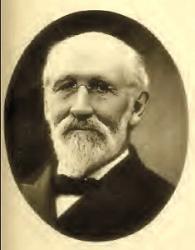
1836 - 1926 Person Name: Newton Mann, 1836-1926 Topics: Scriptures Translator of "Praise to the Living God" in Hymns of the Saints Mann, Rev. Newton. (Cazenovia, New York, January 16, 1836--July 25, 1926, Chicago, Illinois). He graduated from Cazenovia Academy, and during the Civil War served as head of the Western Sanitary Commission. He then entered the Unitarian ministry and was ordained as pastor of the church in Kenosha, Wisconsin, which he organized and served for three years. He later served churches in Troy, New York, 1868-1870; Rochester, N.Y., 1870-1888; and Omaha, Nebraska, 1888-1908, after which he retired to Chicago. His only connection with hymnody was his versification of an English translation of the Jewish creedal statement known as the Yigdal. His verse, which has not survived, was later recast by Rev. W.C. Gannett. In its present form the hymn is probably mostly the work of Gannett, but Mann should be credited with having drafted its earlier form. See also Foote, Three Centuries of American Hymnody, pp.339-340.
--Henry Wilder Foote, DNAH Archives
Newton Mann
Samuel Dyer
1785 - 1835 Topics: Scriptures Power of ; Scriptures Power of ; Scriptures Inspired; The Godhead Holy Scripture; Joy In Scriptures; Scriptures Joy in ; Inspiration Of Scriptures Arranger of "MENDON" in Methodist Hymn and Tune Book Rv Samuel Dyer United Kingdom 1785-1835. Born in White Chapel, Hampshire, the family moved to Wellshire, England, where he was ordained and served as a Baptist minister. In 1806 the family moved to Coventry, and Samuel emigrated to the U.S. in 1811. He married Renee Novak. He taught music and directed choirs in New York City and Philadelphia, PA. He later moved to Baltimore, MD, and wrote, conducted singing schools in the south and east, and conducted the New York Sacred Music Society. He published “New selection of sacred music” (1817), “Anthems” (1822 & 1834), and “The Philadelphia collection of sacred music” (1828). He died in Hoboken, NJ.
John Perry
Samuel Dyer
James Merrick
1720 - 1769 Person Name: Merrick Topics: The Scriptures Excellence and power of God's word; The Scriptures Divine instruction implored Author of "Teach me, O teach me, Lord! thy way" in A Collection of Psalms and Hymns for Christian Worship. 16th ed. Merrick, James , M.A., was born in 1720, and educated at Oxford, where he became a Fellow of Trinity College. He entered Holy Orders, but his health would not admit of parish work. He died at Reading, 1769. His publications include:—
(1) Messiah, a Divine Essay. Humbly dedicated to the Reverend the Vice-Chancellor of the University of Oxford and the Visitors of the Free School in Reading. By James Merrick, Ætat. 14, Senior Scholar of the School at their last Terminal Visitation, the 7th of October, 1734. Reading. (2) The Destruction of Troy. Translated from the Greek of Tryphiodorus into English Verse, with Notes, &c. 1742. (3) Poems on Sacred Subjects. Oxford . 1763. (4) The Psalms of David Translated or Paraphrased in English Verse. By James Merrick, M.A., late Fellow of Trinity College, Oxford. Reading. J. Carnan and Co. 1765. 2nd ed. 1766. A few only of these paraphrases were divided into stanzas. In 1797 the Rev. W. D. Tattersall pulished the work "Divided into stanzas for Parochial Use, and paraphrased in such language as will be intelligible to every capacity . . . with a suitable Collect to each Psalm from the Works of Archbishop Parker."
Merrick's paraphrases, although weak and verbose, were in extensive use in the early part of the present century, both in the Church of England and with Nonconformists. They have, however, fallen very much into disuse. Those in modern hymn-books, mainly in the form of centos, include:—
1. Blest Instructor, from Thy ways. Ps. xix.
2. Descend, O Lord! from heaven descend. Ps. cxliv. (In time of National Peril.)
3. Far as creation's bounds extend. Ps. cxlv.
4. God of my strength, the wise, the just. Ps. xxxi.
5. He who with generous pity glows. Ps. xli.
6. How pleasant, Lord.Thy dwellings are. Ps. lxxxiv.
7. Lift up your voice and thankful sing. Ps. cxxxvi.
8. Lo, my Shepherd's hand divine. Ps. xxiii.
9. Lord, my Strength, to Thee I pray. Ps. xxviii.
10. My heart its noblest theme has found. Ps.xlv.
11. O let me, [gracious] heavenly Lord extend. Ps. xxxix.
12. O turn, great Ruler of the skies. Ps. li.
13. Praise, O praise the Name divine. Ps. cl.
14. Sing, ye sons of [men] might, O sing. Ps. xxix.
15. Teach me, O teach me, Lord, Thy way. Ps. cxix.
16. The festal morn, my [O] God, is come. Ps. cxxii, (Sunday Morning.)
17. The morn and eve Thy praise resound. Ps. lxv. (Harvest.)
18. To Thy pastures, fair and large. Ps. xxiii.
From his Poems on Sacred Subjects, 1763, the following centos have also come into common use: --
19. Author of good, to Thee we turn. Resignation.
20. Eternal God, we look to Thee. Resignation.
21. 'Tis enough, the hour is come. Nunc Dimittis.
John Julian, Dictionary of Hymnology (1907)
James Merrick
Thomas Gibbons
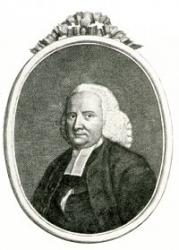
1720 - 1785 Person Name: Gibbons Topics: The Scriptures, Legal, Prophetic, and Evangelical, collectively testify of the Savior Author of "The Gospel worthy of all Acceptaince" in Psalms, Hymns and Spiritual Songs Gibbons, Thomas, was born at Beak, near Newmarket, May 31, 1720; educated by Dr. Taylor, at Deptford; ordained in 1742, as assistant to the Rev. Mr. Bures, at Silver Street Chapel, London; and in 1743 became minister of the Independent Church, at Haberdashers' Hall, where he remained till his death, Feb. 22, 1785. In addition to his ministerial office he became, in 1754, tutor of the Dissenting Academy at Mile End, London; and, in 1759, Sunday evening lecturer at Monkwell Street. In 1760 the College at New Jersey, U.S., gave him the degree of M.A. and in 1764 that of Aberdeen the degree of D.D. His prose works were (1) Calvinism and Nonconformity defended, 1740; (2) Sermons on various subjects, 1762; (3) Rhetoric, 1767; (4) Female Worthies, 2 vols., 1777. Three volumes of sermons were published after his death. His poetical works were:—
(1) Juvenilia; Poems on various subjects of Devotion and Virtue, 1750, was published by subscription. Among the subscribers is found the name of the Rev. Mr. George Whitefield, B.A. It was dedicated to the Countess of Huntingdon, and bears her coat of arms. In this volume are included versions of six of the Psalms, and a few hymns. (2) Hymns adapted to Divine wor¬ship in two books. Book I. Derived from select passages of Holy Scriptures. Book II., Written on sacred subjects and particular occasions, partly collected front various authors, but principally composed by Thomas Gibbons, D.D., 1769. (3) Hymns adapted to Divine worship in two books. Book I. Derived from select passages of the Holy Scriptures. Book II. Written on sacred subjects and particular occasions by Thomas Gibbons, D.D., 1784. (4) The Sermons, published in 1762, included fifteen hymns, one being appended to each sermon. (5) The Christian Minister in three poetical epistles to Philander, 1772. This volume included (i.) Poetical versions of several parts of Scripture, (ii.) Translations of poems from Greek and Latin writers, (iii.) Original pieces on various occasions. (6) An English version of the Latin Epitaphs on the Nonconformist's Memorial, with a poem to the memory of the 2000 ministers ejected in 1662, 1775. (7) Select Portions of Scripture, and Remarkable Occurrences, versified for the Instruction and entertainment of Youth of both Sexes, 1781. Reprinted in America, 1805.
Dr. Gibbons may be called a disciple in hymnwriting of Dr. Watts, whose life he wrote. His hymns are not unlike those of the second rank of Watts. He lacked "the vision and faculty divine," which gives life to hymns and renders them of permanent value. Hence, although several are common use in America, they are dying out of use in Great Britain. The most popular are, "Now let our souls on wings sublime"; "Great God, the nations of the earth"; "Thy goodness, Lord, our souls confess"; "To Thee, my God, whose presence fills." [Rev. W. Garrett Horder]
The less important of Dr. Gibbons's hymns, which are still in common use are:—
1. And be it so that till this hour. Hope. This is No. 50 in Book ii. of his Hymns adapted to Divine Worship, &c, 1769, in 5 stanzas of 4 lines, and headed, "Encouragement against Despair; or, Hope still set before us." Originally a Sacramental hymn in Rippon's Selections, 1787, No 230, it was altered to a general hymn, with special reference to "Hope."
2. Assist us, Lord, Thy Name to praise. Life, a race. In Rippon's Baptist Selections, 1787, No. 326, in 4 stanzas of 4 lines.
3. Eternal life, how sweet the sound. Eternal Life. This is one of three hymns on Titus iii. 7, in his Hymns adapted to Divine Worship, &c, 1784, Book i., No. 156, in 5 stanzas of 4 lines. In the American Dutch Reformed Hymns of the Church, 1869, No. 843 begins with st. ii., "Eternal life, how will it reign?"
4. Father, is not Thy promise pledged? Missions. This is Pt. iii.of his hymn, "Great God, the nations of the earth" (q. v.).
5. Forgiveness, 'tis a joyful sound. Pardon. From his Hymns adapted to Divine Worship, &c, 1769. Book i., No. 69, in 5 stanzas of 4 lines into several modern collections in Great Britain and America. It is based on St. Luke, vii. 47.
6. From winter's barren clods. [Spring.] Appeared in his Hymns, &c, 1784, Book ii., No. 27, in 5 stanzas of 4 lines, and headed, "The Return of the Spring celebrated in the Powerful and Gracious Work of God." In 1787 it was repeated anonymously in Rippon's Baptist Selections, No. 499. The hymn, "Great God, at Thy command, Seasons in order rise," begins with st. iii. of this hymn.
7. Happy the men in ancient days. Public Worship. In his Hymns adapted to Public Worship, &c, 1784.
8. On Zion, his most holy mount. Gospel Feast. From his Hymns adapted for Divine Worship, &c, 1769, Book i., No. 35, in 6 stanzas of 4 lines. It was originally a Sacramental hymn, but in its abbreviated form, as in use in America, that element is eliminated.
9. Our Father, high enthroned above. Lord's Prayer. Appeared in the Bristol Baptist Collection of Ash & Evans, 1769, No. 41, in 9 stanzas of 4 lines. In 1772 it was reprinted in a revised form, and with an additional stanza, in Gibbons's Christian Minister, p. 74.
10. Thy goodness, Lord, our souls confess. Providence and Grace. Appeared in the Gospel Magazine, 1775, and in his Hymns adapted to Divine Worship, &c, 1784, Bk. ii., No. 11, in 7 stanzas of 4 lines. In Dobell's Selections, 1806, st. i.-iv., and vi. were given with alterations, which were not improvements, as No. 9. This arrangement is repeated in modern hymnbooks, including the Baptist Hymnal, 1879, and others.
11. When Jesus dwelt in mortal clay. Jesus our Example. From his Hymns adapted to Divine Worship, &c, 1784, Book i., No. 128, in 9 stanzas of 4 lines into a few American collections, including the Baptist Praise Book, 1871.
The more important of Dr. Gibbons's hymns are annotated under their respective first lines. [William T. Brooke]
-- John Julian, Dictionary of Hymnology (1907)
======================
Gibbons, Thomas, p. 420, i. From his Hymns, &c, of 1784, are also in common use:—
1. Lord God, omnipotent to bless. Divine Help desired.
2. Now may the God of peace and love. Close of Service. (1769. Pt. i.)
3. O what stupendous mercy shines. Benevolence.
--John Julian, Dictionary of Hymnology, Appendix, Part II (1907)
Thomas Gibbons
George C. Martin
1844 - 1916 Person Name: G. C. Martin (1844-1916) Topics: God, Spirit Word of Truth, the Scriptures Composer of "ST. HELEN" in Hymns for Today's Church (2nd ed.)
George C. Martin
Pages