You help make Hymnary.org possible. More than 10 million people from 200+ countries found hymns, liturgical resources and encouragement on Hymnary.org in 2025, including you. Every visit affirms the global impact of this ministry.

If Hymnary has been meaningful to you this year, would you take a moment today to help sustain it? A gift of any size—paired with a note of encouragement if you wish—directly supports the server costs, research work and curation that keep this resource freely available to the world.

Give securely online today, or mail a check to:
Hymnary.org
Calvin University
3201 Burton Street SE
Grand Rapids, MI 49546

Thank you for your partnership, and may the hope of Advent fill your heart.

Person Results

Meter:8.6.8.6
All:(m.c.)
In:people

Planning worship? Check out our sister site, ZeteoSearch.org, for 20+ additional resources related to your search.
Showing 41 - 50 of 616Results Per Page: 102050

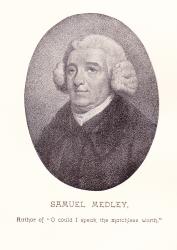
Samuel Medley

1738 - 1799 Meter: 8.6.8.6 Author of "O What Amazing Works of Grace" in The A.M.E. Zion Hymnal Medley, Samuel, born June 23, 1738, at Cheshunt, Herts, where his father kept a school. He received a good education; but not liking the business to which he was apprenticed, he entered the Royal Navy. Having been severely wounded in a battle with the French fleet off Port Lagos, in 1759, he was obliged to retire from active service. A sermon by Dr. Watts, read to him about this time, led to his conversion. He joined the Baptist Church in Eagle Street, London, then under the care of Dr. Gifford, and shortly afterwards opened a school, which for several years he conducted with great success. Having begun to preach, he received, in 1767, a call to become pastor of the Baptist church at Watford. Thence, in 1772, he removed to Byrom Street, Liverpool, where he gathered a large congregation, and for 27 years was remarkably popular and useful. After a long and painful illness he died July 17, 1799. Most of Medley's hymns were first printed on leaflets or in magazines (the Gospel Magazine being one). They appeared in book form as:— (1) Hymns, &c. Bradford, 1785. This contains 42 hymns. (2) Hymns on Select Portions of Scripture by the Rev. Mr. Medley. 2nd ed. Bristol. W. Pine. 1785. This contains 34 hymns, and differs much from the Bradford edition both in the text and in the order of the hymns. (3) An enlargement of the same in 1787. (4) A small collection of new Hymns, London, 1794. This contains 23 hymns. (5) Hymns. The Public Worship and Private Devotion of True Christians Assisted in some thoughts in Verse; principally drawn from Select Passages of the Word of God. By Samuel Medley. London. Printed for J. Johnson. 1800. A few of his hymns are also found in a Collection for the use of All Denominations, published in London in 1782. Medley's hymns have been very popular in his own denomination, particularly among the more Calvinistic churches. In Denham's Selections there are 48, and in J. Stevens's Selections, 30. Their charm consists less in their poetry than in the warmth and occasional pathos with which they give expression to Christian experience. In most of them also there is a refrain in the last line of each verse which is often effective. Those in common use include:— 1. Come, join ye saints, with heart and voice. (1800). Complete in Christ. 2. Death is no more among our foes. Easter. 3. Eternal Sovereign Lord of all. (1789). Praise for Providential Care. 4. Far, far beyond these lower skies. (1789). Jesus, the Forerunner. 5. Father of mercies, God of love, whose kind, &c. (1789.) New Year. 6. Great God, today Thy grace impart. Sermon. 7. Hear, gracious God! a sinner's cry. (1789). Lent. 8. In heaven the rapturous song began. Christmas. 9. Jesus, engrave it on my heart. (1789). Jesus, Needful to all. 10. Mortals, awake, with angels join. (1782). Christmas. 11. My soul, arise in joyful lays. (1789). Joy in God. 12. Now, in a song of grateful praise. Praise to Jesus. In the Gospel Magazine, June, 1776. 13. O could I speak the matchless worth. (1789.) Praise of Jesus. 14. O for a bright celestial ray. Lent. 15. O God, Thy mercy, vast and free. (1800). Dedication of Self to God. 16. O let us tell the matchless love. Praise to Jesus. 17. O what amazing words of grace. (1789). Foutain of Living Waters. 18. Saints die, and we should gently weep. (1800). Death and Burial. From his "Dearest of Names, Our Lord and King." 19. See a poor sinner, dearest Lord. Lent. 20. Sing the dear Saviour's glorious fame. (1789). Jesus the Breaker of bonds. In 1800 a Memoir of Medley was published by his son, which is regarded by members of the family now living as authoritative. But in 1833 appeared another Memoir by Medley's daughter Sarah, to which are appended 52 hymns for use on Sacramental occasions. These she gives as her father's. But 8 of them are undoubtedly by Thos. Kelly, published by him in 1815, and reprinted in subsequent editions of his Hymns. The remainder are by Medley. Nearly all of these 52 hymns (both Medley's and Kelly's) have been altered in order to adapt them to Sacramental use. In Sarah Medley's volume, Kelly's hymns all follow one another, and three of them are in a metre which Medley apparently never used. What could have been Sarah Medley's motive in all this it is hard to divine. She is said to have been a clever, though unamiable woman, and was herself the author of a small volume of Poems published in 1807. In the Memoir she does not conceal her hatred of her brother. [Rev. W. R. Stevenson, M.A.] -- John Julian, Dictionary of Hymnology (1907)

C. G. Gläser

1784 - 1829 Person Name: C. G. Gläser, 1784-1829 Meter: 8.6.8.6 Composer of "AZMON" in Evangelical Lutheran Hymnary Carl Gotthelf Gläser Germany 1781-1829. Born at Weissenfels, Burgenlandkreis, Sachsen-Anhalt, Germany, he received musical training from his father, after which he attended St. Thomas school in Leipzig. He became an author and composer. At Barmen he taught voice, piano, and violin. He also wrote and conducted chorale music. He died at Barmen. John Perry

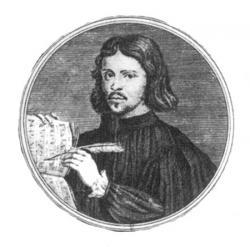
Thomas Tallis

1505 - 1585 Person Name: Thomas Tallis, c. 1515-1585 Meter: 8.6.8.6 Composer of "TALLIS'S ORDINAL" in The Hymnary of the United Church of Canada Thomas Tallis (b. Leicestershire [?], England, c. 1505; d. Greenwich, Kent, England 1585) was one of the few Tudor musicians who served during the reigns of Henry VIII: Edward VI, Mary, and Elizabeth I and managed to remain in the good favor of both Catholic and Protestant monarchs. He was court organist and composer from 1543 until his death, composing music for Roman Catholic masses and Anglican liturgies (depending on the monarch). With William Byrd, Tallis also enjoyed a long-term monopoly on music printing. Prior to his court connections Tallis had served at Waltham Abbey and Canterbury Cathedral. He composed mostly church music, including Latin motets, English anthems, settings of the liturgy, magnificats, and two sets of lamentations. His most extensive contrapuntal work was the choral composition, "Spem in alium," a work in forty parts for eight five-voice choirs. He also provided nine modal psalm tunes for Matthew Parker's Psalter (c. 1561). Bert Polman

David Evans

1874 - 1948 Person Name: David Evans, 1874-1948 Meter: 8.6.8.6 Harmonizer of "JACKSON " in Together in Song David Evans (b. Resolven, Glamorganshire, Wales, 1874; d. Rosllannerchrugog, Denbighshire, Wales, 1948) was an important leader in Welsh church music. Educated at Arnold College, Swansea, and at University College, Cardiff, he received a doctorate in music from Oxford University. His longest professional post was as professor of music at University College in Cardiff (1903-1939), where he organized a large music department. He was also a well-known and respected judge at Welsh hymn-singing festivals and a composer of many orchestral and choral works, anthems, service music, and hymn tunes. Bert Polman

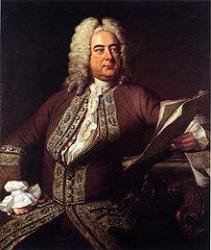
George Frideric Handel

1685 - 1759 Person Name: George Frideric Handel, 1685-1759 Meter: 8.6.8.6 Composer of "ANTIOCH" in Complete Anglican Hymns Old and New George Frideric Handel (b. Halle, Germany, 1685; d. London, England, 1759) became a musician and composer despite objections from his father, who wanted him to become a lawyer. Handel studied music with Zachau, organist at the Halle Cathedral, and became an accomplished violinist and keyboard performer. He traveled and studied in Italy for some time and then settled permanently in England in 1713. Although he wrote a large number of instrumental works, he is known mainly for his Italian operas, oratorios (including Messiah, 1741), various anthems for church and royal festivities, and organ concertos, which he interpolated into his oratorio performances. He composed only three hymn tunes, one of which (GOPSAL) still appears in some modern hymnals. A number of hymnal editors, including Lowell Mason, took themes from some of Handel's oratorios and turned them into hymn tunes; ANTIOCH is one example, long associated with “Joy to the World.” Bert Polman

Oliver Holden

1765 - 1844 Person Name: Oliver Holden, 1765-1844 Meter: 8.6.8.6 Composer of "CORONATION" in The A.M.E. Zion Hymnal Holden, Oliver, one of the pioneers of American psalmody, was born in 1765, and was brought up as a carpenter. Subsequently he became a teacher and music-seller. He died at Charlestown, Massachusetts, 1844. His published works are American Harmony, 1793; the Worcester Collection, 1797; and other Tune books. One of his most popular tunes is "Coronation." It is thought that he edited a small hymn-book, published at Boston before 1808, in which are 21 of his hymns with the signature "H." A single copy only of this book is known, and that is without title-page. Of his hymns the following are in common use:— 1. All those who seek a throne of grace. [God present where prayer is offered.] Was given in Peabody's Springfield Collection, 1835, No. 92, in a recast form as, “They who seek the throne of grace." This form is in extensive use in America, and is also in a few collections in Great Britain. 2. With conscious guilt, and bleeding heart. [Lent.] This, although one of the best of Holden's hymns, has passed out of use. It appeared, with two others, each bearing bis signature, in the Boston Collection (Baptist), 1808. 3. Within these doors assembled now. [Divine Worship.] [Rev. F. M. Bird, M.A.] -- John Julian, Dictionary of Hymnology

A. L. Peace

1844 - 1912 Person Name: Albert L. Peace, 1844-1912 Meter: 8.6.8.6 Composer of "GREEN HILL" in The A.M.E. Zion Hymnal Albert Lister Peace DMus United Kingdom 1844-1912. Born at Huddersfield, Yorkshire, England, son of a warehouseman and woolstapler, he was extremely gifted as a musician, largely self-taught, playing the organ at Holmfirth Parish Church near Huddersfield at age nine. He married Margaret Martin Steel Gilchrist, and they had three children: Lister, Archibald, and Margaret. In 1865 he was appointed organist of Trinity Congregational Church in Glasgow, Scotland. He obtained his doctorate degree from the University of Oxford in 1875. He became organist at Glasgow Cathedral in 1879. In 1897 he succeeded William Best as organist at St George’s Hall, Liverpool. In later years he was in much demand to play the organ in recitals. He did so at Canterbury Cathedral (1886), Victoria Hall, Hanley, Stoke-on-Trent (1888), and Newcastle Cathedral (1891). He composed orchestrations, sonatas, cantatas, and concert and church service anthems. He was an arranger, author, and editor. He died at Blundelsands, Liverpool, England. John Perry

William Hiley Bathurst

1796 - 1877 Meter: 8.6.8.6 Author of "O for a faith that will not shrink" in Common Service Book of the Lutheran Church Bathurst, William Hiley , M.A., son of the Rt. Hon. Charles Bragge (afterwards Bathurst) some time M.P. for Bristol, born at Clevedale, near Bristol, Aug. 28, 1796, and educated at Winchester, and Christ Church, Oxford, graduating B.A. in 1818. From 1820 to 1852 he held the Rectory of Barwick-in-Elmet, near Leeds. Resigning the Rectory in the latter year, through his inability to reconcile his doctrinal views with the Book of Common Prayer, he retired into private life, and died at Lydney Park, Gloucestershire, Nov. 25, 1877. His works include, The Georgics of Virgil: Translated by W. H. B., 1849; Metrical Musings; or, Thoughts on Sacred Subjects in Verse, 1849; and Psalms and Hymns for Public and Private Use, 1831 (2nd ed. 1842). This last contains 141 versions of Psalms, and 206 hymns. All the latter, and many of the former are original. Of his hymns, those in most extensive use are, "Hark! the distant isles proclaim," "Holy Spirit from on high,” "Jesus, Thy Church with longing eyes,” "Eternal Spirit, by whose power," "O for a faith that will not shrink” and “O Saviour, may we never rest." In addition to these and a few others (all of which are annotated under their first lines), the following are in common use, but mainly in America:— 1. Before Thy cross, my dying Lord. Faith. 2. Before Thy mercy-seat, O Lord. Holy Scriptures. 3. Behold what unspeakable love. Heaven. 4. Does the Lord of Glory speak? Holy Scripture. 5. Ere the world with light invested. Holy Spirit. 6. Except the Lord our labours bless. Ps. cxxvii. 1. Full of weakness and of sin. The Creator Spirit desired. 8. Glory to the Almighty Father. Praise. 9. Holy Lord, our hearts prepare. Preparation for Prayer. 10. Holy Spirit from on high. Holy Spirit's direction implored. 11. How blest are they who feel the weight. Repentance. 12. How strange that souls whom Jesus feeds. Conflict. 13. How sweet it is in early youth. Youthful Piety. 14. How sweet the hour of closing day. Death. 15. Led by a Father's gentle hand. Communion of Saints 16. Lord, a better heart bestow. Lent. 17. Lord, bid the light arise. To the Holy Spirit. 18. Lord, shed Thy glory as of old. Whitsuntide. 19. Lord, what blessed consolation. Safety of the Church. 20. Lord, when our offerings we present. Offertory. 21. 0 for a beam of heavenly light. Lent. 22. 0 for that flame of living tire. Holy Spirit. 23. 0 give thanks unto the Lord. Ps. cv. 24. Shepherd of Israel, from above. On behalf of Children. 25. This day the Lord hath called His own. Sunday. 26. When the world my heart is rending. Heaven. 27. Why search ye in the narrow tomb? Ascension. 28. Ye servants of the living God. Praise. All these hymns were given in his Psalms & Hymns , &c, 1831 (Preface dated November 15th, 1830), and repeated, without alteration, in the 2nd ed., 1842. They are characterized by simplicity of language, and directness of aim; but do not in any instance rise above the ordinary level of passable hymn-writing. In some American collections Bathurst's name is contracted to "Bath," and this is regarded either as a complete surname or as a Bath Collection. The contraction was given by Bickersteth in his Christian Psalmody, 1833. --John Julian, Dictionary of Hymnology (1907) =================== Bathurst, William H., p. 117, ii. Additional hymns from his Psalms & Hymns, 1831, are in common use as follows:— 1. Great God, when I approach Thy throne. Redemption. 2. How bright a day was that which saw. The First Sabbath. 3. How frail and fallible I am. Jesus Unchangeable. 4. In Jesus' name with one accord. Divine Worship. 5. Lord, I claim Thee for my own. Ps. lxiii. 6. Lord shew Thy glory as of old. This is not "Lord shed Thy glory, &c," as stated at p. 118, i., 18. 7. Lord, when I lift my voice to Thee. Ps. ci. 8. O Lord, defend us as of old. Ps. lxxiv. 9. O Lord, how long shall heathens hold. Ps. lxxix. 10. 0 Lord, look down with pitying eye. Intercession for the Jews. Begins with st. iv. of “0 how is Zion's glory gone." 11. Praise God, O my soul. Ps. cxlvi. 12. Saviour, at Thy feet we bow. United Prayer. 13. 'Tis past, that agonizing hour. Ascension. 14. The Lord look'd all around. Universal Corruption. 15. To the Source of every blessing. Praise to the Father. 16. What can relieve the troubled soul? Christ the Comforter. --John Julian, Dictionary of Hymnology, Appendix, Part II (1907)

Harriet Auber

1773 - 1862 Meter: 8.6.8.6 Author of "With Joy We Hail the Sacred Day" in The A.M.E. Zion Hymnal Auber, Harriet, daughter of Mr. James Auber, b. in London, Oct. 4, 1773. During the greater part of her quiet and secluded life she resided at Broxbourne and Hoddesdon, Herts, and died at the latter place on the 20th Jan., 1862. Miss Auber wrote devotional and other poetry, but only a portion of the former was published in her Spirit of the Psalms, in 1829. This collection is mainly her work, and from it some useful versions of the Psalms have been taken and included in modern hymn-books, about 20 appearing in Spurgeon's Our Own Hymn Book, 1866. Miss Auber's name is widely known, but it is principally through her exquisite lyric, "Our blest Redeemer, ere He breathed," and the Epiphany hymn, "Bright was the guiding star that led." (For criticism of her work, see English Psalters, §. 17.) In addition to these and other hymns by Miss Auber, which are annotated under their respective first lines, the following are also in C. V., but principally in America:— 1.  Arise, ye people, and adore.   Easter. 2.  As Thy chosen people, Lord.   Ps. lxciii. 3.  Can guilty man indeed believe?   Ps. xciv. 4.  Delightful is the task to sing.   Ps. cxlvii. 5.  Father of Spirits, Nature's God.   Ps. cxxxi. 6.  Hail, gracious Source of every good.   Ps. Ixv. 7.  Hasten, Lord, the glorious time.   Ps. lxxii. 8.  Jehovah reigns, O earth, rejoice.   Ps. xccii. 9.  Join, all ye servants of the Lord.   H. Scriptures. 10.  Jesus, Lord, to Thee we sing.   Ps. cx. 11.  O all ye lands, rejoice in God.   Ps. lxvi. 12.  O God our Strength, to Thee the song.   Ps. lIxxxi. 13.  O praise our great and gracious Lord.   Ps. lxxviii. 14.  On thy church, O power divine.   Ps. lxvii. 15.  Sweet is the work, O Lord.   Sunday. 16.  That Thou, O Lord, art ever nigh.   Ps. lxxv. 17.  The Lord, Who hath redeemed our souls.   Ps. xxxi. 18.  When all bespeaks a Father's love.   Ps. set. 19.  When dangers press and fears invade.   Ps. lxii. 20.  Who, O Lord, when life is o'er.   Ps. xv. 21.  Whom have we   Lord,  in  heaven, but Thee.   Ps. lxxiii. 22.  Wide, ye heavenly gates, unfold.   Ascension. 23.  With hearts in love abounding.   Ps. xlv. 24.  With joy we hail the sacred day.   Sunday. 25.  Vainly through the night the ranger.   Ps. cxvii. All these psalm-versions and hymns are from her Spirit of the Psalms,   London, 1829. - John Julian, Dictionary of Hymnology (1907) ========================= Auber, Harriet, p. 90, ii. The following versions of psalms from her Spirit of the Psalms, 1829, are also in common use:- 1. Great God, wert Thou extreme to mark. Ps. cxxx. "Thy servants in the temple watched," begins with stanza ii. of this. 2. How blest are they who daily prove. Ps. xli. 3. How blest the children of the Lord. Altered from Ps. cxii. 4. Jehovah, great and awful name. Part of Ps. Ixxviii. 5. 0 Thou Whom heaven's bright host revere. Ps. Ixxxiv. 6. Praise the Lord, our mighty King. Ps. cxxxv. 7. Spirit of peace, Who as a [celestial] Dove. Ps. cxxxiii. 8. Thou by Whose strength the mountains stand. Ps. Ixv. 9. To heaven our longing eyes we raise. Ps. cxxi. 10. Vainly through night's weary hours. Ps. cxxvii. Sometimes "Vainly through the night the ranger." 11. While all the golden harps above. Easter. --John Julian, Dictionary of Hymnology, Appendix, Part II (1907) See also in:Hymn Writers of the Church

Jeremiah Clarke

1669 - 1707 Person Name: J. Clarke, c. 1674-1707 Meter: 8.6.8.6 Composer of "ST. MAGNUS" in Evangelical Lutheran Hymnary

Pages


Export as CSV
It looks like you are using an ad-blocker. Ad revenue helps keep us running. Please consider white-listing Hymnary.org or getting Hymnary Pro to eliminate ads entirely and help support Hymnary.org.