

 My Starred Hymns
 My FlexScores
 My Hymnals
 My Purchased Files
Planning worship?
Check out our sister site, ZeteoSearch.org,
for 20+ additional resources related to your search.
- |
User Links
Person Results
C. J. Boye
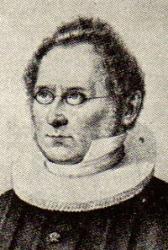
1791 - 1853 Person Name: Casper Boye Topics: Tilføiede Salmer; Added Hymns; Andre Søndag I Advent Til Aftengudstjeneste; Second Sunday in Advent; Nyaarsdag Til Høimesse -Til Tredje Teksxtækkes Evangelium; New Years Day; Andre Søndag efter Hellig 3 Kongers Dag Til Høimesse; Second Sunday after Epiphany; Tredje Søndag efter Hellig 3 Kongers Dag Til Aftengudstjeneste; Third Sunday after Epiphany; Femte Søndag efter Hellig 3 Kongers Dag Til Aftengudstjeneste - Til Sekund Tekstrækkes Epistel; Fifth Sunday after Epiphany; Skjærtorsdag Til Aftengudstjeneste - Til Tredje Tekstrækkes Lektie; Maundy Thursday; Femte Søndag efter Paaske Til Høimesse -Til Sekund Tekstrækkes Evangelium; Fifth Sunday after Easter; Andre Pinsedag Til Aftengudstjeneste - Til Sekund Tekstrækkes Epistel; Pentecost; Fjerde Søndag efter Trefoldiheds Fest Til Høimesse; Fjerde Søndag efter Trefoldiheds Fest Til Høimesse -Til Tredje Teksxtækkes Evangelium; Fourth Sunday after Trinity Sunday; Fourth Sunday after Trinity Sunday; Trettende Søndag efter Trefoldiheds Fest Til Høimesse; Trettende Søndag efter Trefoldiheds Fest Til Høimesse -Til Sekund Tekstrækkes Evangelium; Thirteenth Sunday after Trinity Sunday; Thirteenth Sunday after Trinity Sunday; Syttende Søndag efter Trefoldiheds Fest Til Aftengudstjeneste; Seventeenth Sunday after Trinity Sunday; Tjue sekund Søndag efter Trefoldiheds Fest Til Høimesse -Til Sekund Tekstrækkes Evangelium; Twenty second Sunday after Trinity Sunday; Broderkjærlighed; Brotherly Love; Helliges Samfund; Holy Society; Næstekjærlighed; Charity Author of "Hvor blev Guds Jord et deiligt Sted" in Salmebog for Lutherske Kristne i Amerika Caspar Johannes Boye was born in Kongsberg, Norway in 1791. He studied both law and theology at the University of Copenhagen, became a teacher and later served as rector in Søllerød, Helsingørand and Copenhagen. He died in 1853.
See also in:
Wikipedia
C. J. Boye
Walter Greatorex
1877 - 1949 Person Name: Walter Greatorex (1877-1949) Topics: Advent; Blessing; Canticles and Affirmations of Faith; Children and All-Age Worship; Food and Hunger; God faithfulness of in creation; God Power of; God Promises of; Mary; Other Saints and Festivals The Blessed Virgin Mary; Other Saints and Festivals Luke the Evangelist; Praise; The Fourth Sunday of Advent Year A; The Fourth Sunday of Advent Year C Composer of "WOODLANDS" in Ancient and Modern Walter Greatorex (b. Mansfield, Nottinghamshire, England, 1877; d. Bournemouth, Hampshire, England, 1949) was director of music at Gresham's School, Holt, Norfolk, where from 1911-1936. Before that he served as assistant music master at Uppingham School in Rutland (1900-1910). Greatorex's musical education began as a chorister at King's College, Cambridge, England, and he received his university music training at St. John's College, Cambridge.
Bert Polman
Walter Greatorex
Johann D. Meyer
1636 - 1696 Person Name: J. D. Meier Topics: The Church Year Fourth Sunday in Advent; The Church Year Fourth Sunday in Advent Composer of "[When sinners see their lost condition]" in The Lutheran Hymnary
Johann D. Meyer
Bob Hurd
b. 1950 Person Name: Bob Hurd, b. 1950 Topics: Love of God for Us; Praise; Social Concern; Advent 3 Year A; Fourth Ordinary Year A; Twenty-Third Ordinary Year B; Twenty-Sixth Ordinary Year C; Thirty-Second Ordinary Year B; Service Music for Mass Responsorial Psalm; Sunday Celebrations in the Absence of a Priest Responsorial Psalm Composer of "[It is the LORD who preserves fidelity forever]" in Glory and Praise (3rd. ed.)
Bob Hurd
Philipp Balthazar Sinold von Schütz
1657 - 1742 Person Name: Filip Sinold Topics: Tjueførste Søndag efter Trefoldigheds Fest Til Aftengudstjeneste; Tredje Søndag I Advent Til Høimesse -Til Sekund Tekstrækkes Evangelium; Third Sunday in Advent; Fjerde Søndag efter Hellig 3 Kongers Dag Til Høimesse -Til Tredje Teksxtækkes Evangelium; Fourth Sunday after Epiphany; Second Sunday in Lent; Tredje Søndag I Faste Til Aftengudstjeneste - Til Tredje Tekstrækkes Lektie; Third Sunday in Lent; Tredje Søndag efter Paaske Til Aftengudstjeneste - Til Tredje Tekstrækkes Epistel; Third Sunday after Easter; Fourth Sunday after Easter; Første Søndag efter Trefoldiheds Fest Til Aftengudstjeneste - Til Tredje Tekstrækkes Epistel; First Sunday after Trinity Sunday; Trettende Søndag efter Trefoldiheds Fest Til Aftengudstjeneste - Til Sekund Tekstrækkes Epistel; Thirteenth Sunday after Trinity Sunday; Jesus, vor Seierherre; Jesus, our Lord of Hosts; Kamp og Seier; Struggle and Victory; Troens Kamp; Struggle of Faith; Andem Søndag I Faste Til Høimesse -Til Tredje Teksxtækkes Evangelium; Fjerde Søndag efter Paaske Til Høimesse -Til Anden Tekstrækkes Evangelium Author of "Hjælp mig, o sødeste Jesus, at vinde!" in Salmebog for Lutherske Kristne i Amerika
Philipp Balthazar Sinold von Schütz
E. O. Schwartzkopf
Person Name: Schwarzkopf Topics: Søndag Septuagesima Til Aftengudstjeneste; Septuagesima Sunday; Second Sunday in Advent; Third Sunday in Advent; Søndag efter Jul Til Aftengudstjeneste - Til Tredje Tekstrækkes Epistel; Sunday after Christmas; Femte Søndag efter Hellig 3 Kongers Dag Til Aftengudstjeneste - Til Tredje Tekstrækkes Epistel; Fifth Sunday after Epiphany; Fifth Sunday after Epiphany; Sjette Søndag efter Hellig 3 Kongers Dag Til Aftengudstjeneste; Sixth Sunday after Epiphany; Søndag Seksagesima Til Høimesse -Til Tredje Teksxtækkes Evangelium; Sexagesima Sunday; Tredje Søndag I Faste Til Aftengudstjeneste - Til Tredje Tekstrækkes Lektie; Third Sunday in Lent; Skjærtorsdag Til Aftengudstjeneste - Til Tredje Tekstrækkes Lektie; Maundy Thursday; Femte Søndag efter Paaske Til Aftengudstjeneste - Til Tredje Tekstrækkes Epistel; Fifth Sunday after Easter; Fifth Sunday after Easter; Pentecost; Fjerde Søndag efter Trefoldiheds Fest Til Aftengudstjeneste - Til Tredje Tekstrækkes Epistel; Fourth Sunday after Trinity Sunday; Syttende Søndag efter Trefoldiheds Fest Til Aftengudstjeneste; Seventeenth Sunday after Trinity Sunday; Twenty second Sunday after Trinity Sunday; Tjuetredje Søndag efter Trefoldiheds Fest Til Aftengudstjeneste; Twenty third Sunday after Trinity Sunday; Arbeide I Herrens Tjeneste; Work in the Lord's Service; Broderkjærlighed; Brotherly Love; Helliges Samfund; Holy Society; Kamp og Seier; Struggle and Victory; Menighedsmøder; Church Meetings; Pilgrimsvandring, de Kristnes; The Christian Pilgrimage; Anden Pinsedag Til Aftengudstjeneste - Til Anden Tekstrækkes Epistel; Anden Søndag I Advent Til Aftengudstjeneste; Femte Søndag efter Hellig 3 Kongers Dag Til Aftengudstjeneste - Til Anden Tekstrækkes Epistel; Femte Søndag efter Paaske Til Høimesse -Til Anden Tekstrækkes Evangelium; Tjueanden Søndag efter Trefoldiheds Fest Til Høimesse -Til Anden Tekstrækkes Evangelium; Tredje Søndag I Advent Til Høimesse -Til Anden Tekstrækkes Evangelium Translator of "Kom, Brødre, lad os haste" in Salmebog for Lutherske Kristne i Amerika
E. O. Schwartzkopf
Nils J. Holm
1778 - 1845 Person Name: Nils Holm Topics: Tilføiede Salmer; Added Hymns; Tredje Søndag I Advent Til Høimesse -Til Sekund Tekstrækkes Evangelium; Third Sunday in Advent; Fjerde Søndag efter Hellig 3 Kongers Dag Til Aftengudstjeneste - Til Sekund Tekstrækkes Epistel; Fourth Sunday after Epiphany; Fastelavns Søndag Til Høimesse -Til Sekund Tekstrækkes Evangelium; Shrovetide; Palmesøndag Til Høimesse; Palmesøndag Til Høimesse -Til Tredje Teksxtækkes Evangelium; Palmesøndag Til Aftengudstjeneste - Til Tredje Tekstrækkes Lektie; Palm Sunday; Palm Sunday; Palm Sunday; Åttende Søndag efter Trefoldiheds Fest Til Høimesse -Til Tredje Teksxtækkes Evangelium; Eighteenth Sunday after Trinity Sunday; Tjuetredje Søndag efter Trefoldiheds Fest Til Aftengudstjeneste - Til Sekund Tekstrækkes Epistel; Twenty third Sunday after Trinity Sunday; Heiliggjørelse; Sanctification; Kamp og Seier; Struggle and Victory; Lunkenhed; Lukewarmness Author (attributed to) of "Livets Krone at erlange" in Salmebog for Lutherske Kristne i Amerika
Nils J. Holm
Jodocus van Lodenstein
1620 - 1677 Person Name: Jodokus von Lodenstein Topics: Tilføiede Salmer; Added Hymns; Andre Søndag I Advent Til Aftengudstjeneste - Til Sekund Tekstrækkes Lektie; Second Sunday in Advent; Første Søndag efter Hellig 3 Kongers Dag Til Høimesse; First Sunday after Epiphany; Andre Søndag efter Hellig 3 Kongers Dag Til Høimesse -Til Sekund Tekstrækkes Evangelium; Second Sunday after Epiphany; Tredje Søndag efter Hellig 3 Kongers Dag Til Aftengudstjeneste; Third Sunday after Epiphany; Søndag Septuagesima Til Høimesse -Til Sekund Tekstrækkes Evangelium; Septuagesima Sunday; Første Søndag I Faste Til Høimesse -Til Sekund Tekstrækkes Evangelium; First Sunday in Lent; Andre Søndag I Faste Til Høimesse -Til Sekund Tekstrækkes Evangelium; Second Sunday in Lent; Marias Bebudelses Dag Til Høimesse; Annunciation; Skjærtorsdag Til Høimesse -Til Tredje Teksxtækkes Evangelium; Maundy Thursday; Fjerde Søndag efter Paaske Til Aftengudstjeneste - Til Sekund Tekstrækkes Epistel; Fourth Sunday after Easter; Andre Søndag efter Trefoldiheds Fest Til Høimesse -Til Sekund Tekstrækkes Evangelium; Andre Søndag efter Trefoldiheds Fest Til Høimesse -Til Tredje Teksxtækkes Evangelium; Second Sunday after Trinity Sunday; Second Sunday after Trinity Sunday; Fjerde Søndag efter Trefoldiheds Fest Til Høimesse; Fjerde Søndag efter Trefoldiheds Fest Til Høimesse -Til Tredje Teksxtækkes Evangelium; Fourth Sunday after Trinity Sunday; Fourth Sunday after Trinity Sunday; Trettende Søndag efter Trefoldiheds Fest Til Høimesse -Til Sekund Tekstrækkes Evangelium; Thirteenth Sunday after Trinity Sunday; Tjuefjerde Søndag efter Trefoldiheds Fest Til Høimesse -Til Sekund Tekstrækkes Evangelium; Twenty fourth Sunday after Trinity Sunday; Efterfølgelse, Jesu; Obedience of Jesus; Heiliggjørelse; Sanctification; Hengivelse til Jesus; Devotion to Jesus; Legemet I Herrens Tjeneste; The Body in the Lord's Service; Næstekjærlighed; Charity; Renhed; Purity; Sagtmodighed; Meekness; Taalmodighed; Patience; Ydmyghed; Humility Author of "Hellig' Jesus, Renheds Kilde" in Salmebog for Lutherske Kristne i Amerika Lodenstein, Jodocus van, son of Joost Corneliss van Lodenstein, burgomaster of Delft, was born at Delft Feb. 6, 1620. After studying at the Universities of Utrecht and Franeker he was appointed in 1644 pastor at Zoetermeer and Zegwaard, near Delft; in 1650 at Sluys (Sluis, near the boundary of Flanders); and in 1653 at Utrecht. He died at Utrecht Aug. 6, 1677 (Allg. Deutsche Biog., xix. 73-75).
A pastor of the Reformed Church, he was spiritually allied to the Mystics. After 1665, not being able to exclude the worldly, he ceased to dispense the Holy Communion and altered the Baptismal formula; but never separated from the Church.
His hymns appeared in his Uyt-Spanningen, Behelfende eenige stigtelyke Liederen en andere Gedigten, &c, Utrecht, 1676 [Berlin], which passed through many editions. Two are translated, viz.:—
1. Hemelsch Ooge! Wilt gy dogen. [Love to God.] 1676, p. 346, in 9 st. entitled "Solitude with God." It has passed into English through
Ich will einsam und gemeinsam. No. 723, in Freylinghausen's Gesang-Buch, 1705; Porst's Gesang-Buch, ed. 1855, No. 385. It is a free translation in 5 stanzas of 6 lines, and is probably by C. A. Bernstein (p. 135, ii.), certainly not by Gr. Arnold or G. Tersteegen. Translated as (1) “Quite alone and yet not lonely," in full, from the 1105, as No. 680 in pt. i. of the Moravian Hymn Book, 1754. In the Moravian Hymn Book, 1789 (1886, No. 702), the trs. of stanzas i., ii., were reduced to 8.7.8.7, and this form is also in the Bible Hymn Book, 1845.
2. Heylge Jesu! Hemelsch Voorbeeld! [Christ our Example.] 1676, p. 152, in 9 stanzas, entitled "Jesus Pattern." It has passed into English through
Heiligster Jesu, Heiligungsquelle, tr. in full. This has not yet been traced earlier than G. Arnold's Göttliche Sophia, 1700, pt. ii. p. 327, where it is No. 17 of “some hitherto unknown poems, mostly composed by others.” As it is found in this section it is perhaps more probably by B. Crasselius (q. v.). Koch, vi. 6, and viii. 437, characterises it as "a pearl in the Evangelical Treasury of Song and a genuine Christian moral hymn, of more importance than a hundred of the so-called moral hymns in the second half of the eighteenth cen¬tury." In the Berlin
Jodocus van Lodenstein
Frederick William Faber
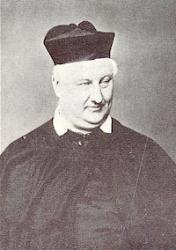
1814 - 1863 Person Name: Frederick William Faber (1814-1863) Topics: Assurance; Atonement; God in grace and mercy; God Love of; Kindness; Proper 15 Year A; Proper 5 Year C; The Fourth Sunday before Advent Year B; The Second Sunday of Lent Year C Author of "There's a wideness in God's mercy" in Ancient and Modern Raised in the Church of England, Frederick W. Faber (b. Calverly, Yorkshire, England, 1814; d. Kensington, London, England, 1863) came from a Huguenot and strict Calvinistic family background. He was educated at Balliol College, Oxford, and ordained in the Church of England in 1839. Influenced by the teaching of John Henry Newman, Faber followed Newman into the Roman Catholic Church in 1845 and served under Newman's supervision in the Oratory of St. Philip Neri. Because he believed that Roman Catholics should sing hymns like those written by John Newton, Charles Wesley, and William Cowpe, Faber wrote 150 hymns himself. One of his best known, "Faith of Our Fathers," originally had these words in its third stanza: "Faith of Our Fathers! Mary's prayers/Shall win our country back to thee." He published his hymns in various volumes and finally collected all of them in Hymns (1862).
Bert Polman
=================
Faber, Frederick William, D.D., son of Mr. T. H. Faber, was born at Calverley Vicarage, Yorkshire, June 28, 1814, and educated at Balliol College, Oxford, graduating B.A. in 1836. He was for some time a Fellow of University College, in the same University. Taking Holy Orders in 1837, he became Rector of Elton, Huntingdonshire, in 1843, but in 1846 he seceded to the Church of Rome. After residing for some time at St. Wilfrid's, Staffordshire, he went to London in 1849, and established the London "Oratorians," or, "Priests of the Congregation of St. Philip Neri," in King William Street, Strand. In 1854 the Oratory was removed to Brompton. Dr. Faber died Sept. 26, 1863. Before his secession he published several prose works, some of which were in defence of the Church of England; and afterwards several followed as Spiritual Conferences, All for Jesus, &c. Although he published his Cherwell Waterlily and Other Poems, 1840; The Styrian Lake, and Other Poems, 1842; Sir Lancelot, 1844; and The Rosary and Other Poems, 1845; and his Lives of the Saints, in verse, before he joined the Church of Rome, all his hymns were published after he joined that communion. They were included in his:—
(1) A small book of eleven Hymns1849, for the School at St. Wilfrid's, Staffordshire. (2) Jesus and Mary: or, Catholic Hymns for Singing and Reading, London 1849. In 1852 the 2nd edition was published with an addition of 20 new hymns. (3) Oratory Hymns, 1854; and (4) Hymns, 1862, being a collected edition of what he had written and published from time to time.
Dr. Faber's account of the origin of his hymn-writing is given in his Preface to Jesus & Mary. After dwelling on the influence, respectively, of St. Theresa, of St. Ignatius, and of St. Philip Neri, on Catholicism; and of the last that "sanctity in the world, perfection at home, high attainments in common earthly callings…was the principal end of his apostolate," he says:—
“It was natural then that an English son of St. Philip should feel the want of a collection of English Catholic hymns fitted for singing. The few in the Garden of the Soul were all that were at hand, and of course they were not numerous enough to furnish the requisite variety. As to translations they do not express Saxon thought and feelings, and consequently the poor do not seem to take to them. The domestic wants of the Oratory, too, keep alive the feeling that something of the sort was needed: though at the same time the author's ignorance of music appeared in some measure to disqualify him for the work of supplying the defect. Eleven, however, of the hymns were written, most of them, for particular tunes and on particular occasions, and became very popular with a country congregation. They were afterwards printed for the Schools at St. Wilfrid's, and the very numerous applications to the printer for them seemed to show that, in spite of very glaring literary defects, such as careless grammar and slipshod metre, people were anxious to have Catholic hymns of any sort. The manuscript of the present volume was submitted to a musical friend, who replied that certain verses of all or nearly all of the hymns would do for singing; and this encouragement has led to the publication of the volume."
In the same Preface he clearly points to the Olney Hymns and those of the Wesleys as being the models which for simplicity and intense fervour he would endeavour to emulate. From the small book of eleven hymns printed for the schools at St. Wilfrid's, his hymn-writing resulted in a total of 150 pieces, all of which are in his Hymns, 1862, and many of them in various Roman Catholic collections for missions and schools. Few hymns are more popular than his "My God, how wonderful Thou art," "O come and mourn with me awhile," and "Sweet Saviour, bless us ere we go." They excel in directness, simplicity, and pathos. "Hark, hark, my soul, angelic songs are swelling," and "O Paradise, O Paradise," are also widely known. These possess, however, an element of unreality which is against their permanent popularity. Many of Faber's hymns are annotated under their respective first lines; the rest in common use include:—
i. From his Jesus and Mary, 1849 and 1852.
1. Fountain of love, Thyself true God. The Holy Ghost.
2. How shalt thou bear the Cross, that now. The Eternal Years.
3. I come to Thee, once more, O God. Returning to God.
4. Joy, joy, the Mother comes. The Purification.
5. My soul, what hast thou done for God? Self-Examination
6. O how the thought of God attract. Holiness Desired.
7. O soul of Jesus, sick to death. Passiontide. Sometimes this is divided into two parts, Pt. ii. beginning, “My God, my God, and can it be."
ii. From his Oratory Hymns, 1854.
8. Christians, to the war! Gather from afar. The Christian Warfare.
9. O come to the merciful Saviour that calls you. Divine Invitation. In many collections.
10. O God, Thy power is wonderful. Power and Eternity of God.
11. O it is sweet to think, Of those that are departed. Memory of the Dead.
12. O what are the wages of sin? The Wages of Sin.
13. O what is this splendour that beams on me now? Heaven.
14. Saint of the Sacred Heart. St. John the Evangelist.
iii. From his Hymns, 1862.
15. Father, the sweetest, dearest Name. The Eternal Father.
16. Full of glory, full of wonders, Majesty Divine. Holy Trinity.
17. Hark ! the sound of the fight. Processions.
18. How pleasant are thy paths, 0 death. Death Contemplated.
19. O God, Whose thoughts are brightest light. Thinking no Evil.
20. O why art thou sorrowful, servant of God? Trust in God.
21. Souls of men, why will ye scatter? The Divine Call.
22. The land beyond the sea. Heaven Contemplated.
23. The thought of God, the thought of thee. Thoughts of God.
24. We come to Thee, sweet Saviour. Jesus, our Rest.
In addition to these there are also several hymns in common use in Roman Catholic hymn-books which are confined to those collections. In the Hymns for the Year, by Dr. Rawes, Nos. 77, 110, 112, 117, 120, 121, 122, 125, 127, 128, 131, 140, 152, 154,169, 170, 174, 179, 180, 192, 222, 226, 230, 271, 272, are also by Faber, and relate principally to the Blessed Virgin Mary. Several of these are repeated in other Roman Catholic collections.
--John Julian, Dictionary of Hymnology (1907
==================
Faber, Frederick William, p. 361, i. To this article the following additions have to be made:—
1. Blood is the price of heaven. Good Friday. (1862.)
2. Exceeding sorrowful to death. Gethsemane. This in the Scottish Ibrox Hymnal, 1871, is a cento from "O soul of Jesus, sick to death," p. 362, i., 7.
3. From pain to pain, from woe to woe. Good Friday. (1854.)
4. I wish to have no wishes left. Wishes about death. (1862.)
5. Why is thy face so lit with smiles? Ascension. (1849.)
The dates here given are those of Faber's works in which the hymns appeared. In addition to these hymns there are also the following in common use:—
6. Dear God of orphans, hear our prayer. On behalf of Orphans. This appeared in a miscellaneous collection entitled A May Garland, John Philip, n.d. [1863], No. 1, in 7 stanzas of 4 lines. In the Roman Catholic Parochial Hymn Book, 1880, it begins, "O God of orphans, hear our prayer."
7. Sleep, sleep my beautiful babe. Christmas Carol. This carol we have failed to trace.
8. By the Archangel's word of love. Pt. i. Life of our Lord. This, and Pt. ii., “By the blood that flowed from Thee"; Pt. iii., "By the first bright Easter day"; also, "By the word to Mary given"; "By the name which Thou didst take"; in The Crown Hymn Book and other Roman Catholic collections, we have seen ascribed to Dr. Faber, but in the Rev. H. Formby's Catholic Hymns, 1853, they are all signed "C. M. C," i.e. Cecilia M. Caddell (p. 200, i.).
--John Julian, Dictionary of Hymnology, Appendix, Part II (1907)
======================
Faber, F. W., pp. 361, i.; 1562, ii. We are informed by members of Dr. Faber's family that his father was Mr. Thomas Henry Faber, sometime Lay Secretary of the Bishop of Durham. In addition to his hymns already noted in this Dictionary, the following are found in various Roman Catholic collections, viz.:—
i. From St. Wilfrid's Hymns, 1849:—
1. Dear Father Philip, holy Sire. S. Philip Neri.
2. Hail, holy Joseph, hail. S. Joseph.
3. Mother of Mercy, day by day. Blessed Virgin Mary.
ii. Jesus and Mary, 1849:—
4. Ah ! dearest Lord! I cannot pray. Prayer.
5. Dear Husband of Mary. S. Joseph.
6. Dear Little One, how sweet Thou art. Christmas.
7. Father and God! my endless doom. Predestination.
8. Hail, holy Wilfrid, hail. S. Wilfrid.
9. O Jesus, if in days gone by. Love of the World.
10. O turn to Jesus, Mother, turn. B. V. M.
11. Sing, sing, ye angel bands. Assum. B. V. M.
iii. Jesus and Mary, 1852:—
12. All ye who love the ways of sin. S. Philip Neri.
13. Day set on Rome! its golden morn. S. Philip Neri.
14. Hail, bright Archangel! Prince of heaven. S. Michael.
15. Hail, Gabriel, hail. S. Gabriel.
16. O Flower of Grace, divinest Flower. B. V. M.
17. Saint Philip! 1 have never known. S. Philip Neri.
18. Sweet Saint Philip, thou hast won us. S. Philip Neri. Previously in the Rambler, May, 1850, p. 425.
iv. Oratory Hymns, 1854:—
19. Day breaks on temple roofs and towers. Expect. of B. V. M.
20. How gently flow the silent years. S. Martin and S. Philip.
21. How the light of Heaven is stealing. Grace.
22. Like the dawning of the morning. Expect. of B. V. M.
23. Mother Mary ! at thine altar. For Orphans.
24. My God! Who art nothing but mercy and kindness. Repentance.
25. O blessed Father! sent by God. S. Vincent of Paul.
26. O do you hear that voice from heaven? Forgiveness.
27. The chains that have bound me. Absolution.
28. The day, the happy day, is dawning. B. V. M.
29. The moon is in the heavens above. B. V. M.
30. Why art thou sorrowful, servant of God? Mercy.
v. Hymns, 1862:—
31. At last Thou art come, little Saviour. Christmas.
32. By the spring of God's compassions. S. Raphael.
33. Fair are the portals of the day. B. V. M.
34. Father of many children. S. Benedict.
35. From the highest heights of glory. S. Mary Magdalene.
36. Like the voiceless starlight falling. B. V. M.
37. Mary! dearest mother. B. V. M.
38. Mother of God, we hail thy heart. B. V. M.
39. O Anne! thou hadst lived through those long dreary years. S. Anne. Previously in Holy Family Hymns, 1860.
40. O balmy and bright as moonlit night. B. V. M.
41. O Blessed Trinity! Thy children. Holy Trinity.
42. O dear Saint Martha, busy saint. S. Martha
43. O Mother, will it always be. B. V. M.
44. O vision bright. B. V. M.
45. Summer suns for ever shining. B. V. M.
46. There are many saints above. S. Joseph. Previously in Holy Family Hymns, 1860.
vi. Centos and altered forms:—
47. Confraternity men to the fight. From "Hark the sound of the fight," p. 362, i.
48. Hail, sainted Mungo, hail. From No. 8.
49. I bow to Thee, sweet will of God. From "I worship Thee," p. 559, ii.
50. They whom we loved on earth. From "0 it is sweet to think," p. 362, i.
51. Vincent! like Mother Mary, thou. From No. 25.
When Dr. Faber's hymns which are in common use are enumerated, the total falls little short of one hundred. In this respect he outnumbers most of his contemporaries. [Rev. James Mearns]
--John Julian, Dictionary of Hymnology, New Supplement (1907)
--------------
See also in:
Hymn Writers of the Church
Frederick William Faber
Hans Chr. Sthen
1544 - 1610 Person Name: Hans C. Sthen Topics: Fourth Sunday in Advent For Evening Author of "Herre Jesu Krist!" in M. B. Landstads Kirkesalmebog og "Nokre Salmar" ved Professor Dr. E. Blix, samt følgende tillæg
Hans Chr. Sthen
Pages




