

 My Starred Hymns
 My FlexScores
 My Hymnals
 My Purchased Files
Planning worship?
Check out our sister site, ZeteoSearch.org,
for 20+ additional resources related to your search.
- |
User Links
Person Results
Melchior Vulpius
1570 - 1615 Person Name: Melchoir Vulpius Topics: Anniversaries; Assurance; Church Year Lent; Church Year Transfiguration; Conflict; Courage; Darkness; Elements of Worship Call to Worship; Elements of Worship Confession (Individual); Elements of Worship Gathering; Elements of Worship Prayer for Illumination; Enemies; Freedom from Fear; God Dependence on; God as Refuge; God as Shelter; God's Armor; God's Love; God's Presence; God's Protection; God's Strength; Hope; Joy; Judgment; Lament Individual; Mercy; Occasional Services Dedication / Consecration / Anniversary; Occasional Services Funerals; Occasional Services Ordination and/or Installation; Peace; People of God / Church Suffering; Prayer; Temptation And Trial; Truth; Year A, Ordinary Time after Epiphany, 3rd Sunday; Year C, Lent, 2nd Sunday Composer of "CHRISTUS, DER IST MEIN LEBEN" in Psalms for All Seasons Born into a poor family named Fuchs, Melchior Vulpius (b. Wasungen, Henneberg, Germany, c. 1570; d. Weimar, Germany, 1615) had only limited educational opportunities and did not attend the university. He taught Latin in the school in Schleusingen, where he Latinized his surname, and from 1596 until his death served as a Lutheran cantor and teacher in Weimar. A distinguished composer, Vulpius wrote a St. Matthew Passion (1613), nearly two hundred motets in German and Latin, and over four hundred hymn tunes, many of which became popular in Lutheran churches, and some of which introduced the lively Italian balletto rhythms into the German hymn tunes. His music was published in Cantiones Sacrae (1602, 1604), Kirchengesangund Geistliche Lieder (1604, enlarged as Ein schon geistlich Gesanglmch, 1609), and posthumously in Cantionale Sacrum (1646).
Bert Polman
Melchior Vulpius
Michael Haydn
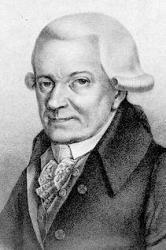
1737 - 1806 Person Name: Johann Michael Haydn Topics: Church Year Pentecost; Church Year Transfiguration; Despair; Elements of Worship Confession (Individual); Elements of Worship Praise and Adoration; Fear; God Light from; God as Spirit; God as Spirit; God's Sovereignty; God's Wisdom; God's Face; God's Faithfulness; God's Greatness; God's Majesty; God's Name; God's Power; God's Presence; God's Strength; Grace; Hymns of Praise; Jesus Christ Teacher; Life Stages Death; Lord's Prayer 4th petition (give us today our daily bread); Occasional Services New Year; Occasional Services Thanksgving Day / Harvest Festival; Renewal; Suffering; The Creation; Truth; Worship; Year A, B, C, Easter, Day after Pentecost; Year B, Ordinary Time after Pentecost, October 16-22 Composer (attributed to) of "LYONS" in Psalms for All Seasons Johann Michael Haydn Austria 1737-1806. Born at Rohrau, Austria, the son of a wheelwright and town mayor (a very religious man who also played the harp and was a great influence on his sons' religious thinking), and the younger brother of Franz Joseph Haydn, he became a choirboy in his youth at the Cathedral of St. Stephen in Vienna, as did his brother, Joseph, an exceptional singer. For that reason boys both were taken into the church choir. Michael was a brighter student than Joseph, but was expelled from music school when his voice broke at age 17. The brothers remained close all their lives, and Joseph regarded Michael's religious works superior to his own. Michael played harpsichord, violin, and organ, earning a precarious living as a freelance musician in his early years. In 1757 he became kapellmeister to Archbishop, Sigismund of Grosswardein, in Hungary, and in 1762 concertmaster to Archbishop, Hieronymous of Salzburg, where he remained the rest of his life (over 40 years), also assuming the duties of organist at the Church of St. Peter in Salzburg, presided over by the Benedictines. He also taught violin at the court. He married the court singer, Maria Magdalena Lipp in 1768, daughter of the cathedral choir-master, who was a very pious women, and had such an affect on her husband, trending his inertia and slothfulness into wonderful activity. They had one daughter, Aloysia Josepha, in 1770, but she died within a year. He succeeded Wolfgang Amadeus Mozart, an intimate friend, as cathedral organist in 1781. He also taught music to Carl Maria von Weber. His musical reputation was not recognized fully until after World War II. He was a prolific composer of music, considered better than his well-known brother at composing religious works. He produced some 43 symphonies,12 concertos, 21 serenades, 6 quintets, 19 quartets, 10 trio sonatas, 4 due sonatas, 2 solo sonatas, 19 keyboard compositions, 3 ballets, 15 collections of minuets (English and German dances), 15 marches and miscellaneous secular music. He is best known for his religious works (well over 400 pieces), which include 47 antiphons, 5 cantatas, 65 canticles, 130 graduals, 16 hymns, 47 masses, 7 motets, 65 offertories, 7 oratorios, 19 Psalms settings, 2 requiems, and 42 other compositions. He also composed 253 secular vocals of various types. He did not like seeing his works in print, and kept most in manuscript form. He never compiled or cataloged his works, but others did it later, after his death. Lothar Perger catalogued his orchestral works in 1807 and Nikolaus Lang did a biographical sketch in 1808. In 1815 Anton Maria Klafsky cataloged his sacred music. More complete cataloging has been done in the 1980s and 1990s by Charles H Sherman and T Donley Thomas. Several of Michael Haydn's works influenced Mozart. Haydn died at Salzburg, Austria.
John Perry
Michael Haydn
Johann Crüger
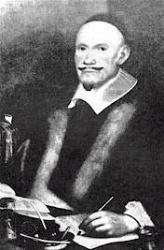
1598 - 1662 Person Name: Johann Crüger (1598-1662) Topics: Despair and Trouble; Devotion; Fear; God peace of; God Protection of; Jesus Names and images for; Longing; Proper 12 Year A; Trust and Confidence Composer of "JESU MEINE FREUDE" in Ancient and Modern Johann Crüger (b. Grossbriesen, near Guben, Prussia, Germany, 1598; d. Berlin, Germany, 1662) Crüger attended the Jesuit College at Olmutz and the Poets' School in Regensburg, and later studied theology at the University of Wittenberg. He moved to Berlin in 1615, where he published music for the rest of his life. In 1622 he became the Lutheran cantor at the St. Nicholas Church and a teacher for the Gray Cloister. He wrote music instruction manuals, the best known of which is Synopsis musica (1630), and tirelessly promoted congregational singing. With his tunes he often included elaborate accompaniment for various instruments. Crüger's hymn collection, Neues vollkomliches Gesangbuch (1640), was one of the first hymnals to include figured bass accompaniment (musical shorthand) with the chorale melody rather than full harmonization written out. It included eighteen of Crüger's tunes. His next publication, Praxis Pietatis Melica (1644), is considered one of the most important collections of German hymnody in the seventeenth century. It was reprinted forty-four times in the following hundred years. Another of his publications, Geistliche Kirchen Melodien (1649), is a collection arranged for four voices, two descanting instruments, and keyboard and bass accompaniment. Crüger also published a complete psalter, Psalmodia sacra (1657), which included the Lobwasser translation set to all the Genevan tunes.
Bert Polman
===============================
Crüger, Johann, was born April 9, 1598, at Gross-Breese, near Guben, Brandenburg. After passing through the schools at Guben, Sorau and Breslau, the Jesuit College at Olmütz, and the Poets' school at Regensburg, he made a tour in Austria, and, in 1615, settled at Berlin. There, save for a short residence at the University of Wittenberg, in 1620, he employed himself as a private tutor till 1622. In 1622 he was appointed Cantor of St. Nicholas's Church at Berlin, and also one of the masters of the Greyfriars Gymnasium. He died at Berlin Feb. 23, 1662. Crüger wrote no hymns, although in some American hymnals he appears as "Johann Krüger, 1610,” as the author of the supposed original of C. Wesley's "Hearts of stone relent, relent" (q.v.). He was one of the most distinguished musicians of his time. Of his hymn tunes, which are generally noble and simple in style, some 20 are still in use, the best known probably being that to "Nun danket alle Gott" (q.v.), which is set to No. 379 in Hymns Ancient & Modern, ed. 1875. His claim to notice in this work is as editor and contributor to several of the most important German hymnological works of the 16th century, and these are most conveniently treated of under his name. (The principal authorities on his works are Dr. J. F. Bachmann's Zur Geschichte der Berliner Gesangbücher 1857; his Vortrag on P. Gerhard, 1863; and his edition of Gerhardt's Geistliche Lieder, 1866. Besides these there are the notices in Bode, and in R. Eitner's Monatshefte für Musik-Geschichte, 1873 and 1880). These works are:—
1. Newes vollkömmliches Gesangbuch, Augspur-gischer Confession, &c, Berlin, 1640 [Library of St. Nicholas's Church, Berlin], with 248 hymns, very few being published for the first time.
2. Praxis pietatis melica. Das ist: Ubung der Gottseligkeit in Christlichen und trostreichen Gesängen. The history of this, the most important work of the century, is still obscure. The 1st edition has been variously dated 1640 and 1644, while Crüger, in the preface to No. 3, says that the 3rd edition appeared in 1648. A considerable correspondence with German collectors and librarians has failed to bring to light any of the editions which Koch, iv. 102, 103, quotes as 1644, 1647, 1649, 1650, 1651, 1652, 1653. The imperfect edition noted below as probably that of 1648 is the earliest Berlin edition we have been able to find. The imperfect edition, probably ix. of 1659, formerly in the hands of Dr. Schneider of Schleswig [see Mützell, 1858, No. 264] was inaccessible. The earliest perfect Berlin edition we have found is 1653.
The edition printed at Frankfurt in 1656 by Caspar Röteln was probably a reprint of a Berlin edition, c. 1656. The editions printed at Frankfurt-am-Main by B. C. Wust (of which the 1666 is in the preface described as the 3rd) are in considerable measure independent works.
In the forty-five Berlin and over a dozen Frankfurt editions of this work many of the hymns of P. Gerhardt, J. Franck, P. J. Spener, and others, appear for the first time, and therein also appear many of the best melodies of the period.
3. Geistliche Kirchen-Melodien, &c, Leipzig, 1649 [Library of St. Katherine's Church, Brandenburg]. This contains the first stanzas only of 161 hymns, with music in four vocal and two instrumental parts. It is the earliest source of the first stanzas of various hymns by Gerhardt, Franck, &c.
4. D. M. Luther's und anderer vornehmen geisU reichen und gelehrten Manner Geistliche Lieder und Psalmen, &c, Berlin, 1653 [Hamburg Town Library], with 375 hymns. This was edited by C. Runge, the publisher, and to it Crüger contributed some 37 melodies. It was prepared at the request of Luise Henriette (q.v.), as a book for the joint use of the Lutherans and the Re¬formed, and is the earliest source of the hymns ascribed to her, and of the complete versions of many hymns by Gerhardt and Franck.
5. Psalmodia Sacra, &c, Berlin, 1658 [Royal Library, Berlin]. The first section of this work is in an ed. of A. Lobwasser's German Psalter; the second, with a similar title to No. 4, and the date 1657, is practically a recast of No. 4,146 of those in 1653 being omitted, and the rest of the 319 hymns principally taken from the Praxis of 1656 and the hymn-books of the Bohemian Brethren. New eds. appeared in 1676, 1700, 1704, 1711, and 1736.
[Rev. James Mearns, M.A.]
-- Excerpt from John Julian, Dictionary of Hymnology (1907)
=======================
Crüger, Johann, p. 271, ii. Dr. J. Zahn, now of Neuendettelsau, in Bavaria, has recently acquired a copy of the 5th ed., Berlin, 1653, of the Praxis.
--John Julian, Dictionary of Hymnology, Appendix, Part II (1907)
Johann Crüger
Arthur Henry Brown
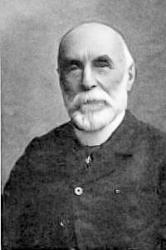
1830 - 1926 Person Name: Arthur Henry Brown, 1830-1926 Topics: Absolution; Commitment; Faith; Fear; Forgiveness; God's Love to Us; Healing; Jesus Christ Redeemer; Lamb Of God; Personal Response to Jesus; Reconciliation; Saints Days and Holy Days St Mary Magdalene Composer of "SAFFRON WALDEN" in Together in Song Born: July 24, 1830, Brentwood, Essex, England.
Died: February 15, 1926, Brentwood, Essex, England.
Almost completely self taught, Brown began playing the organ at the age 10. He was organist of the Brentwood Parish Church, Essex (1842-53); St. Edward’s, Romford (1853-58); Brentwood Parish Church (1858-88); St. Peter’s Church, South Weald (from 1889); and Sir Anthony Browne’s School (to 1926). A member of the London Gregorian Association, he helped assemble the Service Book for the annual festival in St. Paul’s Cathedral. He supported the Oxford Movement, and pioneered the restoration of plainchant and Gregorian music in Anglican worship.
Brown edited various publications, including the Altar Hymnal. His other works include settings of the Canticles and the Holy Communion Service, a Children’s Festival Service, anthems, songs, part songs, and over 800 hymn tunes and carols.
Music:
Alleluia! Sing the Triumph
Arthur
Dale Abbey
Fields of Gold Are Glowing
Gerran
Holy Church
Holy Rood
If Angels Sang Our Savior’s Birth
Lammas
O, Sing We a Carol
Purleigh
Redemptor Mundi
Ring On, Ye Joyous Christmas Bells
Saffron Walden
St. Anatolius
St. Austell
St. John Damascene
St. Mabyn
St. Sophronius
Story of the Cross
Sweet Child Divine
--www.hymntime.com/tch
Arthur Henry Brown
Hans G. Nägeli
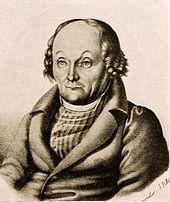
1773 - 1836 Person Name: Johann G. Nägeli, 1773-1836 Topics: Fear; God's Love; Protection; Trust Composer of "DENNIS" in Hymns of the Saints Johann G. Nageli (b. Wetzikon, near Zurich, Switzerland, 1773; d. Wetzikon, 1836) was an influential music educator who lectured throughout Germany and France. Influenced by Johann Pestalozzi, he published his theories of music education in Gangbildungslehre (1810), a book that made a strong impact on Lowell Mason. Nageli composed mainly" choral works, including settings of Goethe's poetry. He received his early instruction from his father, then in Zurich, where he concentrated on the music of. S. Bach. In Zurich, he also established a lending library and a publishing house, which published first editions of Beethoven’s piano sonatas and music by Bach, Handel, and Frescobaldi.
Bert Polman
Hans G. Nägeli
Samuel Sebastian Wesley
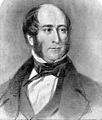
1810 - 1876 Person Name: Samuel S. Wesley, 1810-1876 Topics: Courage; Fear; God the Sustainer; Protection; Salvation; Trust Composer of "AURELIA" in Hymns of the Saints Samuel Sebastian Wesley (b. London, England, 1810; d. Gloucester, England, 1876) was an English organist and composer. The grandson of Charles Wesley, he was born in London, and sang in the choir of the Chapel Royal as a boy. He learned composition and organ from his father, Samuel, completed a doctorate in music at Oxford, and composed for piano, organ, and choir. He was organist at Hereford Cathedral (1832-1835), Exeter Cathedral (1835-1842), Leeds Parish Church (1842-1849), Winchester Cathedral (1849-1865), and Gloucester Cathedral (1865-1876). Wesley strove to improve the standards of church music and the status of church musicians; his observations and plans for reform were published as A Few Words on Cathedral Music and the Music System of the Church (1849). He was the musical editor of Charles Kemble's A Selection of Psalms and Hymns (1864) and of the Wellburn Appendix of Original Hymns and Tunes (1875) but is best known as the compiler of The European Psalmist (1872), in which some 130 of the 733 hymn tunes were written by him.
Bert Polman
Samuel Sebastian Wesley
Joseph Haydn
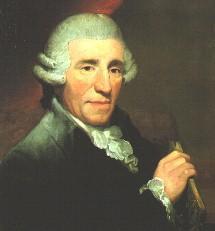
1732 - 1809 Person Name: Franz Joseph Haydn, 1732-1809 Topics: Fears; Freedom; God Love of; Eternal Life; Light; Holy Spirit; Trinity; The Holy Spirit Composer of "HAYDN" in The Hymnal Franz Joseph Haydn (b. Rohrau, Austria, 1732; d. Vienna, Austria, 1809) Haydn's life was relatively uneventful, but his artistic legacy was truly astounding. He began his musical career as a choirboy in St. Stephen's Cathedral, Vienna, spent some years in that city making a precarious living as a music teacher and composer, and then served as music director for the Esterhazy family from 1761 to 1790. Haydn became a most productive and widely respected composer of symphonies, chamber music, and piano sonatas. In his retirement years he took two extended tours to England, which resulted in his "London" symphonies and (because of G. F. Handel's influence) in oratorios. Haydn's church music includes six great Masses and a few original hymn tunes. Hymnal editors have also arranged hymn tunes from various themes in Haydn's music.
Bert Polman
Joseph Haydn
Thomas Haweis
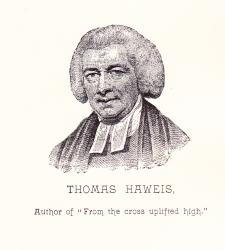
1734 - 1820 Person Name: Thomas Haweis, 1732-1820 Topics: Assurance Of Acceptance; Believer's (See also Christian Saints) Joy of; Christ Morning Star; Communion With God; The Christian Life The Inner Life; Death Fear of removed; Fear of death removed ; Joy In God; Joy Of Believers; Star Morning; Sun Of Righteousness Composer of "RICHMOND" in Methodist Hymn and Tune Book Thomas Haweis (b. Redruth, Cornwall, England, 1734; d. Bath, England, 1820) Initially apprenticed to a surgeon and pharmacist, Haweis decided to study for the ministry at Oxford and was ordained in the Church of England in 1757. He served as curate of St. Mary Magdalen Church, Oxford, but was removed by the bishop from that position because of his Methodist leanings. He also was an assistant to Martin Madan at Locke Hospital, London. In 1764 he became rector of All Saints Church in Aldwinkle, Northamptonshire, and later served as administrator at Trevecca College, Wales, a school founded by the Countess of Huntingdon, whom Haweis served as chaplain. After completing advanced studies at Cambridge, he published a Bible commentary and a volume on church history. Haweis was strongly interested in missions and helped to found the London Mission Society. His hymn texts and tunes were published in Carmino Christo, or Hymns to the Savior (1792, expanded 1808).
Bert Polman
============================
Haweis, Thomas, LL.B., M.D., born at Truro, Cornwall, 1732. After practising for a time as a Physician, he entered Christ's College, Cambridge, where he graduated. Taking Holy Orders, he became Assistant Preacher to M. Madan at the Lock Hospital, London, and subsequently Rector of All Saints, Aldwincle, Northamptonshire. He was also Chaplain to Lady Huntingdon, and for several years officiated at her Chapel in Bath. He died at Bath, Feb. 11, 1820. He published several prose works, including A History of the Church, A Translation of the New Testament, and A Commentary on the Holy Bible. His hymns, a few of which are of more than ordinary merit, were published in his
Carmina Christo; or, Hymns to the Saviour. Designed for the Use and Comfort of Those who worship the Lamb that was slain. Bath, S. Hayward, 1792 (139 hymns), enlarged. London, 1808 (256 hymns). In 1794, or sometime after, but before the enlarged edition was published, two hymns "For the Fast-day, Feb. 28, 1794," were added to the first edition. These were, "Big with events, another year," and "Still o'er the deep the cannon's roar."
The most popular and widely used of his hymns are, "Behold the Lamb of God, Who bore," &c.; "Enthroned on high, Almighty Lord"; and “O Thou from Whom all goodness flows." The rest, all being from Carmina Christo, first edition 1792, are:—
1. Dark was the night and cold the ground. Gethsemane.
2. From the cross uplifted high. Christ in Glory.
3. Great Spirit, by Whose mighty power. Whitsuntide.
4. Submissive to Thy will, my God. Resignation.
5. The happy morn is come. Easter.
6. Thou Lamb of God, that on the tree. Good Friday. The hymn, "Thy Head, the crown of thorns that wears," in Stryker & Main's Church Praise Book, N. Y., 1882, begins with st. ii. of this hymn.
7. To Thee, my God and Saviour, My heart, &c. Praise for Redemption.
--John Julian, Dictionary of Hymnology (1907)
Thomas Haweis
Chas. H. Gabriel
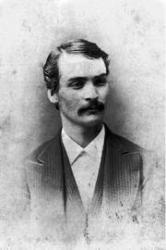
1856 - 1932 Person Name: Charles H. Gabriel Topics: Anxiety/Fear; Providence of God; Peace; Suffering; Comfort; Hope Composer of "SPARROW" in The Sing! Hymnal Pseudonyms: C. D. Emerson, Charlotte G. Homer, S. B. Jackson, A. W. Lawrence, Jennie Ree
=============
For the first seventeen years of his life Charles Hutchinson Gabriel (b. Wilton, IA, 1856; d. Los Angeles, CA, 1932) lived on an Iowa farm, where friends and neighbors often gathered to sing. Gabriel accompanied them on the family reed organ he had taught himself to play. At the age of sixteen he began teaching singing in schools (following in his father's footsteps) and soon was acclaimed as a fine teacher and composer. He moved to California in 1887 and served as Sunday school music director at the Grace Methodist Church in San Francisco. After moving to Chicago in 1892, Gabriel edited numerous collections of anthems, cantatas, and a large number of songbooks for the Homer Rodeheaver, Hope, and E. O. Excell publishing companies. He composed hundreds of tunes and texts, at times using pseudonyms such as Charlotte G. Homer. The total number of his compositions is estimated at about seven thousand. Gabriel's gospel songs became widely circulated through the Billy Sunday-Homer Rodeheaver urban crusades.
Bert Polman
Chas. H. Gabriel
W. H. Jude
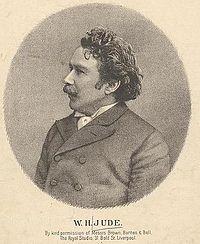
1851 - 1922 Person Name: William H. Jude Topics: Blessedness Of Those Fearing God; Godly Fear Blessedness of Composer of "JUDE" in The Psalter William Herbert Jude United Kingdom 1851-1922. Born at Westleton, Suffolk, England, his family moved to Norfolk. A precocious child, by age eight he was composing music for school plays. Educated at the Liverpool Organ School and East Liverpool College of Music, he became college principal for awhile. He married Catherine Helena Haigh. They had no children. He became a composer, editor, and organist. He was organist for the Blue Coat Hospital & School and Stretford Town Hall near Manchester, while teaching and lecturing. After 20 years there he was appointed organist at the Exeter Hall in London, a primary venue and Christian Centre owned by the YMCA on the Strand in London. As a recitalist, he was asked to “open” over 1000 new organs across the UK, Ireland, and Australia. He was considered the most brilliant organist of his day. He wrote at least two operettas: “Innocents abroad” (1882) and “The mighty deep” (1917). His compositions were frequently religious. He admired British evangelist, Rodney “Gipsy” Smith and published a collection of Smith’s favorite solos in 1903. He also supported the temperance movement. He toured Australia and New Zealand 1890-1894. In 1904 he served as editor for several musical periodicals, including “Monthly Hymnal”, “Minister of music”, and “The Higher life”. He also compiled several hymnbooks, including “Mission hymns” (1911”), and “Festival hymns” (1916). He wrote a number of works on music. He died in London.
John Perry
W. H. Jude
Pages