

 My Starred Hymns
 My FlexScores
 My Hymnals
 My Purchased Files
Planning worship?
Check out our sister site, ZeteoSearch.org,
for 20+ additional resources related to your search.
- |
User Links
Person Results
Samuel Greenwood
Author of "No mortal sense can still or stay" in Christian Science Hymnal (Rev. and enl.)
Samuel Greenwood
Isaac Watts
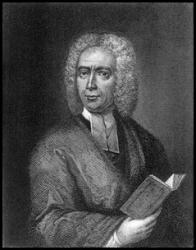
1674 - 1748 Person Name: Dr. Isaac Watts, 1674-1748 Author of "I'm not ashamed to own my Lord" in Methodist Hymn and Tune Book Isaac Watts was the son of a schoolmaster, and was born in Southampton, July 17, 1674. He is said to have shown remarkable precocity in childhood, beginning the study of Latin, in his fourth year, and writing respectable verses at the age of seven. At the age of sixteen, he went to London to study in the Academy of the Rev. Thomas Rowe, an Independent minister. In 1698, he became assistant minister of the Independent Church, Berry St., London. In 1702, he became pastor. In 1712, he accepted an invitation to visit Sir Thomas Abney, at his residence of Abney Park, and at Sir Thomas' pressing request, made it his home for the remainder of his life. It was a residence most favourable for his health, and for the prosecution of his literary labours. He did not retire from ministerial duties, but preached as often as his delicate health would permit.
The number of Watts' publications is very large. His collected works, first published in 1720, embrace sermons, treatises, poems and hymns. His "Horae Lyricae" was published in December, 1705. His "Hymns" appeared in July, 1707. The first hymn he is said to have composed for religious worship, is "Behold the glories of the Lamb," written at the age of twenty. It is as a writer of psalms and hymns that he is everywhere known. Some of his hymns were written to be sung after his sermons, giving expression to the meaning of the text upon which he had preached. Montgomery calls Watts "the greatest name among hymn-writers," and the honour can hardly be disputed. His published hymns number more than eight hundred.
Watts died November 25, 1748, and was buried at Bunhill Fields. A monumental statue was erected in Southampton, his native place, and there is also a monument to his memory in the South Choir of Westminster Abbey. "Happy," says the great contemporary champion of Anglican orthodoxy, "will be that reader whose mind is disposed, by his verses or his prose, to imitate him in all but his non-conformity, to copy his benevolence to men, and his reverence to God." ("Memorials of Westminster Abbey," p. 325.)
--Annotations of the Hymnal, Charles Hutchins, M.A., 1872.
=================================
Watts, Isaac, D.D. The father of Dr. Watts was a respected Nonconformist, and at the birth of the child, and during its infancy, twice suffered imprisonment for his religious convictions. In his later years he kept a flourishing boarding school at Southampton. Isaac, the eldest of his nine children, was born in that town July 17, 1674. His taste for verse showed itself in early childhood. He was taught Greek, Latin, and Hebrew by Mr. Pinhorn, rector of All Saints, and headmaster of the Grammar School, in Southampton. The splendid promise of the boy induced a physician of the town and other friends to offer him an education at one of the Universities for eventual ordination in the Church of England: but this he refused; and entered a Nonconformist Academy at Stoke Newington in 1690, under the care of Mr. Thomas Rowe, the pastor of the Independent congregation at Girdlers' Hall. Of this congregation he became a member in 1693.
Leaving the Academy at the age of twenty, he spent two years at home; and it was then that the bulk of the Hymns and Spiritual Songs (published 1707-9) were written, and sung from manuscripts in the Southampton Chapel. The hymn "Behold the glories of the Lamb" is said to have been the first he composed, and written as an attempt to raise the standard of praise. In answer to requests, others succeeded. The hymn "There is a land of pure delight" is said to have been suggested by the view across Southampton Water. The next six years of Watts's life were again spent at Stoke Newington, in the post of tutor to the son of an eminent Puritan, Sir John Hartopp; and to the intense study of these years must be traced the accumulation of the theological and philosophical materials which he published subsequently, and also the life-long enfeeblement of his constitution.
Watts preached his first sermon when he was twenty-four years old. In the next three years he preached frequently; and in 1702 was ordained pastor of the eminent Independent congregation in Mark Lane, over which Caryl and Dr. John Owen had presided, and which numbered Mrs. Bendish, Cromwell's granddaughter, Charles Fleetwood, Charles Desborough, Sir John Hartopp, Lady Haversham, and other distinguished Independents among its members. In this year he removed to the house of Mr. Hollis in the Minories. His health began to fail in the following year, and Mr. Samuel Price was appointed as his assistant in the ministry. In 1712 a fever shattered his constitution, and Mr. Price was then appointed co-pastor of the congregation which had in the meantime removed to a new chapel in Bury Street. It was at this period that he became the guest of Sir Thomas Abney, under whose roof, and after his death (1722) that of his widow, he remained for the rest of his suffering life; residing for the longer portion of these thirty-six years principally at the beautiful country seat of Theobalds in Herts, and for the last thirteen years at Stoke Newington. His degree of D.D. was bestowed on him in 1728, unsolicited, by the University of Edinburgh. His infirmities increased on him up to the peaceful close of his sufferings, Nov. 25, 1748. He was buried in the Puritan restingplace at Bunhill Fields, but a monument was erected to him in Westminster Abbey.
His learning and piety, gentleness and largeness of heart have earned him the title of the Melanchthon of his day. Among his friends, churchmen like Bishop Gibson are ranked with Nonconformists such as Doddridge. His theological as well as philosophical fame was considerable. His Speculations on the Human Nature of the Logos, as a contribution to the great controversy on the Holy Trinity, brought on him a charge of Arian opinions. His work on The Improvement of the Mind, published in 1741, is eulogised by Johnson. His Logic was still a valued textbook at Oxford within living memory. The World to Come, published in 1745, was once a favourite devotional work, parts of it being translated into several languages. His Catechisms, Scripture History (1732), as well as The Divine and Moral Songs (1715), were the most popular text-books for religious education fifty years ago. The Hymns and Spiritual Songs were published in 1707-9, though written earlier. The Horae Lyricae, which contains hymns interspersed among the poems, appeared in 1706-9. Some hymns were also appended at the close of the several Sermons preached in London, published in 1721-24. The Psalms were published in 1719. The earliest life of Watts is that by his friend Dr. Gibbons. Johnson has included him in his Lives of the Poets; and Southey has echoed Johnson's warm eulogy. The most interesting modern life is Isaac Watts: his Life and Writings, by E. Paxton Hood. [Rev. H. Leigh Bennett, M.A.]
A large mass of Dr. Watts's hymns and paraphrases of the Psalms have no personal history beyond the date of their publication. These we have grouped together here and shall preface the list with the books from which they are taken.
(l) Horae Lyricae. Poems chiefly of the Lyric kind. In Three Books Sacred: i.To Devotion and Piety; ii. To Virtue, Honour, and Friendship; iii. To the Memory of the Dead. By I. Watts, 1706. Second edition, 1709. (2) Hymns and Spiritual Songs. In Three Books: i. Collected from the Scriptures; ii. Composed on Divine Subjects; iii. Prepared for the Lord's Supper. By I. Watts, 1707. This contained in Bk i. 78 hymns; Bk. ii. 110; Bk. iii. 22, and 12 doxologies. In the 2nd edition published in 1709, Bk. i. was increased to 150; Bk. ii. to 170; Bk. iii. to 25 and 15 doxologies. (3) Divine and Moral Songs for the Use of Children. By I. Watts, London, 1715. (4) The Psalms of David Imitated in the Language of the New Testament, And apply'd to the Christian State and Worship. By I. Watts. London: Printed by J. Clark, at the Bible and Crown in the Poultry, &c, 1719. (5) Sermons with hymns appended thereto, vol. i., 1721; ii., 1723; iii. 1727. In the 5th ed. of the Sermons the three volumes, in duodecimo, were reduced to two, in octavo. (6) Reliquiae Juveniles: Miscellaneous Thoughts in Prose and Verse, on Natural, Moral, and Divine Subjects; Written chiefly in Younger Years. By I. Watts, D.D., London, 1734. (7) Remnants of Time. London, 1736.
454 Hymns and Versions of the Psalms, in addition to the centos are all in common use at the present time.
--Excerpts from John Julian, Dictionary of Hymnology (1907)
==================================
Watts, I. , p. 1241, ii. Nearly 100 hymns, additional to those already annotated, are given in some minor hymn-books.
--John Julian, Dictionary of Hymnology, Appendix, Part II (1907)
=================
Watts, I. , p. 1236, i. At the time of the publication of this Dictionary in 1892, every copy of the 1707 edition of Watts's Hymns and Spiritual Songs was supposed to have perished, and all notes thereon were based upon references which were found in magazines and old collections of hymns and versions of the Psalms. Recently three copies have been recovered, and by a careful examination of one of these we have been able to give some of the results in the revision of pp. 1-1597, and the rest we now subjoin.
i. Hymns in the 1709 ed. of Hymns and Spiritual Songs which previously appeared in the 1707 edition of the same book, but are not so noted in the 1st ed. of this Dictionary:—
On pp. 1237, L-1239, ii., Nos. 18, 33, 42, 43, 47, 48, 60, 56, 58, 59, 63, 75, 82, 83, 84, 85, 93, 96, 99, 102, 104, 105, 113, 115, 116, 123, 124, 134, 137, 139, 146, 147, 148, 149, 162, 166, 174, 180, 181, 182, 188, 190, 192, 193, 194, 195, 197, 200, 202.
ii. Versions of the Psalms in his Psalms of David, 1719, which previously appeared in his Hymns and Spiritual Songs, 1707:—
On pp. 1239, U.-1241, i., Nos. 241, 288, 304, 313, 314, 317, 410, 441.
iii. Additional not noted in the revision:—
1. My soul, how lovely is the place; p. 1240, ii. 332. This version of Ps. lxiv. first appeared in the 1707 edition of Hymns & Spiritual Songs, as "Ye saints, how lovely is the place."
2. Shine, mighty God, on Britain shine; p. 1055, ii. In the 1707 edition of Hymns & Spiritual Songs, Bk. i., No. 35, and again in his Psalms of David, 1719.
3. Sing to the Lord with [cheerful] joyful voice, p. 1059, ii. This version of Ps. c. is No. 43 in the Hymns & Spiritual Songs, 1707, Bk. i., from which it passed into the Ps. of David, 1719.
A careful collation of the earliest editions of Watts's Horae Lyricae shows that Nos. 1, 7, 9, 10, 11, 12, 14, 16, p. 1237, i., are in the 1706 ed., and that the rest were added in 1709. Of the remaining hymns, Nos. 91 appeared in his Sermons, vol. ii., 1723, and No. 196 in Sermons, vol. i., 1721. No. 199 was added after Watts's death. It must be noted also that the original title of what is usually known as Divine and Moral Songs was Divine Songs only.
--John Julian, Dictionary of Hymnology, New Supplement (1907)
===========
See also in:
Hymn Writers of the Church
Isaac Watts
Joseph Dacre Carlyle
1759 - 1804 Person Name: Joseph D. Carlyle Author of "Lord, when we bend before thy throne" in The Hymnal Joseph Dacre Carlyle was born at Carlisle, in 1759. He became Professor of Arabic in the University of Cambridge, in 1794, and afterwards Vicar of Newcastle-on-Tyne. He was the author of several works. His death occurred in 1804.
--Annotations of the Hymnal, Charles Hutchins, M.A., 1872
======================
Carlyle, Joseph Dacre, B.D., some time Professor of Arabic in the University of Cambridge, and afterwards Vicar of Newcastle-on-Tyne, was born at Carlisle, June 4, 1758. In 1799 he accompanied the Earl of Elgin to Constantinople with the object of exploring the literary treasures of the public Library of that city. He extended his journey into Asia Minor, and the islands and shores of the Archipelago. He died at Newcastle, April 12, 1804. Amongst his manuscripts were Poems, suggested chiefly by Scenes in Asia Minor, Syria, &c. These were published under that title, in 1805, by Susanna Maria Carlyle. His hymns, which appeared in J. Fawcett's Psalms & Hymns, Carlisle, 1802, include, "Lord, when we bend before Thy throne "—his most popular production; a paraphrase of the Lord's Prayer,"Father of heaven, Whose gracious hand"; and "Lord, when we creation scan." His works include Specimens of Arabian Poetry, 1796.
--John Julian, Dictionary of Hymnology (1907)
Joseph Dacre Carlyle
Melancthon Woolsey Stryker
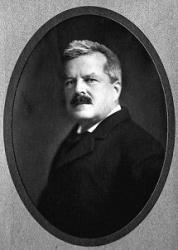
1851 - 1929 Person Name: M. Woolsey Stryker Author of "Almighty Lord, with One Accord" in The Hymnal of The Evangelical United Brethren Church Stryker, Melancthon Woolsey, D.D., son of the Rev. Isaac Pierson Stryker, was born at Vernon, New York, Jan. 7, 1851, and educated at Hamilton College (1872) and Auburn Theological Seminary (1876). In 1876 he entered the Presbyterian ministry as Pastor at Auburn, New York. In 1878 he removed to Ithaca, N. Y.; in 1883 to Holyoke, Massachusetts, and in 1885 to Chicago, Illinois. He received his degree of D.D. from Hamilton College in 1889. He has edited Christian Chorals, 1885 ; New Alleluia, 1880-86; and Church Song, 1889. He was also joint editor with H. P. Main of The Church Praise Book, 1882. He has also published Hymns and Verses, 1883, and Song of Miriam, and Other Hymns and Verses,
1888. To two of these works which have been designed for daily use in divine worship Dr. Stryker contributed the following original hymns:—
i. The Church Praise Book, 1882.
1. Burst forth, 0 Bridegroom, from Thy chamber bright. Second Advent Desired. (1880.)
2. Death cannot make my soul afraid. Death Contemplated. (1881.)
3. Eternal day hath dawned. Heaven. (1881.)
4. Mighty God, Thy Church recover. Missions. (1881.)
5. King again, ye starry chime. Christmas. (1881.)
6. Sing, Israel, for the Lord your strength. Passing the Red Sea. (1878.)
7. The tribes of faith from all the earth. Heaven. (1881.)
8. Thy Kingdom come, 0 blessed Son of God. Second Advent Desired, (1880.) Re-written in Church Song, 1889, as "Thy Kingdom come, 0 everlasting Lord."
9. When the everlasting Lord. Morning. (1880.)
ii. Church Song, 1889.
10. Arouse Thy Church, Almighty God. Missions. (1887.)
11. Father, as here we bow. Holy Trinity. (1886.)
12. Four hundred years their course have sped. American National Hymn. (1888.)
13. God of our Fathers, our God to-day. National Hymn. (1889.)
14. Lo, where that spotless Lamb for sin provided. Passiontide. (1884.)
15. My Maker, at Thy holy throne. Holy Baptism. (1888.)
16. O God, Thy judgments give the King, Thy Son. Missions. (1883.)
17. O Thou, Eternal, Changeless, Infinite. Praise to God. (1882.)
18. 0 Thou, Omnipresent. Omnipresence of the Father. (1885.)
19. O Thou Shepherd of Thine Israel, hear us. Ps. lxxz. (1883.)
20. Our God, and our Redeemer. Opening of a Place of Worship. (1883.)
21. Robbed, bruised, and dying, once I lay. The Good Samaritan. (1886.)
22. Sing, every boy and maiden. Praise to God. (1885.)
23. Thou, Lord of my life, by the words Thou hast said. Lent. (1887.)
24. Thy grace is all of grace. Divine Grace. (1886.)
25. To Thee, our God, these babes we bring. Holy Baptism. (1886.)
26. Tranquilly, slowly, solemnly, lowly. Burial. (1884.)
27. We close Thy blessed Word. Sunday Evening. (1S87.)
28. While all the night-stars fade and wane. Easter. (1884.)
In addition to these original hymns Dr. Stryker has several translations from the German which are in common use. One of his hymns, No. 513, "Now I lay me down to sleep" (Child's Evening hymn), in Church Song, 1889 (dated 1884), begins with a stanza by another hand. In the same work there are also several of his tunes. Dr. Stryker's hymns are massive and rugged, full of dogmatism and fire, but they lack unity and purity of rhythm. In some instances words stand for thoughts, and exclamations for ideas. Nevertheless a few will live.
-- John Julian, Dictionary of Hymnology (1907)
=================
Stryker, M. W., pp. 1098, i.; 1525, ii. 7; 1615, iv. In 1892, Dr. Stryker became Presi¬dent of Hamilton College and also received the LL.D. from Lafayette College. His College Hymnal, 1897, 1904, contains 28 of his hymns, the majority of which date 1890-1894. Of these "From doubt and all its sullen pain" (Faith), written in 1890, is found in other collections. Dr. Stryker d. in 1905. His Dies Irae was published 1892, and his Latermath (verse) 1896.
--John Julian, Dictionary of Hymnology, New Supplement (1907)
Melancthon Woolsey Stryker
John Needham
? - 1786 Author of "When Men, Pretending To Be Wise" in The Cyber Hymnal Needham, John, was the son of John Needham, Baptist Minister, of Hitchin, Herts, but the date of his birth is unknown. He would doubtless be educated by his father, who was a tutor and in repute as a learned man. In 1750 Needham became co-pastor with John Beddome at the Baptist meetinghouse in the Pithay, Bristol; but, two years later, Beddome having retired through age, a violent controversy arose in the Church with regard to a continuance of the plan of co-pastorship. As the result, Needham and a number of his friends removed to a Baptist meetinghouse in Callowhill Street, where a Mr. Foot was pastor. For a time the two societies used the same builing at different hours, but in 1755 they were united, with Mr. Needham and Mr. Foot as co-pastors. It is known that up to 1774 this arrangement continued, and it is also known that in 1787, both Mr. Needham and Mr. Foot having died, the Callowhill Street Church became extinct, but which of the two pastors was the survivor is not known. The date of Needham's death is unknown. It was probably circa 1786. In 1768 he published Hymns Devotional and Moral on various Subjects, collected chiefly from the Holy Scriptures, &c, Bristol, S. Farley, 1768. These hymns are 263 in all, and whilst none of them possess great excellence, yet several are of a pleasing and useful character. During the past 120 years several have appeared in Nonconformist hymnbooks, and specially in those of the Baptists. Of these the following are still in common use:—
1. Ashamed of Christ! my soul disdains. Not ashamed of Christ.
2. Awake, my tongue, thy tribute bring. The Divine Perfections.
3. Glory to God, Who reigns above. Jesus, the Messiah.
4. Great author of the immortal mind. Imitation of God's Moral Perfections. From "flow matchless, Lord, Thy glories are."
5. Happy the man whose cautious steps. Christian Moderation.
6. Holy and reverend is the Name. Reverence in Worship.
7. Kind are the words that Jesus speaks. Christ the Strengthener.
8. Lord,ere [Now Lord] the heavenly seed is sown. Parable of the Sower.
9. Methinks the last great day is come. The Judgment.
10. Rise, O my soul, pursue the path. The Example of the Saints.
11. See how the little toiling ant. Youth for Christ.
12. Thou art, O God, a Spirit pure. God a Spirit.
13. To praise the ever bounteous Lord. Harvest.
14. When some kind shepherd from his fold. The Lost Sheep. From this “O how divine, how sweet the joy," in Hatfield's Church Hymn Book, New York, 1872, is taken. [Rev. W. R. Stevenson, M.A.]
--John Julian, Dictionary of Hymnology (1907)
John Needham
Richard Chenevix Trench
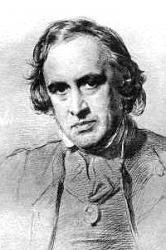
1807 - 1886 Person Name: Rev. Richard C. Trench, D. D. Author of "Make Channels for the Streams of Love" in Sunday School Hymnal Trench, Richard Chenevix, D.D. was born in North Frederick Street, Dublin, on Sept. 9th, 1807, during a visit of his parents of some mouths to Ireland. His father was Richard Trench, 6th son of Frederick Trench, of Woodlands, Co. Galway; his mother Melesina, only grandchild and heiress of Richard Chenevix, Bishop of Waterford, and widow of Colonel St. George. On his mother's side he was almost purely French, the grandfather of Bishop Chenevix of Waterford, Philip Chenevix of d'Eply of Loraine having only taken refuge in England on the revocation of the Edict of Nantes. The Huguenot refugee families married for a long time within themselves, and in Mrs. Richard Trench, four distinct foreign strains were blended. Her sons (the Archbishop and his brothers, besides his two sisters) were the only descendants of the Refugee Philip, either in the male or female line, all the other branches having come to an end. Trench's home in childhood was Elm Lodge, close to the village of Bursledon, not far from Southampton. In February, 1816 he proceeded to Twyford School, and in 1819 to Harrow, where he won great distinction. In October 1825 he was entered at Trinity College, Cambridge. His mother's correspondence is full of references to a little periodical called The Translator, begun in 1825, or immediately on his becoming an undergraduate. She was his ardent co-worker both as contributor and critic. In 1826 he had acquired Spanish, and in that year applied himself to preparing and publishing a volume of Miscellanies, of which the "profits were to be sent to the committee formed for the relief of the exiled Spaniards." On May 27th, 1827, his mother died at Malvern. The Letters and Memorials (1888) give vivid and exciting details of his continuous interest and daring personal service and sacrifices on behalf of Spain. It was during the winter days of 1829-30 that the consultations and schemes respecting Spain were discussed in John Sterling's apartment. Robert Boyd, Trench's cousin, threw himself and his entire fortune into the plot by purchasing a small ship in the Thames and storing it with arms, in which General Torrijos and fifty picked Spaniards were to sail for the new adventure of the Golden Fleece. The enterprise ended tragically. Boyd and others perished by the inevitable vengeance of the Spanish sovereign when captured. By the hand of God, Trench was safe in Gibraltar.
Till far up in young manhood he was undecided as to his calling, Law rather than Divinity colouring his thoughts and plans. He left Cambridge on February 1st, 1829, and rejoined his widowed father at Elm Lodge, near Southampton. He married, at the Abbey Church, Bath, on May 31st, 1832, his own cousin, Frances Mary Trench, daughter of his uncle, Francis Trench (2nd son of Frederick Trench, of Woodlawn, co. Galway, Ireland, and next brother to the 1st Lord Ashtown). On October 7th, 1832, he received Deacon's Orders in Norwich Cathedral at the hands of the aged Bishop Bathurst of Norwich. His first curacy was at Hadleigh, Norfolk, with H. J. Rose. He was ordained priest early in July, 1835, by Bishop Sumner, of Winchester. He published in 1835 The Story of Justin Martyr, and other Poems (Moxon). This was (practically) his first book. In 1838 followed Sabbation, Honor Neale, and other Poems, with Notes. In 1840 appeared his first prose work, Notes on the Parables of our Lord, subsequently companioned with Notes on the Miracles of our Lord (1846). In 1841 "the loving discipline of pain" visited his heart and hearth by the death of his eldest born, a deep sorrow which gave its subtlest and finest inspiration to his Elegiac Poems. A third volume of poetry, Poems from Eastern Sources, the Steadfast Prince, and other Poems, was published early in 1842; and a fourth, Genoveva, later in the same year. Early in 1843 he delivered his Five Sermons before the University of Cambridge, published in 1844. In 1844 also was published Exposition of the Sermon on the Mount, drawn from the Writings of St. Augustine, with Observations. In this same year he became Vicar of Itchen Stoke.
In 1845 he delivered a lecture "On Language as an instrument of Knowledge," which expanded into his famous and suggestive Study of Words. In 1846 he was appointed Professor of Divinity at King's College, London, later changed into "Professor of the Exegesis of the New Testament,” which he held until 1858. The friendship between Trench and Maurice here was very beautiful. In 1846 also came the Hulsean Lectures, their subject being Christ "the Desire of all Nations." In 1849 appeared his Sacred Latin Poetry. This is an inestimable book. In 1852, Lessons on Proverbs and Study of Words, and in 1855 English Past and Present appeared. His Synonyms of the New Testament (1854) was a permanent contribution and inspiration to Philology and Theology. Life's Dream: the Great Theatre of the World, from the Spanish of Calderon, with an Essay on his Life and Genius, was published in 1856; 2nd ed. in 1880. The Crimean war drew from him his finest verse, Poems written during the Russian War (1854-55). In 1856 he was appointed Dean of Westminster. In 1861 was published his Commentary on the Epistles to the Seven Churches in Asia. On New Year's Day, 1864, he was consecrated Archbishop of Dublin in Christ Church Cathedral. He instantly took a foremost place in the regard of the entire community. His published Sermons, including his Studies on the Gospels (1867), are amongst the most thoughtful and quietly eloquent in our language; as are his Lectures on Plutarch (1873), and others. Timolem (1881) was his last poem. His final confirmation was in St. Bartholomew's Church on May 16th, 1884. On November 28th, 1884, he resigned his Archbishopric. He died in London, March 28, 1886. Few have left behind them a more stainless, a more loveable, a more enviable memory. He was sweetness and light embodied. [Rev. A. B. Grosart, D.D., LL.D]
In the strict sense of the word Archbishop Trench, although a poet, was not a hymn-writer. Some of his poetical pieces are used as hymns, but their use is limited. These include:—
1. High thoughts at first, and visions high. Ordination. Appeared in his Story of Justin Martyr, &c, 1835, p. 53, in 1 stanza of 8 lines, and entitled "To a Friend entering the Ministry." Its use as a hymn is in an abbreviated form.
2. I say to thee, do thou repeat. Safety in Divine Guidance. Published in his Story of Justin Martyr, &c, 1835, in 10 stanzas of 3 lines, again in his Poems, 1865, p. 98, and ed. 1885, i. p. 140. It is headed, "The Kingdom of God."
3. Let all men know that all men move. Love of God. Published in his Story of Justin Martyr, &c, 1835, p. 111.
4. Lord, weary of a painful way. Evening. Appeared in his Sabbation, Honor Neale, &c, 1838, p. 117; and Poems, 1885, i. p. 207.
5. Not Thou from us, 0 Lord, hut we. Divine Love. Published in his Story of Justin Martyr, &c, 1835, p. 52, in 14 1., and in his Poems, 1885, i. p. 109.
6. Pour forth the oil, pour boldly forth. The Law of Love. Appeared in his Sabbation, Honor Neale, and Other Poems, 1838, p. 132, in 5 stanzas of 4 lines, and entitled "The Law of Love," also in his Poems, 1865, p. 150, and ed. 1885, i. p. 215. From this is taken the hymn, Make channels for the stream of love."
7. Some murmur when their sky is clear. Contentment. Published in the Sabbation, Honor Neale, and Other Poems, 1838, p. 116, in 2 st. of 8 1., in his Poems, 1865, p. 113, and ed. 1885, i. p. 142.
8. Thou inevitable day. Death. From his Sabbation, Honor Neale, &c, 1838, p. 99, in 14 stanzas of 3 lines, and headed, "The Day of Death." Also in Poems, 1885, i. p. 213.
-- Excerpts from John Julian, Dictionary of Hymnology (1907)
Richard Chenevix Trench
Elizabeth Eunice Smith Marcy
1821 - 1911 Person Name: Elizabeth E. Marcy Author of "Out of the Depths" in Church Hymnal, Mennonite Marcy, Elizabeth Eunice, wife of Oliver Marcy, LL.D., Professor of Natural History in the Northwestern University, Evanston, Illinois, was born in 1822. Her hymn, "Out of the depths to Thee I cry" (Lent), was contributed to the Methodist Episcopal Hymnal in 1877, and published therein in 1878.
--John Julian, Dictionary of Hymnology, Appendix, Part II (1907)
==================
Born: December 22, 1821, Eastham, Connecticut.
Died: January 26, 1911, Evanston, Illinois.
Buried: Woodland Dell Cemetery, Wilbraham, Massachusetts.
She was active in the Woman’s Christian Temperance Union, the Woman’s Home Missionary Society, and the Woman’s Foreign Missionary Society, and founded the Elizabeth Marcy Home in the Bohemian District of Chicago, Illinois. She was described as a "remarkable woman, full of originality in thought and expression, and known throughout Methodism as a writer in verse and prose, and as a speaker who can make even a prosy theme poetic."
--http://www.hymntime.com/tch
==================
Marcy, Elizabeth Eunice. (Eastham, Connecticut, December 22, 1821--January 26, 1911, Evanston, Illinois). Her hymn in five four-line stanzas was included in the Hymn and Tune Book (1866), Methodist Episcopal Church, South, with the first and third lines of the first stanza interchanged. It appeared again in The Methodist Hymnal, (1905) in its original form.
Source: Nutter and Tillett, Hymns and Hymn Writers of the Church.
--Robert G. McCutchan, DNAH Archives
Elizabeth Eunice Smith Marcy
Grace W. Hinsdale
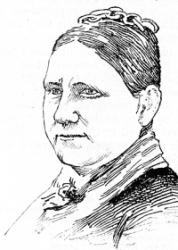
1833 - 1902 Person Name: G. W. Hinsdale Author of "Jesus, Thou art my Lord, my God" in The Congregational Mission Hymnal Hinsdale, Grace Webster, née Haddock, a Congregationalism daughter married to Theodore Hinsdale, a lawyer of New York, in 1850. Mrs. Hinsdale is a contributor to the periodical press, and has published Coming to the King, a Book of Daily Devotion for Children, 1865; republished in England as Daily Devotions for Children, 1867. Her hymns include :—
i. From Coming to the King, 1865.
1. A light streams downward from the sky. Heaven.
2. My soul complete in Jesus stands (1855). Safety in Jesus.
ii. From Schaff’s Christ in Song, N.Y., 1869.
3. Are there no wounds for me? Passiontide. Written April, 1868.
4. Jesus, the rays divine. Jesus ever present. Written July, 1868.
5. There was no angel 'midst the throng. Jesus, the Deliverer; or, Redemption. Written April, 1868. The hymn, "Jesus, Thou art my Lord, my God,” in the 1874 Supplement to the New Congregational Hymn Book, is composed of st. viii.-x., xv.-xvii., slightly altered, of this hymn.
6. Thou stand'st between the earth and heave. Virgin and Child. This poem was "written after viewing Raphael's Madonna di San Sisto, in the Royal Gallery of Dresden, Aug., 1867." (Christ in Song.) It is not suited for congregational use.
Her pen name is "Farin."
-- John Julian, Dictionary of Hymnology
Grace W. Hinsdale
Howard J. Conover
1850 - 1922 Person Name: Howard J. Conover, 1850-1922 Author of "O God We Pray for All Mankind" in The Christian Hymnary Born: November 22, 1850, Woodstone, New Jersey.
Died: June 29, 1922, Elmer, New Jersey.
Buried: Chestnut Grove Cemetery, Elmer, New Jersey.
Son of Elisha Conover and Elizabeth Van Meter, Howard attended Pennington Seminary, Pennington, New Jersey, and Dickinson College, Carlisle, Pennsylvania. He became a Methodist Episcopal minister in 1874, and in his later years, joined the Hymn Writers’ and Composers’ Society in New York City.
--www.hymntime.com/tch/
Howard J. Conover
Pages