You help make Hymnary.org possible. More than 10 million people from 200+ countries found hymns, liturgical resources and encouragement on Hymnary.org in 2025, including you. Every visit affirms the global impact of this ministry.

If Hymnary has been meaningful to you this year, would you take a moment today to help sustain it? A gift of any size—paired with a note of encouragement if you wish—directly supports the server costs, research work and curation that keep this resource freely available to the world.

Give securely online today, or mail a check to:
Hymnary.org
Calvin University
3201 Burton Street SE
Grand Rapids, MI 49546

Thank you for your partnership, and may the hope of Advent fill your heart.

Person Results

Topics:faith in christ
In:people

Planning worship? Check out our sister site, ZeteoSearch.org, for 20+ additional resources related to your search.
Showing 61 - 70 of 670Results Per Page: 102050

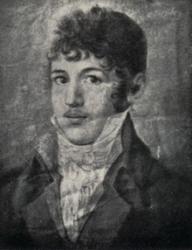
César Malan

1787 - 1864 Person Name: Henri A. César Malan Topics: Faith In Christ Composer of "HENDON" in Trinity Hymnal (Rev. ed.) Rv Henri Abraham Cesar Malan, 1787-1864. Born in Geneva, Switzerland, into a bourgeois family that moved to Switzerland to escape religious persecution during the French Revolution, he attended the university in Marseilles, France, intending to become a businessman. Although having some grounding in religious faith by his mother, he decided to attend the Academy at Geneva (founded by Calvin) in preparation for ministry. He was ordained in 1810, after being appointed a college master (teaching Latin) in 1809. Malan was in accord with the National Church of Geneva as a Unitarian, but the Reveil Movement caused him to become a dissident (evangelical) instead of a proponent of the Reformed Church (believing works, not faith, was what mattered). In 1811 he married (wife’s name not found). They had at least two children (one son was Solomon, referenced below). From 1813 on Malan slowly became an evangelical, after being given an understanding of true salvation through grace (not works) in 1816 by two German Lutherans from Geneva. He became saved upon this realization and was so changed that he burned his prized collection of classical authors and manuscripts. In 1817 he preached around Geneva, and one sermon in particular, “Man only justified by faith alone” created a firestorm and brought him into conflict with religious authorities of the region. From then on he wished to help reform the national church from within, but the forces of the Venerable Company were too strong for him and excluded him from the pulpits and caused his dismissal from his regentsship at the college in 1818. Others in agreement with Malan were Charles Spurgeon, Robert Wilcox, Robert Haldane, and Henry Drummond. In 1820 he built a chapel in his garden and obtained the license of the State for it as a separatist place of worship. He preached in that chapel 43 years. In 1823 he was formally deprived of his status as a minister of the national Church. Various events caused his congregation to diminish over the next few years, and he began long tours of evangelization subsidized by religious friends in his land, Belgium, France, England and Scotland. He often preached to large congregations. Malan also authorized a hymn book, “Chants de Sion” (1841). A strong Calvinist, Malan lost no opportunity to evangelize. On one occasion an old man he visited pulled Malan’s hymnal out and told him he had prayed to see the author of it before he died. On a visit to England Malan also inspired author, Charlotte Elliott, to write the hymn lyrics for “Just as I am”, when seeking an answer to her conversion she asked and he advised her to come to Christ ‘just as she was’. Malan published a score of books and also produced many religious tracts and pamphlets largely on questions in dispute between the National and evangelical churches of Rome. He also wrote articles in the “Record” and in American reviews. His hymns were set to his own melodies. He was an artist, a mechanic, a carpenter, a metal forger, and a printer. He had his own workshop, forge and printing press. One of his greatest joys was the meeting of the evangelical alliance at Geneva in 1861 which helped change church views. He retired to his home, Vandoeuvres, in the countryside near Geneva in 1857, dying there seven years later.. He was honored by a visit from the Queen of Holland two years before his death. He is mainly remembered as a hymn writer, having written 1000+ hymn lyrics and tunes. One son, Solomon, a gifted linguist and theologian, became Vicar of Broadwindsor. About a dozen of his hymns appeared translated in the publication “Friendly visitor” (1826). He was an author, creator, composer, editor, correspondent, contributor, translator, owner, and performer. John Perry ================= Malan, Henri Abraham César. The family of Malan traces its origin to the valleys of Piedmont. A branch of it settled at Mérindol, in Dauphiné, but was driven from France by the persecutions that followed the Revocation of the Edict of Nantes. Pierre Malan [Cesar's father], after seeing his sister fall a victim to persecution, left Mérindol (1714), and arrived at Geneva (1722). Henri Abraham César Malan was born at Geneva in 1787. After an education at the College, he went to Marseilles, with the intention of learning business: but, soon after, entered the Academy at Geneva, as a preparation for the ministry, to which he was ordained in 1810. He had been appointed one of the masters at the College in the previous year. The National Church of Geneva was at that time almost Unitarian, and Malan's convictions were in accord with it. But the great movement known as the Réveil, of which the first products were the dissident church of Bourg de Four and at a later date that founded by Malan himself, and which finally imbued the whole Swiss Church with its spirit, was silently preparing itself. The germ of the movement may be traced in the Société des Amis (1810), of which Empeytaz and A. Bost were leaders; and in Malan's independent attainment to the doctrines of the Divinity of the Saviour and the free gifts of salvation through Him (1816). But the human agency, which gave it force, and determined its Calvinistic direction, was the visit of Robert Haldane (in the autumn of 1816), to whom not only these pioneers of the movement, but F. Monod, E. Rieu, Guers, Gonthier, Merle d'Aubigné, and others, always pointed as their spiritual father. Empeytaz and others sought to attain enfranchisement by the establishment of the "petite Eglise of Bourg de Four." Malan wished to reform the national Church from within: and a sermon at Geneva, which brought on him the obloquy of the professors and theologians that composed his audience, and which Haldane characterized as a republication of the Gospel, was his first overt act (Jan. 19, 1817). But the opposing forces were far too strong for him. The Venerable Company excluded him from the pulpits, and achieved his dismissal from his regentship at the College (1818). In 1820 he built a chapel (Chapelle du Temoignage) in his garden, and obtained the licence of the State for it, as a separatist place of worship. In 1823 he was formally deprived of his status as a minister of the national Church. The seven years that succeeded were the palmy days of the little chapel. Strangers, especially from England, mingled with the overflowing Swiss congregation. But (in 1830) a secession to Bourg de Four, and then the foundation of the Oratoire and the Société Evangelique, which in 1849 absorbed the congregation of Bourg de Four under the title of the Église Evangélique, thinned more and more the number of his adherents. His burning zeal for the conversion of souls found a larger outlet in long tours of evangelization, subsidized by religious friends, in his own land and Belgium and France, and also in Scotland and England, where he had friends among many religious bodies, and where he preached to large congregations. The distinguishing characteristic of these tours was his dealing with individuals. On the steamboat or the diligence, in the mountain walk, at the hotel, no opportunity was lost. On one occasion an old,man whom he visited drew from under his pillow a copy of his great hymnbook, Chants de Sion, 1841, and told him how he had prayed to see the author of it before he died. It is as the originator of the modern hymn movement in the French Reformed Church that Malan's fame cannot perish. The spirit of his hymns is perpetuated in the analysis of Christian experience, the never-wearied delineation of the hopes and fears, the joys and sorrows of the believer's soul, which are still the staple of French Protestant hymns. To this was added, in Malan himself, a marked didactic tone, necessitated by the great struggle of the Réveil for Evangelical doctrine; and an emphatic Calvinism, expressing itself with all the despondency of Newton and Cowper, but, in contrast with them, in bright assurance, peace and gladness. French criticism has pronounced his hymns unequal, and full of literary defects; but their unaffected freshness and fervent sincerity are universally allowed. In the Chants de Sion, hymns 20, ”Hosanna! Béni soit"; 165, “Mon coeur joyeux, plein d'espérance"; 199, "Du Rocher de Jacob"; 200, "Agneau de Dieu"; 239, "Trois fois Jehovah," are in every Protestant French hymnbook; and several others are very widely used. Besides his hymns Malan produced numberless tracts and pamphlets on the questions in dispute between the National and Evangelical Churches and the Church of Rome, as well as articles in the Record and in American reviews. He was a man of varied acquirements. His hymns were set to his own melodies. He was an artist, a mechanic: his little workshop had its forge, its carpenter's bench, its printing press. To the end of his life his strong Calvinism, and his dread of mere external union in church government, kept him distinct from all movements of church comprehension, though freely joining in communion with all the sections of Evangelical thought in Geneva and Scotland. At one time there seemed a prospect of his even rejoining the national Church, which had driven him from her. One of his greatest joys was the meeting of the Evangelical Alliance at Geneva (1861). He left no sect; one of his latest orders was the demolition of his decayed chapel, in which he had preached for 43 years. He died at Vandoeuvres, near Geneva, in 1864, leaving a numerous family, one of whom, the Rev. S. C. Malan, D.D., sometime Vicar of Broadwindsor, is well known as a linguist and a theologian of the English Church. To English readers Malan is chiefly known as a hymn-writer through translations of his "Non, ce n'est pas mourir" (q.v.): "It is not death to die", &c. About a dozen of his hymns appear in a translated form in the Friendly Visitor for 1826. [Rev. H. Leigh Bennett, M.A.] -- John Julian, Dictionary of Hymnology (1907) ================= http://en.wikipedia.org/wiki/César_Malan

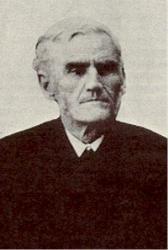
W. O. Cushing

1823 - 1902 Person Name: William O. Cushing Topics: Faith In Christ Author of "O Safe to the Rock That Is Higher Than I" in Trinity Hymnal (Rev. ed.) Rv William Orcutt Cushing USA 1823-1902. Born at Hingham, MA, he read the Bible as a teenager and became a follower of the Orthodox Christian school of thought. At age 18 he decided to become a minister, following in his parents theology. His first pastorate was at the Christian Church, Searsburg, NY. He married Hena Proper in 1854. She was a great help to him throughout his ministry. He ministered at several NY locations over the years, including Searsburg, Auburn, Brookley, Buffalo, and Sparta. Hena died in 1870, and he returned to Searsburg, again serving as pastor there. Working diligently with the Sunday school, he was dearly beloved by young and old. Soon after, he developed a creeping paralysis that caused him to lose his voice. He retired from ministry after 27 years. He once gave all his savings ($1000) to help a blind girl receive an education. He was instrumental in the erection of the Seminary at Starkey, NY. He gave material aid to the school for the blind at Batavia. He was mindful of the suffering of others, but oblivious to his own. After retiring, he asked God to give him something to do. He discovered he had a talent for writing and kept busy doing that. He authored about 300 hymn lyrics. The last 13 years of his life he lived with Rev. and Mrs. E. E Curtis at Lisbon Center, NY, and joined with the Wesleyan Methodist Church there. He died at Searsburg, NY. John Perry ================== Cushing, William Orcutt , born at Hingham, Massachusetts, Dec. 31, 1823, is the author of the following hymns which appear in I. D. Sankey's Sacred Songs and Solos:— 1. Beautiful valley of Eden. Heaven. 2. Down in the valley with my Saviour I would go. Trusting to Jesus. 3. Fair is the morning land. Heaven. 4. I am resting so sweetly in Jesus now. Rest and Peace in Jesus. 5. I have heard of a land far away. Heaven. 6. O safe to the Rock that is higher than I. The Rock of Ages. 1. Ring the bells of heaven, there is joy today. Heavenly Joy over repenting Sinners. 8. We are watching, we are waiting. Second Advent anticipated. Mr. Cushing has also several additional hymns in some American Sunday School collections, and collections of Sacred Songs. -- John Julian, Dictionary of Hymnology ================= Cushing, W. 0., p. 274, i. Other hymns are:— 1. O I love to think of Jesus . Thinking of Jesus. 2. There is joy in heaven! there is joy to-day. Angels joy over returning Sinners. 3. When He cometh, when He cometh. Advent. --John Julian, Dictionary of Hymnology, Appendix, Part II (1907)

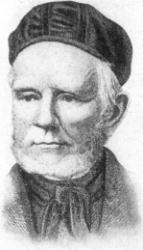
Ira David Sankey

1840 - 1908 Person Name: Ira D. Sankey Topics: Faith In Christ Composer of "HIDING IN THEE" in Trinity Hymnal (Rev. ed.) Sankey, Ira David, was born in Edinburgh, Pennsylvania, in 1840, of Methodist parents. About 1856 he removed with his parents to New Castle, Pennsylvania, where he became a member of the Methodist Episcopal Church. Four years afterwards he became the Superintendent of a large Sunday School in which he commenced his career of singing sacred songs and solos. Mr. Moody met with him and heard him sing at the International Convention of the Young Men's Christian Association, at Indianapolis, and through Mr. Moody's persuasion he joined him in his work at Chicago. After some two or three years' work in Chicago, they sailed for England on June 7, 1872, and held their first meeting at York a short time afterwards, only eight persons being present. Their subsequent work in Great Britain and America is well known. Mr. Sankey's special duty was the singing of sacred songs and solos at religious gatherings, a practice which was in use in America for some time before he adopted it. His volume of Sacred Songs and Solos is a compilation from various sources, mainly American and mostly in use before. Although known as Sankey and Moody’s Songs, only one song, "Home at last, thy labour done" is by Mr. Sankey, and not one is by Mr. Moody. Mr. Sankey supplied several of the melodies. The English edition of the Sacred Songs & Solos has had an enormous sale; and the work as a whole is very popular for Home Mission services. The Songs have been translated into several languages. --John Julian, Dictionary of Hymnology (1907) Pseudonymns: Harry S. Low­er Rian A. Dykes ==================== Sankey, I. D., p. 994, i. During the past fifteen years Mr. Sankey's Sacred Songs and Solos have had a very large sale, which has justified him in increasing the number of songs and hymns, including " New Hymns and Solos," to 1200. In 1906 he published My Life and Sacred Songs (London : Morgan & Scott). In addition to the "Story of his Own Life," the work contains an account of the most popular of his solos, with interesting reminiscences of the spiritual awakening of many who were influenced through his singing of them in public. In this respect it corresponds in some measure with G. J. Stevenson's Methodist Hymn Book, &c, 1883 (p. 1094, i.). It is an addition to the Sacred Songs and Solos, which will be held in esteem by many. In addition to his hymn, noted on p. 994, ii., Mr. Sankey gives details of the following:— 1. Out of the shadow-land into the sunshine. [Heaven Anticipated.] Mr. Sankey's account of this hymn is:— "I wrote this hymn specially for the memorial service held for Mr. Moody in Carnegie Hall, where 1 also sang it as a solo. It is the last sacred song of which I wrote both the words and music. The idea was suggested by Mr. Moody's last words, 'Earth recedes; heaven opens before me . . . God is calling me, and I must go.' On account of its peculiar association with my fellow-labourer in the Gospel for so many years, the words are here given in full." The hymn follows on p. 185, in 3 stanzas of 4 lines and a chorus. 2. Rejoice! Rejoice! our King is coming, [Advent.] Mr. Sankey writes concerning this hymn:— "During one of my trips to Great Britain on the SS. City of Rome a storm raged on the sea. The wind was howling through the rigging, and waves like mountains of foam were breaking over the bow of the vessel. A great fear had fallen upon the passengers. When the storm was at its worst, we all thought we might soon go to the bottom of the sea. The conviction came to me that the Lord would be with us iu the trying hour, and sitting down in the reading room, I composed this hymn. Before reaching England the tune had formed itself in my mind, and on arriving in London I wrote it out, and had it published in Sacred Songs and Solos, where it is No. 524 in the edition. of 1888. From Mr. Sankey's autobiographical sketch we gather that he was born at Edinburgh, in Western Pennsylvania, Aug. 28, 1840, joined Mr. Moody in 1871, and visited England for the first time in 1873. The original of the Sacred Songs, &c, of 23 pieces only, was offered as a gift to the London publishers of P. Phillips's Hallowed Song, and declined by them. It was subsequently accepted by Mr. K. O. Morgan, of Morgan & Scott, and is now a volume of 1200 hymns. From a return kindly sent us by Messrs. Morgan & Scott, we find that the various issues of the Sacred Songs and Solos were:— In 1873, 24 pp.; 1874, 72 pp. ; 1876, 153 hymns; 1877, 271 hymns; 1881, 441 hymns; 1888, 750 hymns; 1903, 1200 hymns. In addition, The Christian Choir, which is generally associated with the Sacred Songs and Solos, was issued in 1884 with 75 hymns, and in 1896 with 281. The New Hymns & Solos, by the same firm, were published in 1888. --John Julian, Dictionary of Hymnology, New Supplement (1907)

Lowell Mason

1792 - 1872 Person Name: Dr. Lowell Mason, 1792-1872 Topics: Faith In Christ Composer of "OLIVET" in Methodist Hymn and Tune Book Dr. Lowell Mason (the degree was conferred by the University of New York) is justly called the father of American church music; and by his labors were founded the germinating principles of national musical intelligence and knowledge, which afforded a soil upon which all higher musical culture has been founded. To him we owe some of our best ideas in religious church music, elementary musical education, music in the schools, the popularization of classical chorus singing, and the art of teaching music upon the Inductive or Pestalozzian plan. More than that, we owe him no small share of the respect which the profession of music enjoys at the present time as contrasted with the contempt in which it was held a century or more ago. In fact, the entire art of music, as now understood and practiced in America, has derived advantage from the work of this great man. Lowell Mason was born in Medfield, Mass., January 8, 1792. From childhood he had manifested an intense love for music, and had devoted all his spare time and effort to improving himself according to such opportunities as were available to him. At the age of twenty he found himself filling a clerkship in a banking house in Savannah, Ga. Here he lost no opportunity of gratifying his passion for musical advancement, and was fortunate to meet for the first time a thoroughly qualified instructor, in the person of F. L. Abel. Applying his spare hours assiduously to the cultivation of the pursuit to which his passion inclined him, he soon acquired a proficiency that enabled him to enter the field of original composition, and his first work of this kind was embodied in the compilation of a collection of church music, which contained many of his own compositions. The manuscript was offered unavailingly to publishers in Philadelphia and in Boston. Fortunately for our musical advancement it finally secured the attention of the Boston Handel and Haydn Society, and by its committee was submitted to Dr. G. K. Jackson, the severest critic in Boston. Dr. Jackson approved most heartily of the work, and added a few of his own compositions to it. Thus enlarged, it was finally published in 1822 as The Handel and Haydn Society Collection of Church Music. Mason's name was omitted from the publication at his own request, which he thus explains, "I was then a bank officer in Savannah, and did not wish to be known as a musical man, as I had not the least thought of ever making music a profession." President Winchester, of the Handel and Haydn Society, sold the copyright for the young man. Mr. Mason went back to Savannah with probably $500 in his pocket as the preliminary result of his Boston visit. The book soon sprang into universal popularity, being at once adopted by the singing schools of New England, and through this means entering into the church choirs, to whom it opened up a higher field of harmonic beauty. Its career of success ran through some seventeen editions. On realizing this success, Mason determined to accept an invitation to come to Boston and enter upon a musical career. This was in 1826. He was made an honorary member of the Handel and Haydn Society, but declined to accept this, and entered the ranks as an active member. He had been invited to come to Boston by President Winchester and other musical friends and was guaranteed an income of $2,000 a year. He was also appointed, by the influence of these friends, director of music at the Hanover, Green, and Park Street churches, to alternate six months with each congregation. Finally he made a permanent arrangement with the Bowdoin Street Church, and gave up the guarantee, but again friendly influence stepped in and procured for him the position of teller at the American Bank. In 1827 Lowell Mason became president and conductor of the Handel and Haydn Society. It was the beginning of a career that was to win for him as has been already stated the title of "The Father of American Church Music." Although this may seem rather a bold claim it is not too much under the circumstances. Mr. Mason might have been in the average ranks of musicianship had he lived in Europe; in America he was well in advance of his surroundings. It was not too high praise (in spite of Mason's very simple style) when Dr. Jackson wrote of his song collection: "It is much the best book I have seen published in this country, and I do not hesitate to give it my most decided approbation," or that the great contrapuntist, Hauptmann, should say the harmonies of the tunes were dignified and churchlike and that the counterpoint was good, plain, singable and melodious. Charles C. Perkins gives a few of the reasons why Lowell Mason was the very man to lead American music as it then existed. He says, "First and foremost, he was not so very much superior to the members as to be unreasonably impatient at their shortcomings. Second, he was a born teacher, who, by hard work, had fitted himself to give instruction in singing. Third, he was one of themselves, a plain, self-made man, who could understand them and be understood of them." The personality of Dr. Mason was of great use to the art and appreciation of music in this country. He was of strong mind, dignified manners, sensitive, yet sweet and engaging. Prof. Horace Mann, one of the great educators of that day, said he would walk fifty miles to see and hear Mr. Mason teach if he could not otherwise have that advantage. Dr. Mason visited a number of the music schools in Europe, studied their methods, and incorporated the best things in his own work. He founded the Boston Academy of Music. The aim of this institution was to reach the masses and introduce music into the public schools. Dr. Mason resided in Boston from 1826 to 1851, when he removed to New York. Not only Boston benefited directly by this enthusiastic teacher's instruction, but he was constantly traveling to other societies in distant cities and helping their work. He had a notable class at North Reading, Mass., and he went in his later years as far as Rochester, where he trained a chorus of five hundred voices, many of them teachers, and some of them coming long distances to study under him. Before 1810 he had developed his idea of "Teachers' Conventions," and, as in these he had representatives from different states, he made musical missionaries for almost the entire country. He left behind him no less than fifty volumes of musical collections, instruction books, and manuals. As a composer of solid, enduring church music. Dr. Mason was one of the most successful this country has introduced. He was a deeply pious man, and was a communicant of the Presbyterian Church. Dr. Mason in 1817 married Miss Abigail Gregory, of Leesborough, Mass. The family consisted of four sons, Daniel Gregory, Lowell, William and Henry. The two former founded the publishing house of Mason Bros., dissolved by the death of the former in 1869. Lowell and Henry were the founders of the great organ manufacturer of Mason & Hamlin. Dr. William Mason was one of the most eminent musicians that America has yet produced. Dr. Lowell Mason died at "Silverspring," a beautiful residence on the side of Orange Mountain, New Jersey, August 11, 1872, bequeathing his great musical library, much of which had been collected abroad, to Yale College. --Hall, J. H. (c1914). Biography of Gospel Song and Hymn Writers. New York: Fleming H. Revell Company.

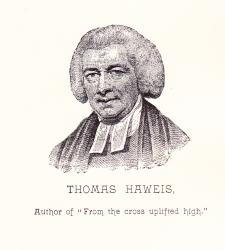
Thomas Haweis

1734 - 1820 Topics: Christian Experience Faith in Christ; Faith In Christ Author of "O Thou from whom all goodness flows" in The Hymnal Thomas Haweis (b. Redruth, Cornwall, England, 1734; d. Bath, England, 1820) Initially apprenticed to a surgeon and pharmacist, Haweis decided to study for the ministry at Oxford and was ordained in the Church of England in 1757. He served as curate of St. Mary Magdalen Church, Oxford, but was removed by the bishop from that position because of his Methodist leanings. He also was an assistant to Martin Madan at Locke Hospital, London. In 1764 he became rector of All Saints Church in Aldwinkle, Northamptonshire, and later served as administrator at Trevecca College, Wales, a school founded by the Countess of Huntingdon, whom Haweis served as chaplain. After completing advanced studies at Cambridge, he published a Bible commentary and a volume on church history. Haweis was strongly interested in missions and helped to found the London Mission Society. His hymn texts and tunes were published in Carmino Christo, or Hymns to the Savior (1792, expanded 1808). Bert Polman ============================ Haweis, Thomas, LL.B., M.D., born at Truro, Cornwall, 1732. After practising for a time as a Physician, he entered Christ's College, Cambridge, where he graduated. Taking Holy Orders, he became Assistant Preacher to M. Madan at the Lock Hospital, London, and subsequently Rector of All Saints, Aldwincle, Northamptonshire. He was also Chaplain to Lady Huntingdon, and for several years officiated at her Chapel in Bath. He died at Bath, Feb. 11, 1820. He published several prose works, including A History of the Church, A Translation of the New Testament, and A Commentary on the Holy Bible. His hymns, a few of which are of more than ordinary merit, were published in his Carmina Christo; or, Hymns to the Saviour. Designed for the Use and Comfort of Those who worship the Lamb that was slain. Bath, S. Hayward, 1792 (139 hymns), enlarged. London, 1808 (256 hymns). In 1794, or sometime after, but before the enlarged edition was published, two hymns "For the Fast-day, Feb. 28, 1794," were added to the first edition. These were, "Big with events, another year," and "Still o'er the deep the cannon's roar." The most popular and widely used of his hymns are, "Behold the Lamb of God, Who bore," &c.; "Enthroned on high, Almighty Lord"; and “O Thou from Whom all goodness flows." The rest, all being from Carmina Christo, first edition 1792, are:— 1. Dark was the night and cold the ground. Gethsemane. 2. From the cross uplifted high. Christ in Glory. 3. Great Spirit, by Whose mighty power. Whitsuntide. 4. Submissive to Thy will, my God. Resignation. 5. The happy morn is come. Easter. 6. Thou Lamb of God, that on the tree. Good Friday. The hymn, "Thy Head, the crown of thorns that wears," in Stryker & Main's Church Praise Book, N. Y., 1882, begins with st. ii. of this hymn. 7. To Thee, my God and Saviour, My heart, &c. Praise for Redemption. --John Julian, Dictionary of Hymnology (1907)

Annie S. Hawks

1835 - 1918 Topics: Faith in Christ Author of "I need thee every hour" in Elmhurst Hymnal Hawks, Annie Sherwood. Mrs. Hawks was born in Hoosick, N. Y., May 28, 1835, and has resided for many years at Brooklyn. Her hymns were contributed to Bright Jewels, Pure Gold, Boyal Diadem, Brightest and Best, Temple Anthems, Tidal Wave, and other popular Sunday School hymnbooks. They include "I need Thee every hour" (written April, 1872), "Thine, most gracious Lord," "Why weepest thou? Whom seekest thou?" and others of the same type. --John Julian, Dictionary of Hymnology (1907) ==============

Joseph Parry

1841 - 1903 Topics: Christian Life Faith in Christ Composer of "ABERYSTWYTH" in Trinity Hymnal Joseph Parry (b. Merthyr Tydfil, Glamorganshire, Wales, 1841; d. Penarth, Glamorganshire, 1903) was born into a poor but musical family. Although he showed musical gifts at an early age, he was sent to work in the puddling furnaces of a steel mill at the age of nine. His family immigrated to a Welsh settlement in Danville, Pennsylvania in 1854, where Parry later started a music school. He traveled in the United States and in Wales, performing, studying, and composing music, and he won several Eisteddfodau (singing competition) prizes. Parry studied at the Royal Academy of Music and at Cambridge, where part of his tuition was paid by interested community people who were eager to encourage his talent. From 1873 to 1879 he was professor of music at the Welsh University College in Aberystwyth. After establishing private schools of music in Aberystwyth and in Swan sea, he was lecturer and professor of music at the University College of South Wales in Cardiff (1888-1903). Parry composed oratorios, cantatas, an opera, orchestral and chamber music, as well as some four hundred hymn tunes. Bert Polman

Erdmann Neumeister

1671 - 1756 Person Name: Erdmann Neumeister, 1671 - 1756 Topics: The Life in Christ Repentance and Faith Author of "Sinners Jesus will receive" in Service Book and Hymnal of the Lutheran Church in America Neumeister, Erdmann, son of Johann Neumeister, schoolmaster, organist, &c, at Uechteritz, near Weissenfels, was born at Uechteritz, May 12, 1671. He entered the University of Leipzig in 1689, graduated M.A. in 1695, and was then for some time University lecturer. In June 1697 he was appointed assistant pastor at Bibra, and in 1698 pastor there, and assistant superintendent of the Eckartsberg district. He was then, in 1704, called by Duke Johann Georg, to Weissenfels as tutor to his only daughter, and assistant court preacher, and shortly afterwards court preacher. After the death of this princess, Neumeister was invited by the Duke's sister (she had married Count Erdmann II. von Promnitz) to Sorau, where on New Year's Day, 1706, he entered on the offices of senior court-preacher, consistorialrath, and superintendent. Finally, in 1715, he accepted the appointment of Pastor of St. James's Church at Hamburg, entering on his duties there Sept. 29, 1715. He died at Hamburg, Aug. 18 (not 28), 1756 (Bode, p. 120; Allgemeine Deutsche Biographie. xxiii. 543, &c). Neumeister was well known in his day as an earnest and eloquent preacher, as a vehement upholder of High Lutheranism, and as a keen controversialist against the Pietists and the Moravians by means of the pulpit as well as the press. His underlying motive was doubtless to preserve the simplicity of the faith from the subjective novelties of the period. He was the author of one of the earliest historico-critical works on German Poetry (1695"); and of many Cantatas for use in church, of which form of Fervice he may be regarded as the originator. He had begun to write hymns during his student days, and in later years their composition was a favourite Sunday employment. He takes high rank among the German hymn-writers of the 18th century, not only for the number of his productions (over 650), but also for their abiding value. A number are founded on well-known hymns of the 16th and 17th century; and many of his later productions are inferior. Of his earlier efforts many soon took and still hold their place as standard German hymns; and deservedly so, for their simple, musical style, scripturalness, poetic fervour, depth of faith and Christian experience, and for their clear-cut sayings which have almost passed into proverbial use. They appeared principally in the following works:— 1. DerZugang zum Gnadenstuhle Jesu Christo. This was a devotional manual of preparation for Holy Communion, with interspersed hymns. The first edition appeared at Weissenfels in 1705, the 2nd 1707, 3rd 1712, 4th 1715. The earliest edition of which precise details are available is the 5th edition 1717, from which Wetzel, ii. 231, quotes the first lines of all the 77 hymns (the page references to the earlier eds. given by Fischer appear to be conjectural); and the earliest ed. available for collation was the 7th edition, 1724 [Göttingen University Library]. In the later editions many hymns are repeated from his other works. 2. Fünffache Kirchen-Andachten, Leipzig 1716 [Wernigerode Library], a collected edition of his Cantatas (Wernigerode Library has the 1704 ed. of his Geistliche Cantaten), and similar productions. A second set (Fortgesetzte) appeared at Hamburg in 1726 [Hamburg Town Library]; and a third set (Dritter Theil) at Hamburg in 1752 [Hamburg Town Library]. 3. Evangelischer Nachklang, Hamburg, 1718 [Hamburg Town Library], with 86 hymns on the Gospels for Sundays and Festivals, originally written to form conclusions to his sermons. A second set of 86 appeared as the Anderer Theil at Hamburg, 1729 [Hamburg Town Library]. Those of Neumeister’s hymns which have passed into English are:— i. Gott verlasst die Seinen nioht, Ei so fahret hin ihr Sorgen. Cross and Consolation. In his Evangelical Nachklang, 1718, No. 71, p. 149, in 5 stanzas of 8 lines, appointed for the 25th Sunday after Trinity, in Burg's Gesang-Buch, Breslau, 1746, it appears in two forms. No. 127 is the original with alterations, and arranged in 11 stanzas of 4 lines, with the refrain "Gott verlässt die Seinen nicht." No. 128 is a form in 3 stanzas of 6 lines, rewritten to the melody, "Jesus meine Zuversicht", and beginning with stanza iii. line 5, of the original, viz. "Gott verlässt die Seinen nicht, Nach dem Seufzen, nach dem Weinen." ii. Jesu, grosser Wunderstern. Epiphany. In his Kirchen-Andachten, 1716, p. 646, in 4 st. of 6 1., with the motto, Auf ihr Christen insgemein! Stellt euch mit den Weisen ein. Jesus muss geschenket sein." It is a hymn on the Gifts of the Magi, and the spiritual sense in which we can offer the same—-the Gold of Faith, the Frankincense of Prayer, the Myrrh of Penitence. In the Berlin Geistliche Lieder, ed. 1863, No. 208. Translated as:— 1. Jesus! great and wondrous star. A good and full translation by E. Cronenwett, as No. 52 in the Ohio Lutheran Hymnal, 1880. iii. Jesus nimmt die Sünder an! Saget doch dies Trostwort Allen. Lent. The best hymn of its author. First published in his Evangelical Nachklang, 1718, No. 47, p. 96, in 8 stanzas of 6 lines, founded on the Gospel for the 3rd Sunday after Trinity (St. Luke xv. 1-7), and also suggested by St. Matt. xi. 28, and Isaiah i. 18. It has come into very extensive German use, especially at Mission services at home and abroad. In the Berlin Geistliche Lieder, ed. 1863, No. 110. The translations are:— 1. This man sinners doth receive. In full by Dr. H. Mills, in his Horae Germanicae, 1845 (1856, p. 73). His translations of stanzas i., ii., iv., v. are included in the American Lutheran General Synod's Collection, 1850-52, No. 844. 2. Jesus sinners doth receive! Spread the word of consolation. A good translation of stanzas i., iii.—v., by A. T. Russell, as No. 47 in the Dalston Hospital Hymn Book, 1848, repeated in his own Psalms & Hymns, 1851. 3. Jesus is the sinner's Friend. A good and full translation by Miss Dunn in her Hymns from the German, 1857, p. 82. Her translations of stanzas i., ii., iv. are No. 46 in Dr. Pagenstecher's Collection, 1864. 4. Sinners Jesus will receive. A full and good translation by Mrs. Bevan in her Songs of Eternal Life, 1858, p. 23. Repeated in full in L. Rehfuess's Church at Sea, 1868, p. 50, and, abridged, in the English Presbyterian Psalms & Hymns, 1867, and Flett's Collection, Paisley, 1871. In Dr. W. F. Stevenson's Hymns for Church & Home, 1873, stanzas i., v., vi., vii. are included, altered, and beginning "Jesus sinners will receive; Say this word of grace to all;" and this form is also in the Baptist Hymnal, 1879. Other translations are :— (l) "My Jesus the sinner receives." By Miss Warner, 1869, p. 51. (2) "Jesus sinners doth receive! Tell to all." By R. Massie in the Day of Rest, 1811. The hymn "Jesus sinners will receive, When they fall," by E. Cronenwett, in 5 stanzas, in the Ohio Lutheran Hymnal, 1880, is marked as a translation of Neumeister. It follows Neumeister in metre, but seems rather a paraphrase of the hymn "Jesus nimmt die Sünder an, Drum so will ich nicht verzagen." This hymn is by Ludwig Heinrich Schlosser [b. Sept. 1, 1663, at Darmstadt; d. Aug. 18,1723, as pastor at Frankfurt am Main], and appeared in the Appendix to the Frankfurt ed., 1693, of Crüger's Praxis, and in his own Stilles Lob Gottes in dern geistlichen Zion, Frankfurt a. M , 1724 (see Wetzel, iv. 433; Kambach's Anthologie, vi p. xi., &c). In Burg's Gesang-Buch, Breslau, 1746, the Neumeister hymn is given as No. 1593 and marked as by G. G. Hofmann, and the Schlosser hymn as No. 1592 and marked as by Neumeister. Hence perhaps the confusion. Hymns not in English common use:--. iv. Bleib, Jesu, bleib bei mir. For the Dying. In his Evangelical Nachklang, 171S, No. 31, p. 64, in 7 st., entitled "For the Second Day of Easter." In the Berlin Geistliche Lieder, ed. 1863, No. 1434. Translated as "Jesus, near me still abide." By Miss Dunn, 1857, p. 117. v, Herr Jesu Christ, mein höchstes Gut. Love to Christ. One of his best and most popular hymns, apparently written for use at the Sunday celebration of Holy Communion in the castle at Weissenfels. It seems to have appeared in his Zugang, 1705 (Wetzel, ii. 232, cites it as in the 5th edition 1717. In the 8th ed. 1724, p. 17, entitled “Hymn of Consolation from Ps. lxxiii. 23-28 ), and is included in the Halle Stadt Gesang-Buch,1711, No. 524 in 6 st. In Freylinghausen, 1714, it begins "Herr Jesu Christ, mein Fleisch und Blut." In Porst's Gesang-Buch,ed. 1855, No. 546. The translations are (1) "All my desires are fix'd on Thee" (st. iii.). By P. H. Molther as pt. ot No. 401 in the Moravian Hymn Book 1801 (1886, No. 448). (2) "Lord Jesus Christ, my spirit's health." By Dr. H. Mills, 1845 (1856, p. 115). vi. Herr Jesu, meines Lebens Heil. Evening. Apparently in his Zugang, 1705 (Wetzel, ii. 232, as in ed. 1717. In ed. 1724, p. 284 in 10 st), and included in the Halle Stadt Gesang-Buch, 1711, No. 426. In Burg's Gesang-Buch, Breslau, 1746, No. 1844. Translated as (1) "Now I'll lie down and sleep in Thee"(st. vi.), as pt. of No. 750 in the Moravian Hymn Book, 1789 (1849, No. 1137). (2) "Lord Jesu! Thou my life's true health." By H. J. Buckoll, 1842, p. 92. vii. Ich bin bei allem Kummer stille. Trust in God. Included in the 5th ed. 1717 of his Zugang (Wetzel, ii. 232), and in the ed. 1724, p. 594, in 6 stanzas, founded on Ps. lxxvii. 11. In the Berlin Geistliche Lieder, ed. 1863, No. 911. It has been translated into English through the recast by J. S. Diterich "Herr, mache meine Seele stille," which is No. 169, in 7 stanzas, in the Berlin Gesang-Buch,1765 (Berlin Gesang-Buch, 1829, No. 599). Translated as "Lord, make my spirit still." By Miss Warner, 1869, p. 26. viii. Ich weiss dass mein Erlöser lebet. For the Dying. In his Evangelical Nachklang, 1718, No. 32, in 5 st., entitled "On the Third Day of Easter." In Bunsen's Allgemeine Gesang-Buch, 1846, No. 437, in 4 stanzas. Translated as "I know that my Redeemer liveth, And as He lives." A good translation from Bunsen in Reid's Praise Book, 1872. ix. Ob Menschen klug und weise sein. Spiritual Wisdom. In his Evangelical Nachklang, 1718, No. 12, p. 24, in 6 stanzas, for the 1st Sunday after Epiphany. In the Berlin Geistliche Lieder, ed. 1863. Translated as “Here many wise and prudent grow." By Dr. H. Mills, 1845 (1856, p. 109). x. So ist die Woche nun geschlossen. Saturday Evening. Apparently in his Zugang, 1705 (Wetzel, ii. 233, cites it as in ed. 1717. In the ed. 1724, p. 552, in 9 st. entitled "Hymn for the close of the Week"). In the Berlin Geistliche Lieder, ed. 1863. Translated as “Thou, Lord, Thy love art still bestowing." By H. J. Buckoll, 1842. xi. Wie Gott will, also will ich sagen. Trust in God. Wetzel ii. 214, cites this as in his Zugang, 1717 (ed. 1724, p. 570, in 8 stanzas). In the Berlin Geistliche Lieder, ed. 1863, No. 919. Translated as “As Thou wilt, my God! I ever say” By Miss Borthwick, in Hymns from the Land of Luther, 1858, p. 44 (1884, p. 166), and thence in Bishop Ryle's Collection 1860, No. 163. [Rev. James Mearns, M.A.] --John Julian, Dictionary of Hymnology (1907)

William D. Longstaff

1822 - 1894 Person Name: W. D. Longstaff, 1822-1894 Topics: Eternal Life; Growth in Faith; Holy / Holiness; One Life in Christ Discipleship; Prayer / Prayers / Poems Author of "Take time to be holy" in The Book of Praise William Dunn Longstaff United Kingdom 1822-1894. Born at Sunderland, Durham, England, the son of a wealthy ship owner, he was a person of independent financial means. Although Longstaff had everything he desired, he still had an empty feeling in his life, and attended church one day and was inspired by words of a China missionary, Griffith John, on furlough to England, preaching at a service in Keswick, England, citing I Peter 1:16, “Be ye holy, for I am holy”. That resulted in him giving his heart to the Lord and beginning a Christian life, dedicated to God. He became a generous philanthropist and was influential in evangelical circles. Following his friend, Rev Arthur A Rees, a persuasive Welsh preacher, who left the Anglican priesthood after disagreements with his rector and bishop, Dunn served as church treasurer for Ree’s Bethesda Free Chapel in Sunderland. He married Joice Burlinson in 1853 and they had eight children: William, Hannah, Rhoda, Amelia, Ernest, Nora, Marnia, and Minnie. Longstaff befriended well-known evangelists, including William Booth of the Salvation Army, to whose work he generously contributed. Some of Langstaff’s hymns were published in the Salvation Army magazine, “The War Cry” during the 1880s. He also financed Dwight Moody’s evangelical crusades in England and Scotland when Moody’s funding dried up after their financier died. During the crusade they preached to 20,000 people. Longstaff did not forget that first sermon he heard, and it prompted the writing of his hymn lyrics, which he later showed to Ira Sankey during their crusade. Sankey showed it to George Stebbins, who set it to music in 1882 during a revival in India. In 1881 Longstaff’s wife died. He died at Sunderland, England. John Perry

Jean Sibelius

1865 - 1957 Topics: Life in Christ Faith and Assurance Composer of "FINLANDIA" in The Hymnbook Johann Julius Christian [Jean] Sibelius DM Finland 1865-1957. Born at Hameenlinna, Finland, the son of a Swedish-speaking medical doctor, he lost his father to typhoid in 1868, leaving the family in substantial debt. His mother, again pregnant, had to sell their property and move in with her widowed mother. His aunt Julia gave him piano lessons when he was seven on the family upright piano, wrapping him on the knuckles when he played a wrong note. He learned to improvise as he played. His uncle, Pehr Ferdinand Sibelius, was interested in music, especially the violin, and gave Jean a violin when he was 10. As his musical advisor his uncle encouraged him to play and compose music. He played music with sister on piano, brother on cello, and himself on violin. He attended a Finnish-speaking prep school in 1874 and continued his education at the Hameenlinna Normal Lyceum thereafter. Jean also showed a strong interest in nature, frequently walking around the countryside when the family moved to the Loviisa coast for the summer months. In 1881 he took violin lessons from the local bandmaster, and developed a strong interest in violin. He became an accomplished player, and thought of becoming a virtuoso, but realizing he began study too late in life for that, instead opted to compose. He often played music in quartets with neighboring families, adding to his chamber music experience. He took the French form of his name, Jean. He studied law at the Imperial Alexander University in Finland, but showed far more interest in music. He then studied music at the Helsinki Music Institute (now Sibelius Academy) from 1885-1889. The school’s founder, Martin Wegelius, did much to support education development in Finland and gave Sibelius his first lessons in composition. Another teacher,,Ferruccio Busoni, a pianist-composer, helped him as well and became a life-long friend. Other friends, pianist Adolf Paul, and conductor-to-be, Armas Jarnefelt, also helped him. In 1892 he married Armas ‘s sister, Aino Jarnefelt, daughter of General Alexander Jarnefelt, governor of Vaasa. They had six daughters, Eva, Ruth, Kirsti, Katarina, Margareta, and Heidi. He continued his musical studies in Berlin (1889-1890) with Albert Becker, and in Vienna (1890-1891) with Robert Fuchs and Karl Goldmark. In Berlin he had opportunity to attend concerts and operas. In Vienna he turned to orchestral composition and had much success, although he had gallstone surgery during that period. He also traveled to the UK, France, Germany, and the USA during this time in his life, composing, conducting, and socializing. In 1892 he took on teaching assignments at the Music Institute and at Kajanus’s conducting school, but this left him with little time for composing. Sibelius’ works were more and more appreciated in Helsinki concert halls as he composed and conducted symphonies in the mid-1890s. In 1898 he was awarded a substantial grant, initially for 10 years, and later extended for life, allowing him to concentrate on composition. Much of his music became popular in Finland and in Germany. In 1899 he began work on his first symphony. It went well, but other patriotic music hehad composed did even better, since Russia was trying to restrict the powers of the Grand Duchy of Finland. In 1900 Sibelius went on an international tour with Kajanus and his orchestra, presenting his recent works. In 1901 he wrote his second symphony, which received rave reviews. He continued to compose as he became popular and well-known. In 1903 he had a new home built near Lake Tuusula north of Helsinki, calleed Ainola (after his wife). He gave concerts in and around Finland, spending more and more time away from home, to the chagrin of his wife. After a time he returned home and composed from there. He spent much time wining and dining in Helsinki, and it had a disastrous effect on his wife, who finally entered a sanitorium. He resolved again to give up drinking and concentrate on composing his 3rd symphony. He met Gustav Mahler in Helsinki and they became friends. He performed his 3rd symphony in St Petersburg, Russia. In 1907 he underwent a serious operation for suspected throat cancer, and spent time in the hospital in 1908. His smoking and drinking had now become life-threatening. He cancelled concerts for Rome, Warsaw, and Berlin, but kept one in London. His health deteriorated further, And his brush with death inspired him to compose his 4th symphony. In 1909 his successful throat operation resulted in renewed happiness for him and his wife, Aino. He continued conducting concerts, and met Claude Debussy, who further encouraged his musical efforts. He began working on his 4th symphony in 1910, but had to write other music to compensate for dwindling funds. He finished his 4th symphony in Berlin and conducted concerts in Sweden in 1911. In 1912 he completed short orchestral works. Over the next several years he continued producing a variety of pieces of music, well-received, especially in America. He was given an honorary DM degree from Yale University and also another from the University of Helsinki about the same time. WW1 interrupted his music royalties in 1915, and he was forced to compose smaller works for publication to make ends meet. He completed his 5th symphony at age 50, but he was dissatisfied with it and reworked it three times In 1917 he starting drinking again, triggering arguments with his wife. The Russian Revolution in 1917 caused an improvement in their personal relationship, and he wrote his ‘Jager March’ to celebrate Finnish independence from Russia. The next year the Finnish Civil War began, putting a damper on his march. In 1919, after the war, he completed his 6th symphony. In 1920 George Eastman , of Eastman Kodak, asked him to teach for a year in New York, but he declined. He did enjoy a trip conducting several concerts in England in 1921. He premiered his 6th symphony in 1923. In 1924 he completed his 7th symphony. The next year he composed a number of small pieces. He began drinking again. He did write a few more major works, but for the last thirty years of his life he avoided publicly talking about his music. He tried to write an 8th symphony, but was unsatisfied with it and burned the scores. In fact, he burned a laundry basket full of music he had written, to the chagrin of his wife. But, afterward, he became calmer and gradually had a lighter mood. In 1935 he was awarded the Goethe-Metal, with a certificate signed by Adolf Hitler. A Soviet invasion of Finland in 1939 was repelled, but Finland gave up territory to Russia as a result. In 1941 Sibelius and his wife returned to their Finland home, Ainola, after a long absence. He did not compose much the last few years, and died at Ainola. His wife outlived him by 12 years. John Perry

Pages


Export as CSV
It looks like you are using an ad-blocker. Ad revenue helps keep us running. Please consider white-listing Hymnary.org or getting Hymnary Pro to eliminate ads entirely and help support Hymnary.org.