

 My Starred Hymns
 My FlexScores
 My Hymnals
 My Purchased Files
Planning worship?
Check out our sister site, ZeteoSearch.org,
for 20+ additional resources related to your search.
- |
User Links
Person Results
Cesáreo Gabarain
1936 - 1991 Person Name: Cesáreo Gabaráin Author of "Venid Fieles Todos" in Flor y Canto
Cesáreo Gabarain
Edward Caswall
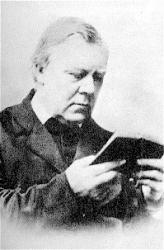
1814 - 1878 Person Name: E. Caswall Translator of "Come Hither, ye Faithful" in Concordia Edward Caswall was born in 1814, at Yately, in Hampshire, where his father was a clergyman. In 1832, he went to Brasenose College, Oxford, and in 1836, took a second-class in classics. His humorous work, "The Art of Pluck," was published in 1835; it is still selling at Oxford, having passed through many editions. In 1838, he was ordained Deacon, and in 1839, Priest. He became perpetural Curate of Stratford-sub-Castle in 1840. In 1841, he resigned his incumbency and visited Ireland. In 1847, he joined the Church of Rome. In 1850, he was admitted into the Congregation of the Oratory at Birmingham, where he has since remained. He has published several works in prose and poetry.
--Annotations of the Hymnal, Charles Hutchins, M.A. 1872
=====================
Caswall, Edward, M.A., son of the Rev. R. C. Caswall, sometime Vicar of Yately, Hampshire, born at Yately, July 15, 1814, and educated at Brasenose College, Oxford, graduating in honours in 1836. Taking Holy Orders in 1838, he became in 1840 Incumbent of Stratford-sub-Castle, near Salisbury, and resigned the same in 1847. In 1850 (Mrs. Caswall having died in 1849) he was received into the Roman Catholic communion, and joined Dr. Newman at the Oratory, Edgbaston. His life thenceforth, although void of stirring incidents, was marked by earnest devotion to his clerical duties and a loving interest in the poor, the sick, and in little children. His original poems and hymns were mostly written at the Oratory. He died at Edgbaston, Jan. 2, 1878, and was buried on Jan. 7 at Redwall, near Bromsgrove, by his leader and friend Cardinal Newman. Caswall's translations of Latin hymns from the Roman Breviary and other sources have a wider circulation in modern hymnals than those of any other translator, Dr. Neale alone excepted. This is owing to his general faithfulness to the originals, and the purity of his rhythm, the latter feature specially adapting his hymns to music, and for congregational purposes. His original compositions, although marked by considerable poetical ability, are not extensive in their use, their doctrinal teaching being against their general adoption outside the Roman communion. His hymns appeared in:—
(1) Lyra Catholica, which contained 197 translations from the Roman Breviary, Missal, and other sources. First ed. London, James Burns, 1849. This was reprinted in New York in 1851, with several hymns from other sources added thereto. This edition is quoted in the indices to some American hymn-books as Lyra Cath., as in Beecher's Plymouth Collection, 1855, and others.
(2) Masque of Mary, and Other Poems, having in addition to the opening poem and a few miscellaneous pieces, 53 translations, and 51 hymns. 1st ed. Lon., Burns and Lambert, 1858.
(3) A May Pageant and Other Poems, including 10 original hymns. Lon., Burns and Lambert, 1865.
(4) Hymns and Poems, being the three preceding volumes embodied in one, with many of the hymns rewritten or revised, together with elaborate indices. 1st ed. Lon., Burns, Oates & Co., 1873. Of his original hymns about 20 are given in the Roman Catholic Crown of Jesus Hymn Book, N.D; there are also several in the Hymns for the Year, N.D., and other Roman Catholic collections.
--John Julian, Dictionary of Hymnology (1907)
======================
Caswall, E. , p. 214, ii. Additional original hymns by Caswall are in the Arundel Hymns, 1902, and other collections. The following are from the Masque of Mary, &c, 1858:—
1. Christian soul, dost thou desire. After Holy Communion.
2. Come, let me for a moment cast. Holy Communion.
3. O Jesu Christ [Lord], remember. Holy Communion.
4. Oft, my soul, thyself remind. Man's Chief End.
5. Sleep, Holy Babe. Christmas. Appeared in the Rambler, June 1850, p. 528. Sometimes given as "Sleep, Jesus, sleep."
6. The glory of summer. Autumn.
7. This is the image of the queen. B. V. M.
His "See! amid the winter's snow,” p. 1037, i., was published in Easy Hymn Tunes, 1851, p. 36. In addition the following, mainly altered texts or centos of his translations are also in common use:—
1. A regal throne, for Christ's dear sake. From "Riches and regal throne," p. 870, ii.
2. Come, Holy Ghost, Thy grace inspire. From "Spirit of grace and union," p. 945, i.
3. Hail! ocean star, p. 99, ii,, as 1873. In the Birmingham Oratory Hymn Book, 1850, p. 158.
4. Lovely flow'rs of martyrs, hail. This is the 1849 text. His 1873 text is "Flowers of martyrdom," p. 947, i.
5. None of all the noble cities. From "Bethlehem! of noblest cities," p. 946, ii.
6. O Jesu, Saviour of the World. From “Jesu, Redeemer of the world," p. 228, ii.
7. 0 Lady, high in glory raised. From "O Lady, high in glory, Whose," p. 945, i.
The Parochial Hymn Book, 1880, has also the following original hymns by Caswall. As their use is confined to this collection, we give the numbers only:—
IS os. 1, 2, 3, 159 (Poems, 1873, p. 453), 209 (1873, p. 288), 299, 324 (1873, p. 323), 357, 402, 554, 555, 558, 569 (1873, p. 334). These are from his Masque of Mary 1858. Nos. 156, 207 (1873, p. 296), 208 (1873, p. 297), 518. These are from his May Pageant, 1865.
As several of these hymns do not begin with the original first lines, the original texts are indicated as found in his Poems, 1873. [Rev. James Mearns, M.A.]
--John Julian, Dictionary of Hymnology, New Supplement (1907)
Edward Caswall
Robert Stanley Weir
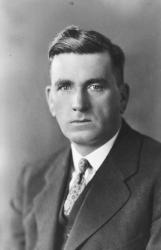
1856 - 1926 Adapter of "O come, all ye faithful" in Services for Congregational Worship. The New Hymn and Tune Book Weir, Robert Stanley. (Hamilton, Ontario, November 15, 1856--August 20, 1926, Lake Memphremagog, Quebec). Unitarian. McGill University (Montreal), B.C.L., 1881; D.C.L., 1897. He took up law after training, and working for some years, as a schoolteacher. He began to pratise law in Montreal in 1881, and taught it at McGill 1909-1920, as well as writing articles on it, and publishing verse and prose in magazines. For the tercentenary of Quebec City (1908) he composed an English version of "O Canada" which, as kept insisting for the rest of his life, was not an attempted translation of the French lyric which Judge Adolphe B. Routhier had written for the 1880 St-Jean-Baptiste celebrations at Quebec, but an independent poem constructed to pit the tune which Calixa Lavallée had composed for that occasion. Since his poem invokes God only in the final stanza, it was never sung in church until after 1967, when Parliament took incomplete steps toward designating it as Canada's national anthem, and then usually with the amended wording proposed to Parliament in 1972, on which no definite action was then taken.
--Hugh D. McKellar, DNAH Archives
Robert Stanley Weir
E. G. de De Marsico
Person Name: E. G. de De Mársico Author of "Señor, reposamos" in Himnario Adventista del Séptimo Día Spanish teacher at River Plate College in 1923.
See the dissertation http://digitalcommons.andrews.edu/cgi/viewcontent.cgi?article=2536&context=dissertations: River Plate College : an Historical Study of a Missionary Institution, 1898-1951 by Egil H. Wensell, Andrews University, 1982.
E. G. de De Marsico
John Paul Cragin
Person Name: J. Paul Cragin Translator of "Venid Fieles Todos" in Melodias Evangélicas Brother of Howard W. Cragin (Melodias Evangélicas: Nuevo Cantos y Coros de Despertamiento Cristiano, #181).
John Paul Cragin
G. Darlington Richards
Person Name: G. D. R. Composer (descant) of "ADESTE FIDELES" in The Hymnal for Boys and Girls
G. Darlington Richards
João Marques da Mota Sobrinho
1883 - 1964 Person Name: João Marques da Mota Sobrinho (1883-1964) Translator of "Entre nuvens multicores (1)" in Mil Vozes para Celebrar
João Marques da Mota Sobrinho
E. J. Hopkins
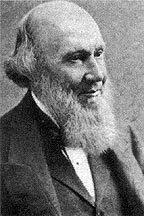
1818 - 1901 Person Name: Edward J. Hopkins Arranger of "ADESTE FIDELES" in Songs of the Christian Life Dr Edward John Hopkins MusDoc United Kingdom 1818-1901. Born at Westminster, England, the son of a clarinetist with the Royal Opera House orchestra, he became an organist (as did two of his brothers) and a composer. In 1826 he became a chorister of the Chapel Royal and sang at the coronation of King William IV in Westminster Abbey. He also sang in the choir of St. Paul’s Cathedral, a double schedule requiring skill and dexterity. On Sunday evenings he would play the outgoing voluntary at St. Martin’s in-the-field. He left Chapel Royal in 1834 and started studying organ construction at two organ factories. He took an appointment at Mitcham Church as organist at age 16, winning an audition against other organists. Four years later he became organist at the Church of St. Peter, Islington. In 1841 he became organist at St. Luke’s, Berwick St., Soho. Two Years later he was organist at Temple Church, which had a historic organ (built in 1683). He held this position for 55 years. In 1845 he married Sarah Lovett, and they had four sons and five daughters. He was closely associated with the Bach Society and was organist for the first English performances of Bach’s St. Matthew Passion. In 1855 he collaborated with Edward Rimbault publishing “The organ, its history and construction” (3 editions 1855-70-77). In 1864 he was one of the founders of the “College of organists”. In 1882 he received an honorary Doctorate of Music from the Archbishop of Canterbury. He composed 30+ hymn tunes and some psalm chants, used by the Church of England. He died in London, England.
John Perry
E. J. Hopkins
John Franklin Genung
1850 - 1919 Person Name: John F. Genung Author of "O, Praise ye the Father" in Select Songs No. 2
John Franklin Genung
Pages